
Turtle Canyon Oahu: How Green Turtles Digest Their Food

Green turtles digest their mostly plant-based diet with help from microbes in their gut. At Turtle Canyon Oahu, you can watch these remarkable animals in their natural reef habitat on a Living Ocean Tours snorkel trip.
A turtle passing below you may be resting, visiting cleaner fish, or moving between areas. Knowing how honu, the Hawaiian name for green sea turtles, process their food gives you another way to appreciate what you see.
Key Takeaways
- Adult Hawaiian green turtles eat mostly marine algae, also known in Hawaiian as limu.
- Microbes in a turtle’s hindgut help break down parts of plant food that the turtle can’t digest on its own.
- Green turtles elsewhere also eat seagrass, and their diets can include animal material.
- Turtle Canyon Oahu is known for cleaning stations. A turtle visiting one isn’t necessarily feeding.
- You can protect turtles by watching from a distance and leaving them room to surface and swim away.
What Green Turtles Eat at Turtle Canyon Oahu
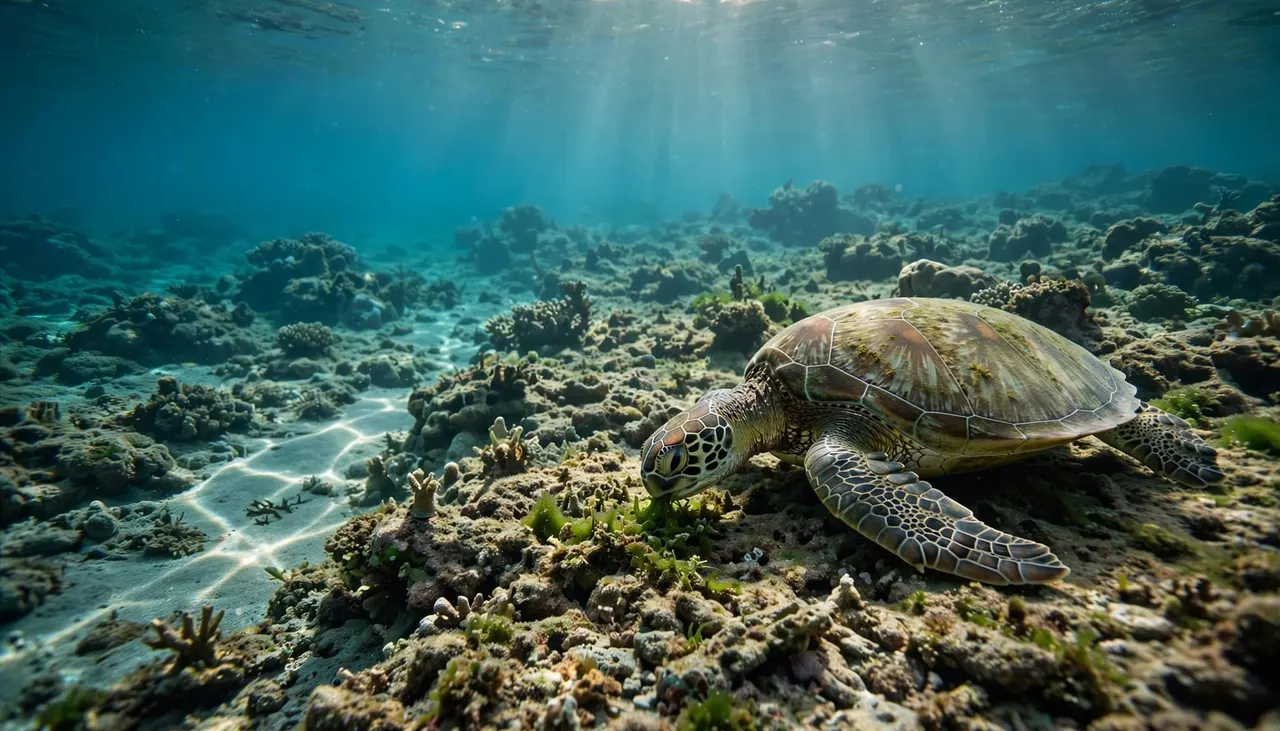
Hawaiian green turtles, or Chelonia mydas, rely heavily on marine algae as adults. Algae grow in different shapes and colors across coastal habitats, including on rocky surfaces and reefs.
At Turtle Canyon Oahu, you’re visiting a reef known for turtle cleaning activity. The food a particular turtle eats may come from other areas it uses along the coast.
Algae and Seagrass Are Different Foods
Marine algae include the seaweeds you might see attached to rocks. Seagrasses are flowering plants that grow underwater, often in meadows.
Green turtles eat both in places where those foods are available. Around Oahu, adult honu eat mainly algae. Turtle Canyon is known as reef habitat, so you shouldn’t expect to see a seagrass meadow beneath your snorkel boat.
A Mostly Plant-Based Diet Has Exceptions
Green turtles aren’t limited to one food throughout their lives. A global review of green turtle diets describes seagrass, algae, and invertebrates among their reported foods.
Local habitat matters, too. A study of East Pacific green turtles found that turtles in Bahía de los Angeles foraged mainly on marine algae. That finding describes turtles in that region, rather than the diet of an individual honu you see off Waikiki.
How a Sea Turtle Digests Algae
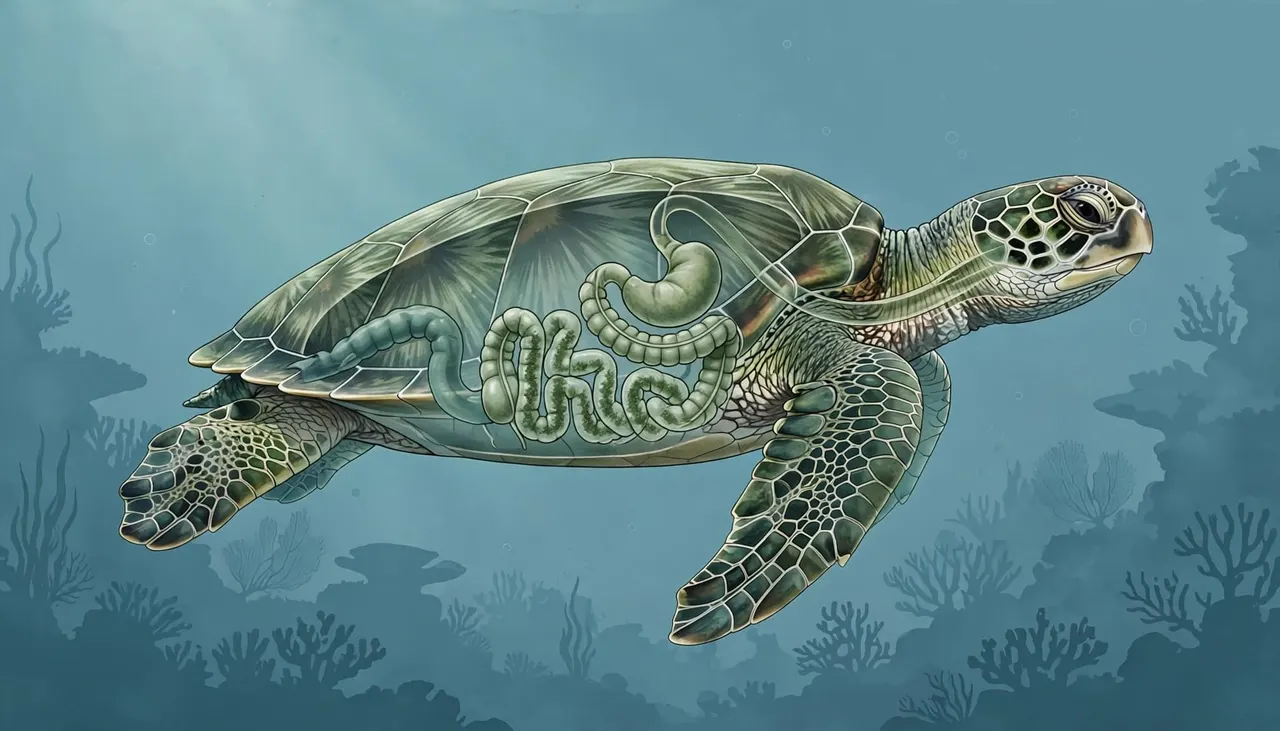
Algae can provide nutrients, but a turtle must first process food with tough structural material. Its digestive tract and the microorganisms living inside it share that work.
The Journey Through the Gut
A honu takes bites with its beak and swallows the food. It passes down the esophagus into the stomach, where digestion begins.
The food then moves through the intestines. Digestive processes break down nutrients the turtle can absorb, while other material continues toward the hindgut. The turtle doesn’t need to stop eating and wait for one meal to finish its entire journey before feeding again.
Microbes Help Break Down Plant Material
Green turtles are hindgut fermenters. Microorganisms in the latter part of the digestive tract help break down fibrous plant material, including cellulose.
Fermentation produces substances called volatile fatty acids. The turtle can absorb and use these as an energy source. In return, the microbes have a place to live and a supply of material to process.
You can’t see this digestive partnership through a snorkel mask. Still, it’s happening inside the honu as you watch it move over the reef.
How a Honu Bites and Processes Its Food
A green turtle has no teeth. Instead, it uses a hard beak to bite and crop vegetation. Repeated bites against a food-covered surface can be a sign that a turtle is grazing.
Once food enters the digestive tract, the turtle’s own digestive processes and its gut microbes handle different parts of the meal. That division of work matters because fibrous material isn’t as easy to break down as every other component of food.
Algae also vary in structure. A broad, leafy piece and a tougher growth against a rock won’t offer the same kind of bite. From the surface, you may see a turtle dip its head without being able to identify what it picked up.
Give yourself time to observe rather than assuming every movement is a meal. A turtle swimming above an algae-covered reef may simply be passing through.
A Green Turtle’s Diet Changes With Age
The adult honu you may see at Turtle Canyon Oahu didn’t necessarily eat the same foods as a young turtle. Green turtles use different habitats as they grow, and their diet can change along with the food available to them.
Young green turtles can eat animal material as well as plant matter. As they mature and use coastal feeding areas, many rely more heavily on algae or seagrass.
That change is one reason a simple label such as “plant-eater” doesn’t describe every green turtle at every stage. It does, however, give you a useful starting point for understanding the adult Hawaiian turtles often seen around Oahu.
Size alone won’t tell you exactly what an individual turtle has eaten. At a respectful viewing distance, enjoy the behavior you can see without trying to judge its age or diet.
Feeding and Cleaning Are Two Different Reef Activities
Turtle Canyon Oahu is especially well known for natural cleaning stations. At these reef areas, small fish may pick algae and other material from a turtle’s shell or skin.
During that interaction, the fish are feeding. The turtle may hover or remain nearly still while the fish move around it. You might also see a honu leave the reef and rise toward the surface for air.
Grazing looks different. A feeding turtle directs its beak toward vegetation and may take repeated bites. Even then, your angle and the water conditions can make it hard to tell exactly what it’s eating.
Both behaviors offer a reason to float patiently. A quiet moment near the reef can reveal as much as a turtle swimming across open water.
Why a Healthy Reef Matters to Honu
A coastal reef gives green turtles places to move, pause, and interact with other marine life. Algae are part of that habitat, while reef fish can take part in cleaning interactions.
The same reef also supports many other animals. When you look beyond a turtle’s shell, you may notice fish moving around coral heads or sheltering near rocks. Their activity is part of the setting that makes a turtle encounter so memorable.
Your choices in the water matter here. Keep your fins away from the bottom, avoid touching coral, and take any trash back to the boat. These simple habits help protect the habitat you came to enjoy.
How to Watch Turtles Without Disturbing Them
At Turtle Canyon Oahu, the best viewing position gives a turtle control over its own movements. You can watch from the surface while leaving the animal space to rest, turn, or rise for air.
Give Honu Room to Breathe
Stay at least 10 feet away from sea turtles. If one approaches you, remain calm and gently move away when you can.
Never touch, chase, feed, or ride a turtle. Keep the route to the surface clear, and don’t place yourself between a honu and the direction it wants to travel. A turtle that changes course because of your approach needs more room.
Float Calmly Above the Reef
Use a flotation aid if it helps you stay comfortable. Slow fin movements make it easier to maintain your position without kicking the reef or stirring up the bottom.
Listen to your guide and stay with your group. If visibility or water movement makes you uncomfortable, let your guide know. You can return to the boat for a break and rejoin the water when you’re ready.
Visit Turtle Canyon With Living Ocean Tours
Our Turtle Canyons Snorkel Excursion departs from Kewalo Basin Boat Harbor near Waikiki. The two-hour trip includes approximately one hour of snorkeling, with equipment, flotation support, and guidance for guests of different experience levels.
We describe Living Ocean Tours as the only tour company with professional snorkel guides in the water with you. That in-water support can help first-time snorkelers and families feel more comfortable while observing wildlife.
Our snorkeling trips have an approximately 95% turtle sighting success rate. Honu are wild animals, though, so sightings and behavior aren’t guaranteed. The Turtle Canyon adventure is listed at $79.
You can CHECK AVAILABILITY for your Turtle Canyon snorkel tour.
You can also read what guests have shared about their time on the water with us.
For our full tour calendar, use the availability button below.
Frequently Asked Questions
Do Hawaiian green sea turtles eat only plants?
Adult Hawaiian green turtles eat mostly algae, but green turtles can also eat animal material. Their diet varies with age, location, and available food.
Do turtles eat the algae on their own shells?
At a cleaning station, you’re more likely to see small fish picking material from a turtle’s shell or skin. That differs from a turtle grazing with its beak on vegetation growing in its habitat.
Can you feed a turtle during a snorkel trip?
No. Let honu find their natural food without interference. Feeding can disturb wildlife and changes the behavior you’re there to observe.
Will you always see a turtle eating at Turtle Canyon?
A turtle may be resting, swimming, surfacing, or visiting cleaner fish instead. Each encounter is different, and a sighting doesn’t reveal where that turtle last fed.
Take a Closer Look at Honu
A green turtle’s plant-based diet depends on more than its beak. Its gut microbes help process fibrous food and make nutrients available for the animal to use.
When you visit Turtle Canyon Oahu, that hidden process adds another layer to what you see. Give each honu room, watch patiently, and enjoy the reef on the turtle’s terms.


