
Turtle Canyon Oahu: How Turtles Save Oxygen on Dives
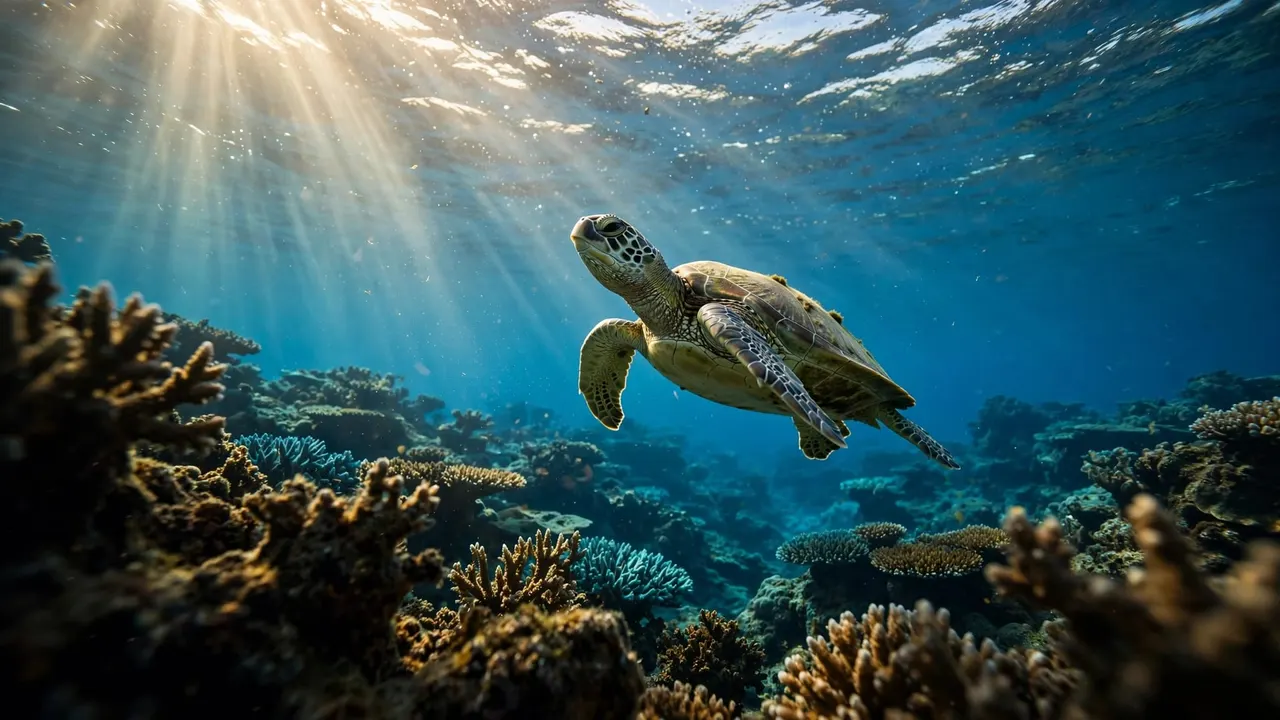
At Turtle Canyon Oahu, green sea turtles conserve oxygen underwater by slowing their heart rate and adjusting circulation during dives. Their dive response, combined with low resting energy needs, helps them stay submerged between breaths.
With us at Living Ocean Tours, you can observe these air-breathing reptiles at a natural cleaning station offshore from Waikiki. A turtle hovering above the reef may look motionless, but its body is managing a limited oxygen supply. Understanding that process gives you a deeper appreciation for every unhurried glide.
Key Takeaways
- Green turtles breathe air, and their lungs hold an important share of the oxygen available during a dive.
- A slower heart rate and changes in blood flow help conserve that oxygen, although the response varies with activity.
- Resting, swimming, temperature, and disturbance affect how long turtles remain underwater.
- You can support natural behavior by keeping your distance and leaving a clear route to the surface.
Turtle Canyon Oahu Is a Natural Cleaning Station
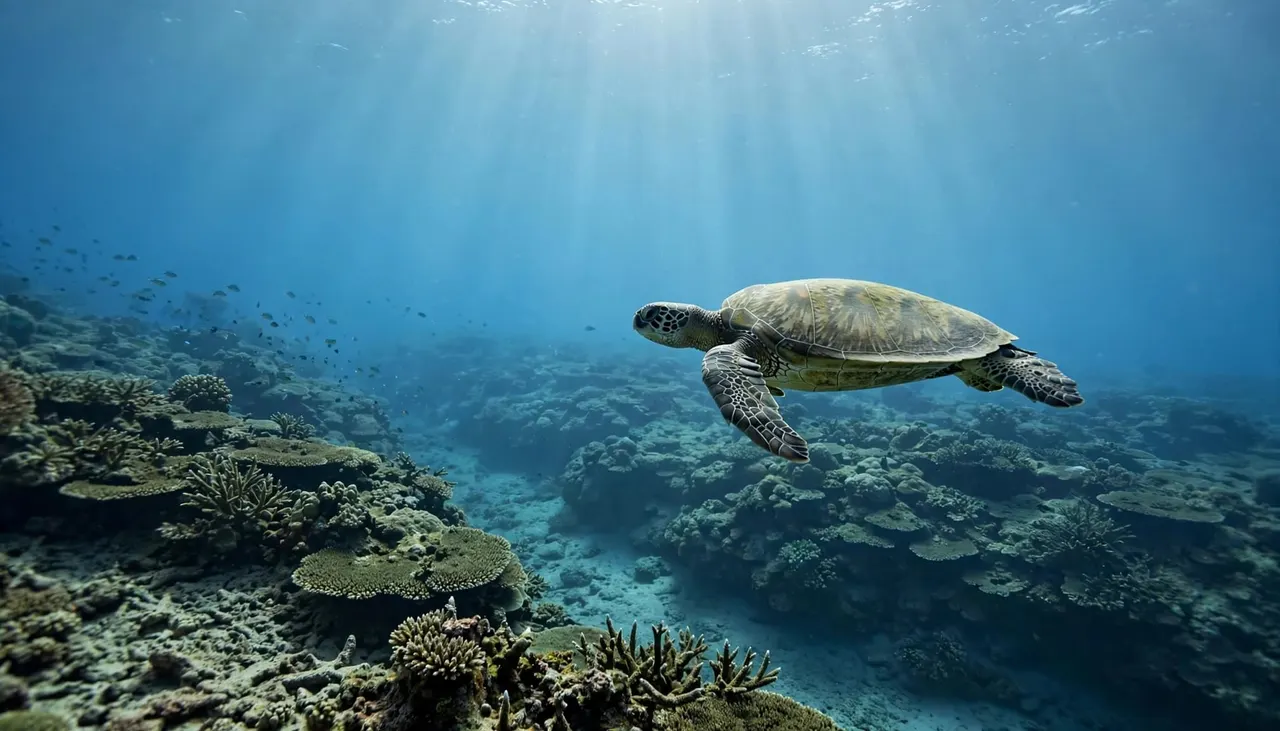
Just offshore from Waikiki, this reef attracts Hawaiian green sea turtles, known as honu. Small reef fish remove algae and other material from their shells and skin. In return, the fish gain a meal.
That cleaning relationship gives you a chance to observe turtles moving slowly or holding position. However, a cleaning visit isn’t the same as sleep. A turtle may remain alert while allowing fish to approach.
Watch the rhythm of its movements rather than expecting constant action. Gentle flipper strokes, a pause near the reef, and a gradual ascent can all be part of an ordinary visit.
Because turtles breathe air, every underwater cleaning session has a limit. Eventually, they leave the fish behind and return to the surface.
Conditions also matter for your experience. Visibility, wind, currents, and wildlife movements change, so an offshore reef never guarantees pool-like water or a particular encounter.
How the Dive Reflex Conserves Oxygen
A slower heartbeat reduces demand
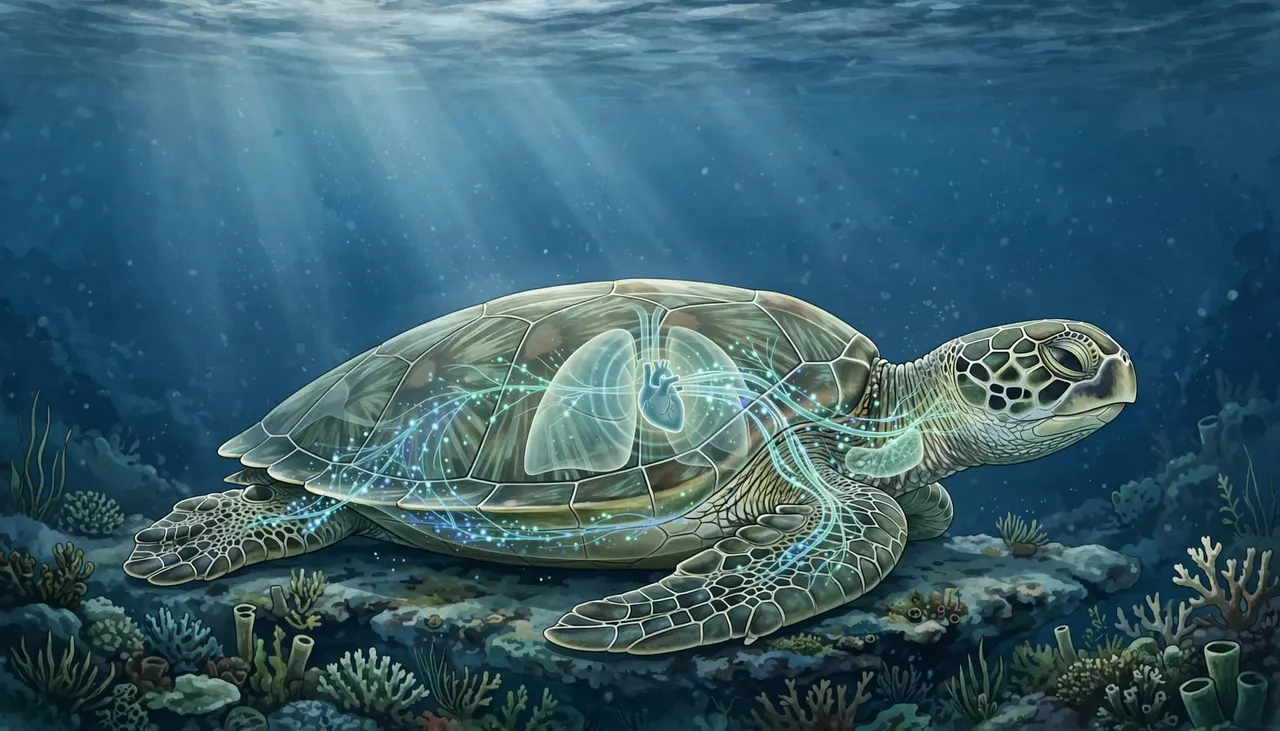
When a turtle submerges, its cardiovascular system adjusts to a period without fresh air. One important response is bradycardia, the scientific term for a slower heart rate.
The heart itself uses oxygen. Slowing its work helps reduce that demand while the turtle manages its stored supply.
However, the response isn’t a fixed setting. An actively swimming turtle has different needs than one resting on the bottom. During voluntary dives, heart rate can change with movement and the stage of the dive.
You can’t measure this response by watching through a snorkel mask. A calm-looking turtle doesn’t reveal its heartbeat.
Circulation adjusts to the dive
Changes in circulation help manage where oxygen goes. During stronger oxygen-conserving responses, reduced blood flow to some tissues helps preserve delivery to oxygen-sensitive organs, including the brain and heart.
Those adjustments work alongside the turtle’s behavior. Remaining still requires less muscular work than sustained swimming, so a quiet pause stretches the available supply.
The dive reflex doesn’t create oxygen or make breathing optional. It helps the turtle spend stored oxygen more carefully until its next breath.
For you, that makes an undisturbed encounter especially meaningful: the turtle can continue its chosen activity without an added need to swim away.
Where Green Turtles Store Their Oxygen
Their lungs are an important reservoir
Unlike fish, sea turtles don’t extract oxygen from seawater through gills. They surface, breathe through their nostrils, and carry oxygen underwater.
Their lungs are an especially important reservoir. A scientific review of diving air-breathing vertebrates describes sea turtles’ strong reliance on respiratory oxygen stores.
You may associate long dives with seals or whales, but their oxygen-storage strategies aren’t identical to a turtle’s. Blood and muscle also hold oxygen, yet you shouldn’t assume that every diving animal uses those stores in the same proportions.
A turtle’s next breath replenishes the supply that supports another underwater visit.
Low energy needs help that supply last
Green turtles are ectotherms, meaning their body temperature depends largely on their surroundings. They don’t spend energy maintaining a consistently warm body the way mammals do.
That helps explain their relatively low resting oxygen demand. When a turtle rests, reduced muscular activity lowers its needs further.
Still, low demand doesn’t mean no demand. Its brain, heart, and other tissues continue working.
As you watch a turtle pause over the reef, the visible stillness is only part of the explanation. Its physiology also helps make that pause possible.
Why Every Turtle Dive Has a Different Length
Activity changes oxygen use
A turtle resting underwater usually spends oxygen more slowly than one swimming hard. Feeding, traveling, and avoiding a disturbance create different energy demands.
Therefore, a single maximum breath-holding number tells you little about the animal in front of you. Research on green turtle diving behavior examines real dive patterns rather than treating every submergence as identical.
During your visit to Turtle Canyon Oahu, you might see one turtle surface while another remains below. That difference alone doesn’t indicate a problem.
You don’t know when either turtle last breathed or how much effort it has used since then.
Temperature and circumstances matter
Water temperature affects an ectotherm’s metabolism. Warmer conditions generally increase metabolic demand, while cooler conditions can reduce it.
Other factors include the turtle’s size, health, and activity before you noticed it. Consequently, you can’t calculate its remaining underwater time by watching a clock.
Forced submergence is also different from a voluntary dive. A turtle that cannot reach air faces a dangerous situation, even though healthy turtles routinely spend time underwater.
For snorkeling, the practical lesson is straightforward: allow turtles to control their own movements and breathing schedule.
What You Can Learn by Watching Quietly
At Turtle Canyon Oahu, the most revealing behavior may happen while you remain still. You might notice a turtle settling near cleaner fish, making small adjustments with its flippers, or gradually angling upward.
Those observations show behavior, not a medical reading. You can’t determine oxygen levels, heart rate, or health from one brief encounter.
A turtle’s slow movement doesn’t tell you how much oxygen remains. Always leave its route to the surface open.
If a turtle starts ascending, give it space rather than swimming above it for a closer photograph. It may need several breaths before descending again.
Likewise, avoid interpreting proximity as an invitation. A turtle passing nearby is moving through its habitat.
For families, this is an easy observation activity: notice the difference between gliding, active swimming, and holding position. You can discuss what each movement might require without guessing how long the turtle can stay down.
Give Honu Space to Breathe
Your position in the water affects the encounter. NOAA recommends staying at least 10 feet (3 meters) from sea turtles, including in the water. If a turtle approaches, calmly make room when you can.
Never touch, feed, chase, surround, or ride a turtle. Hawaiian green sea turtles are protected wildlife, and interference can disrupt normal behavior.
Stay near the surface with your group instead of diving down after an animal. Also, keep your fins away from the reef and use flotation support as instructed.
Photography should fit around those boundaries. Let the turtle move through your view rather than maneuvering to stop it or redirect it.
If your mask needs adjusting or you feel tired, ask your guide for help. Managing your own comfort makes it easier to maintain distance and pay attention.
Above all, a good encounter lets you watch without changing what the turtle was doing.
Explore the Reef With Professional In-Water Support
For a guided visit to Turtle Canyon Oahu, our Turtle Canyons Snorkel Excursion starts at $79 per person. You depart from Kewalo Basin Boat Harbor, minutes from Waikiki.
At Living Ocean Tours, we’re the only tour company with professional snorkel guides. You receive fitted gear, flotation support, instruction, and in-water guidance. Tell our crew if you’re new to snorkeling or nervous about entering the ocean.
Our Oahu boat tours combine coastal scenery with onboard comforts, including shaded seating and restrooms.
Our turtle-sighting success rate is approximately 95%, although wild-animal encounters aren’t guaranteed. On our turtle snorkeling tour, observing without touching remains central to the experience.
When you’re ready to plan your reef outing, CHECK AVAILABILITY for the turtle-focused excursion.
Frequently Asked Questions
Can green turtles sleep underwater?
Yes, green turtles can rest and sleep underwater, but they still need to surface for air. Their reduced activity helps conserve oxygen. If you see a motionless turtle, keep your distance rather than approaching to make it move.
Does a cleaning station give turtles oxygen?
No. Cleaner fish remove material from turtles’ shells and skin; they don’t provide oxygen. Turtles replenish their oxygen by breathing air at the surface. A cleaning visit fits within the time available between breaths.
Should you hold your breath to follow a turtle?
No. Stay at the surface and follow your guide’s instructions. A turtle’s diving ability doesn’t provide a safe target for human breath-holding. Never hyperventilate or attempt prolonged underwater breath-holds to keep up with wildlife.
Enjoy the Dive Without Interrupting It
Turtle Canyon Oahu gives you a window into how green turtles balance underwater activity with their need to breathe. A slower heartbeat, adjusted circulation, and low resting energy demands help explain their unhurried movements.
Your part is simpler: give honu space and an open route to air. With patient observation, you can enjoy the encounter while allowing the turtle to choose its next move.


