
Turtle Canyon Oahu: Green Turtle Protection Rules
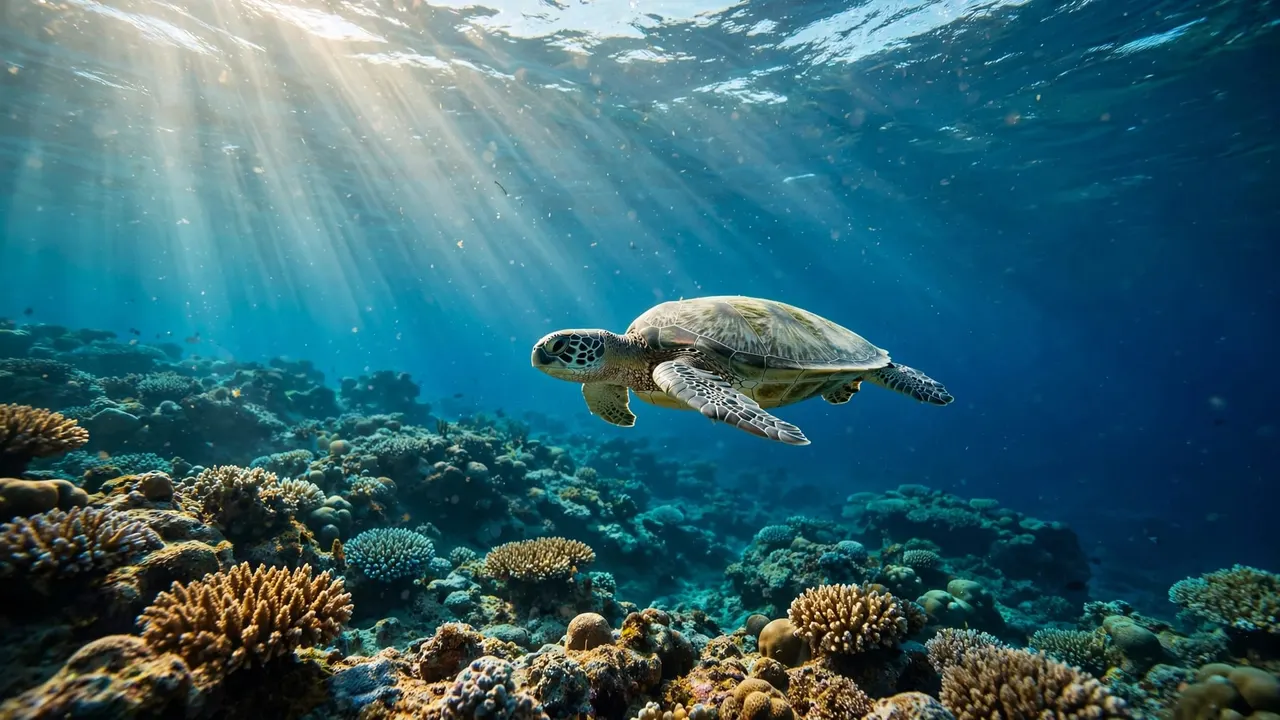
At Turtle Canyon Oahu, you can snorkel near protected Hawaiian green sea turtles, but you must avoid disturbing them. With Living Ocean Tours, you can enjoy our guided Oahu ocean tours with a clear focus on observing without contact.
Hawaii’s recommended viewing distance is at least 10 feet, but legal protection also covers behavior that harms or harasses turtles. Understanding that distinction helps you enjoy the reef while giving each animal room to breathe, rest, and swim.
Key Takeaways
- Keep at least 10 feet (3 meters) from sea turtles, both underwater and on shore. This is recommended viewing guidance, not a universal statutory distance.
- Never touch, chase, feed, ride, restrain, or surround a turtle. Your position matters because a group can block an animal’s route without making contact.
- If a turtle approaches, stay calm and let it pass. If you notice an injury or entanglement, alert your guide rather than attempting a rescue.
Your goal is to watch natural behavior without changing what the turtle does next.
Turtle Canyon Oahu: What the Law Protects
Federal and state protections apply
Hawaiian green sea turtles, known locally as honu, have protection under the federal Endangered Species Act and Hawaii law. The Hawaiian population is federally listed as threatened.
Under the Endangered Species Act, prohibited “take” includes harming, harassing, capturing, or killing protected wildlife. Hawaii adds protections through HRS Chapter 195D and HAR 13-124. You don’t need to injure a turtle for your conduct to create a problem.
For example, pursuing a turtle for a photo can interrupt its normal activity. NOAA’s green turtle species overview explains the animal’s protected status and the threats it faces.
What the 10-foot recommendation means
NOAA recommends staying at least 10 feet (3 meters) away on land and in the water. Its marine wildlife viewing guidelines give you a practical starting distance.
However, Hawaii doesn’t have a universal sea turtle law that sets 10 feet as a minimum approach distance. The legal issue is disturbance or harm, rather than crossing an imaginary line.
Therefore, being farther away doesn’t make chasing acceptable. Keep more space whenever your position or movement could interfere with a turtle’s normal behavior. A tour ticket doesn’t create an exception to these protections.
Give Turtles Room at the Cleaning Station
Watch beside the turtle’s route
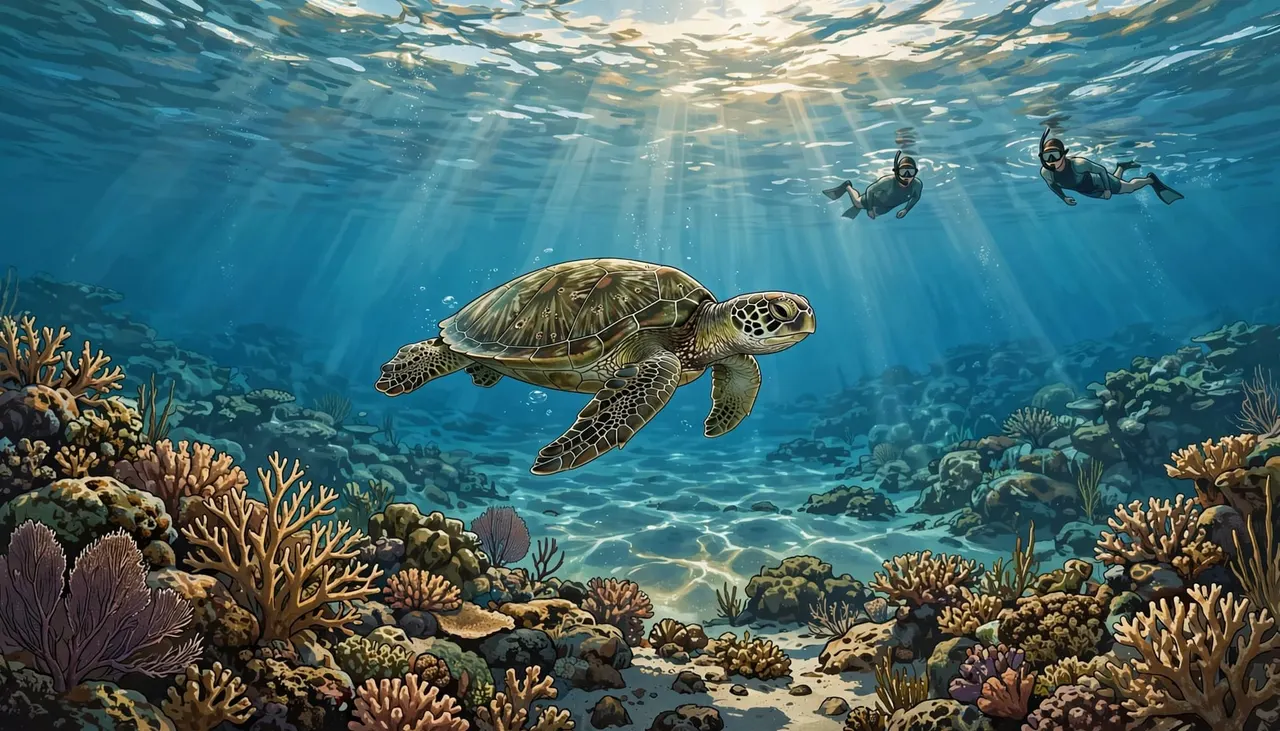
At Turtle Canyon Oahu, you may see turtles pause while small reef fish remove material from their shells and skin. This cleaning activity gives you something interesting to watch without swimming closer.
Float calmly, keep your fins away from coral, and leave open water around the animal. Avoid positioning yourself directly above it because sea turtles must surface to breathe.
Also, watch the people around you. Several snorkelers can gradually form a barrier even when nobody intends to crowd wildlife.
A turtle needs an open route through the group, not simply a small gap between individual swimmers.
If the group tightens, move away gently and follow your guide’s direction. Never dive toward a turtle resting near the reef.
If a turtle swims toward you
A turtle may change direction and approach before you can react. Stay calm, keep your hands close, and allow it to pass without reaching out.
When you can move safely, increase the distance without blocking its path or kicking toward the reef. Sudden splashing and frantic movement add confusion.
An unexpected close pass doesn’t give you permission to touch, follow, or pose beside the animal. Let the encounter end naturally. Meanwhile, remain aware of your buddy, nearby swimmers, and the boat.
Take Photos Without Changing Turtle Behavior
Your camera should help you remember the encounter without driving the encounter itself. Use zoom where available, and accept a wider image rather than swimming into the turtle’s space.
Before lifting your camera, notice where the animal is heading. If it’s moving toward the surface, leave that route open. Don’t ask another swimmer to steer it toward your lens.
A selfie also needs planning. Turning your back on wildlife makes it harder to judge distance, so avoid backing toward a turtle for a closer frame.
For families, explain the rules before entering the water. Children need a clear instruction: keep your hands to yourself and let the turtle choose its route.
A close-up shouldn’t become the measure of a successful trip. Instead, help younger snorkelers notice a turtle’s movement, the fish nearby, and the space it needs.
Secure your camera and loose accessories before swimming. If adjusting equipment becomes distracting, signal your guide and move away from wildlife first.
Protection Follows Turtles onto the Beach
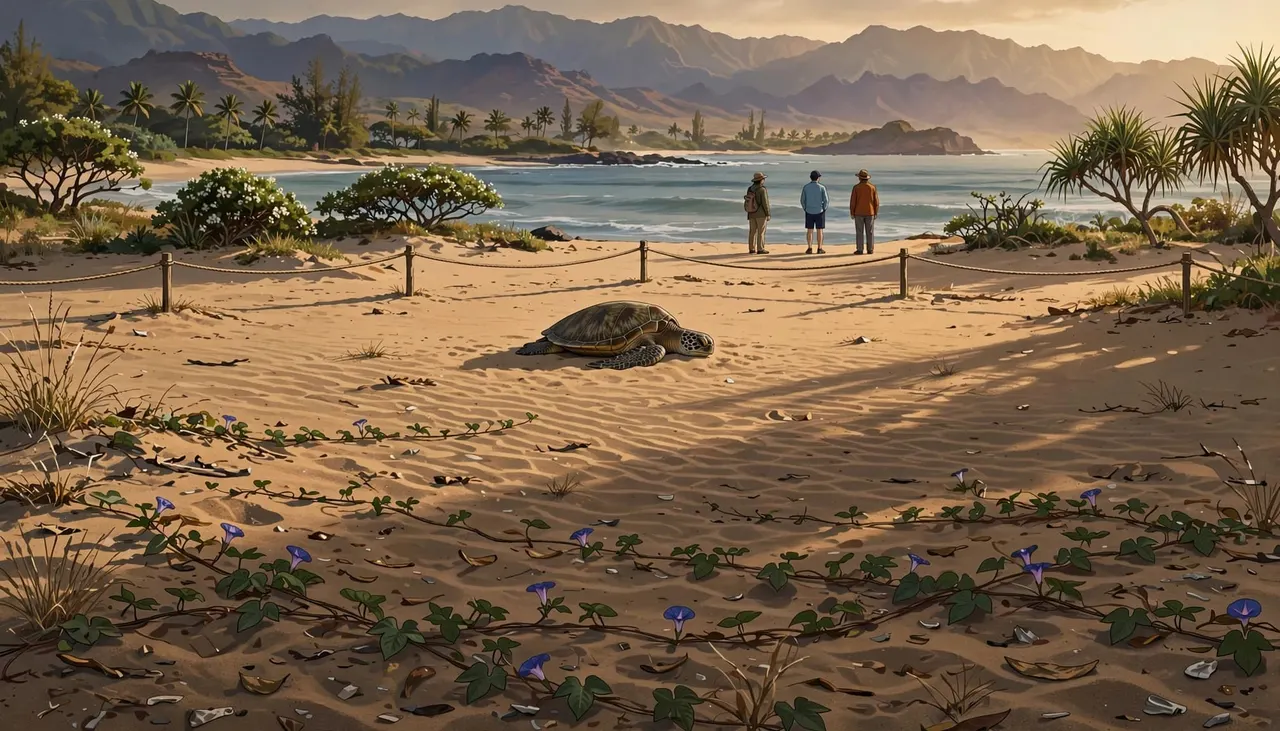
Green turtles sometimes rest on Hawaiian beaches. Seeing one out of the water doesn’t mean it needs help returning to the ocean.
Keep the same recommended 10-foot distance on shore. If a rope barrier or posted instruction creates a larger viewing area, stay outside it.
Leave a clear path between the turtle and the water. Don’t gather around it, place belongings beside it, or encourage children to approach for a photograph.
You also shouldn’t pour water on a resting turtle or try to move it. A motionless animal may simply be resting, and approaching closely can disturb that rest.
NOAA Fisheries handles sea turtle matters in the water, while the U.S. Fish and Wildlife Service shares federal responsibility on land. Hawaii’s Department of Land and Natural Resources also has a role in turtle protection and recovery.
Respond Safely to Injuries or Harassment
Tell your guide about an injured turtle
If you see fishing line, a visible wound, or difficulty swimming, keep your distance and alert your guide. From shore, notify a lifeguard or wildlife authority.
Don’t pull line from a flipper, remove a hook, lift the turtle, or attempt treatment. Those actions can worsen an injury and put you at risk.
Describe what you can see without moving closer. Your location, the animal’s direction, and the visible problem give responders useful information.
NOAA’s Pacific Islands sea turtle questions provide further context on responsible viewing and turtle concerns.
Report disturbance without escalating it
If someone grabs, rides, feeds, or repeatedly pursues a turtle, tell your guide or an appropriate wildlife authority. Don’t join the crowd to get a better view.
From a safe position, note the location, time, and what happened. Photos or video can help document an incident, but only when recording doesn’t create another disturbance.
Violations can result in civil penalties or criminal charges. Penalties depend on the conduct and applicable law; they aren’t an automatic fine for entering the recommended viewing buffer.
Your safety comes first. Don’t pursue another boat or remain in unsafe water to continue filming.
Plan a Guided Turtle Canyon Oahu Visit
Get comfortable before entering
We depart from Kewalo Basin Boat Harbor near Waikiki. At Living Ocean Tours, we’re Oahu’s only tour company with professional snorkel guides, so you have support in the water as you explore.
Tell your guide about your swimming ability, unfamiliar equipment, or concerns before entering. That conversation helps you focus on comfortable breathing and respectful positioning.
Our trips combine snorkeling equipment, flotation support, and in-water guidance. However, flotation doesn’t replace listening to the crew or staying within your ability.
Choose an outing built around respectful viewing
Our Turtle Canyons Snorkel Excursion is a two-hour outing for ages 3 and up. You’ll visit the offshore reef by boat rather than attempting a swim out from Waikiki Beach.
Once there, follow your guide’s positioning and keep the turtle’s route open. Ocean conditions and wildlife activity shape each visit, so sightings aren’t guaranteed.
For couples and families, guided support makes it easier to manage equipment without losing awareness of nearby animals. You can spend your attention watching the reef rather than trying to solve a leaking mask beside a turtle.
Frequently Asked Questions
Is snorkeling near protected green turtles legal?
Yes. You can observe green turtles while snorkeling, provided your conduct doesn’t harm or harass them. Protection doesn’t prohibit all viewing or require you to leave whenever a turtle appears.
Keep the recommended distance, avoid contact, and leave the animal’s route open. Also, follow your guide’s instructions when currents, boats, or other swimmers affect your position. If watching requires you to chase the turtle, let it leave instead.
Can beginners visit Turtle Canyon Oahu?
Yes, beginners can enjoy a guided visit when conditions suit their abilities. Be honest about your comfort in open water, use the flotation support provided, and ask for help before you become tired or anxious.
Practice breathing through your snorkel and adjusting your mask before focusing on wildlife. If conditions or discomfort make snorkeling unsuitable, staying aboard is a sensible choice. A planned turtle encounter never takes priority over your safety.
Let Natural Behavior Lead Your Visit
Your Turtle Canyon Oahu experience is most rewarding when turtles can continue their routines without interference. Keep the recommended space, leave their route open, and follow your guide’s direction.
The strongest habit is watching without changing the encounter. Whether a honu pauses at the cleaning station or swims away, giving it that freedom is part of a responsible visit.


