
Turtle Canyon Oahu: How Green Turtles Stay Balanced
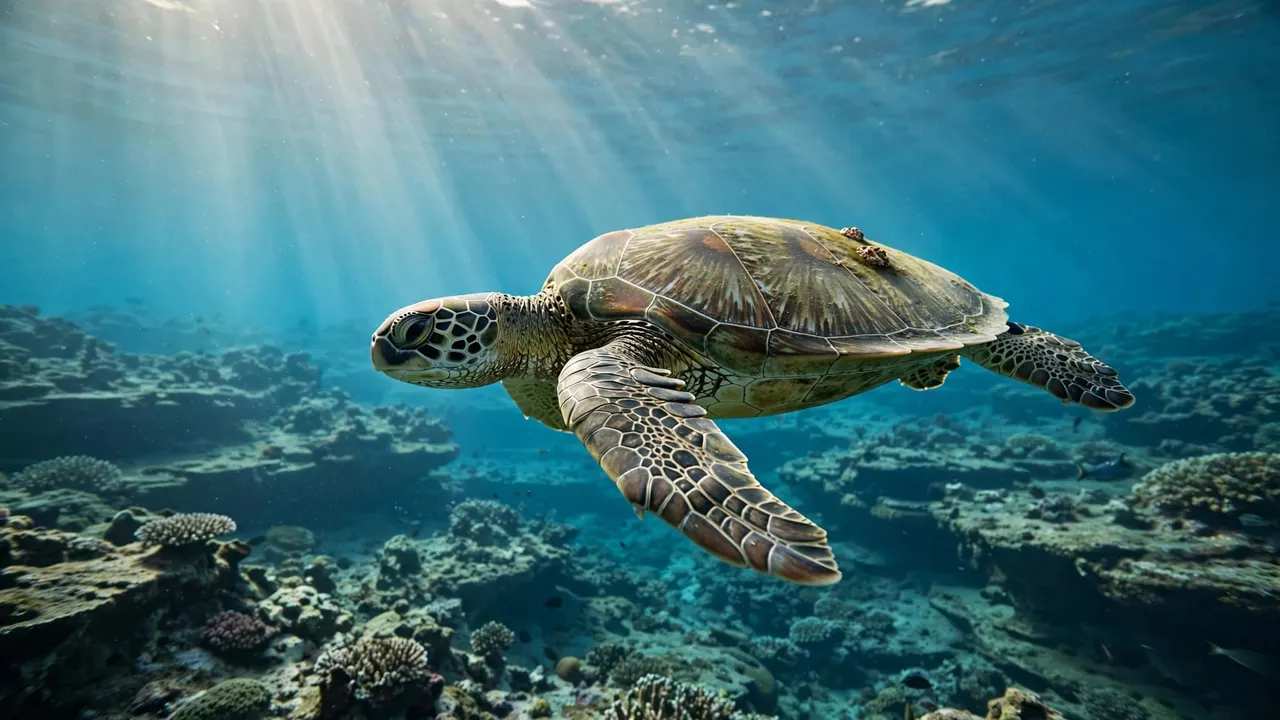
At Oahu’s Turtle Canyon, a turtle’s steady glide reflects a body built for swimming: a streamlined shell and long, paddle-like flippers. Those adaptations explain efficient movement through water, while balance, propulsion, and buoyancy each describe a different part of the picture.
With us at Living Ocean Tours, you can watch Hawaiian green sea turtles, known locally as honu, off Waikiki’s coast. The most revealing moments often happen between strong strokes, when you can follow the animal’s posture and direction. Start with the swimming adaptations you can see.
Key Takeaways
- Sea turtles have streamlined shells that help them move efficiently through water.
- Two large front flippers provide propulsion, while two smaller rear flippers complete their swimming anatomy.
- A smooth glide doesn’t reveal everything about underwater balance, breathing, or buoyancy.
- At Turtle Canyon Oahu, watching a complete movement sequence tells you more than studying one photograph.
- Your viewing position matters, so leave turtles space to turn, surface, and swim away.
You don’t need to identify every movement to appreciate it. A patient view gives you a clearer picture of how an animal travels through its surroundings.
The Swimming Adaptations Behind a Steady Glide
A streamlined shell reduces resistance
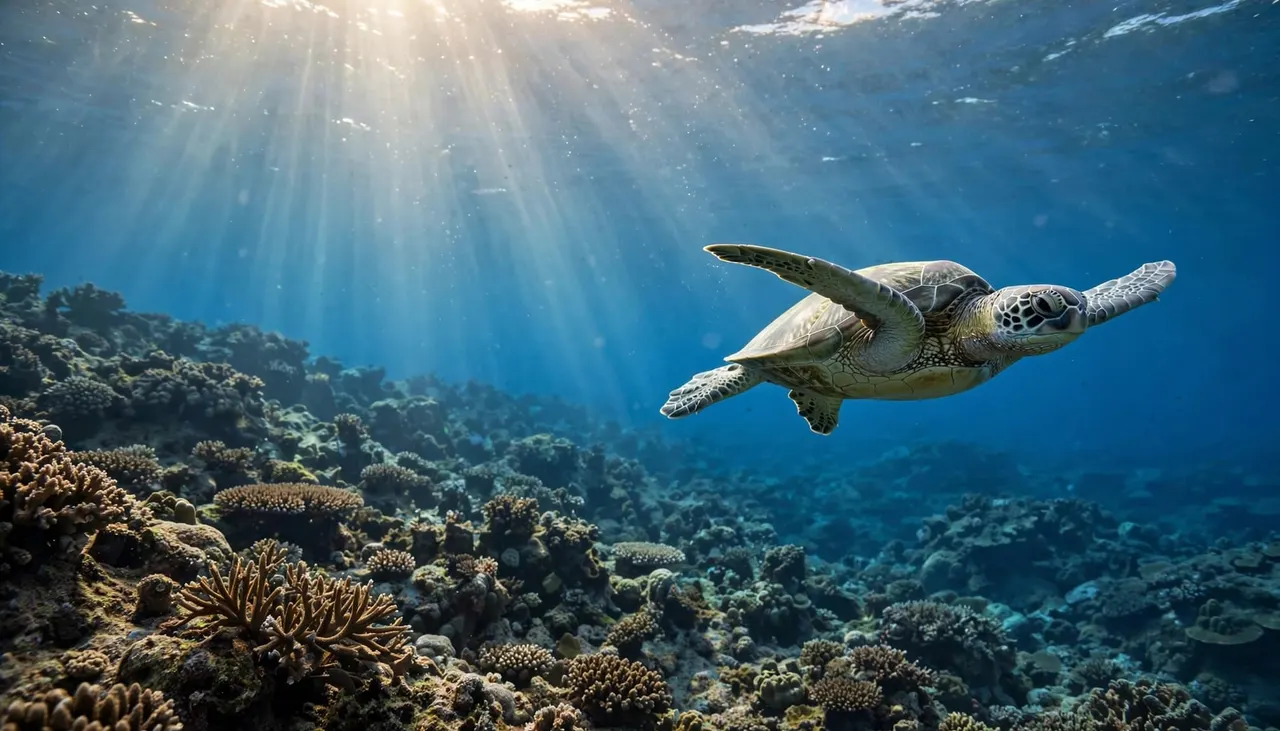
When you watch a turtle pass sideways, notice the outline of its shell. Its shape helps water flow around the body rather than presenting a broad, flat obstacle.
The Smithsonian Ocean Portal describes how streamlined shells and long flippers make sea turtles efficient swimmers. That shape matters because an animal moving underwater must overcome resistance from the surrounding water.
You can appreciate the result without seeing rapid movement. A turtle may continue traveling between visible strokes, so an apparently effortless glide still belongs to an active swimming sequence.
However, shell shape alone doesn’t explain underwater balance. Reduced resistance and a steady body position are related observations, but they aren’t interchangeable explanations.
Front flippers supply swimming power
Next, shift your attention to the flippers. NOAA’s educational guide describes two large front flippers and two smaller rear ones, with the front pair providing propulsion.
Watch beyond the strongest part of a stroke. Notice where the flippers move afterward and how far the animal travels before its next obvious effort.
This gives you a more useful view than counting strokes alone. Speed, body angle, and movement through the water all belong to the same sequence.
Keep the distinction clear: propulsion explains how an animal produces forward movement. By itself, it doesn’t explain every part of maintaining orientation underwater.
What to Watch at Turtle Canyon Oahu
Follow a whole movement sequence
At Turtle Canyon Oahu, try following one turtle’s movement with your eyes rather than swimming alongside it. You can watch its shell angle, the timing of visible strokes, and its direction relative to nearby reef features.
Choose an animal already within comfortable viewing distance. Then remain with your group and let the scene unfold.
A few seconds may show a strong stroke followed by quieter movement. A longer view may reveal a turn or a change in direction that a single photograph would miss.
Your goal is observation rather than pursuit. If the turtle moves beyond your view, let it leave. Following closely can interrupt the behavior you wanted to understand.
Also, avoid assigning a purpose to every small adjustment. You can describe what you saw without deciding exactly why the animal did it.
Use the reef as a visual reference
Open blue water provides few fixed reference points. Consequently, it can be difficult to judge whether a turtle is rising, moving sideways, or simply passing your drifting position.
A reef ledge or sandy patch can make relative movement easier to follow. Notice whether the animal changes position against that background.
Meanwhile, remember that you’re moving too. Surface swell can lift you, and water movement can shift your position even when you aren’t kicking.
This matters when you describe a sighting afterward. “The turtle moved past a coral head” is a clearer observation than assuming it hovered perfectly still.
Let the background help you understand direction, but never stand on or hold the reef for a better view.
Why a Turtle Still Needs the Surface
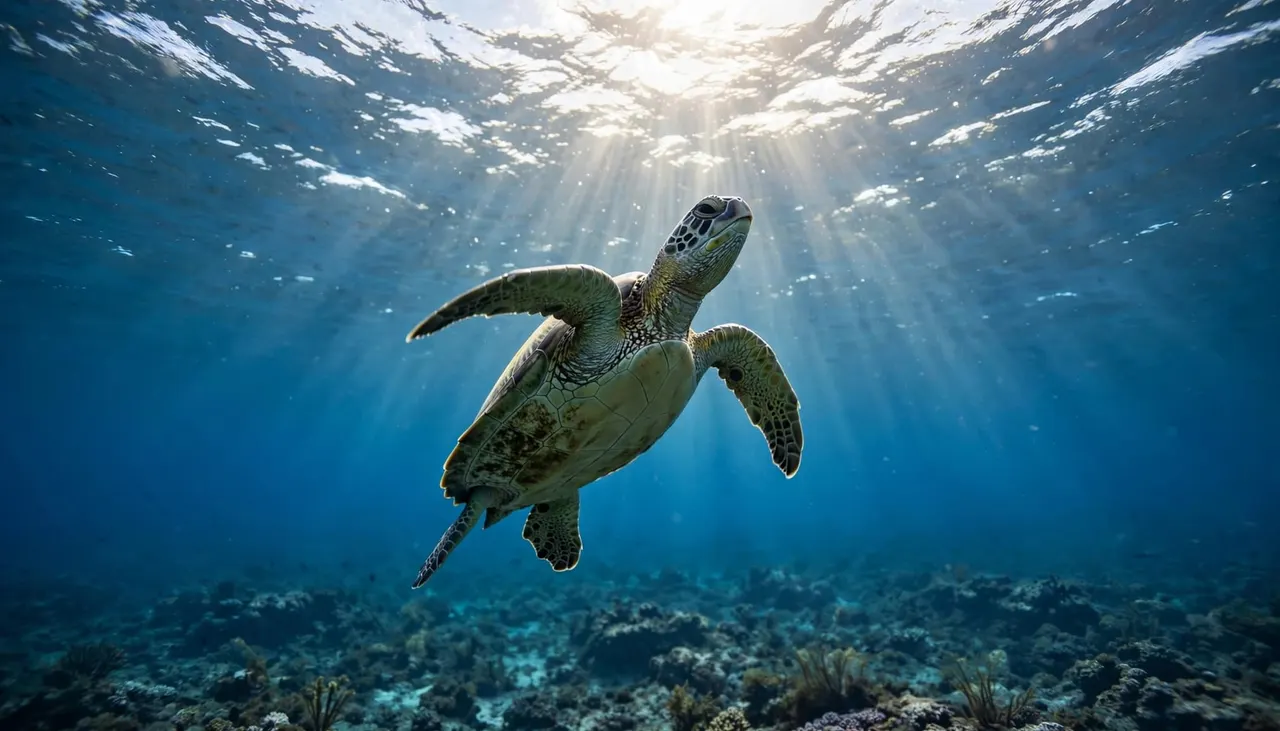
Sea turtles breathe air, so a complete underwater encounter may include a trip toward the surface. That change in direction is another reason to watch the whole animal rather than focusing only on its shell.
At Turtle Canyon Oahu, you may see a honu moving below you and later notice it nearer the surface. Leave the space above and ahead of it open.
A turtle approaching your position doesn’t invite you to reach toward it. Instead, give it room and avoid gathering around its head.
Breathing also involves more anatomy than you can see through a mask. The reference The Anatomy of Sea Turtles describes muscles associated with the flippers, shell, and shoulder region that participate in movement and breathing.
You don’t need to identify those muscles during a snorkel. The practical takeaway is simpler: visible movement offers only part of the story.
A turtle rising toward you needs an unobstructed route to air. Your best viewing position leaves that route open.
Keep Balance, Buoyancy, and Swimming Separate
A turtle can look level while moving forward, angled while ascending, or nearly motionless against a reef background. Those views describe different aspects of movement.
Balance concerns orientation. Buoyancy concerns the upward force of water, while propulsion concerns movement produced by the animal. Keeping these terms separate helps you avoid drawing a large conclusion from one small observation.
Use these distinctions when you watch:
| What you notice | What you can reasonably describe |
|---|---|
| A strong front-flipper stroke | Visible swimming effort |
| A shell held at an upward angle | Body orientation at that moment |
| Movement past a reef feature | A change in position |
| A turtle reaching the surface | A surfacing event |
The strongest interpretation stays close to what you saw. A level shell doesn’t prove that an animal is doing no work, and a tilted shell doesn’t automatically indicate a problem.
Sea turtles share a body plan adapted for marine life, including a streamlined shell and flippers. However, an attractive outline doesn’t reveal every internal process.
For your Turtle Canyon Oahu visit, this distinction makes observation more rewarding. You can appreciate efficient swimming without treating each glide as a complete demonstration of how balance works.
It also keeps a photograph in perspective. A still image records one instant, while the animal continues responding to its surroundings before and after that frame.
Experience Turtle Canyon Oahu With Living Ocean Tours
Our family-friendly Honolulu ocean tours bring you onto the water near Waikiki aboard double-decker vessels. We depart from Kewalo Basin Boat Harbor, close to Waikiki, for ocean experiences along this coastline.
For a turtle-focused outing, our Turtle Canyons Snorkel Excursion gives you an opportunity to observe sea turtles offshore. You can enjoy the experience as a couple, with your family, or with fellow ocean-lovers.
Keep your expectations centered on wild animals. Their movements set the pace, and a brief glimpse of a complete glide can be more interesting than a close photograph.
You can browse guest reviews below as you plan your time on the water.
For our broader selection of ocean outings, explore available departures.
If turtle viewing is your priority, CHECK AVAILABILITY for the Turtle Canyons excursion.
Once you’re watching a turtle, put the camera down occasionally. Following its movement with your eyes makes it easier to notice changes outside a narrow screen.
Frequently Asked Questions
Do sea turtles use all four flippers the same way?
No. Sea turtle anatomy includes two larger front flippers and two smaller rear flippers. The front pair provides propulsion.
As you watch, avoid assuming that every flipper has the same role or produces the same amount of visible movement. Their different sizes are part of the animal’s swimming anatomy.
Does a turtle floating level mean it’s resting?
A level body position alone doesn’t establish that an animal is resting. You may be seeing part of a glide, and small movements can be difficult to notice.
Watch its position relative to the reef and follow the sequence over time. Describe the posture you see without assigning a behavior based on one instant.
Can you understand turtle balance while snorkeling?
You can observe body orientation, swimming effort, and changes in direction. However, you can’t see every internal process that contributes to movement.
At Turtle Canyon Oahu, a useful approach is to watch how those visible elements change together. You don’t need a complete biological explanation to recognize an efficient swimmer or enjoy a respectful encounter.
Watch the Glide, Give the Turtle Room
The steady movement you admire begins with a sea turtle’s swimming adaptations, including its streamlined shell and powerful front flippers. Understanding those features helps you separate visible swimming from broader questions about balance and buoyancy.
On your Turtle Canyon Oahu outing, follow the whole movement sequence rather than chasing a single photograph. Leave room for turns and surfacing, and let the turtle choose its path.
A patient view gives you more to notice while leaving the animal free to continue its day.


