
Turtle Canyon Oahu: How Turtles Swallow Underwater
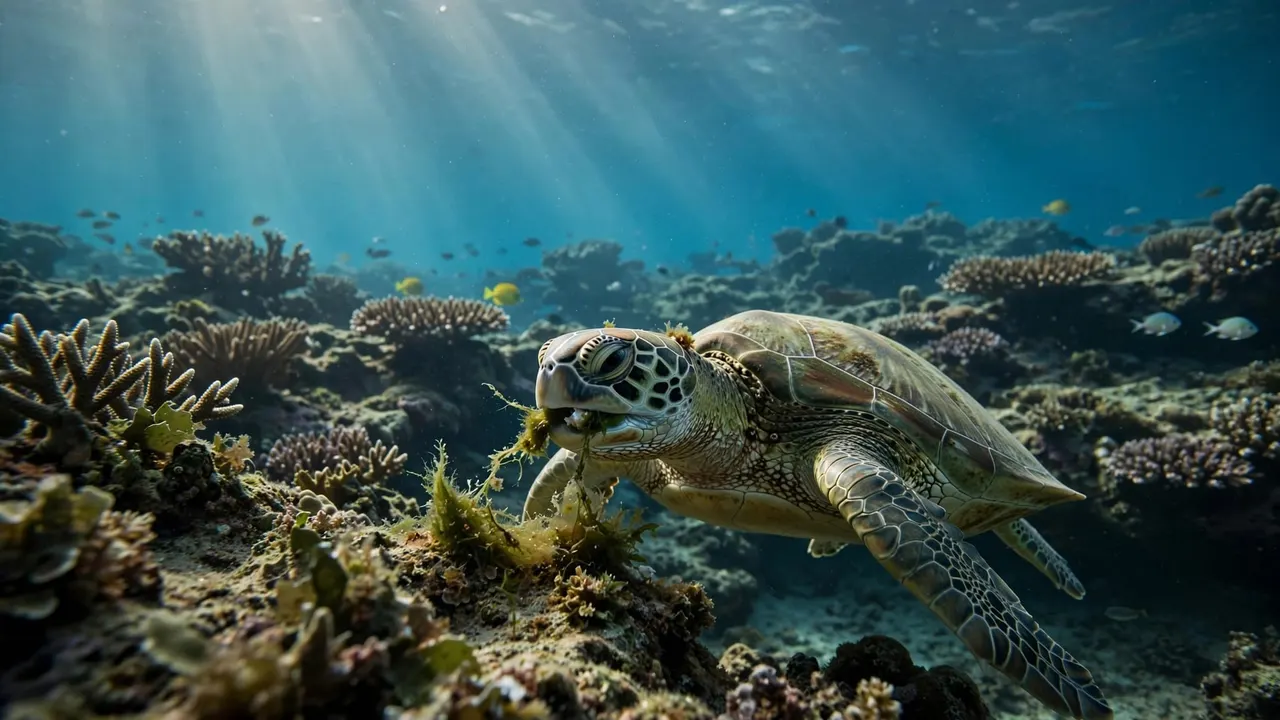
Green sea turtles swallow food underwater by biting off pieces with their beaks, moving food within their mouths, and swallowing while holding their breath. At Turtle Canyon Oahu, understanding that simple process helps you recognize what a honu is doing beneath your snorkel mask.
At Living Ocean Tours, we bring you to this offshore Waikiki reef with professional snorkel guides and a wildlife-first approach. The most rewarding encounters start with patient observation, because a turtle grazing, resting, or receiving attention from cleaner fish can look similar at first.
Start with the feeding action, then look at the surrounding reef for clues.
Key Takeaways
- Green turtles can bite and swallow while submerged, but they must surface to breathe.
- Adult Hawaiian green turtles mainly eat algae, often called limu, although their diet isn’t limited to plants.
- A turtle hovering among small fish may be visiting a cleaning station rather than eating.
- Keep at least 10 feet away and leave every turtle a clear route to the surface.
Your goal is to recognize natural behavior without changing it. A quiet view from the surface gives you more useful information than swimming closer.
How Turtles Swallow at Turtle Canyon Oahu
A beak takes the bite
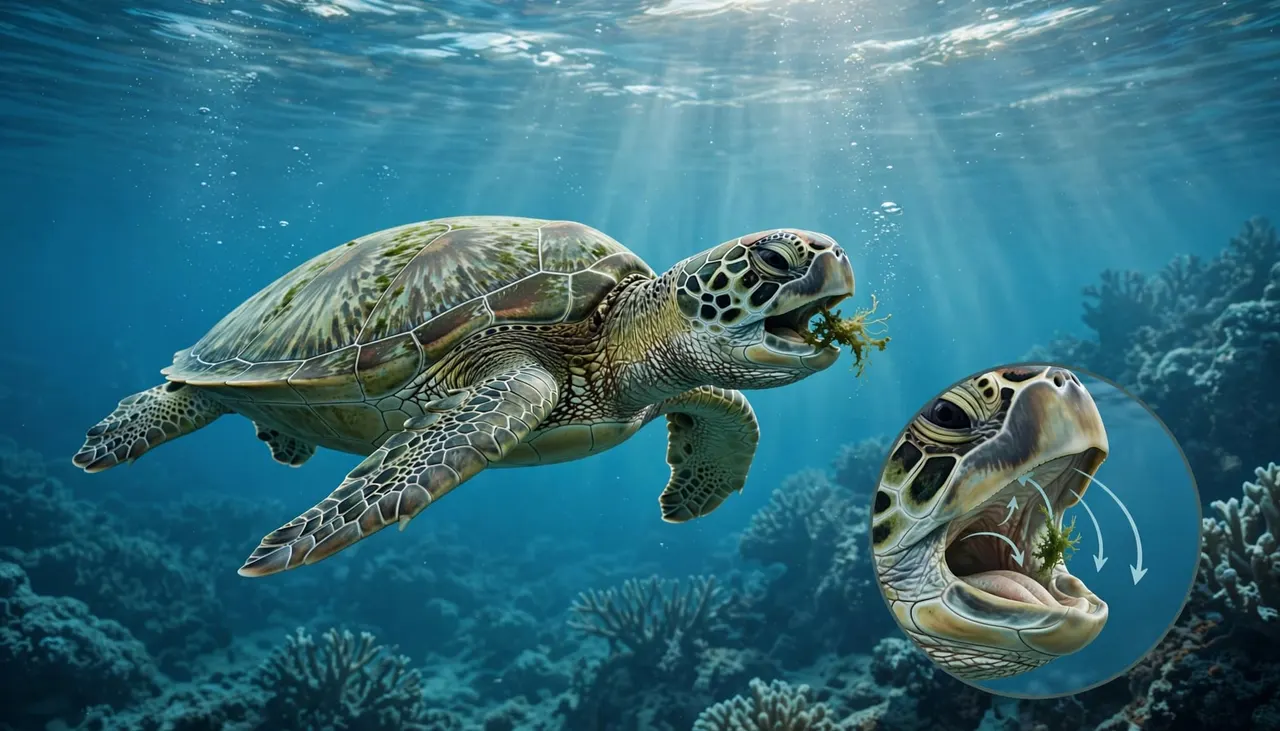
A green turtle doesn’t have teeth. Instead, its beak cuts and pulls food, which helps it remove small pieces of algae attached to underwater surfaces.
If you spot grazing, watch where the turtle directs its head. It may lower its mouth toward a patch of vegetation, take a bite, and reposition for another mouthful. That repeated contact with food is a stronger feeding clue than slow swimming alone.
The bite can be small enough to disappear against the reef’s texture. From the surface, you may notice the head movement without seeing the piece of algae itself. Clear water helps, but distance and viewing angle still limit what you can distinguish.
Food moves through the mouth
Published descriptions of green-turtle feeding include nipping algae, pressing food against the roof of the mouth, and swallowing. George H. Balazs’ green turtle biological synopsis provides background on Hawaiian feeding behavior and diet.
The turtle can complete that feeding action while submerged. It doesn’t need to carry each mouthful above water before swallowing.
However, your snorkel view won’t show the full internal process. You can recognize bites and mouth movements, but you can’t reliably identify every individual swallow. Keep your attention on the visible behavior rather than expecting an obvious gulp.
What Hawaiian Green Turtles Eat
Limu is a major food source
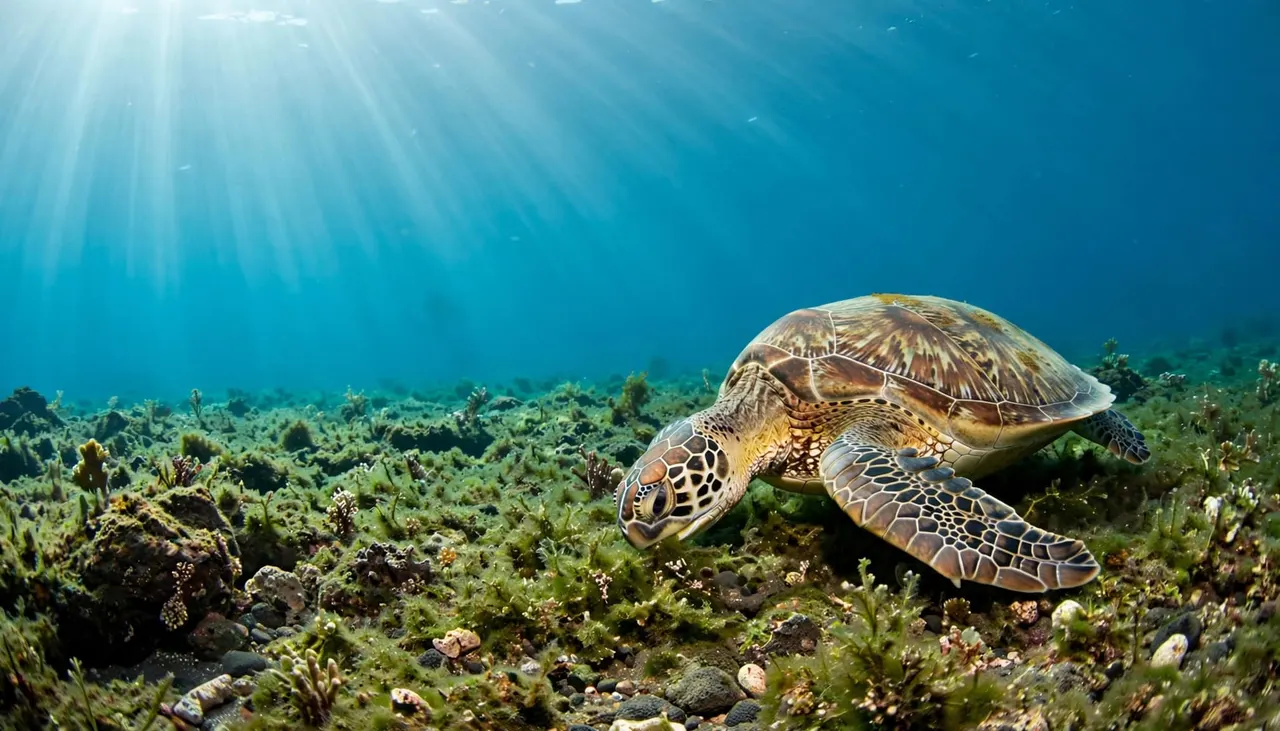
Adult Hawaiian green sea turtles, known locally as honu, primarily eat marine algae. You’ll often hear this underwater vegetation called limu.
According to NOAA’s green turtle species profile, green turtles mainly eat algae and seagrasses. They may also consume invertebrates and other animal matter when available. That makes “primarily herbivorous” more accurate than saying every green turtle eats only plants.
Hawaiian diet research has identified foods such as Acanthophora spicifera, Hypnea musciformis, and Gracilaria salicornia in Kāneʻohe Bay. Those findings describe another Oahu feeding area. They don’t establish which plant a particular turtle is eating during your Waikiki encounter.
Reef habitat isn’t a seagrass meadow
At Turtle Canyon Oahu, you’re visiting offshore reef habitat known for natural cleaning stations. You shouldn’t expect an underwater field of seagrass.
Algae and seagrass are different kinds of food. Algae include the seaweeds growing on marine surfaces, while seagrasses are flowering plants that form underwater meadows where conditions support them.
That distinction helps you read the scene correctly. A turtle near rock or coral may be grazing on algae, but its presence doesn’t prove the surrounding reef is a feeding ground. It could also be resting, passing through, or waiting near cleaner fish.
Likewise, a patch of visible vegetation doesn’t tell you whether the turtle will eat it. Its position and repeated biting movements provide better clues.
Why Underwater Eating Doesn’t Mean Underwater Breathing
A green turtle is an air-breathing reptile with lungs. Although it can swallow beneath the surface, it cannot breathe underwater like a fish.
During a submerged feeding bout, the turtle holds its breath. Eventually, it returns to the surface for air before continuing its underwater activities.
For your Turtle Canyon Oahu encounter, this distinction matters more than a stopwatch. A turtle moving upward may need access to the surface, so avoid positioning yourself directly above its route. Don’t assume that a slow ascent means it wants to approach you.
You also can’t judge its remaining breath from the length of your observation. Activity, resting, and disturbance affect how an animal uses its time underwater. A brief glimpse doesn’t reveal how long it was submerged before you arrived.
A turtle swimming toward the surface needs an open route to air, even if it passes near you.
Stay aware of the turtle’s direction while keeping track of your guide and nearby snorkelers. If it heads your way, give it room rather than waiting for a closer photograph.
Once it surfaces, continue watching without following. The animal may return to the reef, change direction, or leave the area entirely.
Recognize Feeding, Cleaning, and Resting
Feeding involves contact with food
To recognize grazing, look for the mouth repeatedly contacting vegetation or an algae-covered surface. The turtle may shift its head between bites while staying near the same patch.
Research on turtles as coral reef herbivores documents their role as plant eaters within reef communities. That broader ecological role doesn’t mean every turtle you see over a reef is feeding.
A passing honu may keep its head forward and continue swimming without stopping to bite. Meanwhile, a resting turtle may remain nearly motionless. Watch the mouth and its relationship to the surrounding surface before deciding what you’re seeing.
You don’t need to follow an animal to identify the difference. Let the behavior develop within your existing view.
Cleaner fish are doing the eating
Turtle Canyon Oahu is known for cleaning-station activity. Small reef fish may pick algae and other material from a turtle’s shell and skin while the turtle hovers nearby.
In that situation, the fish are feeding. The turtle’s stillness gives them access, but it doesn’t demonstrate that the turtle is swallowing food.
Several turtles may also use the same stretch of reef without traveling together. Shared access to useful habitat explains their proximity better than assuming a lasting social group.
These distinctions make an encounter more interesting without requiring closer access. You can notice a turtle’s posture, nearby fish, and direction of travel while remaining comfortably above the reef.
Give Feeding Turtles Room to Continue
NOAA’s marine wildlife viewing guidelines recommend staying at least 10 feet (3 meters) from sea turtles in Hawaii, both on land and in the water.
Treat that distance as your starting point for respectful observation. If your position interferes with a turtle’s movement, create more space. Never touch, chase, feed, or surround one.
Offering food changes the encounter and encourages wildlife to interact with people. It also prevents you from seeing the natural feeding behavior you came to understand.
Keep your fins away from the reef, too. You don’t need to stand on coral or move down beside a grazing turtle to appreciate its behavior. Floating at the surface protects the habitat and keeps your attention available for your guide.
If a turtle changes direction as you approach, stop advancing and give it room. Don’t pursue it around a reef formation for another view.
For couples and families, this is worth agreeing on before entering the water. Everyone can enjoy the same sighting without forming a ring around the animal.
Your camera should fit the encounter rather than direct it. Let the turtle choose its route, and photograph only what your existing position allows.
Explore Turtle Canyon With Professional In-Water Support
Our Turtle Canyons snorkel excursions bring you from Kewalo Basin Boat Harbor, minutes from Waikiki, to offshore reef habitat. Our Turtle Canyon Snorkeling Adventure is $79 and includes snorkeling equipment, flotation support, and professional in-water guidance.
We’re the only tour company on Oahu with professional snorkel guides. You have direct support while adjusting to your equipment and observing wildlife around the reef.
That support is useful even if you’re a confident swimmer. Using a snorkel, managing flotation, and staying aware of other guests require attention. Our guides help you stay oriented so you can spend more of your outing watching the underwater scene.
On a Turtle Canyon Oahu outing, the turtles choose their activities. You may see cleaning, resting, swimming, or surfacing rather than feeding. Every behavior offers something worth noticing.
Our reported turtle-sighting success rate is 95%, but it doesn’t promise a particular animal behavior. A sighting and a feeding observation are different experiences.
Choose your departure and CHECK AVAILABILITY for our Turtle Canyon snorkeling tour.
Watch the Behavior, Respect the Turtle
Green turtles can bite and swallow underwater while holding their breath. At Turtle Canyon Oahu, recognizing that action helps you separate grazing from resting or cleaning-station visits.
The strongest encounter comes from giving wildlife space. Watch the mouth, notice the surrounding fish, and keep the route to the surface clear.
You don’t need a close-up of every swallow to appreciate a honu’s routine. A patient surface view lets you enjoy the reef while the turtle continues its day.


