
Turtle Canyon Oahu: How Turtles Respond to Noise
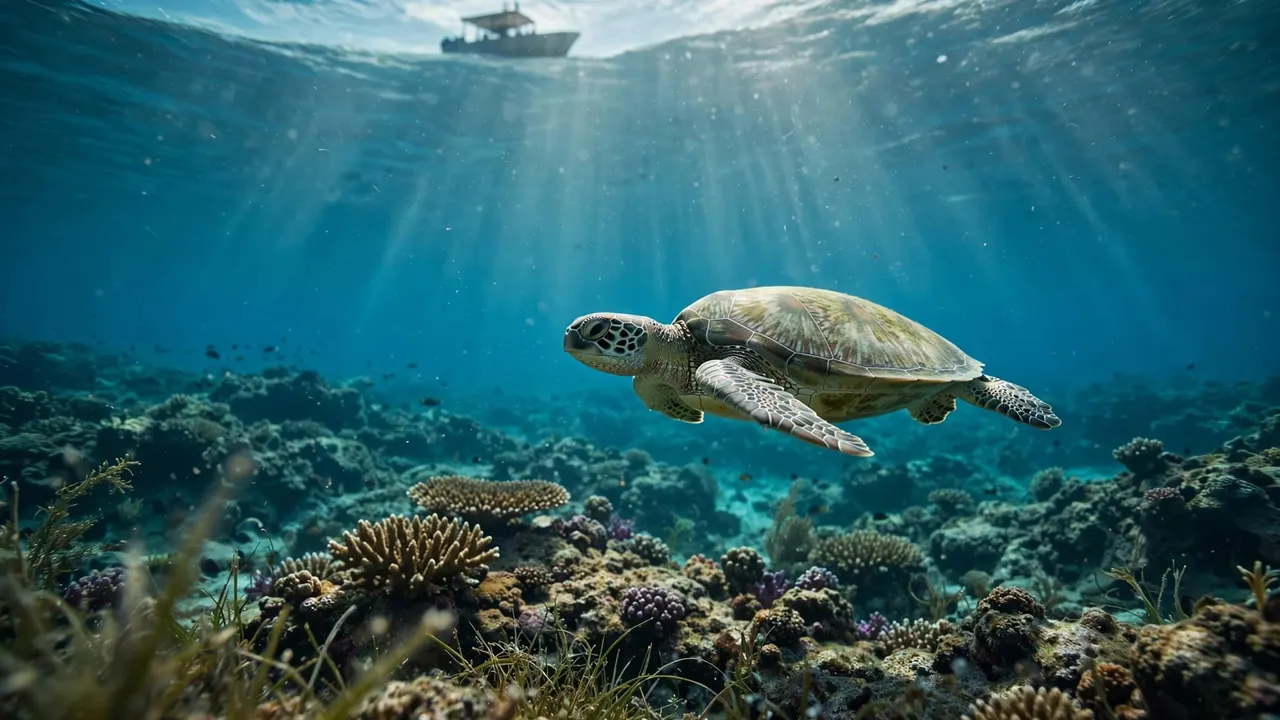
You can hear a boat overhead while snorkeling, but that sound doesn’t tell you what a nearby turtle experiences. At Turtle Canyon Oahu, green turtles can detect underwater sound, although hearing a sound doesn’t automatically mean it causes disturbance.
With Living Ocean Tours, you can explore this Waikiki reef while giving honu, the Hawaiian name for green sea turtles, room to behave naturally. The most useful distinction is between detecting sound and showing a measurable response.
Start with what turtles come here to do, then consider how sound fits into their underwater surroundings.
Key Takeaways
- Juvenile green turtles have responded to underwater tones between 50 and 1,600 Hz in hearing research.
- A hearing response doesn’t establish fear, injury, or a change in natural behavior.
- Boat-noise research elsewhere doesn’t establish what happens at this particular reef.
- Your best viewing habits are calm movement, space around wildlife, and an unobstructed route to the surface.
Turtle Canyon Oahu Is Active Reef Habitat
Understanding the reef helps you interpret what you see. A turtle’s movement makes more sense when you consider its immediate surroundings before assigning a cause.
Cleaning stations explain some slow movements
Turtle Canyon, also called Turtle Canyons, is an offshore reef area near Waikiki. Hawaiian green sea turtles visit natural cleaning stations where small reef fish remove algae and other material from their shells and skin.
You might see a turtle hover above coral while fish gather around it. That slow posture can be part of a cleaning visit. Meanwhile, another turtle may travel through without stopping.
Neither movement gives you a reliable measure of its response to sound.
Surfacing is part of the routine
Green turtles breathe air, so they must leave the reef periodically to reach the surface. A turtle swimming upward may simply be taking its next breath.
Likewise, an animal changing direction could be responding to reef structure, current, another turtle, or approaching swimmers. Keep these ordinary explanations in mind.
NOAA’s green turtle guidance emphasizes respectful observation. Your role is to leave room for those routine movements rather than trying to influence them.
What Green Turtles Can Hear Underwater
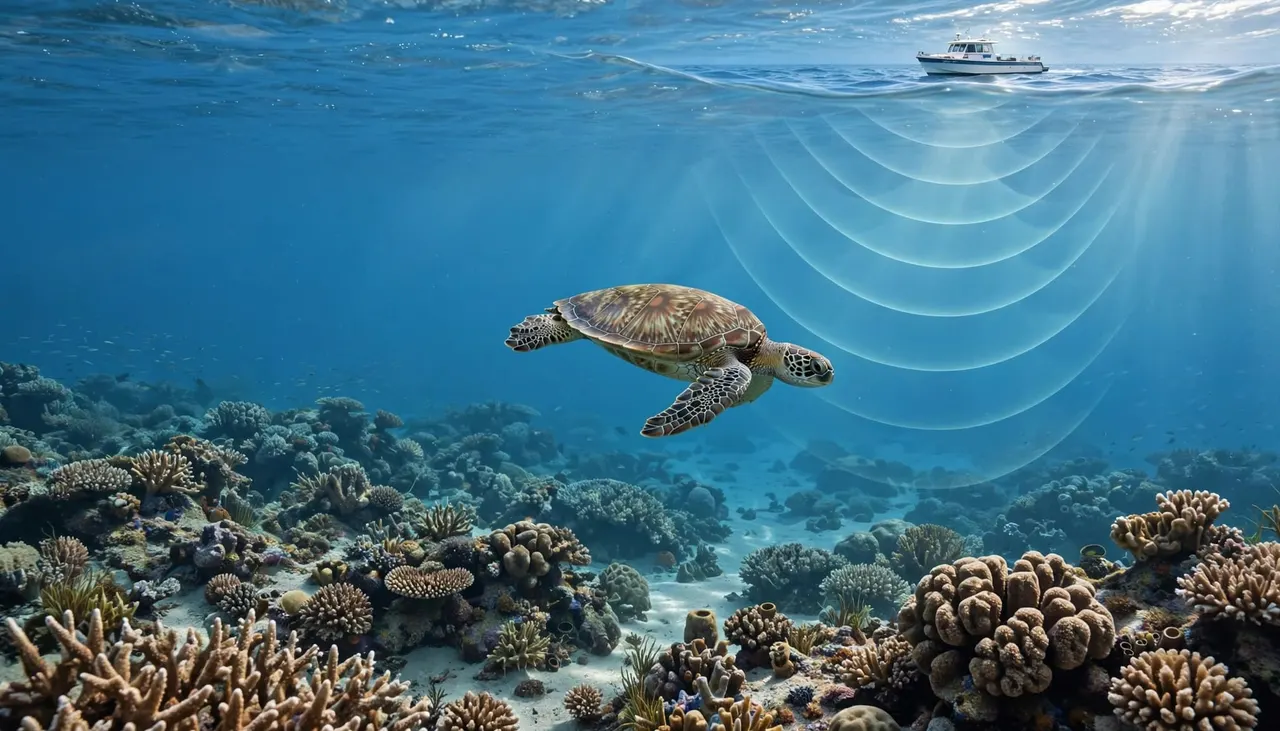
A turtle’s hearing differs from yours. You shouldn’t judge its sound exposure by how loud something seems through your own ears.
Hearing research identifies detectable frequencies
A 2016 study tested five juvenile green sea turtles using auditory evoked potentials. Researchers recorded responses to underwater tones between 50 and 1,600 Hz, with greatest sensitivity around 200 to 400 Hz.
The juvenile green turtle hearing study measured physiological responses to sound. It didn’t establish a universal hearing range for every turtle, regardless of age or setting.
For your visit, the practical point is straightforward: these animals can detect low-frequency underwater sound.
Frequency doesn’t tell you whether noise is harmful
Frequency describes how rapidly a sound vibrates. Sound level describes its strength, while exposure duration describes how long it lasts.
Those are different measurements. A sound within a turtle’s detectable frequency range isn’t automatically harmful or disruptive.
The Discovery of Sound in the Sea explanation describes sea-turtle hearing and its study methods. However, a hearing measurement alone doesn’t tell you whether an animal will leave a cleaning station.
A detectable frequency isn’t a disturbance threshold. Hearing research and behavioral research answer different questions.
The Underwater Sound Environment Isn’t Silent
Even without boats, reef water contains sound. Waves, moving water, and marine animals contribute to an acoustic environment that changes over time.
Vessels add sound through engines, propellers, and movement through water. Some components can overlap frequencies that green turtles detect. However, overlap alone doesn’t establish a behavioral effect.
Distance also matters, but it isn’t the only factor. Water depth, the seabed, and the sound source affect how sound travels. Therefore, a boat’s position on the surface doesn’t give you a complete picture of what reaches a turtle below.
At Turtle Canyon Oahu, you may notice a passing vessel more clearly than the reef’s background sounds. Your perception still isn’t a measurement of the turtle’s exposure.
A surface recording also can’t substitute for measurements made underwater. Sound reaches human ears differently above and below the waterline.
For the same reason, a clip recorded on your phone can’t establish whether a turtle experienced a biologically meaningful change in sound.
What Research Shows About Turtle Responses
The useful question goes beyond whether turtles hear. You also need to distinguish a measured response from an interpretation of that response.
Researchers have observed associations with boat noise
A 2025 sea-turtle study found that two recorded sound types, described as “mono” and “croak,” occurred at rates associated with boat-noise events.
That finding adds information about turtle acoustic behavior. However, it doesn’t establish that boat noise caused a particular response. The study also didn’t determine whether those sounds functioned as communication or what biological purpose they served.
An association can guide further research without proving harm, distress, or a predictable reaction during a snorkel trip.
A single reef encounter can’t establish a cause
When you watch a turtle turn as a boat passes, both events may catch your attention. Their timing alone doesn’t establish that the sound caused the turn.
A stronger conclusion would require underwater sound measurements and repeated behavioral observations. Researchers would also need to account for other influences, including swimmers and conditions.
For Turtle Canyon Oahu, the available research doesn’t establish a site-specific acoustic response. You can still observe movement carefully, but avoid labeling an individual turtle as frightened or unaffected based on one moment.
This distinction matters in both directions. A turtle remaining nearby doesn’t demonstrate that every sound exposure is harmless.
Respectful Viewing at Turtle Canyon Oahu
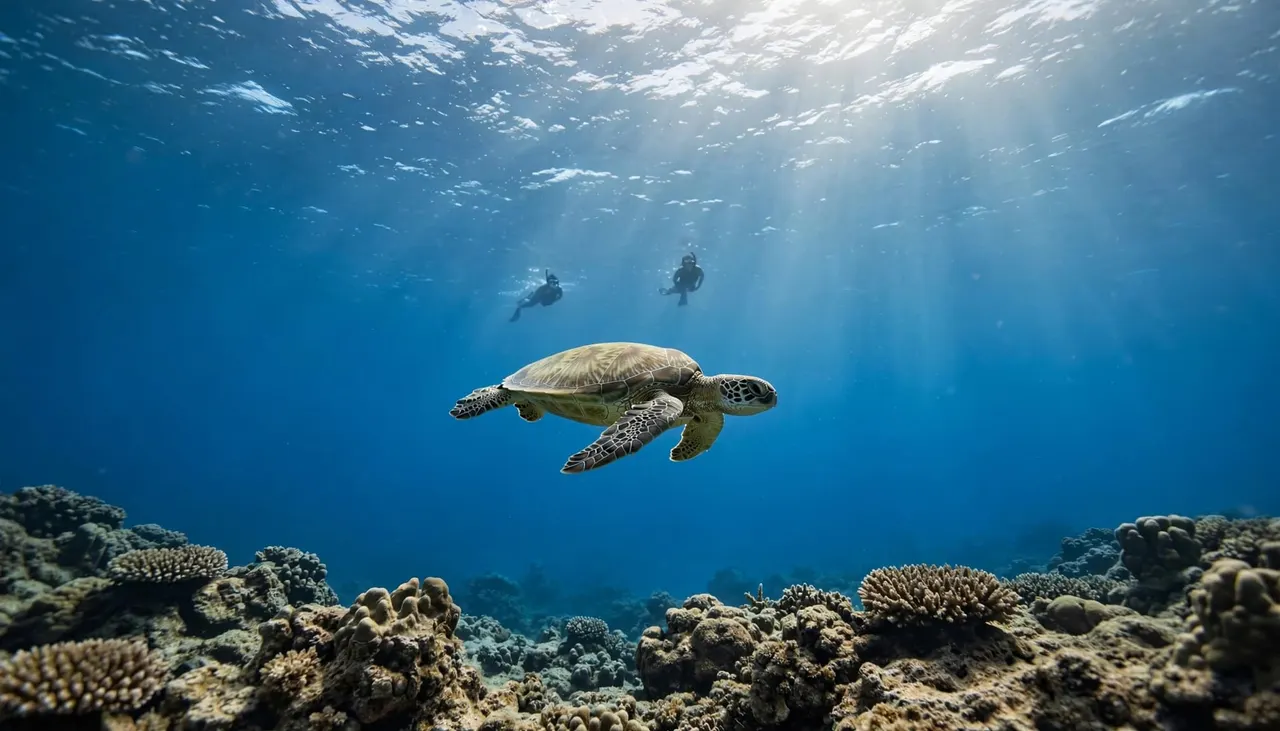
You don’t need to identify a turtle’s hearing response to make considerate choices. Focus on actions that reduce avoidable disturbance and preserve its freedom to move.
Give turtles space to continue their activity
NOAA’s Hawaii wildlife-viewing guidance recommends staying at least 10 feet (3 meters) from sea turtles, both on land and in water.
That distance is viewing guidance, not a legal acoustic limit or a guarantee against disturbance.
Avoid surrounding a turtle or positioning yourself between it and the surface. If it moves toward you, calmly create room without reaching out. Also, let it leave without following closely for another photograph.
Keep your movements controlled
Float comfortably and use gentle kicks rather than repeated splashing. Stay above the reef without standing on coral, and secure equipment so it doesn’t drag.
You shouldn’t use tapping, playback, or other deliberate sounds to attract a turtle or test its reaction. Watching without provoking a response gives the animal more freedom to continue its activity.
Meanwhile, keep listening to your guide’s instructions. Reducing unnecessary disturbance doesn’t mean ignoring safety directions or avoiding communication when you need help.
For families, discuss distance before entering the water. Children can enjoy the encounter without competing to get closest.
Explore the Reef With Our Professional Snorkel Guides
Your attention belongs on the ocean, rather than on unfamiliar equipment. Our guided snorkeling trips provide gear, flotation support, and professional in-water guidance.
At Living Ocean Tours, we’re the only tour company with professional snorkel guides in the water with you. That support helps first-time snorkelers and experienced swimmers stay aware of wildlife, the group, and changing conditions.
You can explore our guided Oahu snorkeling options for outings departing from Kewalo Basin Boat Harbor, minutes from Waikiki.
Our Turtle Canyons Snorkel Excursion focuses on the reef’s natural cleaning-station habitat. You receive guidance that supports comfortable snorkeling and respectful observation.
We report a 95% turtle-sighting success rate. That describes sightings, not a promise about how a turtle will behave around underwater noise.
For a wildlife-focused visit to Turtle Canyon Oahu, you can CHECK AVAILABILITY for our turtle snorkel excursion.
Frequently Asked Questions About Turtle Hearing
Does a turtle staying nearby mean noise doesn’t bother it?
A nearby turtle gives you an opportunity to observe, but its presence doesn’t establish how it experiences sound. It may continue a cleaning visit or another activity for reasons you can’t identify from the surface.
Likewise, a turtle leaving doesn’t establish that noise drove it away. Keep your observations descriptive: the animal surfaced, turned, or continued swimming. Those details are more accurate than assigning an emotion or acoustic cause.
Should you avoid making any sound while snorkeling?
You don’t need complete silence to snorkel responsibly. Speak when you need assistance, and follow safety instructions promptly.
Instead, avoid unnecessary splashing, deliberate underwater noise, and attempts to attract wildlife. Keep your distance and allow turtles to move freely.
Also, don’t use your own discomfort with a sound as a measure of a turtle’s hearing. Your ears, position in the water, and sensitivity differ from the animal’s.
Let the Turtle Set the Pace
Green turtles can hear underwater, but a visible movement doesn’t tell you what caused it. The strongest approach combines accurate science with respectful observation.
Give honu room to clean, breathe, and leave. Follow your guide, keep your movements calm, and enjoy the reef without trying to trigger a reaction.
The memorable encounter is one you can appreciate while the turtle continues its own routine.


