
Turtle Canyon Oahu: Understanding Turtle Skin Shedding
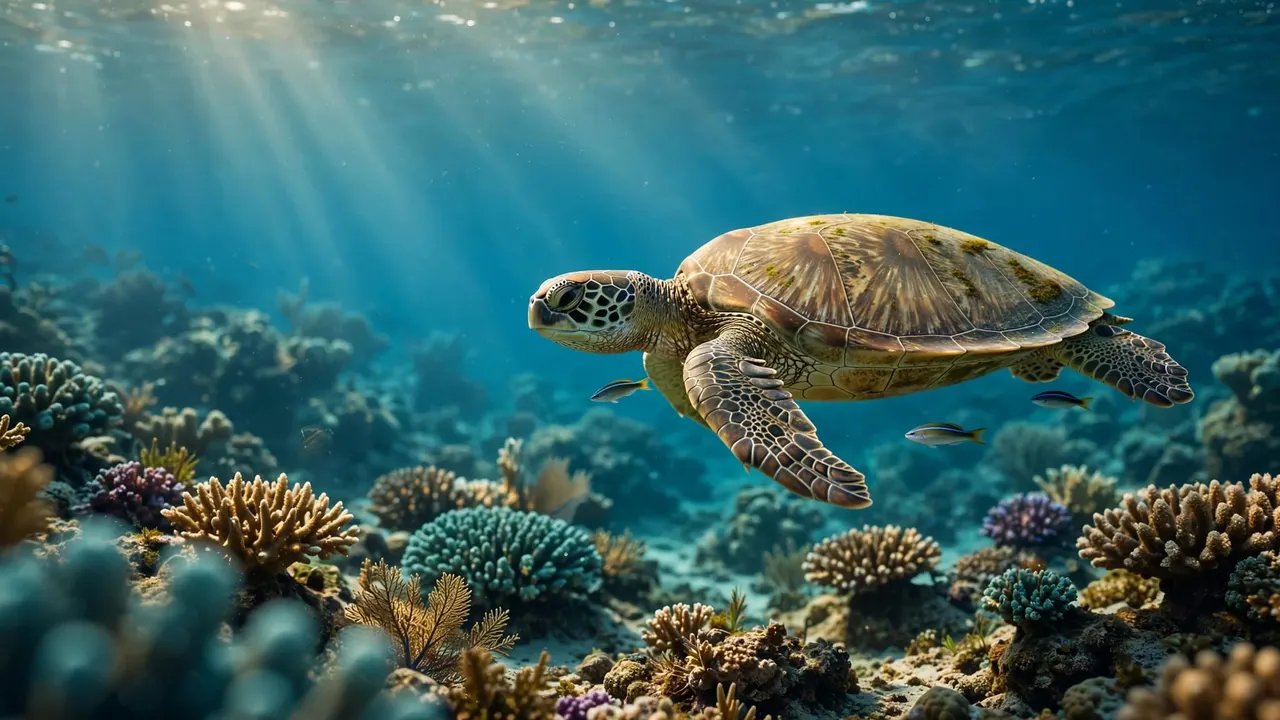
A flaky patch on a sea turtle can catch your attention faster than the reef around it. At Turtle Canyon Oahu, you may notice loose material on a honu and wonder whether it’s shedding skin.
Living Ocean Tours brings you from Kewalo Basin Boat Harbor near Waikiki to observe turtles in their natural habitat. The most useful skill you can bring is careful observation, because appearance alone doesn’t reveal what’s happening to a turtle’s skin.
Start with the difference between skin, shell surfaces, and the cleaning activity unfolding around them.
Key Takeaways
- General reptile skin renewal doesn’t establish why a particular Hawaiian green turtle appears to have peeling material.
- A turtle’s skin and the scutes covering its shell are different structures, so shell flakes don’t prove skin shedding.
- Cleaner fish may remove algae and other material, but their presence doesn’t establish a turtle’s health.
- Keep at least 10 feet away, leave turtles an open route to breathe, and tell your guide about injuries or entanglement.
What Turtle Canyon Oahu Reveals About Honu
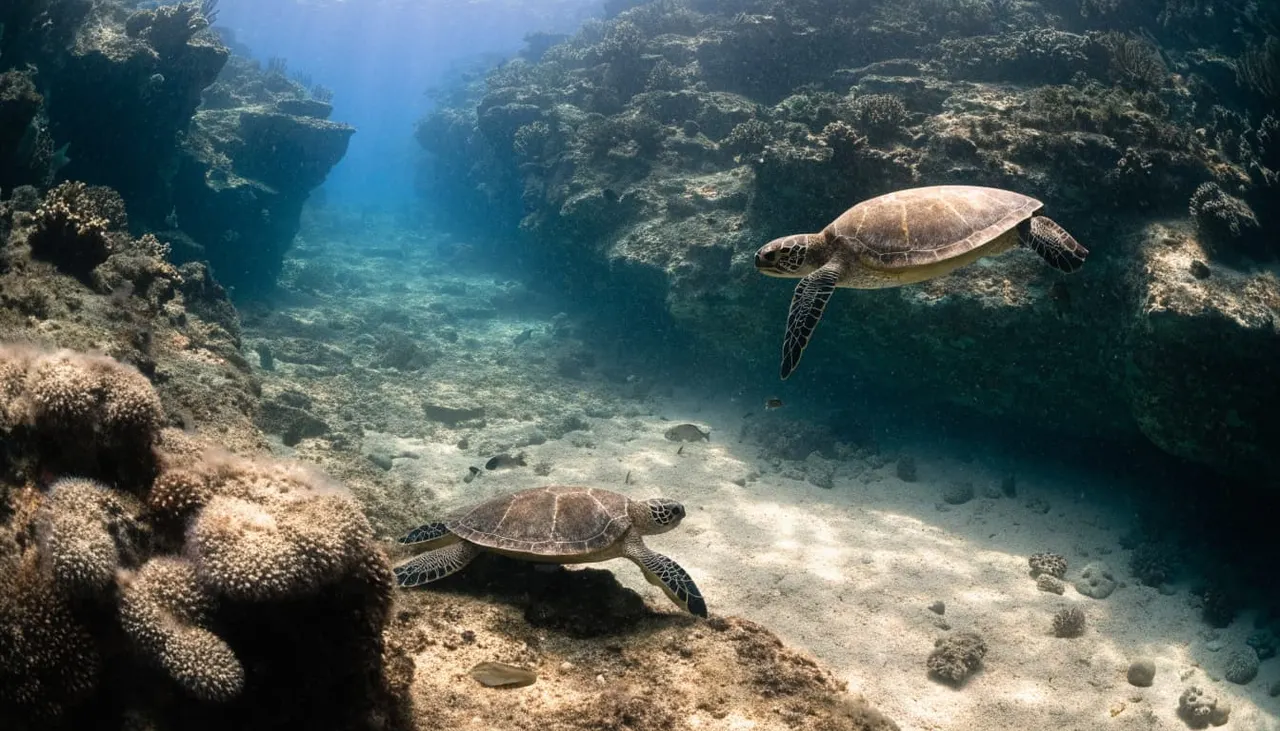
A cleaning station brings different animals together
Turtle Canyons is an offshore Waikiki reef where Hawaiian green sea turtles may visit natural cleaning stations. Here, small reef fish pick algae and other material from turtles’ shells and skin.
You may see a turtle pause while fish approach, then move away without warning. That interaction gives you a view of reef life, but it doesn’t tell you whether the turtle is shedding.
The turtles you encounter are green turtles, Chelonia mydas, commonly called honu in Hawaii. NOAA’s green turtle species profile describes these marine reptiles and their largely plant-based adult diet.
Every turtle follows its own routine
Several turtles using the same reef aren’t necessarily traveling together. One may rest near a ledge while another passes through or rises for air.
Because green turtles breathe with lungs, every underwater visit eventually requires a return to the surface. Their movements reflect several needs, not a single visible process.
At Turtle Canyon Oahu, a quiet pause can offer an excellent wildlife-viewing moment. However, hovering alone doesn’t prove that a turtle is sleeping, receiving cleaning, or renewing its skin. Watch the whole scene rather than assigning a cause to one behavior.
Why the Skin-Shedding Question Needs Care
General reptile biology has limits
Reptiles periodically replace outer skin material. That broad biological fact doesn’t establish a sea-turtle-specific explanation for visible peeling on Hawaiian green turtles.
Through a snorkel mask, you may notice a pale edge or drifting fragment. However, you usually can’t identify its composition, thickness, or origin with confidence.
A simple claim that a green turtle is “shedding because it’s growing” goes beyond what a brief underwater encounter can establish. Likewise, you shouldn’t describe visible peeling as automatically normal.
At Turtle Canyon Oahu, your view offers clues about appearance and behavior. It doesn’t provide a skin examination or a confirmed explanation for loose material.
Skin and shell scutes aren’t interchangeable
The upper shell is the carapace. Its visible plates are scutes, which contain keratin, the structural protein also found in human nails.
Skin around the neck and flippers differs from those shell coverings. Therefore, material lifting from a shell surface isn’t enough to identify skin shedding.
You also shouldn’t apply shell-shedding advice for freshwater pet turtles directly to wild sea turtles. Species differ, and an aquarium care discussion doesn’t establish what’s happening on a Hawaiian reef.
Keep the distinction simple: where material appears matters, but location alone still doesn’t identify the process behind it.
Read Visible Changes Without Making a Diagnosis
Texture doesn’t tell the whole story
A shell can carry algae and other attached material. Underwater light, movement, and viewing distance can also make surface details difficult to interpret.
Rather than deciding that a turtle is healthy or sick from a patch, notice what you can describe. Watch whether it swims, turns, or moves toward the surface without an obvious obstruction.
A veterinarian’s discussion of turtle skin sloughing distinguishes more substantial skin loss from simple surface changes and discusses medical causes. That distinction supports caution, not a diagnosis of a turtle you see while snorkeling.
Report a concern your guide can assess
Fishing line wrapped around a flipper, an open wound, or obvious difficulty swimming deserves your guide’s attention. Describe the location and what you observed rather than naming a disease.
For example, the position of visible fishing line is more useful than a guess about why the turtle looks uncomfortable. If you already have a photograph taken from a respectful distance, it may help document the concern.
Don’t approach for a closer inspection or attempt to remove anything. An intervention can put both you and the turtle at risk. Your guide can help direct the observation to an appropriate wildlife responder.
Watch Turtles Without Interrupting Their Routine
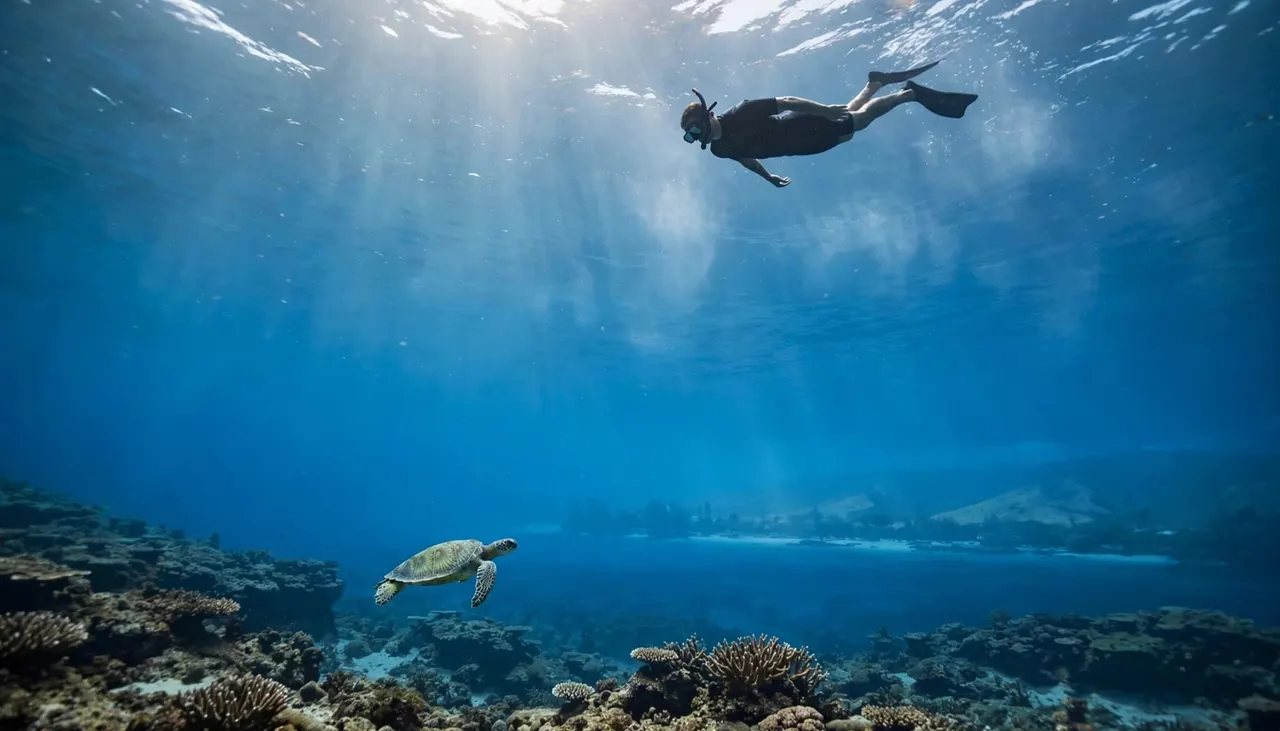
A good view doesn’t require a close approach. NOAA’s Hawaiian honu safety guidance supports responsible viewing that protects turtles’ normal activities.
Keep at least 10 feet, or 3 meters, between yourself and a sea turtle. Because an animal can turn or rise unexpectedly, pay attention to the open water around it.
- Float calmly and use slow, controlled fin movements.
- Leave a clear route between each turtle and the surface.
- Never touch, feed, chase, surround, ride, or block a turtle.
- Keep your fins and equipment away from coral.
If a turtle approaches, stay calm and avoid reaching toward it. Give it room to pass, and follow your guide’s direction about creating more space.
A cleaning station also needs room around the fish and reef. Crowding the turtle can interrupt the interaction you came to watch.
For families, practice these expectations before entering the water. Children can enjoy noticing fish and turtle movements without trying to get closer. Meanwhile, couples can share the experience without positioning themselves on opposite sides of an animal for a photograph.
Plan a Guided Turtle Canyon Oahu Snorkel
Living Ocean Tours supplies snorkeling gear and knowledgeable guides for its Turtle Canyons experience. The company describes itself as the only tour company with professional snorkel guides.
That guidance gives you someone to ask about reef behavior and someone to alert when you notice a concern. However, your guide’s presence doesn’t replace respectful distance or make ocean conditions predictable.
You can explore Living Ocean Tours departures when planning your Waikiki visit.
For a turtle-focused outing, review the Turtle Canyons snorkeling options. You can CHECK AVAILABILITY for the Turtle Canyons Snorkel Excursion when choosing your departure.
You are visiting wild habitat. Turtle arrivals, visibility, and cleaning activity depend on the animals and ocean conditions, so avoid planning around a guaranteed scene.
Prepare to Observe More Than a Flaky Patch
Before entering the water, tell the crew about your swimming experience and comfort level. Ask for help with mask fit and follow the entry instructions.
A comfortable mask lets you spend more time watching rather than adjusting equipment. However, don’t reach for the reef while fixing a leak or taking a break. Ask your guide for assistance instead.
Once you’re floating, look beyond the turtle’s surface. Notice the fish approaching its shell, the reef ledges below, and the direction of its next movement.
At Turtle Canyon Oahu, these observations offer more useful context than concentrating on a single patch. You can enjoy the encounter even when you never see loose material.
If you bring a camera, keep it secure and photograph the scene from your existing position. Don’t descend toward a turtle to document its skin. A wider view can preserve the reef setting and the animal’s behavior without encouraging a closer approach.
Frequently Asked Questions
Does a peeling shell mean a turtle is shedding skin?
A peeling-looking shell doesn’t prove skin shedding. The shell’s scutes and the skin around the neck and flippers are different structures.
From the surface, you may also struggle to distinguish loose shell material from algae or other attached matter. You shouldn’t treat a raised edge as proof of normal shedding or disease.
Instead, keep your distance and ask your guide about what you’re observing. An accurate description is more useful than a confident diagnosis based on appearance.
Can you help by removing loose material?
You shouldn’t remove material from a wild turtle, even if it appears easy to reach. Touching can disturb the animal, and you can’t establish whether that material is harmless debris, attached tissue, or something else.
NOAA’s Pacific Islands sea turtle FAQs provide background on these protected animals and their behavior.
If you see entanglement or an injury, alert your guide. Reporting the concern while leaving the animal space is the appropriate response for a snorkeler.
Let Honu Keep Their Natural Routine
A flaky patch can spark curiosity, but it can’t explain a turtle’s skin condition by itself. At Turtle Canyon Oahu, patient observation gives you a better understanding of the reef than a closer inspection would.
Enjoy the cleaner fish, the slow swimming, and each unhurried return to the surface. Leave every honu room to continue its routine, and let your lasting memory be the encounter rather than an unsupported diagnosis.


