
Turtle Canyon Oahu: How to Identify Remoras
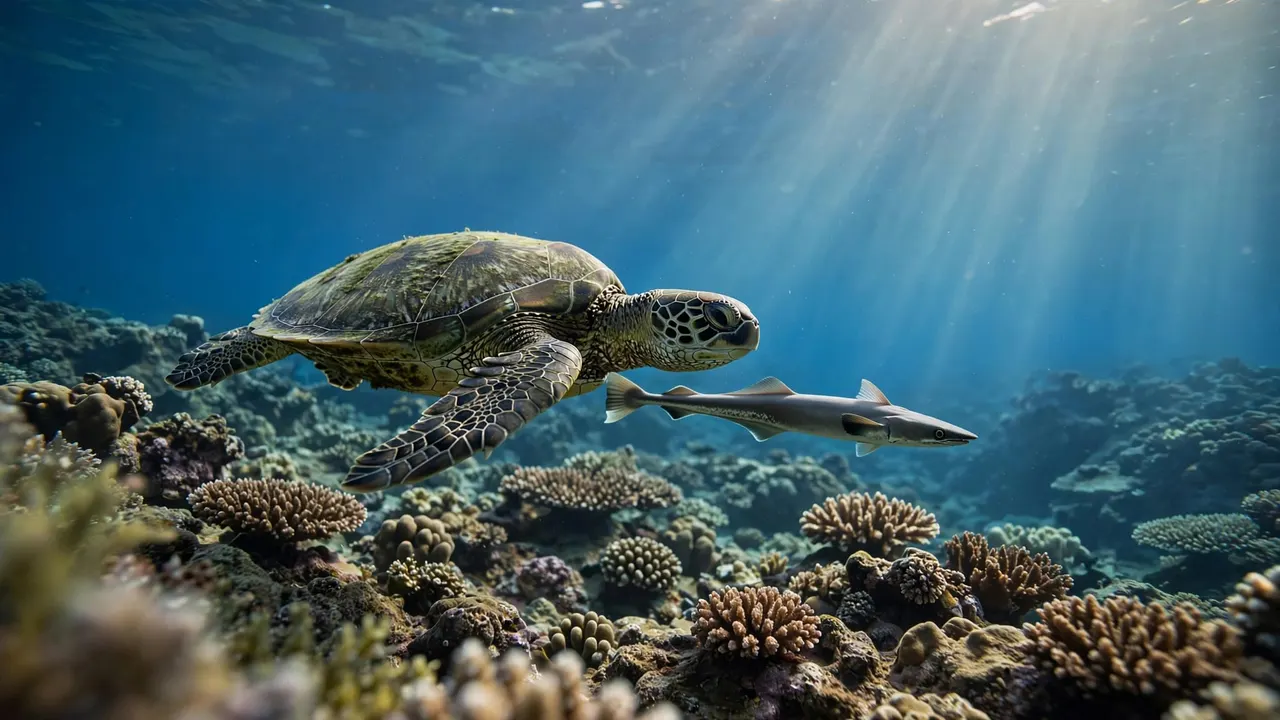
You notice a fish beside a green sea turtle, but the turtle’s shadow makes identification harder than expected. At Turtle Canyon Oahu, Living Ocean Tours brings you to offshore Waikiki reef habitat where patient observation helps you notice more than the honu itself.
A nearby fish isn’t automatically a remora, and one distant glimpse rarely gives you enough detail for a confident identification. Professional in-water guidance helps you separate what you saw from what you assumed.
Start with the turtle’s surroundings, then follow the individual fish without moving closer to the wildlife.
Key Takeaways
- A fish swimming beside a turtle doesn’t, by itself, confirm a remora sighting.
- Track one fish long enough to observe its outline, position, and movement, then ask your guide about identification.
- Cleaning activity at Turtle Canyon involves reef fish, but observing that activity doesn’t establish every nearby fish’s identity.
- Keep at least 10 feet (3 meters) from sea turtles, and never chase a fish for a clearer view.
Why Turtle Canyon Oahu Rewards a Slower Look
Turtle Canyon, also called Turtle Canyons, is reef habitat offshore from Waikiki. Hawaiian green sea turtles, known locally as honu, may visit natural cleaning stations where small reef fish pick material from their shells and skin.
That activity gives you several things to watch at once. A turtle might pause over the reef while fish approach, retreat, or disappear behind its body. Meanwhile, another turtle may swim through the same area without stopping.
Because the scene changes, you need to keep track of individual animals. Several fish around one turtle can blur together when you’re watching through a mask at the surface.
Give yourself time to distinguish the turtle’s outline from the fish around it. Then choose one fish to follow with your eyes.
The reef is wild habitat, so turtles decide when to arrive, surface, and leave. Remora sightings aren’t guaranteed, and a successful outing doesn’t depend on identifying every fish you see.
Check a Possible Remora at Turtle Canyon Oahu
Start With an Unobstructed View
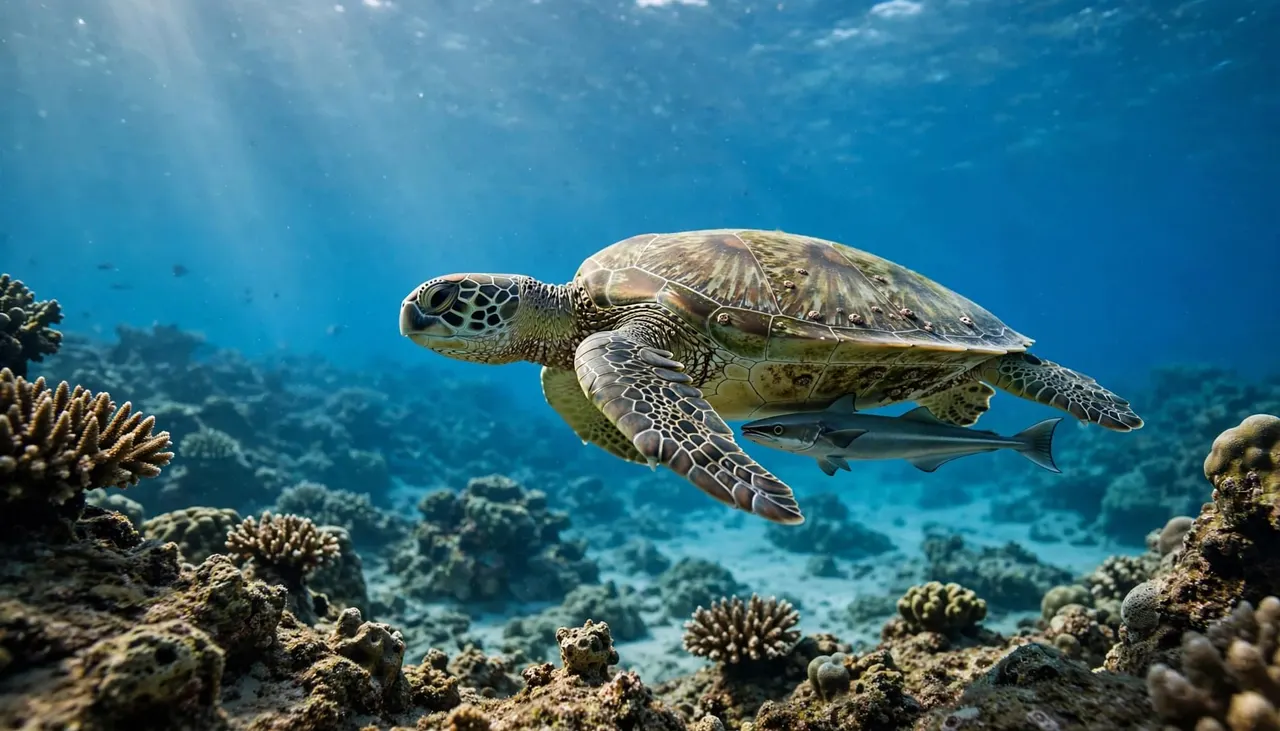
Before naming the fish, check whether you can distinguish its head, body, and tail. A partial outline beneath a turtle gives you less information than a clear side view.
Notice whether the fish looks long or compact, whether its outline stays visible, and whether you can separate it from shadows. These observations help you describe the animal; they don’t establish its species.
At Turtle Canyon Oahu, the safest improvement often comes from waiting for the animals to change position. Stay with your group rather than swimming underneath a turtle to inspect something hidden.
If the view remains unclear, keep the identification open. An uncertain sighting is still worth discussing with your guide.
Follow One Fish Through the Scene
Keep your eyes on the same fish for several moments. Otherwise, you may combine the appearance of one animal with the behavior of another.
Watch whether it stays beside the turtle, moves toward the reef, or disappears behind the shell. Also note whether it returns to your view or whether a different fish enters the scene.
Once you’re back at the surface or aboard, describe those observations to your guide. Ask which visible features support a remora identification and which details remain uncertain.
A useful description is more informative than a confident guess. Your guide can assess what you observed without asking you to approach the turtle again.
Separate Cleaning Activity From Fish Identity
Recognize the Cleaning-Station Setting
At a cleaning station, reef fish may pick algae and other material from a turtle’s shell and skin. You can watch that interaction while the honu rests or moves slowly above the reef.
However, the setting doesn’t identify every fish nearby. A fish passing through the same patch of water isn’t necessarily participating in the cleaning activity.
Pay attention to what each animal does. Brief contact with the shell, repeated approaches, and swimming past are different observations.
You don’t need to label every interaction immediately. First notice the sequence, then discuss it with your guide when you can communicate comfortably.
Avoid Naming a Fish by Its Location Alone
A fish beneath a turtle can be difficult to see because the turtle blocks your view. Likewise, a fish alongside the shell may appear closer to the animal than it is.
Perspective matters underwater. From above, two animals can overlap visually even when there is space between them.
A fish disappearing behind a turtle doesn’t prove it attached to the turtle. You may simply have lost your viewing angle.
Treat “beside,” “below,” and “behind” as descriptions of what you saw. Those words are useful when reviewing a sighting, but they aren’t a species identification.
Make Your Underwater Photos Useful
Capture Context Before Zooming In
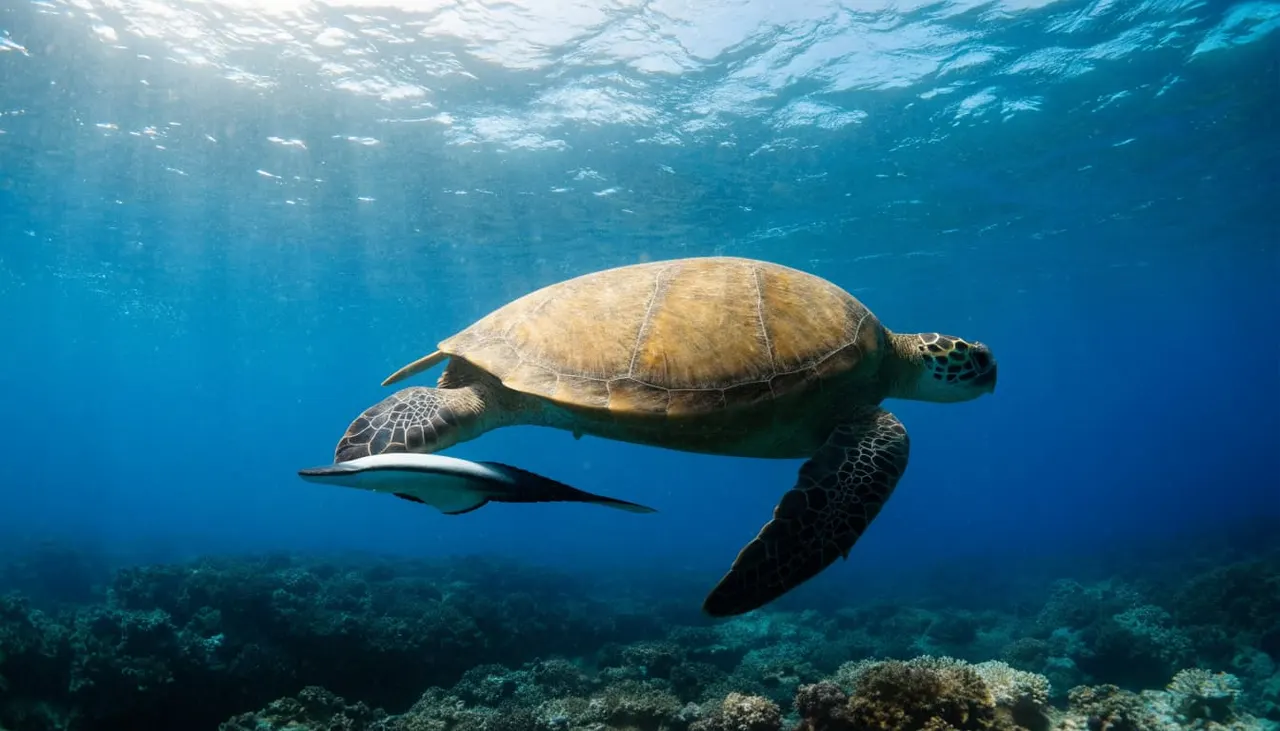
If you carry an underwater camera, start with a wider view showing the turtle, nearby fish, and surrounding reef. That context helps you remember where the fish appeared.
Then, if conditions allow, record a short video from your existing position. Movement can reveal whether you’re following one fish or watching several animals cross the frame.
Keep your camera close to your body. Don’t extend it toward a turtle or swim across the animal’s route to improve the composition.
A distant but steady recording can be more useful than a close, blurred image. Most importantly, filming shouldn’t distract you from your guide or the boat.
Review What the Image Shows
After your Turtle Canyon Oahu outing, inspect the original photo before enlarging it. Heavy cropping can make a small, unclear shape look more convincing without adding information.
Check whether the head and tail are visible. Also look for overlapping animals, reflected light, and areas hidden behind the turtle.
When asking for help, share the uncropped image and describe the fish’s movement. If you recorded video, include the moments before and after your chosen frame.
Keep a tentative identification tentative. A photograph that doesn’t show enough detail is a record of the encounter, not proof of a particular species.
Give Honu Space While You Watch
Hawaii’s Department of Land and Natural Resources lists 10 feet (3 meters) as the current federal public-viewing guideline for sea turtles. Follow its sea turtle viewing guidance and any additional instructions from your crew.
That distance applies even when you’re interested in a fish near the turtle. Your identification project doesn’t justify closing the gap.
Stay clear of the turtle’s route to the surface. Honu breathe air, so leave room for an animal to rise without passing through a circle of snorkelers.
If a turtle approaches, avoid reaching toward it. Follow your guide’s directions and give it room to continue moving.
Also keep your fins away from coral and other snorkelers. A rushed turn can disturb the reef or bring you closer to wildlife than intended.
When visibility changes, shorten your attention span on the camera rather than losing track of your surroundings. Your guide and group remain your first reference points.
Respectful viewing lets you watch an animal’s routine without forcing a response. If a fish disappears, let the sighting end instead of pursuing it.
Plan a Guided Turtle Canyon Oahu Visit
Living Ocean Tours departs from Kewalo Basin Boat Harbor, near Waikiki. You can explore its guided snorkeling and ocean experiences while planning your time on the water.
The company provides snorkeling gear and knowledgeable guides. Its Turtle Canyons listing welcomes different skill levels, while flotation support and in-water guidance help you manage unfamiliar equipment.
Living Ocean Tours describes itself as Oahu’s only tour company with professional snorkel guides. For beginners and families, that support gives you someone to ask about wildlife, equipment, and conditions.
Review guest experiences as you choose your outing:
Before entering the water, tell your guide you’re interested in identifying fish near turtles. Also mention any concerns about your mask, breathing through a snorkel, or keeping up with the group.
For a turtle-focused departure, CHECK AVAILABILITY before arranging the rest of your day.
You can also check the company’s broader booking calendar:
Frequently Asked Questions
Does every green turtle have a remora nearby?
Don’t expect a remora with every turtle. Turtle Canyon Oahu is wild reef habitat, and neither a turtle encounter nor a particular fish sighting is guaranteed.
Can you confirm a remora from one photograph?
Only if the photograph provides enough useful detail for identification. Share the original image with your guide, and avoid treating a blurred silhouette as confirmation.
Should you swim closer when a fish is hidden?
Keep your distance and wait for a clearer view. NOAA’s marine-life viewing guidelines advise observing animals respectfully without approaching or touching them.
Can first-time snorkelers enjoy watching these interactions?
Yes, provided you’re comfortable with the equipment and follow your crew’s directions. Ask for help early so you can concentrate on the reef without struggling with your mask or snorkel.
Leave With a Better Observation
At Turtle Canyon Oahu, identifying a possible remora starts with a clear view and an honest description. Follow one fish, preserve useful photo context, and ask your guide before turning a guess into a confirmed sighting.
Keep wildlife space ahead of your camera or curiosity. Even when the fish remains unidentified, watching a honu follow its natural routine is a worthwhile encounter.


