
Turtle Canyon Oahu: Reef Terms for First-Time Visitors
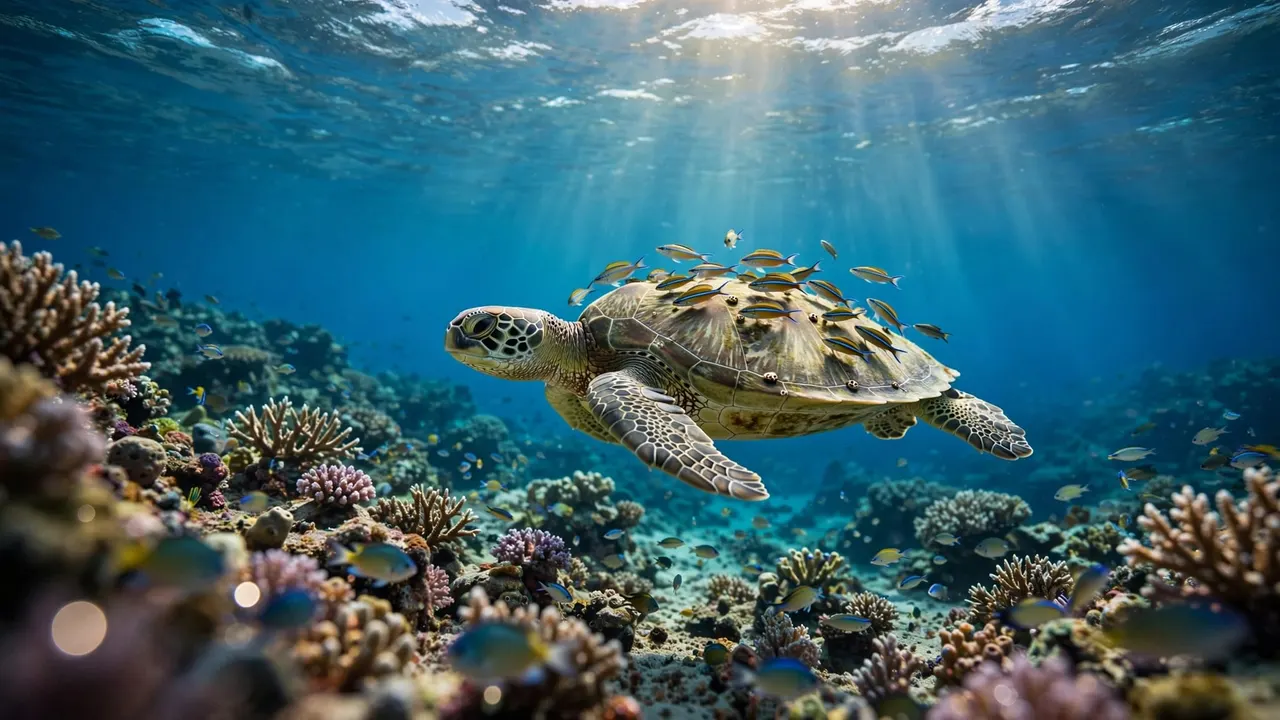
You can spot a turtle and still miss the fascinating interaction happening around it. Before your Turtle Canyon Oahu trip, a few reef terms help you recognize what you’re seeing without needing a marine biology textbook.
Living Ocean Tours welcomes first-time snorkelers, families, and ocean-loving couples exploring the waters near Waikiki. Your most useful preparation is learning how to read the reef while leaving its wildlife undisturbed.
Start with the place itself, then learn the words your guide may use above and below the surface.
Key Takeaways
- Turtle Canyon, also called Turtle Canyons, is an offshore reef area near Waikiki that you visit by boat.
- Coral is made up of living animals, while a reef includes the larger underwater habitat.
- A cleaning station is a place where fish remove material from another animal’s outer surfaces.
- Hawaii’s sea turtle viewing guidance recommends staying at least 10 feet away.
- Visibility, current, and depth describe different conditions, so ask your crew what each means for your outing.
Finding Your Bearings at Turtle Canyon Oahu
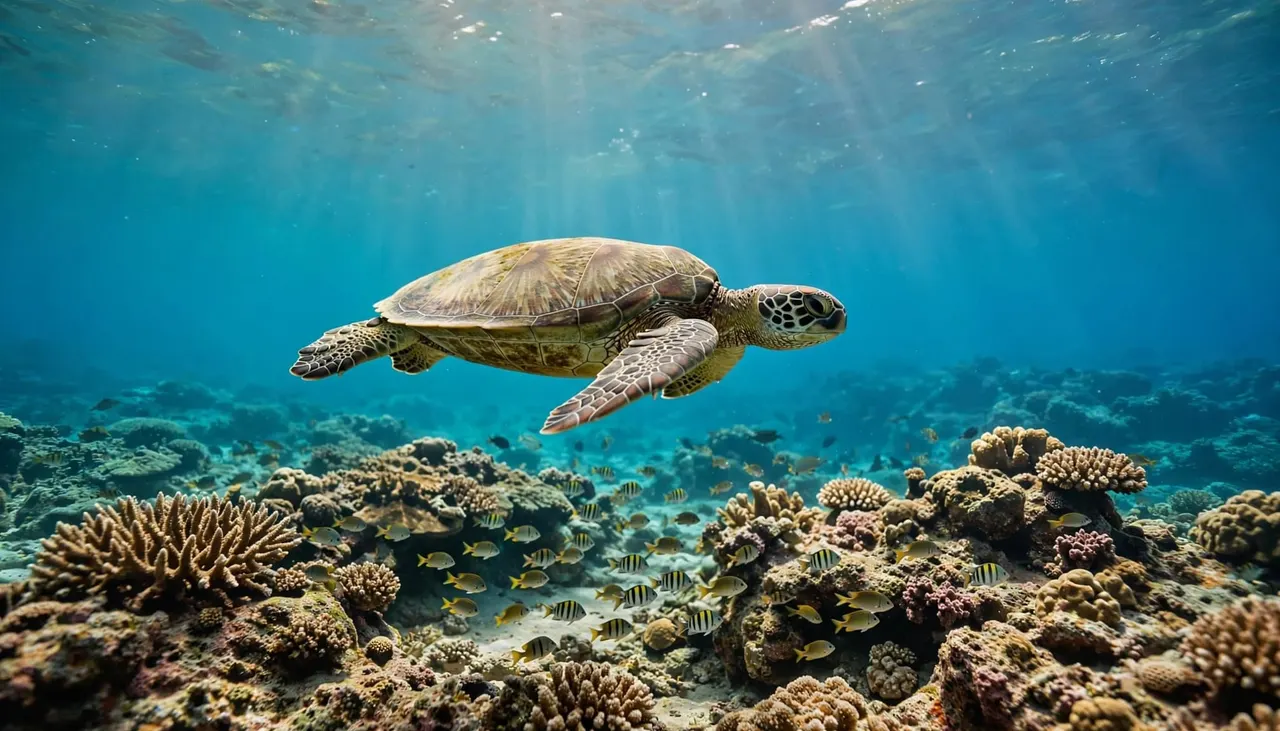
Turtle Canyon is an offshore snorkeling destination near Waikiki, rather than a beach where you walk directly into the water. For your first visit, plan a boat excursion instead of attempting an offshore swim.
You’ll also hear the name “Turtle Canyons.” Both names refer to the snorkeling destination, but neither gives you a complete geological description. The name alone doesn’t establish how its underwater contours formed.
Your guide may describe wildlife activity or point toward an underwater feature. Understanding that vocabulary helps you follow along without assuming every feature is visible on every outing.
Most importantly, you’re visiting wild habitat. Turtles move according to their own routines, and no encounter is guaranteed. You can enjoy the reef from the surface without diving down or approaching animals for a closer look.
Coral, Polyps, and the Reef Around Them
Coral is an animal
A coral polyp is a small animal with a mouth surrounded by tentacles. Many reef-building corals live in colonies, where numerous polyps contribute to a shared structure.
Hard corals produce calcium carbonate skeletons. Over time, those skeletons can contribute to reef construction. However, the hard appearance doesn’t make living coral safe to stand on or handle.
Many shallow-water corals also contain microscopic algae within their tissues. Those algae use sunlight to produce energy that helps support the coral.
When you hear “coral colony,” picture the connected group of animals. A “coral head” usually describes a distinct coral formation, rather than one individual polyp. You don’t need to identify its species to recognize that it deserves space.
A reef is the wider habitat
“Coral” and “reef” aren’t interchangeable. A reef includes underwater structure and the habitat around it, with living organisms using different parts.
Fish may move through open water, hide near shelter, or feed along surfaces. Meanwhile, turtles can pass through the same habitat without using it in exactly the same way.
On your Turtle Canyon Oahu visit, look beyond the largest animal in view. Watching the surrounding fish helps you notice how much activity happens within a small area.
Keep your fins clear of every surface, including anything that appears rocky or lifeless. Small organisms aren’t always easy to see.
Ledges, Channels, and Open Water
Words that describe underwater terrain
A ledge is an underwater shelf or projecting edge. A sandy channel is an opening or passage between surrounding formations. Neither term tells you whether that area is suitable for swimming.
Similarly, “drop-off” describes a change toward deeper water. It doesn’t automatically mean a vertical wall, and it isn’t an invitation to leave your group.
These words describe shapes, not permission to explore independently. Your guide can explain which features are visible and where you should remain during your visit.
This distinction matters because unfamiliar terrain can draw your attention away from the boat and your companions.
Words that describe your viewing area
You’ll hear “water column” when someone means the water between the surface and the bottom. A fish swimming above the reef is moving through that water column.
“Benthic” means associated with the bottom. Corals and many other reef organisms occupy benthic habitat, while a passing turtle may move above it.
For snorkeling, you can translate those terms into a simple viewing habit: notice the open water, then look toward the bottom without changing your position.
However, don’t reach into holes or investigate hidden spaces with your hands. Observe from above and let your guide help identify unfamiliar life.
Cleaning Stations, Honu, and Symbiosis
What happens at a cleaning station
A cleaning station is a place where animals visit fish or other organisms that remove material from their outer surfaces.
At Turtle Canyon, green sea turtles may pause while small reef fish pick at their shells or skin. You might notice fish staying close while the turtle holds a relatively steady position.
That behavior differs from a turtle swimming past or feeding. Watch the interaction before deciding what the animal is doing.
Your Turtle Canyon Oahu experience becomes more interesting when you notice these details. Still, a turtle can leave at any time, and fish gathering nearby doesn’t guarantee a cleaning interaction.
What honu and symbiosis mean
“Honu” is the Hawaiian name for the green sea turtle. Hawaii’s Division of State Parks identifies the green turtle as the most commonly seen sea turtle in Hawaiian waters.
“Symbiosis” describes a close relationship between different species. “Mutualism” is a type of relationship in which both participants benefit.
Cleaning interactions can benefit the turtle through material removal and the fish through access to food. However, every fish beside a turtle isn’t necessarily cleaning it.
Give yourself time to observe. A few calm moments often reveal more behavior than swimming closer would.
Visibility, Depth, Current, and Swell
Visibility isn’t the same as depth
Visibility describes how far you can see through the water. Depth describes the distance between the surface and the bottom at a particular location.
Clear water can make objects appear deceptively close. Meanwhile, suspended particles can reduce visibility without changing the actual depth.
Use these distinctions when discussing your comfort with the crew.
| Term | Meaning | Your practical response |
|---|---|---|
| Visibility | How far you can see underwater | Keep track of your guide and group. |
| Depth | Distance below the surface | Follow the designated snorkeling area. |
| Current | Water moving in a direction | Follow the crew’s positioning instructions. |
| Swell | Waves traveling through the ocean | Ask how conditions affect entry and exit. |
The useful takeaway is that one favorable condition doesn’t describe the whole outing. Your crew assesses the combination.
Current and swell affect different things
A current moves water in a direction. Swell involves traveling waves, which can affect how the surface and boat move.
Neither condition needs to look dramatic to matter to a beginner. Because you’re also managing unfamiliar equipment, tell the crew if you feel uneasy.
Before your Turtle Canyon Oahu outing, ask about the day’s conditions rather than relying on a photograph or another visitor’s experience.
Once you’re aboard, listen for instructions about boundaries and returning to the boat. If you become uncomfortable, signal your guide early instead of trying to solve the problem alone.
Wildlife Etiquette Is Part of Reef Literacy
Give turtles room to move and breathe
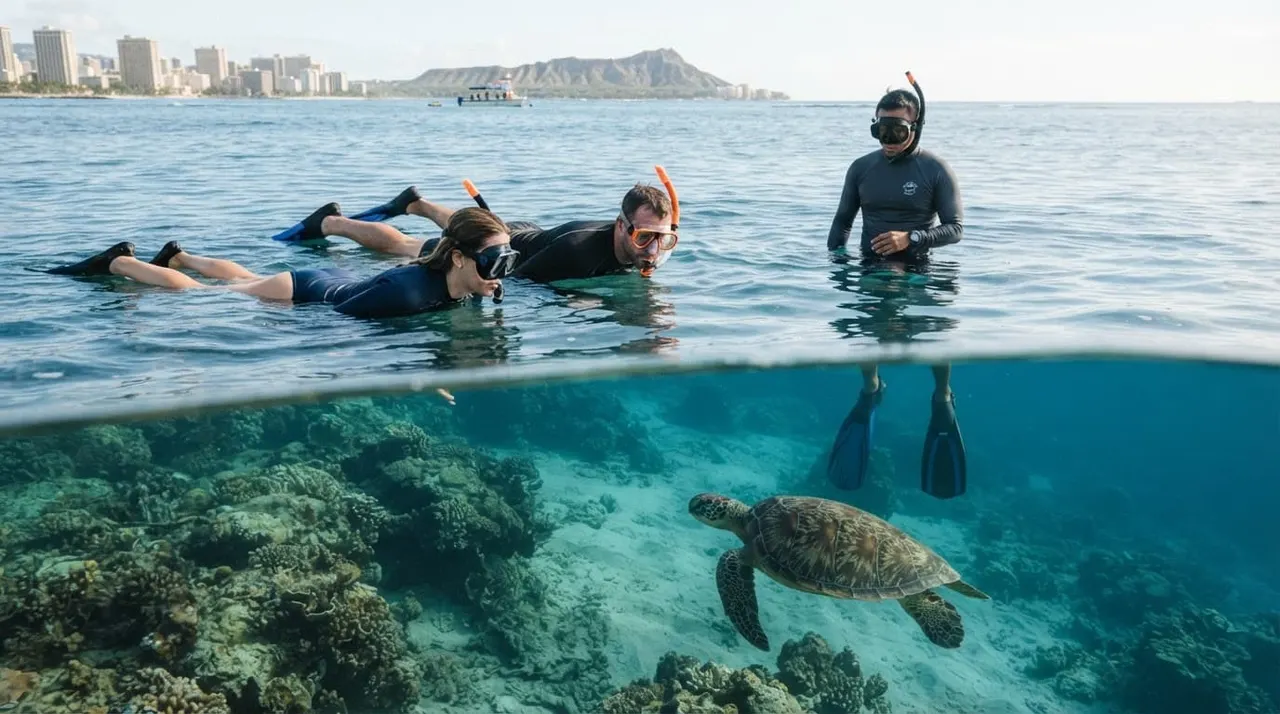
Hawaii’s Department of Land and Natural Resources reports a recommended sea turtle viewing distance of 10 feet, or 3 meters. Treat that as your starting point for respectful observation.
Green turtles breathe air, so they need an unobstructed route to the surface. Avoid positioning yourself directly above a turtle or surrounding it with other swimmers.
A turtle rising beneath you needs room to breathe. Give it a clear route rather than staying overhead for a photograph.
If an animal approaches, calmly create space and follow your guide’s instructions. Never touch, chase, feed, or attempt to ride it.
Keep your equipment away from the reef
Your fins extend beyond your feet, making accidental contact easier than you might expect. Float with controlled movements and avoid standing on underwater surfaces.
Hawaii’s protected-species viewing guidance reinforces the importance of watching wildlife without disturbing it. Apply that same restraint throughout your snorkel.
For sun protection, consider a rash guard to reduce the amount of exposed skin. Don’t treat a “reef-safe” label as permission to touch coral or wildlife.
If you notice an injured or entangled turtle, keep your distance and alert the crew. Leave handling and treatment to trained responders.
Plan a Guided Turtle Canyons Visit
Living Ocean Tours operates from Kewalo Basin Boat Harbor near Waikiki. For beginners, supplied snorkeling equipment and knowledgeable guides make unfamiliar reef vocabulary easier to connect with what you’re seeing.
The company describes itself as the only tour company with professional snorkel guides. That support gives you someone to ask about equipment, positioning, and wildlife behavior.
You can explore the company’s Turtle Canyons snorkeling offering before choosing a departure.
For a Turtle Canyon Oahu trip, the Turtle Canyons Snorkel Excursion keeps your focus on the reef and its wildlife. Before entering, tell the crew about your swimming confidence and any equipment concerns.
You don’t need to memorize every term. Knowing the difference between coral, cleaning behavior, and changing water conditions gives you a useful starting point.
When you’re ready to choose your turtle snorkeling departure, CHECK AVAILABILITY for your travel dates.
Enjoy the Reef With Understanding
Your Turtle Canyon Oahu visit becomes richer when you recognize the habitat and behavior around each turtle. A cleaning interaction, passing fish, or change in visibility becomes something you can understand.
Keep patient observation at the center of your experience. Follow your guide, stay above the reef, and leave wildlife room to choose its own path.


