
Turtle Canyon Oahu: What Flipper Tags Tell Researchers
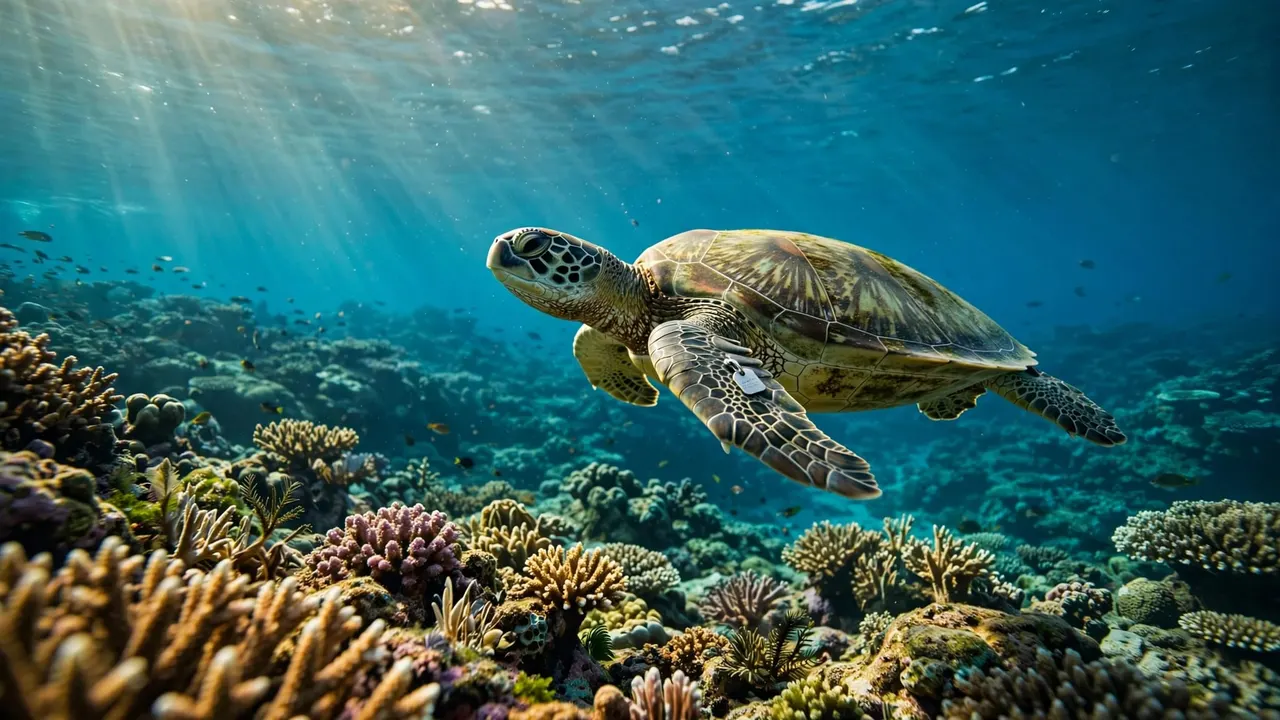
A small tag on a turtle’s flipper can connect your brief sighting to years of research. At Turtle Canyon Oahu, understanding that tag gives you another reason to watch patiently and give each honu space.
Living Ocean Tours brings you from Kewalo Basin Boat Harbor near Waikiki to this wild reef habitat. However, seeing a tagged turtle doesn’t mean you’re visiting a research station. The useful distinction is between identifying an animal and knowing its whole story.
Key Takeaways
- A flipper tag identifies an individual turtle; it doesn’t continuously track its location.
- Repeat encounters can help researchers study movement, growth, reproduction, and survival.
- NOAA’s white shell markings are different from flipper tags and support its Honu Count reporting program.
- Your priority is respectful observation, even when a tag or marking catches your attention.
Turtle Canyon Oahu Is Wild Reef Habitat
When you snorkel offshore from Waikiki, you’re entering a reef that turtles use on their own schedule. Turtle Canyon, also called Turtle Canyons, is known for natural cleaning stations.
Small reef fish may remove algae and other material from a turtle’s shell and skin. Meanwhile, the turtle can hover, rest, surface, or leave. Those movements aren’t scheduled around visiting boats.
The animals you may see are Hawaiian green sea turtles, known locally as honu. NOAA’s green turtle species information explains their biology and conservation status.
A cleaning-station sighting gives you a glimpse of one animal’s routine. It doesn’t establish where that turtle nests, how far it travels, or whether it returns daily. A tag becomes useful when researchers connect that encounter with other records.
What a Flipper Tag Actually Tells You
An identification number connects records
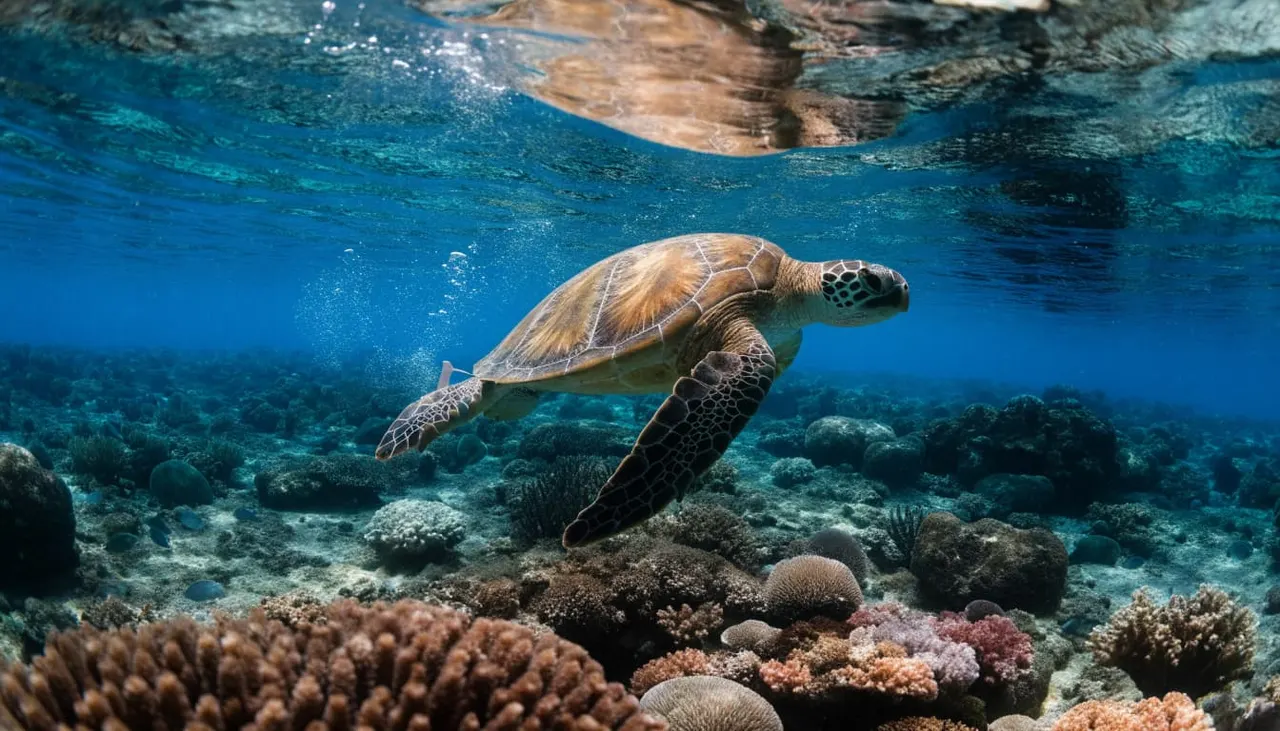
A numbered metal flipper tag gives researchers a way to recognize a turtle during another encounter. Its number links the animal to information recorded when researchers tagged it.
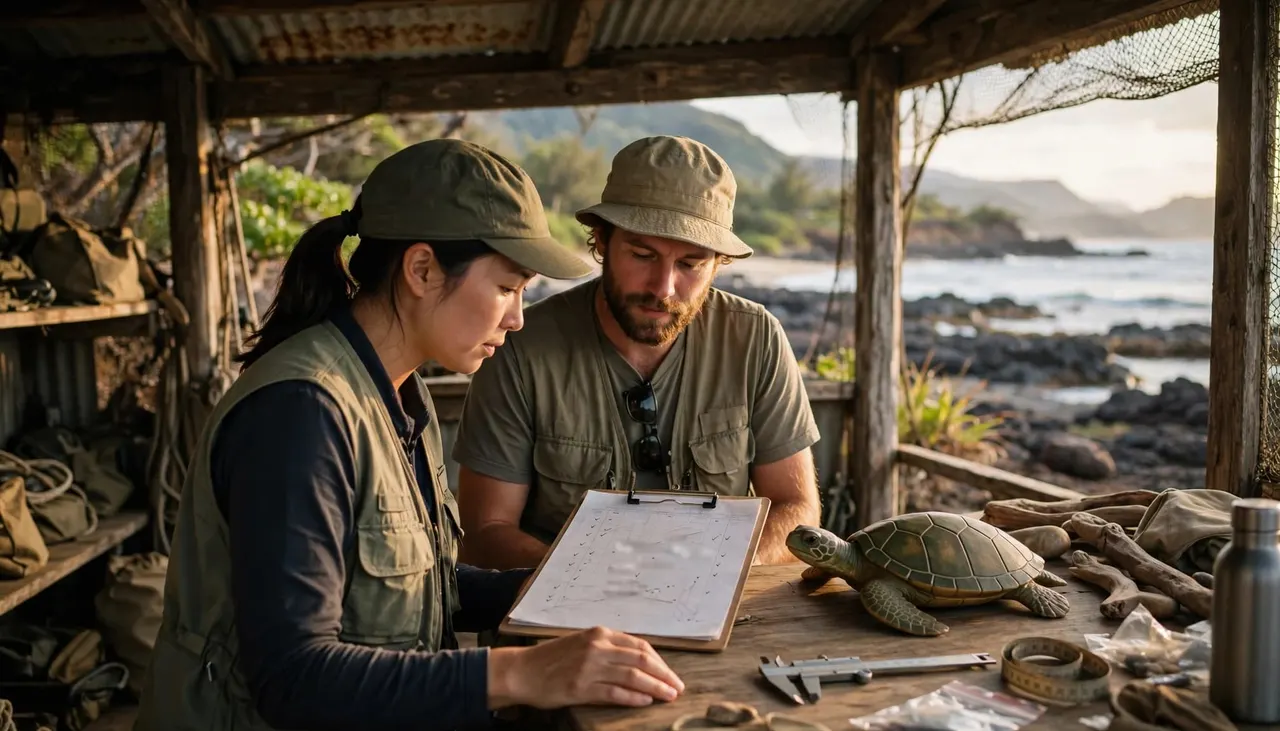
Depending on the study, that record may include the encounter date, location, shell measurements, and observations about condition. Later records become more useful because researchers can associate them with the same individual.
You don’t need to read the number to appreciate its purpose. From snorkeling distance, a small tag may be difficult to see clearly. Swimming closer to inspect it would put a photograph ahead of the turtle’s welfare.
The tag doesn’t transmit a travel route
A basic metal flipper tag isn’t a GPS device. It doesn’t send researchers a continuous location feed or reveal where a turtle went between sightings.
Instead, someone must encounter the turtle again and record its identification. NOAA’s Pacific sea turtle research covers broader scientific work, but you shouldn’t assume any particular method operates at this reef.
A visible tag identifies the turtle. The associated research records supply the context.
How Repeat Encounters Build a Turtle’s History
Locations reveal movement and repeat use
When researchers identify the same turtle at different locations, they gain evidence of movement between those places. Repeated encounters in one area can also document its continued use of that habitat.
At Turtle Canyon Oahu, a sighting could be useful if its identity, date, and location connect reliably with existing records. However, the sighting alone doesn’t establish a migration route.
NOAA’s account of the annual migration of Hawaiian green turtles describes tagging nesting females as part of its research. Such documented encounters help scientists connect different stages of an animal’s life.
Measurements reveal changes over time
Identification becomes especially valuable when authorized researchers measure the same animal again. Comparing shell measurements across known dates can provide information about growth.
Similarly, repeat examinations can document changes in an animal’s condition. A tag supplies continuity, while measurements and observations supply the biological information.
Reproductive research requires its own evidence, such as identifying a female during nesting. You can’t determine nesting history by watching a turtle hover above cleaner fish.
Survival studies also depend on records across time and careful analysis. A confirmed later encounter establishes that the animal survived until that date. Your short snorkel sighting cannot provide a complete health assessment or population estimate.
What Tags Cannot Prove About a Reef Encounter
One sighting leaves large gaps
A turtle’s presence tells you where it was at that moment. It doesn’t tell you where it spent the previous week or where it will go next.
Likewise, seeing several turtles near a cleaning station doesn’t prove they traveled together. Each animal may be using the same reef independently.
There’s no verified Turtle Canyon-specific tagging operation, tag count, or survival estimate established here. You shouldn’t treat a visible tag as evidence that a local project is monitoring every visitor to the reef.
Missing observations don’t establish death
A turtle can go unrecorded because nobody encounters it, because observers miss its identification, or because it uses another area. An external tag can also become unreadable or be lost.
Researchers account for imperfect detection when interpreting repeated encounter records. Without that care, gaps could produce misleading conclusions.
A later sighting confirms that a turtle was alive on that date. A missing sighting doesn’t, by itself, prove that it died.
This distinction matters when you hear someone describe a turtle as a familiar reef resident. Familiarity can be meaningful, but an observer’s memory isn’t a complete scientific record.
Flipper Tags and White Shell Markings Are Different
You may notice a white marking on a turtle’s shell rather than a metal tag. NOAA’s Honu Count program asks people to report turtles with these alphanumeric shell etchings.
The markings are generally on the right side of the shell near a hind flipper. NOAA explains that letters can indicate where a turtle was originally encountered and tagged. For example, “HA” indicates Hawaii Island.
These two identification methods have different viewing characteristics.
| Identification method | What you may notice | Research value |
|---|---|---|
| Metal flipper tag | A small tag attached to a flipper | Links repeat encounters to an individual |
| White shell etching | Letters and numbers on the shell | Allows observers to report a recognizable turtle |
The important step is recording the actual identifier, without guessing unclear characters.
Through NOAA’s Honu Count program, you can submit a photograph, date, time, and location. Those reports help researchers understand distribution, foraging habitat, migration, and individual survival.
Don’t assume a shell code identifies where the turtle hatched. Follow NOAA’s explanation of what the marking records.
How to Observe Without Interrupting the Turtle
Keep distance ahead of identification
NOAA recommends staying at least 10 feet (3 meters) from sea turtles, both in the water and on shore. At Turtle Canyon Oahu, that distance still applies when you’re curious about a tag.
Float calmly, keep your fins away from coral, and leave the turtle an open route to the surface. If it approaches, give it space rather than reaching toward it.
Never touch a tag, turn a turtle, or chase it to read a number. Take a photograph only when you can do so without disturbing the animal. An unreadable photograph is better than a clear image obtained through harassment.
Report concerns without handling wildlife
A small research tag alone isn’t evidence that a turtle needs rescue. However, visible entanglement, fresh wounds, or difficulty swimming deserve attention from trained responders.
Alert your guide and describe what you saw. Don’t pull fishing line, remove a tag, or attempt treatment yourself.
For marine wildlife concerns in Hawaii, you can contact the NOAA Marine Wildlife Hotline at (888) 256-9840. Provide the location and observations, and follow the responder’s instructions. Clear reporting is more helpful than an attempted rescue by an untrained swimmer.
Visit With Guidance From Living Ocean Tours
Your Turtle Canyon Oahu outing should make wildlife observation comfortable without pressuring animals to approach. Living Ocean Tours departs from Kewalo Basin Boat Harbor, minutes from Waikiki.
You can explore its guided Oahu ocean tours when planning your visit. The company describes itself as Oahu’s only tour company with professional snorkel guides, with in-water support for guests.
That support helps you manage unfamiliar equipment and keep track of the group. You can review guest experiences before choosing your departure.
You can browse the company’s available departures below.
The Turtle Canyons Snorkel Excursion includes snorkeling gear, flotation support, and professional guidance. Tell the crew about your swimming comfort before entering the water.
Living Ocean Tours reports a 95% turtle-sighting success rate, but wildlife appearances aren’t guaranteed. Weather, water conditions, and turtle behavior affect each trip.
When you’re ready to select a turtle snorkel departure, CHECK AVAILABILITY.
Let the Turtle’s Story Continue
A flipper tag can connect a fleeting encounter to a longer scientific record. Its value comes through repeat observations, accurate identification, and careful interpretation.
At Turtle Canyon Oahu, your role is straightforward: watch patiently, keep your distance, and report useful information without interfering. Whether you notice a tag, a shell marking, or simply a honu gliding past, leave it free to continue its day.


