
Turtle Canyon Oahu: How Turtles Shape Seagrass Meadows
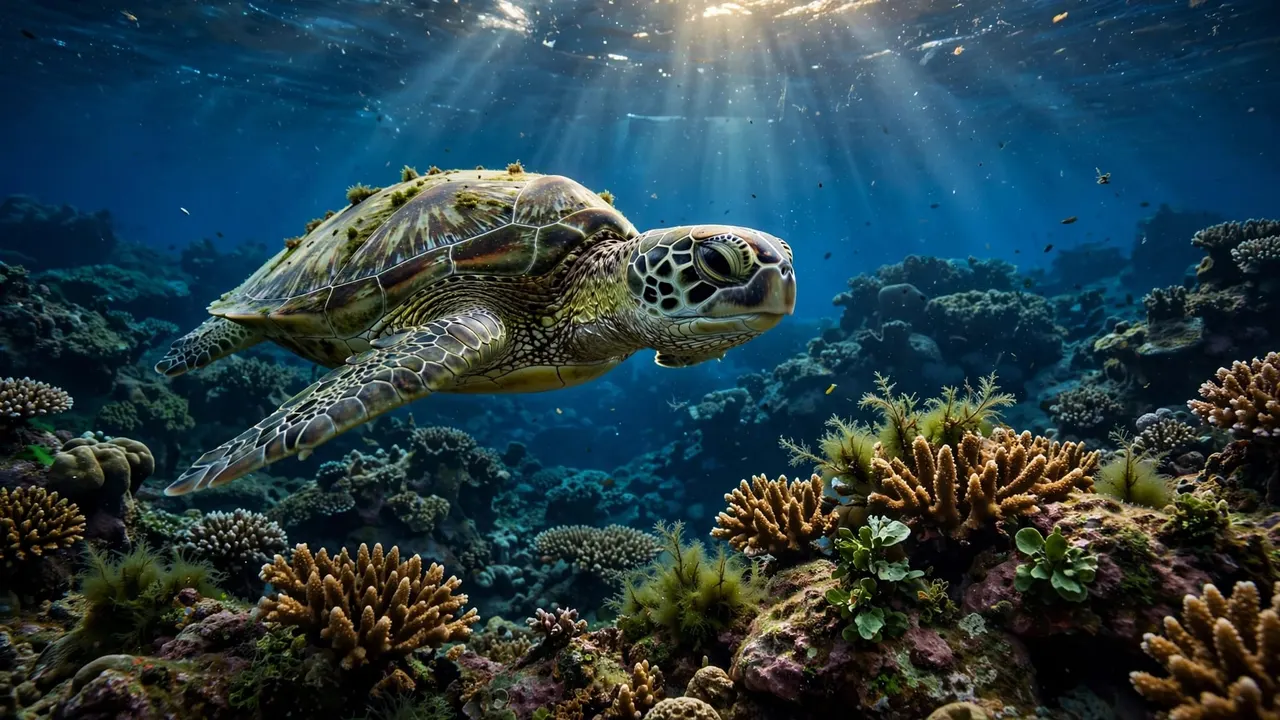
The turtle you watch above a Waikiki reef belongs to a food web that reaches beyond that single encounter. On a Turtle Canyon Oahu outing with Living Ocean Tours, you can see honu in reef habitat while learning how these animals affect marine plants elsewhere.
The important distinction is habitat: Turtle Canyon is known for its reef and natural cleaning stations, not a documented seagrass meadow. Understanding that difference helps you connect your snorkel experience with turtle ecology without confusing two underwater environments.
Key Takeaways
- Turtle Canyon offers reef habitat where green turtles may rest, pass through, or visit cleaner fish. You shouldn’t expect a confirmed seagrass meadow.
- Oahu green turtles eat mainly macroalgae, although seagrass can be important where it grows.
- Turtle grazing changes seagrass height, plant composition, and habitat structure. Its effects depend on feeding intensity and local conditions.
- Your most respectful encounter comes from floating calmly, keeping your distance, and allowing turtles to choose their route.
What Turtle Canyon Oahu Offers Green Turtles
When you visit Turtle Canyon Oahu, you’re entering an offshore reef environment near Waikiki. Rocky shelves, coral contours, sandy openings, and deeper water provide different places for marine animals to move and pause.
A natural cleaning station
Small reef fish may gather around a turtle and remove algae or other material from its shell and skin. Meanwhile, the turtle can remain nearly still or move slowly near the reef.
That interaction is different from grazing. The fish are feeding around the turtle; the turtle isn’t necessarily eating anything.
Watch the whole scene rather than following only the shell. You may notice fish approaching, changing positions, or returning to the same reef feature. However, turtles decide when to arrive and leave. A cleaning station isn’t a managed attraction with scheduled visitors.
A sighting doesn’t reveal the whole diet
A turtle resting above coral tells you little about what it ate earlier. Likewise, a turtle crossing a sandy opening doesn’t prove that seagrass grows nearby.
The available information doesn’t establish a seagrass meadow at Turtle Canyon. Therefore, you can enjoy the reef encounter while keeping the broader seagrass story separate.
Your Turtle Canyon Oahu visit offers a look at one part of a turtle’s coastal routine, not its entire feeding history.
What Hawaiian Green Turtles Eat
Adult Hawaiian green turtles, known locally as honu, eat marine vegetation. However, their meals vary with location and available food.
Macroalgae dominates the Oahu picture
NOAA research on Oahu turtle diets describes red macroalgae as the main food source, with seagrasses secondary overall. Macroalgae includes the seaweeds often called limu in Hawaii.
You’ll recognize the difference more easily when you consider where each plant grows. Many algae attach to rocky surfaces, while seagrasses root in sediment.
A turtle can therefore find different foods across the coastal environment. Light, wave action, and the condition of feeding areas influence what’s available. You shouldn’t assume every turtle uses every food source equally, even when several animals share the same reef.
Seagrass can be locally important
Seagrass belongs to a different group of plants than seaweed. It’s a flowering plant with leaves, roots, and underground stems called rhizomes.
Hawaiian species include Halophila hawaiiana and Halophila decipiens. Where these plants grow, they can contribute substantially to a turtle’s diet.
One NOAA isotopic study identified four Oahu dietary groups associated with macroalgae, turf, seagrass, and red mangrove leaves. However, those groups don’t provide percentages for each food.
The practical takeaway is local variation. Seagrass can matter greatly in a particular feeding area without being the main food for Oahu turtles overall.
How Green Turtles Graze Seagrass
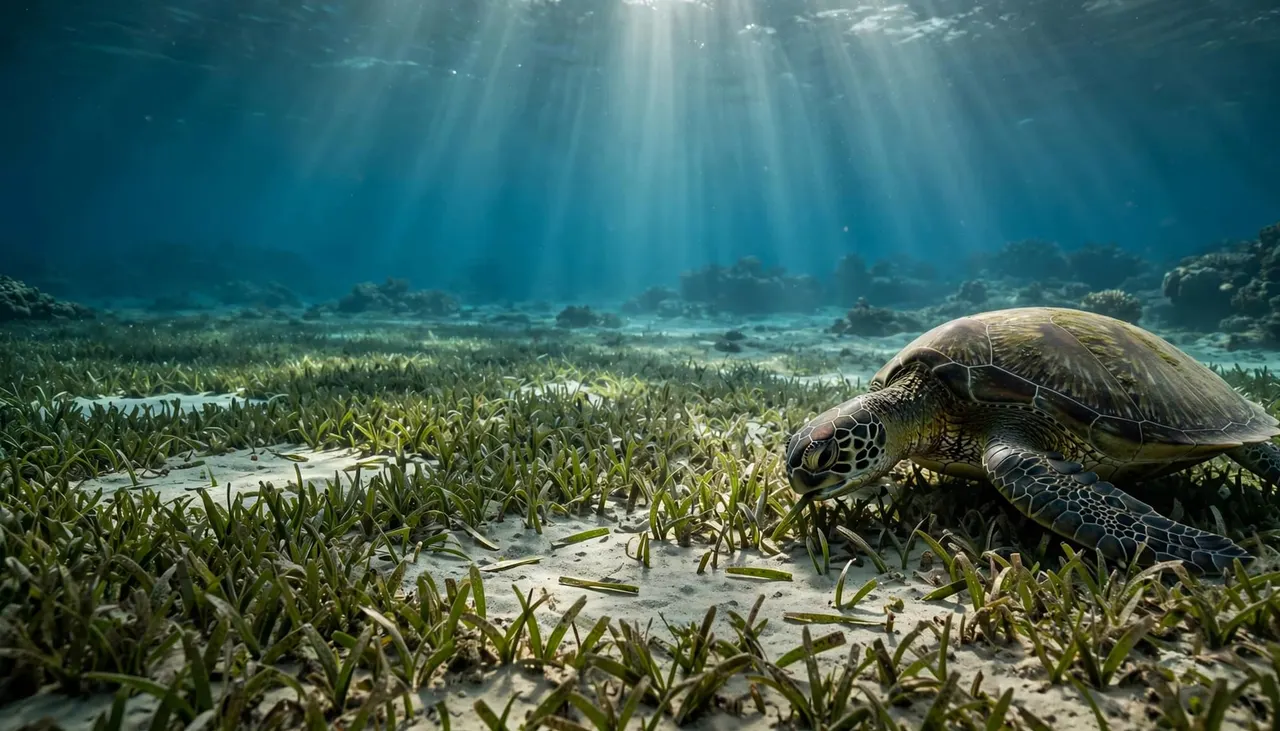
Where seagrass grows, a feeding turtle can change the meadow through repeated bites. Research describes patterns that extend beyond simply removing leaves.
Repeated visits create grazing patches
Green turtles can return to the same feeding patches and keep vegetation relatively short. As a result, a meadow may contain cropped areas beside taller, less-grazed plants.
The 2021 study on green turtles as cultivation grazers examines how recovering turtle populations can reshape seagrass systems.
Repeated grazing changes the amount of vegetation above the seabed. It can also alter which plants occupy a patch over time.
However, that research doesn’t establish a grazing pattern at Turtle Canyon. These are mechanisms documented in seagrass environments, not measurements from your Waikiki snorkel site.
Regrowth changes the food supply
After turtles crop leaves, plants may produce new growth. Some studies have found higher leaf nitrogen and lower lignin in grazed seagrass.
Lignin contributes to plant tissue structure. Changes in leaf chemistry can therefore affect the food turtles encounter on later visits.
Still, a shorter patch doesn’t automatically mean faster growth or a healthier meadow. Plant species, water quality, and feeding frequency all matter.
For you as an observer, the useful lesson is that grazing changes both the quantity and character of vegetation. You can’t judge the full ecological effect from leaf height alone.
Why Grazing Pressure Changes the Outcome
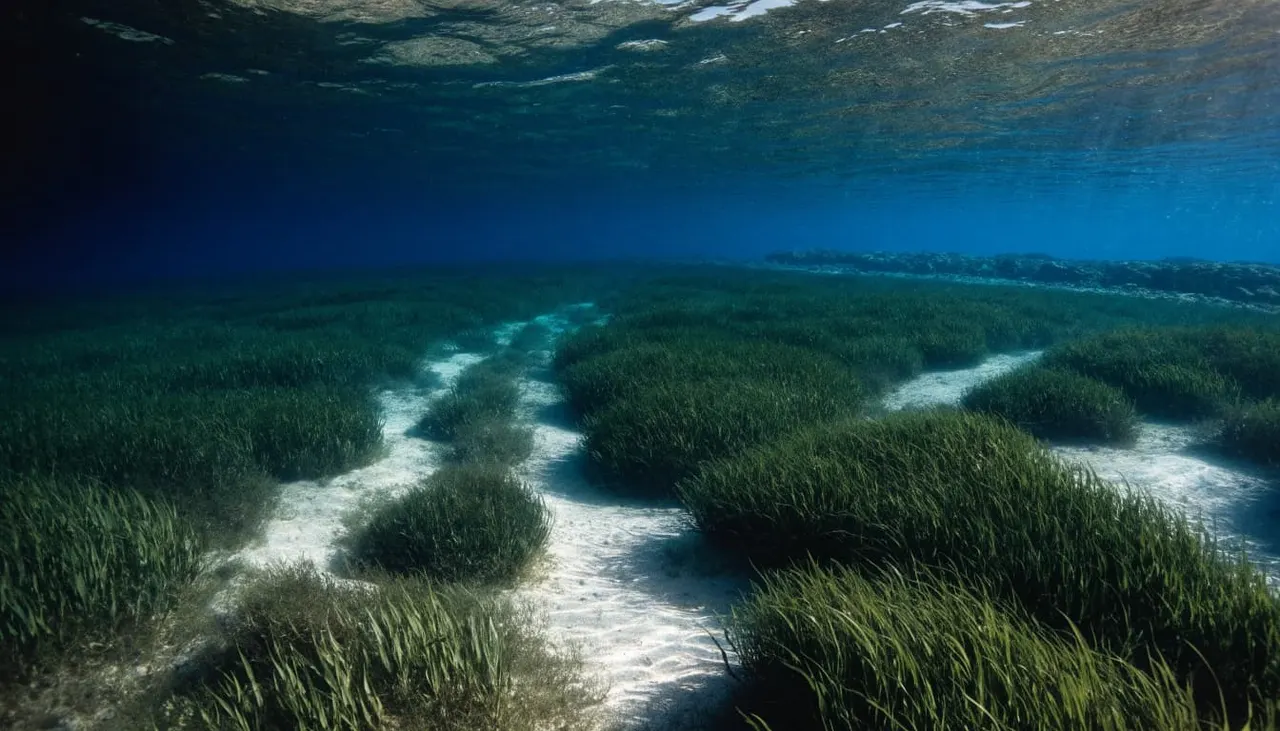
Turtles influence meadows differently depending on how much vegetation they remove and how quickly it grows back. Grazing intensity is central to that balance.
Grazing can reshape plant communities
When turtles reduce the aboveground growth of a dominant seagrass, other plants may gain room. Faster-growing species can occupy openings, changing the meadow’s composition.
Research on grazing effects across different meadows found that effects on seagrass and macroalgae diversity varied spatially.
That variation matters because coastal environments differ. A result from one bay doesn’t automatically describe another bay, much less every Hawaiian reef.
You get a more accurate picture by asking what changed in a particular meadow rather than treating turtle grazing as uniformly beneficial.
Heavy grazing can reduce habitat
If turtles remove leaves faster than plants replace them, vegetation can decline. Intensive grazing can reduce seagrass biomass and weaken functions associated with the meadow.
Meanwhile, environmental stress can limit regrowth. Poor water clarity, for example, reduces the light plants receive.
Research comparing grazing levels has found benefits at intermediate pressure in some systems, but severe losses under intensive grazing. Much of that work comes from outside Hawaii.
A cropped meadow can remain productive, but short leaves alone don’t prove that grazing is helping it.
Seagrass Meadows Support More Than Turtles
When you look across a seagrass bed, the leaves are only part of the habitat. Roots and rhizomes occupy the sediment, while small animals live among blades or beneath the seabed.
Vegetation can provide shelter, influence sediment movement, and contribute organic material to the food web. Because of those connections, turtle grazing can affect animals that never interact directly with a turtle.
The University of Florida’s sea turtle research publications include experiments examining how simulated grazing changes the abundance and composition of animals living within seagrass sediment.
Aboveground and belowground responses can also differ. Removing leaves doesn’t necessarily cause an immediate, matching loss of roots or rhizomes.
For carbon storage, that distinction matters. You need measurements of vegetation and sediment processes before deciding whether grazing improves or reduces storage.
This broader perspective also improves your Turtle Canyon Oahu experience. Cleaner fish, grazing fish, and reef contours are worth watching even when no turtle is directly beneath you.
How to Observe Reef Life Without Disrupting It
Your position in the water affects whether a turtle can continue its routine. Keep at least 10 feet, or about 3 meters, away, and give more room when conditions require it.
Don’t touch, chase, or feed turtles. Also, avoid floating directly above an animal that may need to rise for air. A clear route to the surface matters more than getting a closer photograph.
These habits help you watch without crowding:
- Stay to the side of a turtle’s travel path rather than swimming ahead to intercept it.
- Keep your fins clear of coral, and remain at the surface instead of standing on the reef.
- Tell your guide if you notice an injury or entanglement, and leave handling to trained responders.
Once you’re settled, widen your attention. Sand pockets can make a passing turtle easier to see, while darker reef surfaces may conceal it.
You may also notice fish grazing without any turtle nearby. However, don’t identify every green underwater patch as seagrass; algae can cover reef surfaces too.
A Turtle Canyon Oahu sighting becomes more informative when you watch behavior patiently. Resting, cleaning, swimming, and feeding are different activities, even when they happen close together.
Plan a Guided Turtle Canyons Visit
Living Ocean Tours departs from Kewalo Basin Boat Harbor near Waikiki. You receive snorkeling gear, flotation support, and professional in-water guidance.
The company describes itself as the only tour company with professional snorkel guides. For beginners and families, that support gives you someone to ask about mask fit, position, and wildlife etiquette.
You can compare its Waikiki ocean tour options before choosing your outing.
The Turtle Canyons Snorkel Excursion is roughly two hours, with about an hour in the water. Tell the crew about your swimming comfort before entering.
Onboard shaded seating, restrooms, dry storage, and sturdy ladders make the trip more comfortable. Meanwhile, the guides help you explore the reef without crowding wildlife.
Living Ocean Tours reports a 95% turtle-sighting success rate. However, weather, visibility, and turtle behavior vary, so sightings aren’t guaranteed. The outing is a reef visit, not a promise of seagrass grazing.
When your dates are set, CHECK AVAILABILITY for the turtle-focused excursion.
See the Turtle and the Habitat Around It
Turtle Canyon Oahu gives you a window into reef life, while seagrass research explains another part of green turtle ecology. Grazing can reshape meadows, but its effects depend on local conditions and feeding pressure.
Keep that habitat distinction in mind as you snorkel. By leaving turtles space and watching the surrounding reef, you can enjoy the encounter without asking wildlife to change its routine.


