
Turtle Canyon Oahu: How Green Turtles Use Reef Algae
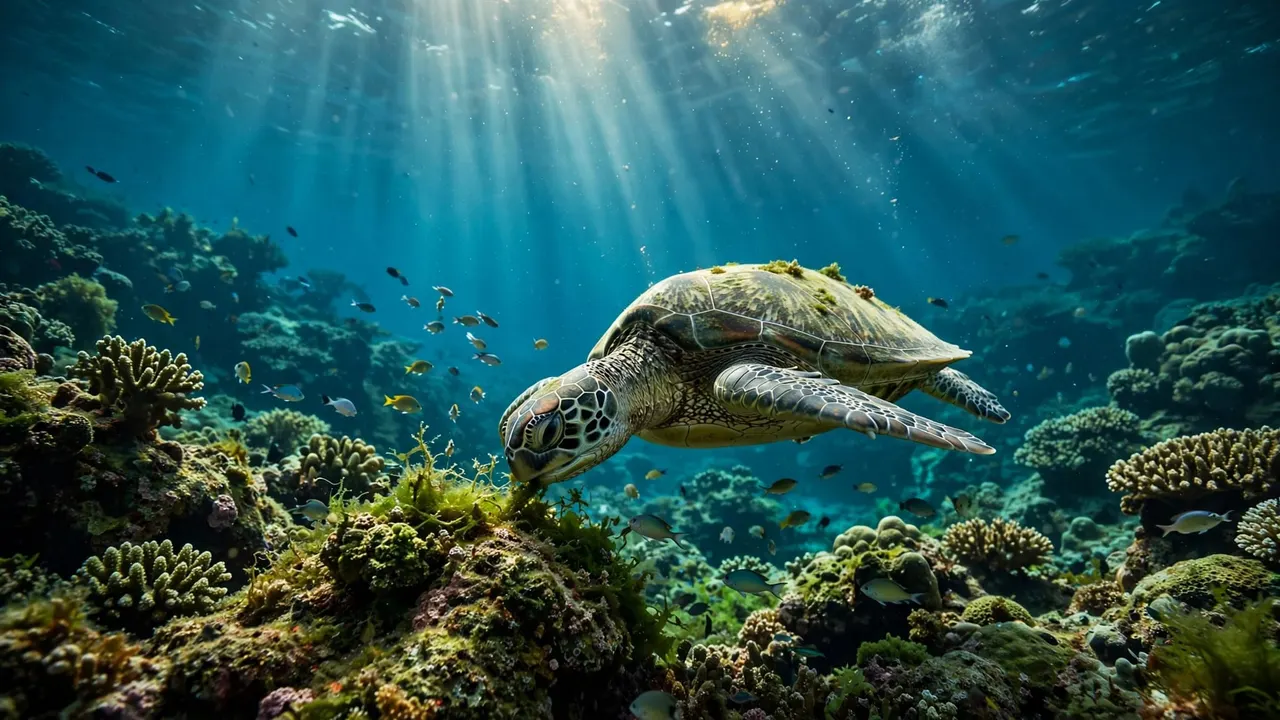
A green sea turtle gliding over a Waikiki reef may be looking for food, a place to rest, or a visit from cleaner fish. At Turtle Canyon Oahu, you can watch those different needs meet in one stretch of ocean. The algae matters, but it doesn’t explain every turtle you see.
Living Ocean Tours takes snorkelers from Kewalo Basin Boat Harbor near Waikiki to this offshore habitat. Before you put on a mask, it helps to know the difference between a turtle grazing on seaweed and one pausing for a cleaning. That distinction makes the reef more interesting and helps you give its wildlife room.
Key Takeaways
- Adult Hawaiian green sea turtles, called honu, eat mostly algae and other marine plants.
- Turtle Canyon is known for cleaning-station activity, where reef fish remove material from turtles’ shells and skin. A turtle at a cleaning station isn’t necessarily eating.
- Research describes algae eaten by turtles around Oahu, but it doesn’t identify which algae grow at Turtle Canyon.
- Your best view comes from floating calmly, staying off the reef, and leaving every turtle a clear path to the surface.
What Turtle Canyon Oahu Offers Green Turtles
Turtle Canyon, also called Turtle Canyons, is an offshore reef area near Waikiki. You reach it by boat rather than walking in from the beach. Its appeal to honu comes from a living reef with places to move, pause, and interact with fish, not a single feature that guarantees a sighting.
Reef contours create different places to pause
Descriptions of the site include rocky ledges, coral heads, and sandy openings. From the surface, you might see a turtle move over a ledge, hover near fish, or cross an open patch of water. Those movements can happen within one snorkel session.
The reef also changes what you can see. A turtle over pale sand may be easy to follow with your eyes, while one beside darker rock can blend into the bottom. Stay with your guide and let the animal’s movement reveal its route instead of swimming after it.
A familiar area is still wild habitat
Several turtles may use the same stretch of reef for different reasons. One might rest while another passes through on its way to the surface. Seeing them nearby doesn’t mean they’re traveling together or that they’ll remain there for your visit.
Honu are air-breathing reptiles. Even a turtle that looks settled below you must eventually surface. Give it open water above and around it, especially when you notice it beginning to rise.
How Algae Fits Into the Reef Habitat
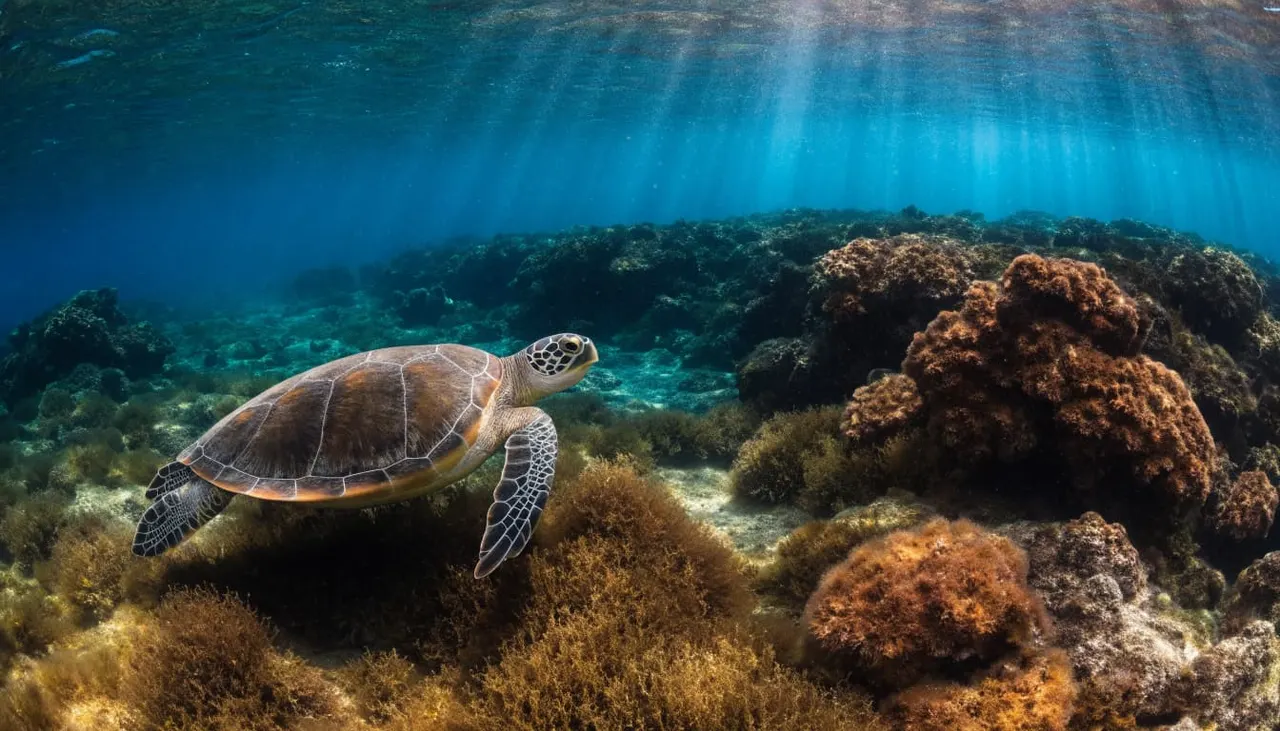
Sunlit reefs give algae surfaces on which to grow. For an adult green turtle, algae and other marine plants are food. For a snorkeler, however, seeing a turtle above the reef doesn’t prove that it’s feeding. Watch what the animal does before drawing that conclusion.
Algae is food, not the whole story
Adult honu eat a largely plant-based diet. They can graze on marine algae growing on hard surfaces and eat larger seaweeds, known in Hawaii as limu. That feeding habit helps explain why a turtle may spend time around a productive coastal reef.
Food isn’t the only reason to visit. A turtle may pass over algae without taking a bite, then settle near a ledge where reef fish gather. Reef habitat can support feeding, resting, and cleaning activity, but those behaviors needn’t happen in the same spot.
Oahu diet research has a clear limit
NOAA research on turtles foraging around Oahu between 1977 and 2012 found that red macroalgae made up much of their diet. The study identified species including Acanthophora spicifera, Gracilaria salicornia, and Hypnea musciformis.
Those findings tell you what researchers found in turtles using Oahu waters. They don’t establish that those three algae grow at Turtle Canyon or that a turtle you see there has eaten them. There isn’t a documented, site-specific algae inventory behind such a claim.
A turtle above algae may be grazing, resting, or passing through. Watch its behavior rather than treating its location as proof that it’s feeding.
What Happens at a Turtle Cleaning Station
Turtle Canyon is known for natural cleaning-station activity. A honu may slow down or hold position while small fish approach its shell and skin. You can sometimes watch the interaction unfold without moving closer.
Cleaner fish get a meal
NOAA describes reef fish, including convict tangs, removing parasites and dead skin from green turtles at Hawaiian cleaning stations. The fish gain food, while the turtle receives a cleaning. NOAA’s account of sea turtle and reef fish interactions explains this relationship as mutualism.
You may also see fish pick at growth on a turtle’s shell. From the surface, though, you can’t reliably identify every bit of material they remove. Give the fish and turtle time to interact without crowding them.
Cleaning and grazing are different behaviors
The direction of feeding is the useful clue. When a turtle grazes, it takes plant material from its surroundings. At a cleaning station, fish approach the turtle and pick material from its body. The turtle may remain almost motionless.
Algae belongs in this broader reef story because adult turtles eat marine plants and growth can collect on a shell. Still, algae doesn’t create the cleaning station by itself. The fish, the turtle’s behavior, and the reef setting all matter.
Read a Turtle’s Behavior Without Following It
Once you slow down, a Turtle Canyon Oahu sighting can show you more than a passing shell. Watch the turtle’s head, flippers, and position in the water. Those clues are more useful than trying to get close enough for a photograph.
Look for signs of feeding or resting
A grazing turtle may lower its head toward a surface and take repeated bites. A resting turtle may stay near a reef feature with little movement. If fish gather around a hovering turtle, you could be watching cleaning activity instead.
You won’t always get a clear answer. Distance, water movement, and the angle of your view can hide small actions. Enjoy what you can observe without changing the animal’s routine to see more.
Leave room for a breath
A turtle that begins swimming upward needs an unobstructed route. Don’t hover directly above it, follow alongside it, or try to predict where its head will break the surface. Move calmly aside and let it choose its path.
The same courtesy applies when a turtle approaches you. Stay relaxed and create space rather than reaching out. A brief, unforced encounter gives you a better look at natural behavior than a chase across the reef.
Snorkel Turtle Canyon Without Disturbing It
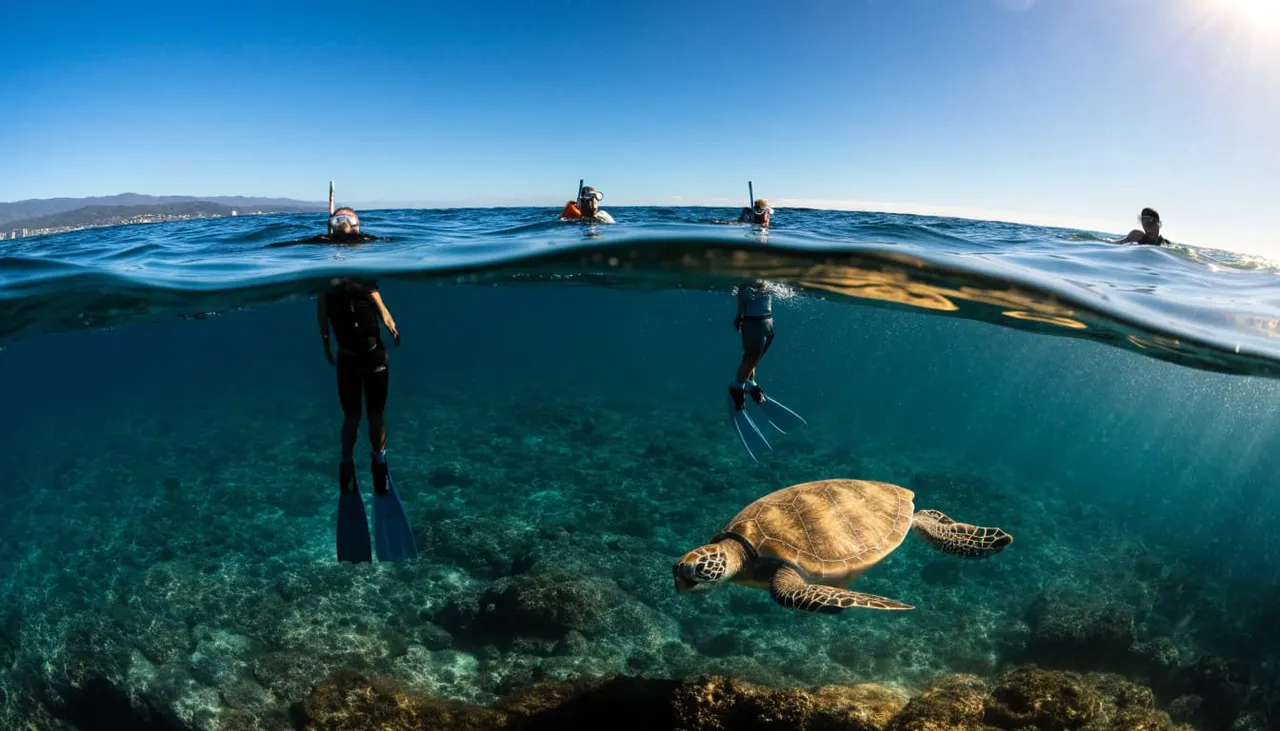
You’re visiting an active habitat, so your position in the water matters. Good fin control protects the reef below you. Giving honu space protects the behaviors you came to see.
Keep your distance from honu
Stay at least 10 feet, or about 3 meters, from a turtle. The Maui Reef Association’s turtle guidance recommends that distance both on land and in the water. Never touch, feed, chase, or surround a honu.
If a turtle starts toward you, don’t treat the approach as permission to reach out. Float calmly and let it pass. Keep its route to the surface open, and follow your guide’s direction if you need to reposition.
Float above the reef, not on it
Watch where your fins go, especially when you stop to look down. A downward kick can strike coral or stir up sediment. If you need a break, use flotation support rather than standing on the bottom.
Bring only what you can keep secure in the water. A loose item can drift beyond your reach and become debris. Ask your guide for help if you feel tired or uncomfortable; you don’t need to solve a problem by grabbing the reef.
Visit With Living Ocean Tours
A guided trip lets you focus on the water instead of arranging an offshore entry yourself. Living Ocean Tours departs from Kewalo Basin Boat Harbor, minutes from Waikiki, and provides snorkel gear and in-water guidance for its Turtle Canyons excursion.
Get support while you watch the reef
The company says it is the only tour operator with professional snorkel guides in the water with guests. That support is useful if you’re new to snorkeling or bringing a water-loving family. Tell your guide about your comfort level before you enter, and take time to settle in at the surface.
Living Ocean Tours reports a 95% turtle-sighting success rate on its Turtle Canyons outings. It’s a useful expectation, not a promise: conditions and wild turtles decide what you’ll see. If this is the reef experience you’re after, you can CHECK AVAILABILITY for a turtle snorkel departure.
Choose the experience that fits your day
If you want to compare snorkeling with other time on the water, browse Living Ocean Tours’ Waikiki excursions. Each trip has a different focus, so check the details before booking. For Turtle Canyon Oahu, the draw is the chance to observe reef life with a guide while letting wildlife set the pace.
Frequently Asked Questions
Will you see turtles eating algae at Turtle Canyon?
You might, but a sighting doesn’t guarantee feeding behavior. Adult green turtles eat algae and other marine plants, yet turtles also use reefs to rest and visit cleaning stations. Watch for repeated bites before deciding that a honu is grazing.
Is Turtle Canyon suitable for a first snorkel?
A guided outing can help you get comfortable with gear and flotation support. Be honest with the crew about your swimming ability, listen to the briefing, and stay near your guide. Ocean conditions vary, so follow the crew’s advice on the day.
Do turtles stay at the cleaning station all day?
No visit follows a schedule you can rely on. A turtle may pause near reef fish, swim across the area, surface for air, or leave. Several turtles using the same reef don’t have to arrive together or behave the same way.
A Better Way to See the Reef
At Turtle Canyon Oahu, algae helps explain what adult honu eat, while the reef offers places for other activity. Watch the behavior before deciding what a turtle is doing.
Float above the reef, leave room for a breath, and let the turtle choose where it goes. That’s how a glimpse of one animal becomes a clearer view of the habitat around it.


