
Green Turtle Tumors at Turtle Canyon Oahu: A Visitor’s Guide
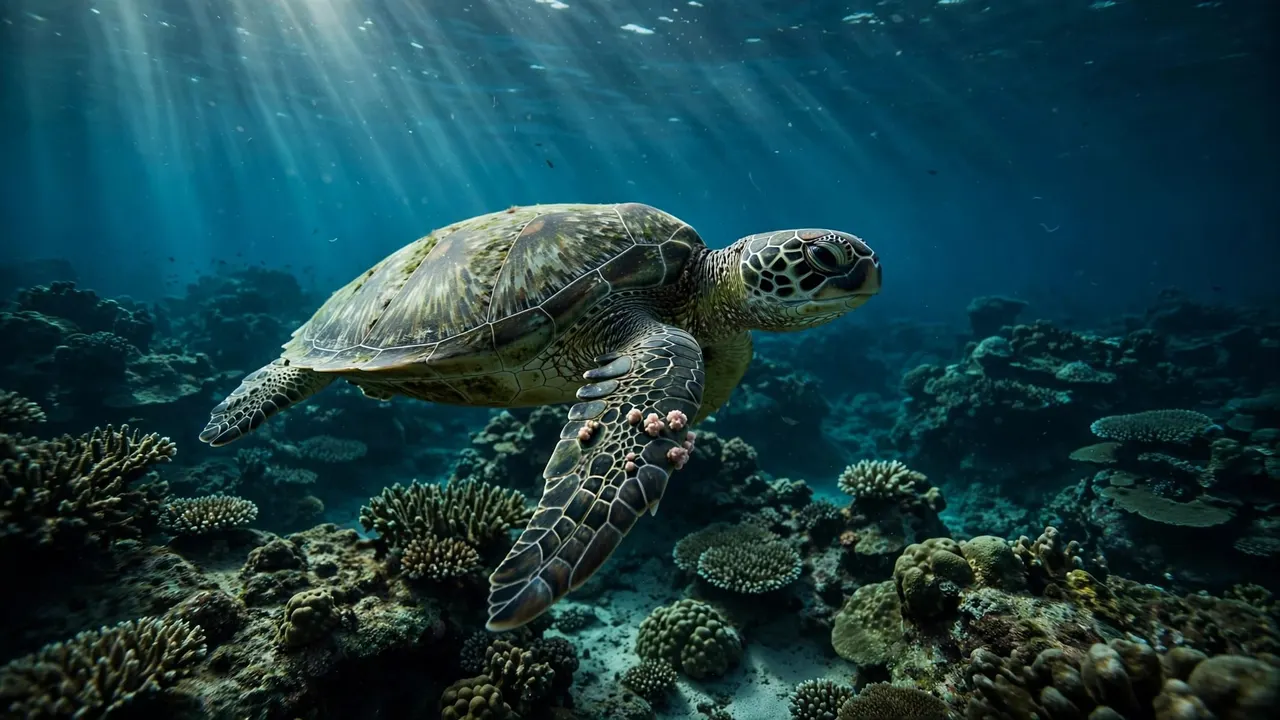
A Turtle Canyon Oahu snorkel may bring you face to face with a Hawaiian green sea turtle, or honu, gliding over the reef. If you notice lumps on its skin, the sight can be unsettling. Give the turtle space and tell your guide what you saw rather than moving closer to inspect it.
Living Ocean Tours visits this offshore habitat from Kewalo Basin Boat Harbor near Waikiki. Before you enter the water, it helps to understand what those growths might mean and how to respond without disturbing the animal.
What green turtle tumors can mean at Turtle Canyon Oahu
Fibropapillomatosis affects more than appearance
The disease most often associated with tumors in green sea turtles is fibropapillomatosis, usually shortened to FP. External growths may appear on a turtle’s eyes, neck, flippers, or other soft tissue. The disease can also affect internal organs, which you cannot assess during a snorkel.
Large growths can interfere with feeding, vision, or swimming. That makes a possible case worth reporting, but it doesn’t mean you should try to help the turtle yourself. A trained responder needs to assess its condition.
A cleaning station is not a treatment site
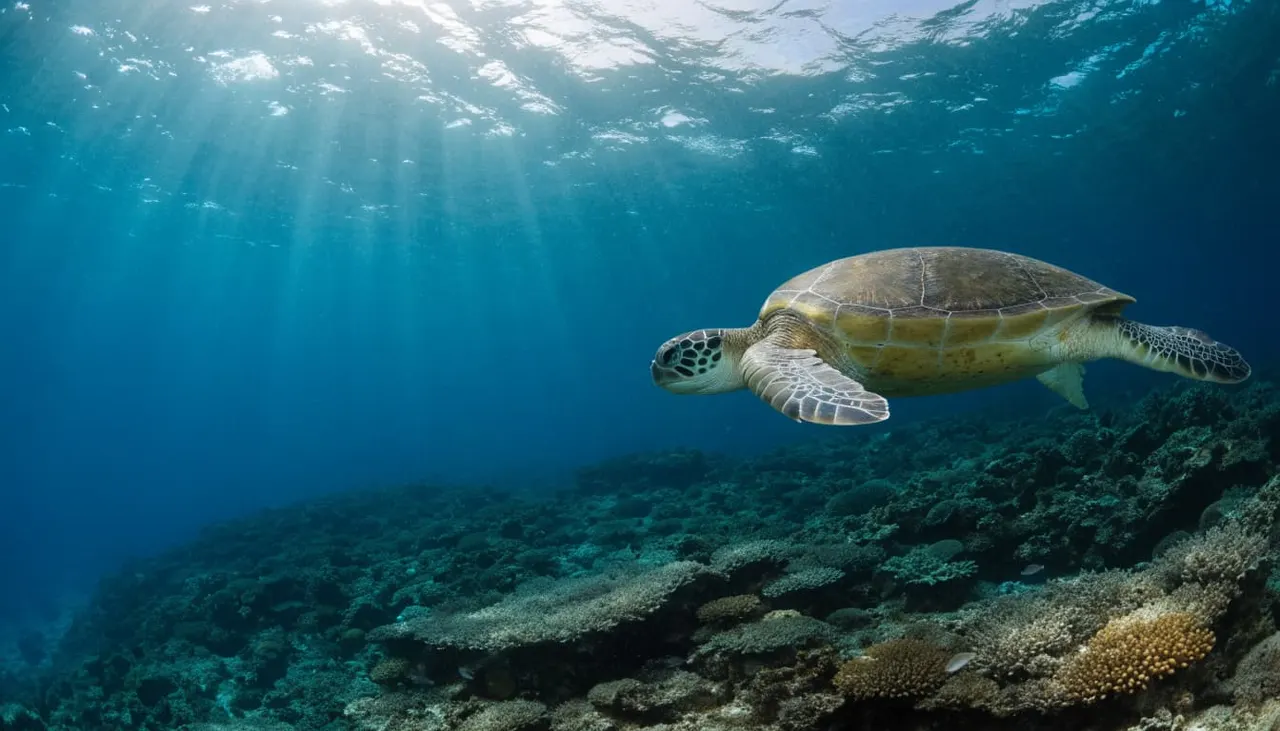
Turtle Canyons is known as a natural cleaning station where reef fish interact with visiting turtles. Watching that behavior is a memorable part of the trip. The fish aren’t treating FP, though, and a turtle’s presence at the reef tells you nothing certain about its health.
Hawaii’s sea turtle species information describes FP as a disease affecting green turtles. Researchers continue to study how the virus associated with it, turtle health, and environmental conditions interact. You shouldn’t assume that every turtle at a cleaning station has FP, or that the station causes it.
What sightings can and cannot tell you about the reef
You cannot estimate local disease rates from a snorkel
You might see several turtles during one visit and none with visible growths. Another group could see one affected turtle. Neither outing gives you a reliable disease rate for Turtle Canyon Oahu.
Research figures cover different places and groups of turtles. For example, the U.S. Geological Survey has reported that FP affects roughly 20% to 40% of Hawaiian turtles, depending on location. That range is not a Turtle Canyons estimate. It also shouldn’t shape your expectations for a particular day on the water.
Healthy-looking turtles need the same respect
A smooth shell and clear skin don’t prove that a turtle is free of disease or injury. Some problems aren’t visible to a snorkeler. Likewise, a slow-moving turtle may simply be resting.
Treat every honu as protected wildlife, regardless of how it looks. Give it room to feed, rest, and rise for air. If you keep your viewing habits consistent, you won’t have to make a health judgment while floating above the reef.
How to recognize a concern without diagnosing a turtle
Notice broad signs from where you already are
FP growths can look pale, dark, or uneven. Some have a bumpy, cauliflower-like surface. The Wild Hawaii green sea turtle guide describes these visible features, but appearance alone cannot confirm a diagnosis.
If you notice a growth on a Turtle Canyon Oahu outing, remember its general location on the body and alert your guide. You don’t need a close-up photo. Zooming in from your current position is safer than swimming toward the animal, and a clear description is useful even without a picture.
Watch for immediate problems, too
A fresh wound, fishing line wrapped around a flipper, difficulty swimming, or repeated trouble surfacing calls for prompt attention. Tell the crew what you observed and where you last saw the turtle.
Avoid treating algae on a shell as an emergency. Don’t scrape it off or pull at anything attached to the animal. If you’re unsure what you’re seeing, your guide can help pass the observation to people equipped to respond. Your job is to notice and report, not handle a wild turtle.
Give turtles room during your Turtle Canyon Oahu snorkel
Keep a clear route to the surface
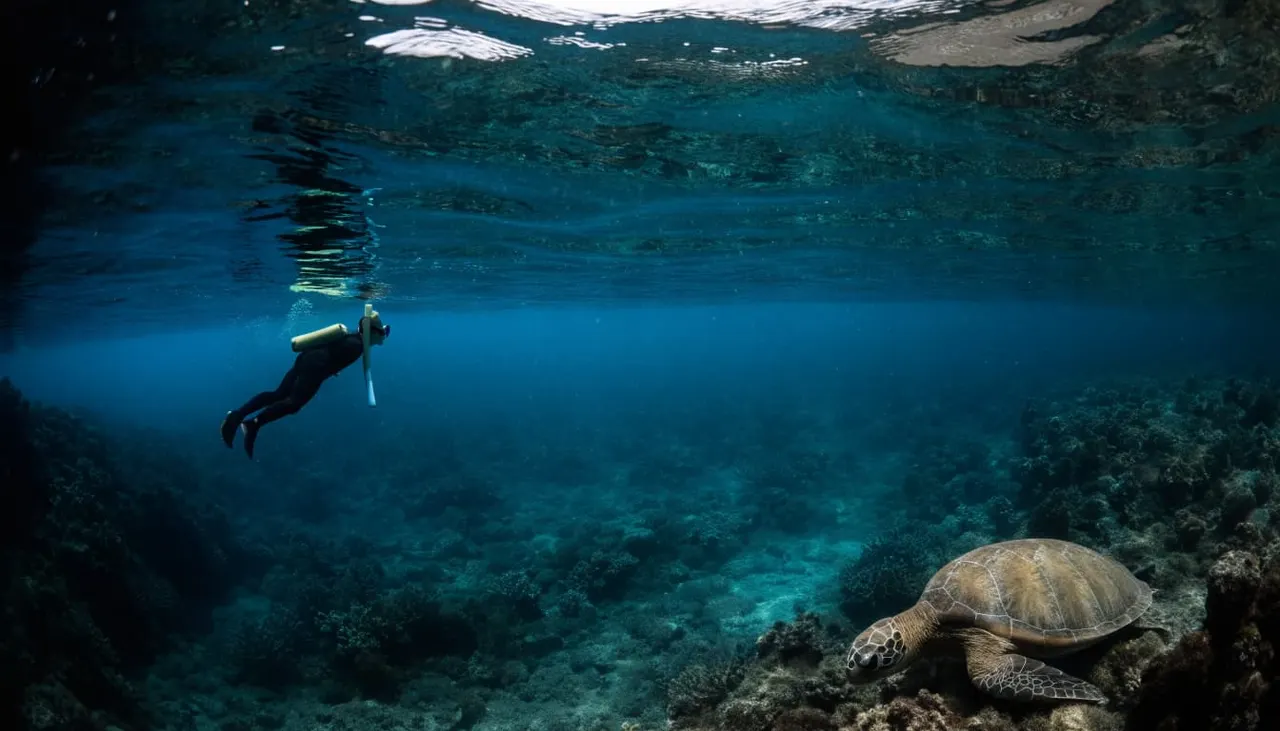
NOAA Fisheries recommends staying at least 10 feet from sea turtles in Hawaii, both underwater and on shore. That distance is a minimum for responsible viewing, not a target to swim toward.
Honu breathe air. Don’t float directly above one, surround it with other snorkelers, or place yourself between it and open water. If a turtle approaches, stay calm and let it pass. You can enjoy a longer, more natural sighting by remaining still than by following it for a closer photograph.
If you have to move toward a turtle to inspect a growth, you are already too close for a respectful observation.
Protect the reef beneath you
Your position matters as much as your distance from the turtle. Short, gentle fin kicks help you avoid striking coral or stirring up sand. Never stand on the reef to adjust a mask or rest.
Before you focus on an animal, check where your fins and fellow snorkelers are. If you need to reset your gear, signal your guide and use the flotation support available to you. A calm group leaves turtles space to continue their normal route through the water.
What to do if a turtle appears injured
Tell your guide, then keep watching from a distance
On a guided trip, let the crew know about visible tumors, entanglement, wounds, or unusual trouble swimming. Share what you actually saw rather than guessing at a diagnosis. If you took a photo without approaching, the crew can decide whether it’s helpful.
Don’t chase the turtle to maintain a view. Don’t attempt to remove line, lift it toward the surface, or treat a wound. NOAA’s sea turtle field response recommendations are written for trained personnel because assessing a distressed animal requires care beyond what a visitor can provide.
Know where to report a serious concern
For an injured, entangled, or dead sea turtle in Hawaii, NOAA lists the Marine Wildlife Hotline at (888) 256-9840. Your guide may make the report during a tour. If you’re visiting independently, provide your location and a clear description while remaining at a safe distance.
A tumor alone doesn’t tell you whether a turtle needs immediate intervention. Reporting a concern gives responders information without adding the stress of a crowd around the animal.
Snorkel with support from Living Ocean Tours
Choose the turtle-focused excursion
Living Ocean Tours departs from Kewalo Basin Boat Harbor near Waikiki. Its guided Turtle Canyons snorkel excursion visits the offshore cleaning-station habitat, with gear and instruction for guests who want help getting comfortable in the water.
The company reports a 95% historical success rate for turtle sightings on its turtle-focused excursion. Wild turtles and ocean conditions still determine what you’ll see. You can CHECK AVAILABILITY if a guided turtle encounter fits your plans.
Tell your guide what you need
Living Ocean Tours says it’s the only Oahu tour company with professional snorkel guides in the water with guests. If you’re new to snorkeling, traveling with a child, or uneasy in open water, tell the crew before you enter. A guide can help with mask fit, flotation, group awareness, and respectful wildlife viewing.
The company’s double-decker vessels have shaded seating, onboard restrooms, and ladders for water entry. You can ask about current trip details and conditions when booking, then decide whether the day’s swim feels right for you.
Prepare for an easier day on the water
Settle your gear before you swim
A well-fitting mask and secure fins leave you freer to watch the reef. Bring a towel, sun protection, and a swimsuit that stays comfortable in the water. Before entering, listen for the crew’s instructions on flotation, the swim area, and returning to the boat.
If you tend to feel seasick or you’re uncertain about conditions, speak up early. You can take a break or skip the swim. There’s no need to push past your comfort level to have a worthwhile ocean outing.
Leave the encounter on the turtle’s terms
Don’t feed, touch, chase, block, or ride a honu, even if it seems unbothered. Keep cameras from pulling you toward the animal. At Turtle Canyon Oahu, the best view often comes while you float in place and watch a turtle choose its own path.
You can check Living Ocean Tours’ broader availability if you’d like to plan your day around a guided boat outing.
Key Takeaways
- Visible growths may be signs of FP, but you cannot diagnose a turtle during a snorkel.
- Keep at least 10 feet away and leave every turtle a clear route to the surface.
- Tell your guide about concerning growths, wounds, entanglement, or trouble swimming. Never attempt a rescue yourself.
- A guided outing can help you manage gear and stay aware of wildlife without crowding it.
Frequently Asked Questions
Are green turtle tumors common at Turtle Canyon Oahu?
There isn’t a reliable current disease-rate figure for this specific reef. Hawaiian research shows that FP rates vary by location and by which turtles researchers study. Your own sightings, however memorable, cannot establish how common the disease is at Turtle Canyons.
Can I take a photo of a turtle with a growth?
Yes, if you can do so without moving closer, blocking its route, or losing awareness of the reef. A distant photo may help you describe a concern to your guide. Skip the shot if getting it would change the turtle’s behavior.
What if a turtle swims toward me?
Stay calm, keep your hands to yourself, and let it pass. Don’t swim above it or try to turn it toward a camera. Once it has room, the turtle can continue swimming or surface for air without having to avoid you.
Let the honu set the pace
A turtle with a visible growth can leave you concerned, but you don’t need to solve its condition in the water. Your most useful response is to give it space and pass a clear observation to your guide or wildlife responders.
That same approach makes every Turtle Canyon Oahu encounter better. You get to watch the reef as it is, while the honu remains free to move through it.


