
Turtle Canyon Oahu: How Green Turtle Surveys Work
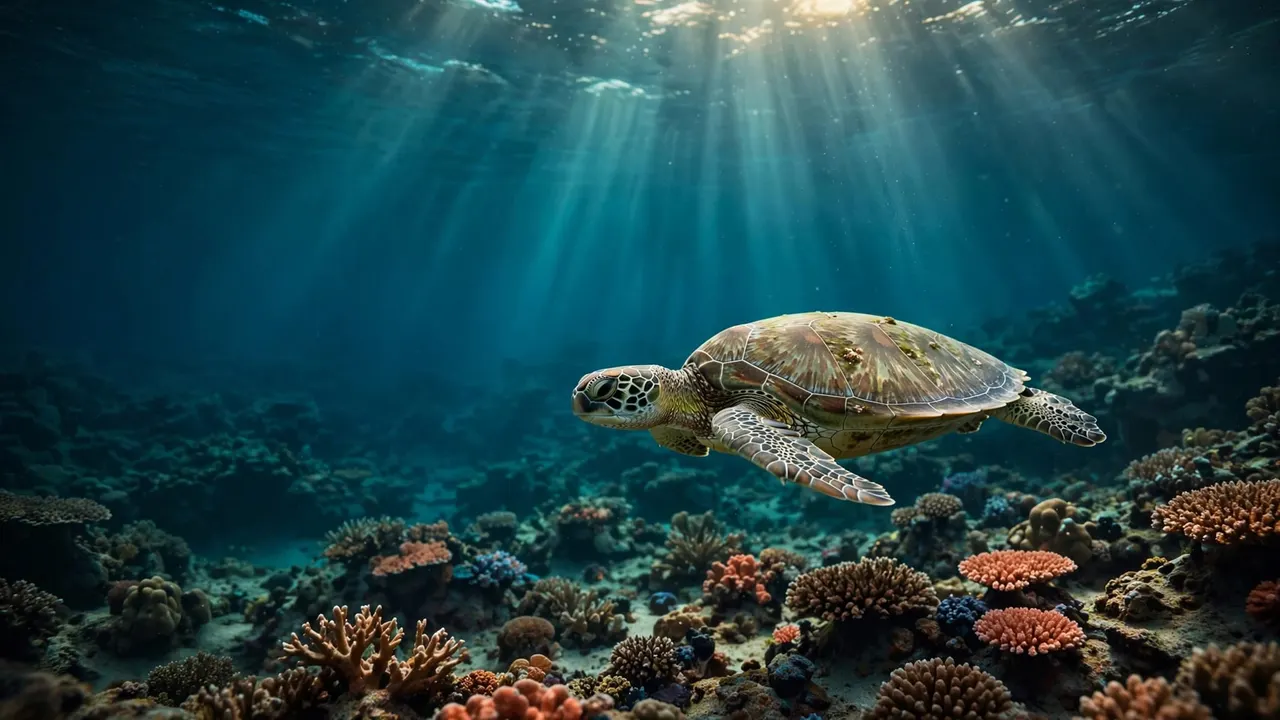
You can see three honu on one snorkel trip and none on the next. At Turtle Canyon Oahu, those moments tell you what happened during your visit, but they don’t reveal how many green turtles use the reef.
Living Ocean Tours brings you to this offshore Waikiki habitat from Kewalo Basin Boat Harbor. While you enjoy the encounter, it helps to know how researchers turn turtle sightings into evidence. A population survey depends on repeated, comparable observations, not one especially memorable swim.
Key Takeaways
- Turtle Canyon is wild reef habitat. Turtles choose when to arrive, rest, visit cleaning stations, and leave.
- A snorkel sighting records an encounter, not the number of turtles living around Oahu.
- Researchers identify individuals and account for survey effort before estimating turtle abundance or population trends.
- You can support turtle research by reporting a visible shell marking through NOAA’s Honu Count, without approaching the animal.
- Give every turtle at least 10 feet of space and leave its route to the surface open.
Why Turtle Canyon Oahu Sightings Aren’t a Census
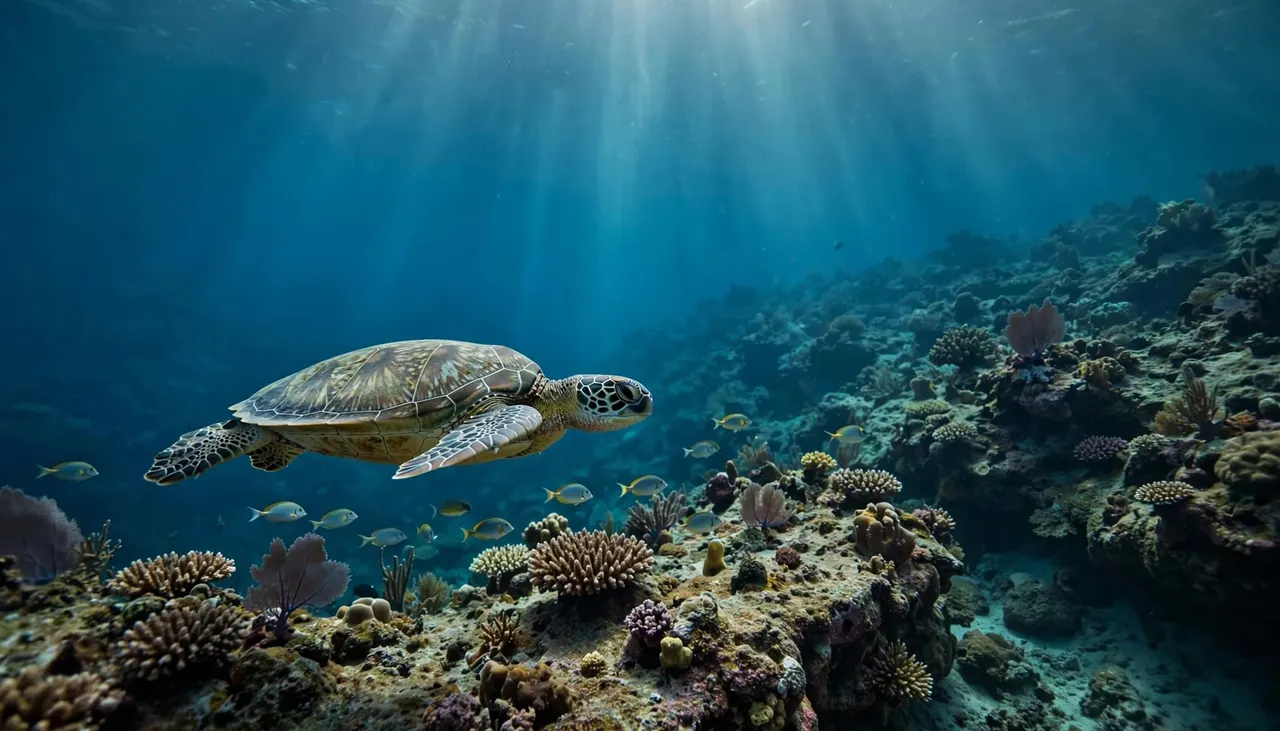
Turtle Canyon is known for cleaning-station activity. Small reef fish may pick material from a turtle’s shell and skin while it pauses near the reef. That makes the area rewarding to watch, but it also makes a simple head count easy to misread.
Several turtles can share a useful reef
If you see multiple honu in the same patch of water, they may be using the same resting area or cleaning station. Their presence doesn’t show that they travel together or remain at the reef all day.
Turtles also move through a larger coastal habitat. You might watch one surface and swim out of view while another arrives. Without a way to tell them apart, a later sighting could be a new animal or one you’ve already seen.
Conditions change what you can detect
Visibility, glare, currents, and the amount of time you spend in the water all affect your count. So does turtle behavior. An animal resting under a ledge is harder to spot than one breathing at the surface.
This is why a busy morning at Turtle Canyon Oahu can’t be compared directly with a brief swim on a cloudy afternoon. Researchers need a consistent method before differences in sightings can mean much.
What a Useful Green Turtle Survey Records
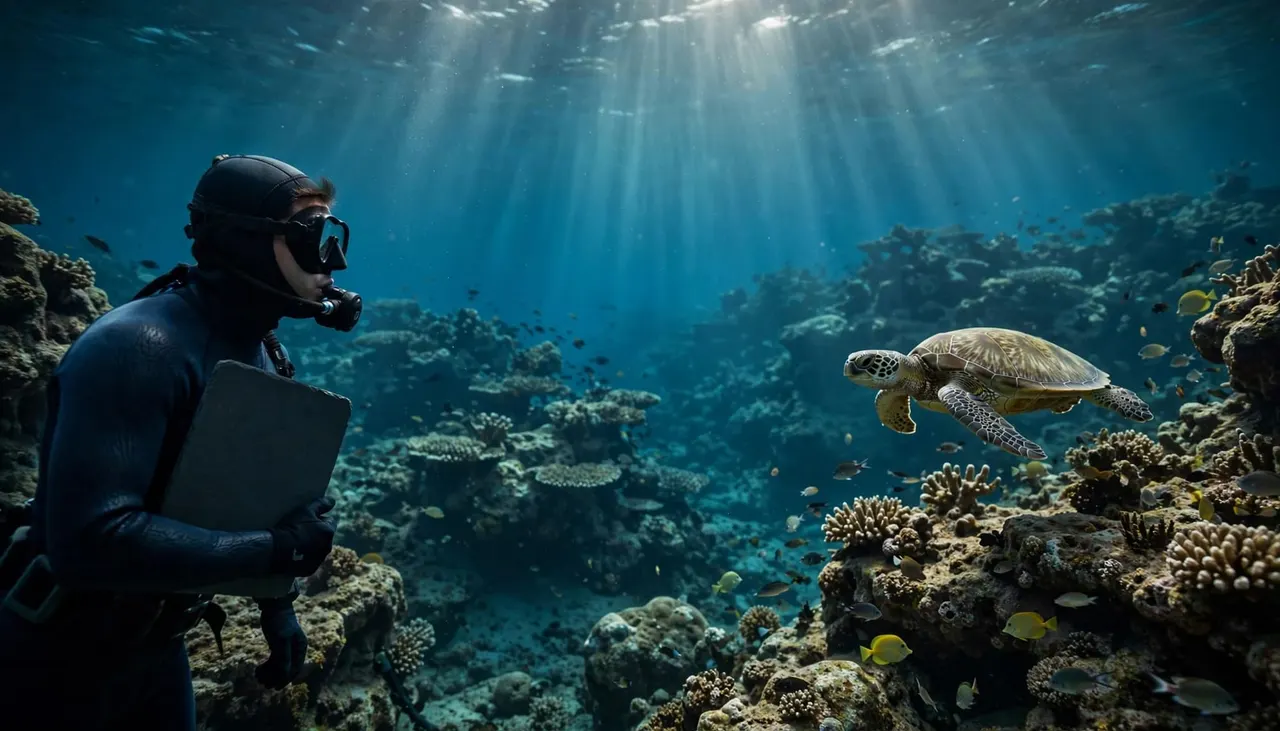
A survey begins with a clear question. Researchers might ask how often turtles use a particular reef, whether identifiable animals return, or how counts change over time. Each question calls for a different design.
Keep observation effort comparable
For a reef survey, a team could use the same observation area and duration on each visit. They would record the date, time, sea conditions, visibility, and number of observers alongside each turtle sighting.
Those details matter because a count of five turtles during a long, clear-water survey isn’t equivalent to five during a short visit with poor visibility. Repeated visits also help reveal variation that one day’s observations would miss.
A sound study would define its survey area before collecting data. Otherwise, a change in route could look like a change in turtle activity.
Distinguish sightings from individuals
A sighting is an observation at a particular time. An individual is a particular turtle. Researchers try to separate the two when their question requires it.
Marks, tags, and carefully documented identifying features can help, depending on the study method. Researchers must also track uncertain identifications rather than assume every image shows a different turtle. If one honu passes the same observation point twice, counting both passes as separate animals would inflate the tally.
Even a reliable count of distinct individuals would describe turtles detected during the study. It wouldn’t automatically include every turtle that uses the wider Waikiki coastline.
How Hawaii’s Green Turtle Monitoring Works
At Turtle Canyon Oahu, you may see behavior that researchers study across Hawaii. However, statewide monitoring methods shouldn’t be mistaken for a published Turtle Canyon population count. NOAA Fisheries’ sea turtle research program examines turtle abundance, health, and threats across Pacific habitats.
Capture, mark, and encounter again
In capture-mark-recapture research, authorized teams identify a turtle when they first handle it, then look for that individual during later work. Depending on the approved protocol, researchers may record measurements and apply identifying marks or tags before release.
A later encounter adds information about that animal’s growth and survival. Across many individuals and survey periods, researchers can use encounter histories to estimate population measures. The analysis accounts for a central problem: turtles present in an area aren’t all detected on every visit.
This work requires trained, authorized personnel. Your snorkel tour is an opportunity to observe honu, not to handle or tag them.
Nesting beaches provide another view
Researchers also identify and count turtles at nesting areas, including French Frigate Shoals in the Northwestern Hawaiian Islands. Beach records answer different questions than observations on an Oahu reef. For example, nesting females represent only part of a population; juveniles and males won’t appear in a nesting-female count.
NOAA also uses approaches such as vessel and aerial surveys in selected areas. Combining methods gives researchers a fuller picture, but each dataset has its own location, time period, and limits. A result from one beach or bay cannot be assigned to Turtle Canyon without evidence connecting the study to that site.
What Survey Results Can Tell You About Turtle Canyon Oahu
A local survey can be valuable without claiming to count every turtle in the sea. The first step is matching the conclusion to what the team measured.
Reef use is narrower than total population
Suppose a study documents repeated visits by identified turtles at Turtle Canyon. That could show which animals returned during the survey period. It wouldn’t prove that those turtles live there year-round or never use other reefs.
Likewise, seeing more turtles on one day may mean more animals were present, more were visible, or both. Researchers have to address detection before treating a higher count as population growth.
Oahu offers examples of place-specific turtle research, including the Maunalua Bay honu survey. Its findings concern the area studied; you can’t transfer its counts to an offshore Waikiki reef.
Trends need a dependable baseline
To judge whether use of a site changes, researchers need observations collected in comparable ways over time. They also need to consider seasonal movement, water conditions, and changes in where people look.
No Turtle Canyon-specific formal population estimate appears in the research described here. So if you hear a number of turtles spotted on a tour, treat it as a report of that outing. It isn’t a census of Turtle Canyon Oahu.
How You Can Help Without Disturbing Honu
You don’t need to conduct a survey to make a useful observation. You do need to let the turtle behave naturally, especially when it rests or rises to breathe.
Report visible shell markings
Some Hawaiian green turtles carry white alphanumeric markings on their shells. NOAA’s Honu Count reporting program asks you to report a visible mark along with the sighting’s date, time, and location.
Only note a marking you can see from a respectful distance. Don’t swim closer or try to turn the turtle for a clearer photo. A report can help researchers follow a known individual, but public submissions don’t replace a standardized abundance survey. Reporting depends on where people happen to visit and which turtles they can see.
If a turtle looks injured or entangled, tell your guide rather than intervening. NOAA’s Pacific Islands sea turtle guidance includes the marine wildlife hotline for reporting concerns.
Leave an open path through the water
NOAA’s Hawaii marine wildlife viewing guidance recommends staying at least 10 feet, or 3 meters, from sea turtles. Don’t touch, chase, or feed them.
Watch your position when several snorkelers spot the same honu. A loose crowd can block the animal’s path even when nobody intends to. Float to the side, keep your fins clear of coral, and give a surfacing turtle plenty of room above it.
Experience the Reef With Living Ocean Tours
Understanding a survey can change how you watch Turtle Canyon Oahu. Instead of trying to count every shell in sight, you can notice where a turtle pauses, how it moves around the reef, and whether it heads toward the surface.
Get support in the water
Living Ocean Tours departs from Kewalo Basin Boat Harbor, minutes from Waikiki. Its Turtle Canyon snorkel trips provide gear and in-water guidance for guests exploring the offshore reef. The company says it’s the only tour operator with professional snorkel guides, offering beginners and families direct support while they swim.
Its reported 95% turtle-sighting rate describes its tours, not a turtle population estimate. Honu are wild, so any day’s sightings depend on the animals and ocean conditions. You can plan an outing around the experience, then let the turtles set the pace.
For the Turtle Canyons excursion, CHECK AVAILABILITY when you know your travel dates.
Choose the ocean day that suits you
If you want to compare other family-friendly outings before booking, Living Ocean Tours also offers boat trips along the Waikiki coastline. Its crew can help you choose an experience that matches your comfort in the water.
Frequently Asked Questions
Does NOAA publish a Turtle Canyon turtle population count?
The research discussed here doesn’t establish a formal Turtle Canyon-specific population estimate. NOAA studies green turtles through broader monitoring programs, but a reef sighting count isn’t interchangeable with a population total.
Can you identify a turtle by its shell?
You may be able to report a clearly visible numbered shell marking through Honu Count. Don’t move closer to check for one. Researchers need reliable identification records; a casual impression that two turtles look alike isn’t enough.
Does a high tour sighting rate mean the population is growing?
No. A tour sighting rate describes how often guests see turtles on outings. Population growth requires comparable data collected over time, with attention to which animals were detected and how the survey was conducted.
A Better Way to Read a Turtle Sighting
The next time you see honu at Turtle Canyon Oahu, enjoy the moment for what it is: a view into a wild animal’s day. A few turtles in one stretch of reef tell you where they were during your swim, not how many live off Waikiki.
Careful observation gives that encounter more meaning. Keep your distance, notice the behavior in front of you, and leave each turtle free to continue on its way.


