
Turtle Canyon Oahu Guide to Male and Female Turtle Clues
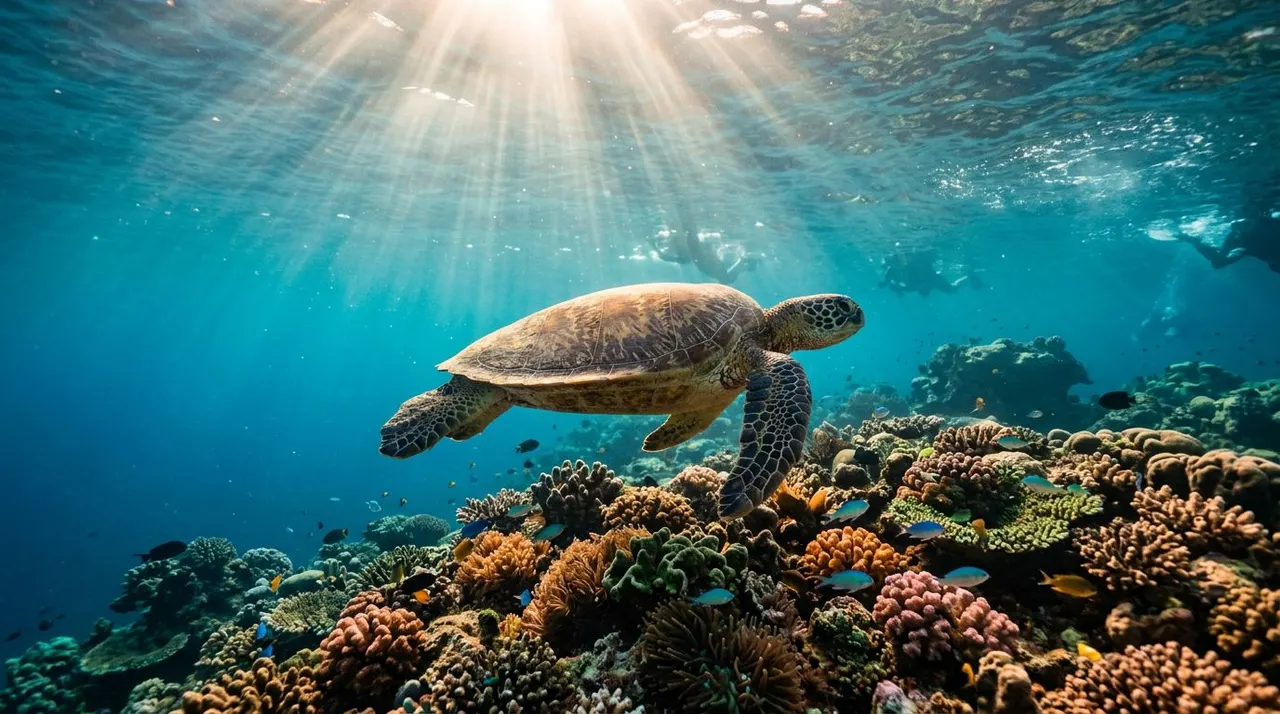
At Turtle Canyon Oahu, you can spot a male turtle fastest by checking the tail. That sounds simple until you’re floating above the reef and every honu seems to turn at the wrong moment.
Once you know the clues, you can read a turtle in seconds. Without them, you’re guessing in open water.
Living Ocean Tours puts you close to Turtle Canyon from Kewalo Basin Boat Harbor, and the crew helps you watch without crowding the animals. Here’s how to tell male and female clues with more confidence.
Why Turtle Canyon gives you a fair look at honu
Turtle Canyon gives you a real chance to study turtles because they often slow down there. They rest near the reef, drift through the water column, and sometimes pause at cleaning stations. That gives you a better look than a fast open-ocean sighting.
Still, the clearest sex clues show up on adults. Juveniles and small subadults keep the guesswork alive, and that surprises a lot of first-time snorkelers.
For species basics, the Hawaii DLNR sea turtle guide is a helpful reference. It helps you separate green turtles from hawksbills before you start reading sex clues. A rounded head and smooth shell fit the green turtle profile, but they don’t tell you male or female.
Use the scene as your first clue. If the turtle is calm, broadside, and close enough for a clear look, your odds improve. If it is far away or moving fast, keep the label open.
Adult males are easier to identify than juveniles. The tail does most of the work.
The adult clues that matter most
The adult male’s tail is the strongest clue. It usually tells the story before anything else does.
These are the details that matter most in the water.
| Clue | Male | Female | Usefulness at Turtle Canyon |
|---|---|---|---|
| Tail | Long, thick, and often extends well past the shell | Short and close to the shell | Best adult clue |
| Body size | Often slimmer | Often broader | Backup clue only |
| Underside view | Cloaca sits farther down the tail | Cloaca stays near the shell edge | Helpful if you get a clear angle |
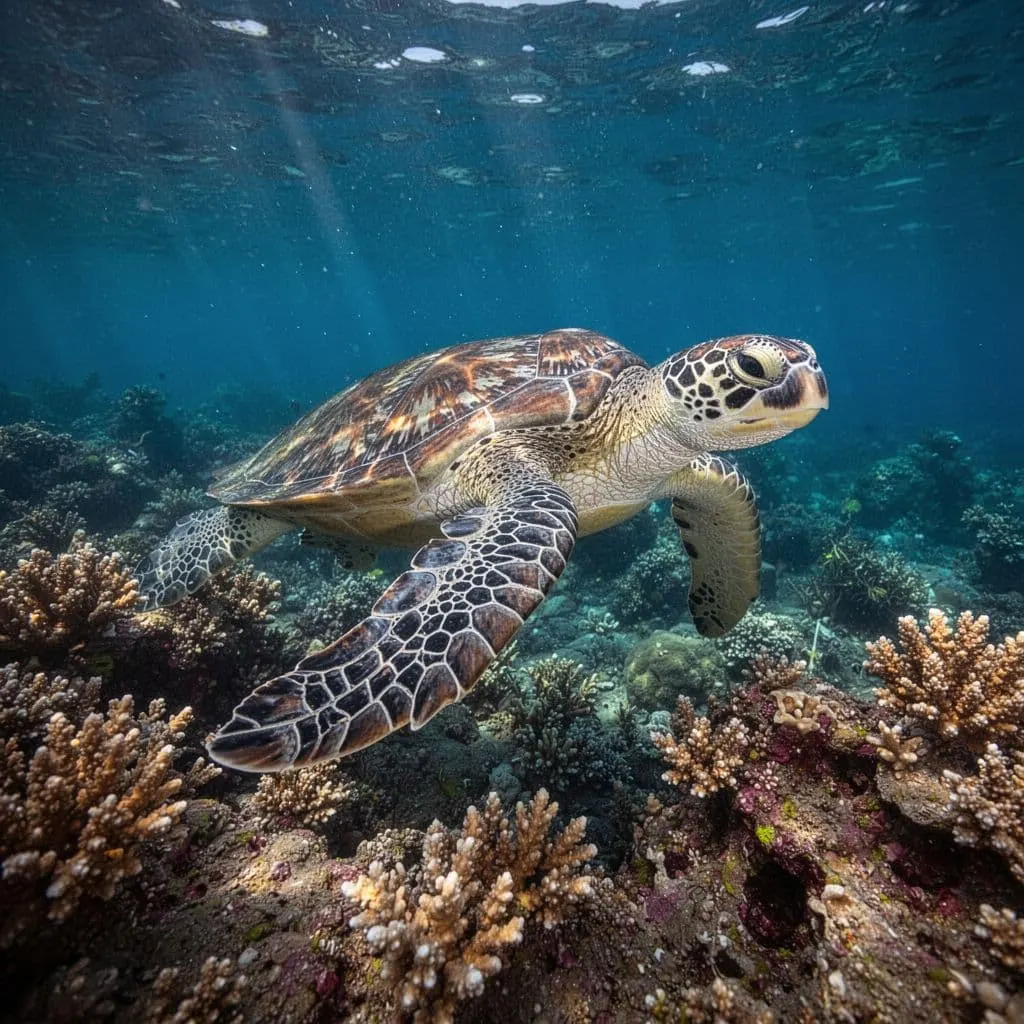
The tail usually wins. On an adult male, it can extend well beyond the shell. On a female, it stays much shorter and closer to the body. If the turtle turns away, the tail may vanish behind a fin or shadow, so don’t rush the call.
If you want a plain-English comparison, the Sea Turtle Status guide on male vs female turtles explains the long-tail rule clearly. The cloaca is the vent opening, and on males it sits farther down the tail because the tail is longer.
Body size can help, but it isn’t proof. Females are often larger, yet age and build vary. A smaller adult female can look like a male at first glance. That is why tail length matters more than shell size.
If you only see the top of the shell, skip the guess. A shell by itself doesn’t tell you much.
When the tail is hidden, use backup clues
Juveniles are the tricky part. Their tails are short, and their body differences are not dramatic enough for a quick guess. If a turtle is small, distant, or angled away from you, leave the sex label blank.
Water also changes what you see. Sun glare flattens detail. Waves hide the rear of the shell. A turtle that rolls once can go from obvious to impossible in a second.
The color and pattern won’t save you either. A darker shell or a brighter one is not a male-female clue. The same goes for head shape, which is more about species than sex. For a broader species reference, the Hawaii DLNR sea turtle guide helps when you want to double-check what you’re seeing.
A clear view is easier to trust than a quick glance. That matters at Turtle Canyon, where the turtles are the stars and you are the visitor.
How guided snorkeling helps you read the clues
A guided trip takes a lot of pressure off your guesswork. Living Ocean Tours leaves from Kewalo Basin Boat Harbor, minutes from Waikiki, and the crew helps you move at a calm pace. The company is the only tour company with professional snorkel guides, so you get trained eyes in the water and people who know how to point out detail without crowding a turtle.
The boats help too. The Coral Kai and Lokahi are Coast Guard-inspected double-decker vessels with shaded seating, restrooms, dry storage, and sturdy ladders. The Lokahi also has a SeaKeeper stabilization system, which helps keep the ride steady if you want a smoother trip.
If you want the closest look at the difference between male and female clues, the Turtle Canyon Snorkel Tour is the most direct choice. You can also browse ocean tours in Honolulu if you want another day on the water.
Living Ocean Tours also keeps the experience family-friendly and beginner-friendly, so you can focus on the reef instead of your nerves.
When you’re ready to book, CHECK AVAILABILITY.
Keep the encounter calm and respectful
A good turtle sighting depends on distance. Stay a few body lengths back, follow your guide, and let the turtle decide where to go. If it keeps drifting away, that’s your answer.
Your best look comes when you stay still and let the animal relax. Quick kicks, hand movements, and sudden turns do the opposite. The reef stays calmer when you move like a guest, not a chaser.
- Keep your hands and fins to yourself.
- Give the turtle space to surface and turn.
- Wait for a side view before you guess.
- Accept that some turtles stay unconfirmed.
That approach protects the reef and gives you better views at the same time. It also keeps the moment easier for everyone in the water.
Conclusion
At Turtle Canyon Oahu, the tail is the clue that matters most. Adult males usually show the longest tail, while females keep theirs short and close to the shell.
You won’t solve every sighting, and that’s fine. If the turtle is small, turned away, or partly hidden, leave the label open and enjoy the moment.
With a calm guide, steady distance, and a sharp look at the back end of the shell, you can read more than most snorkelers do. That turns a nice swim into a smarter one.


