
Swim With Turtles Oahu: Ultimate 2026 Guide
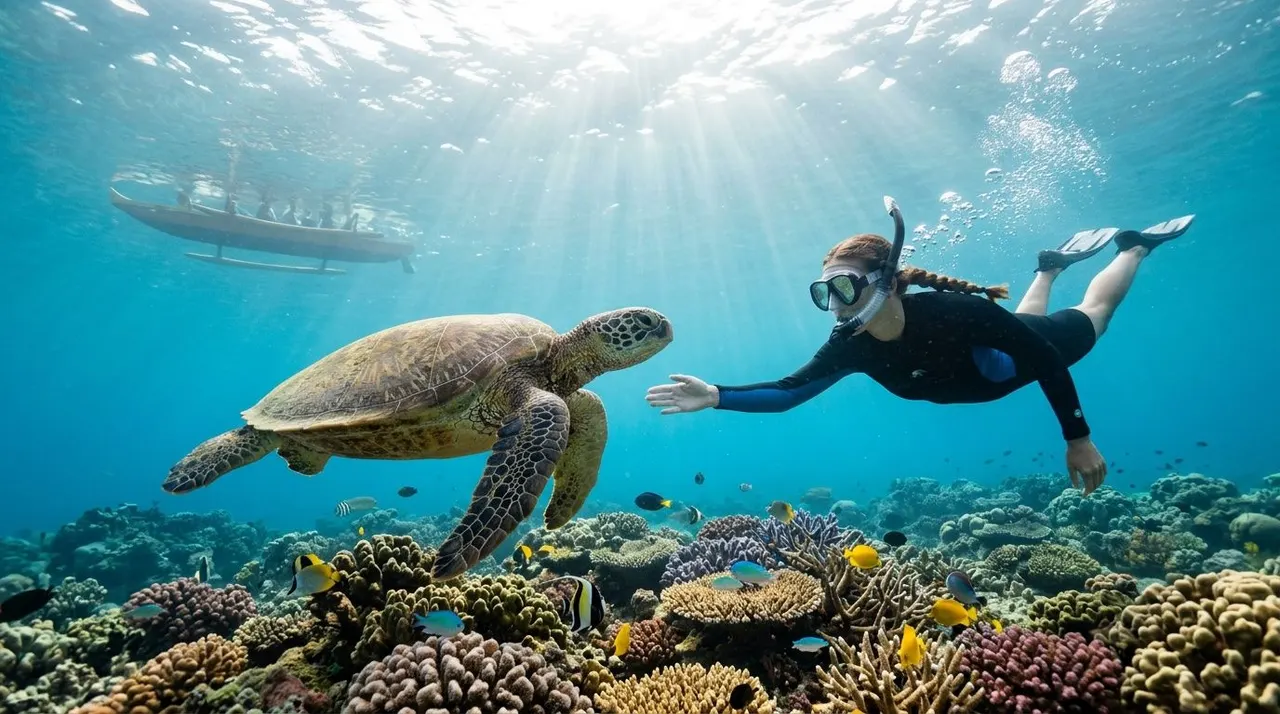
You’re probably here because you’ve seen the photos, heard the stories, and now you want the answer to one question. What’s the smartest way to swim with turtles Oahu without wasting a vacation day, breaking a wildlife rule, or ending up in rough water with a foggy rental mask.
That’s the right question to ask.
On Oahu, turtle encounters can be magical, but they’re not all equal. Some happen in crowded shoreline chaos. Some happen in clear offshore water where the turtles are calm, the reef is healthy, and the whole experience feels the way people hoped it would feel when they booked a Hawaii trip in the first place.
The difference usually comes down to planning, water access, and how you behave once you’re in the turtles’ world.
Your Dream of Swimming with Turtles in Oahu
There’s a moment I see over and over with first-time guests. They slide into warm blue water a little nervous, put their face in, breathe through the snorkel a few times, and then freeze for a second because a honu glides past below them like it owns the ocean. It does, of course. You’re the visitor.
That moment stays with people.
For many travelers, this isn’t just another beach activity. It’s the reason they packed the reef-safe sunscreen, woke up early, and looked up every guide they could find on where turtles show up. If that’s you, you’re not looking for a random splash-around. You want the kind of encounter that feels natural, respectful, and worth remembering.
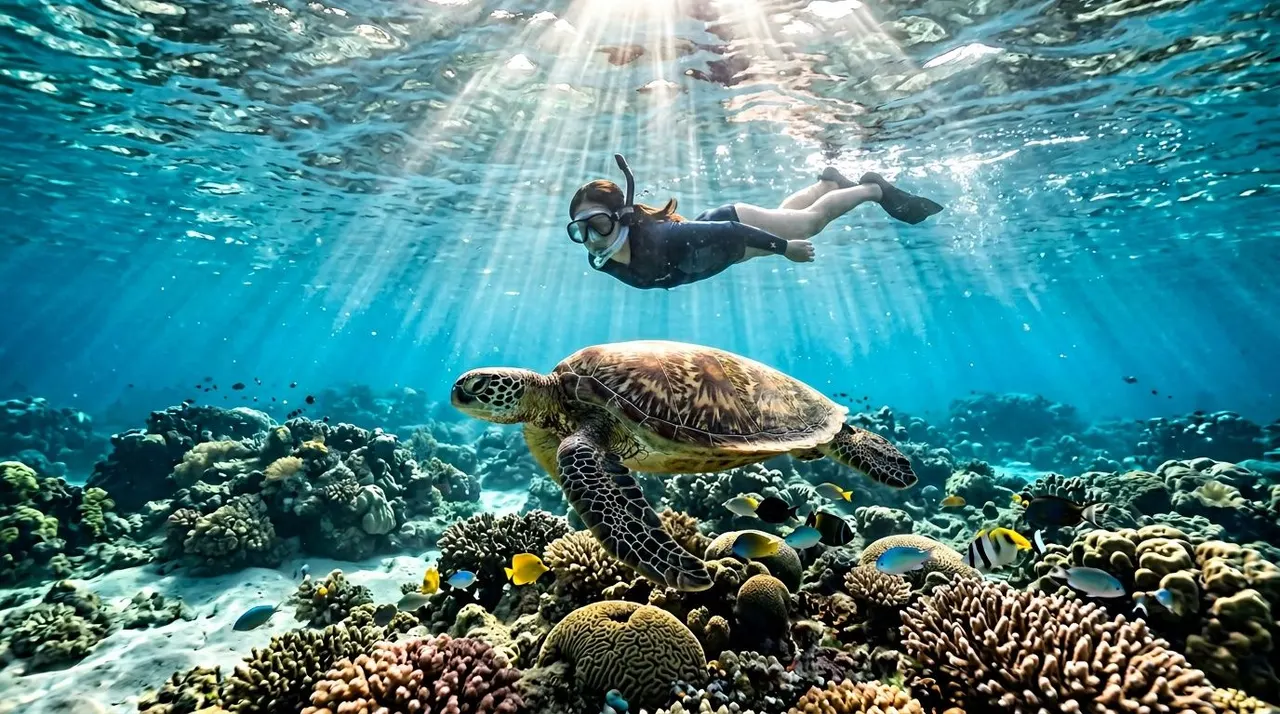
In Hawaiʻi, the honu carries meaning beyond wildlife viewing. People don’t just admire them because they’re beautiful. They’re tied to the islands in a deeper way, which is one reason a good turtle swim never starts with “How close can I get?” It starts with “How do I do this right?”
What the dream looks like in real life
The best version of this experience usually includes:
- Clear water: You can see the reef, fish, and turtle movement without guessing through surf churn.
- Calm conditions: Families and casual swimmers relax faster when the water isn’t pushing them around.
- Room to observe: The encounter feels better when you’re not packed shoulder-to-shoulder with strangers.
- A turtle acting naturally: Feeding, resting, surfacing, or stopping at a cleaning station.
That last point matters most. If the turtle looks unbothered, you’re doing it right.
The goal isn’t to interrupt a turtle. The goal is to witness one.
If you want a broader overview of locations and what makes them work, this guide on where to see sea turtles in Oahu is a useful starting point.
Why people get this wrong
A lot of visitors think the hard part is finding a turtle. Often, the hard part is setting yourself up for a clean, legal, low-stress encounter.
People overestimate shore spots, underestimate currents, and assume any patch of blue water near Waikiki will deliver the same experience. It won’t.
The good news is that Oahu gives you a shot at an excellent turtle swim if you choose the right conditions and approach the day with respect.
Respect the Honu Laws and Etiquette for Safe Encounters
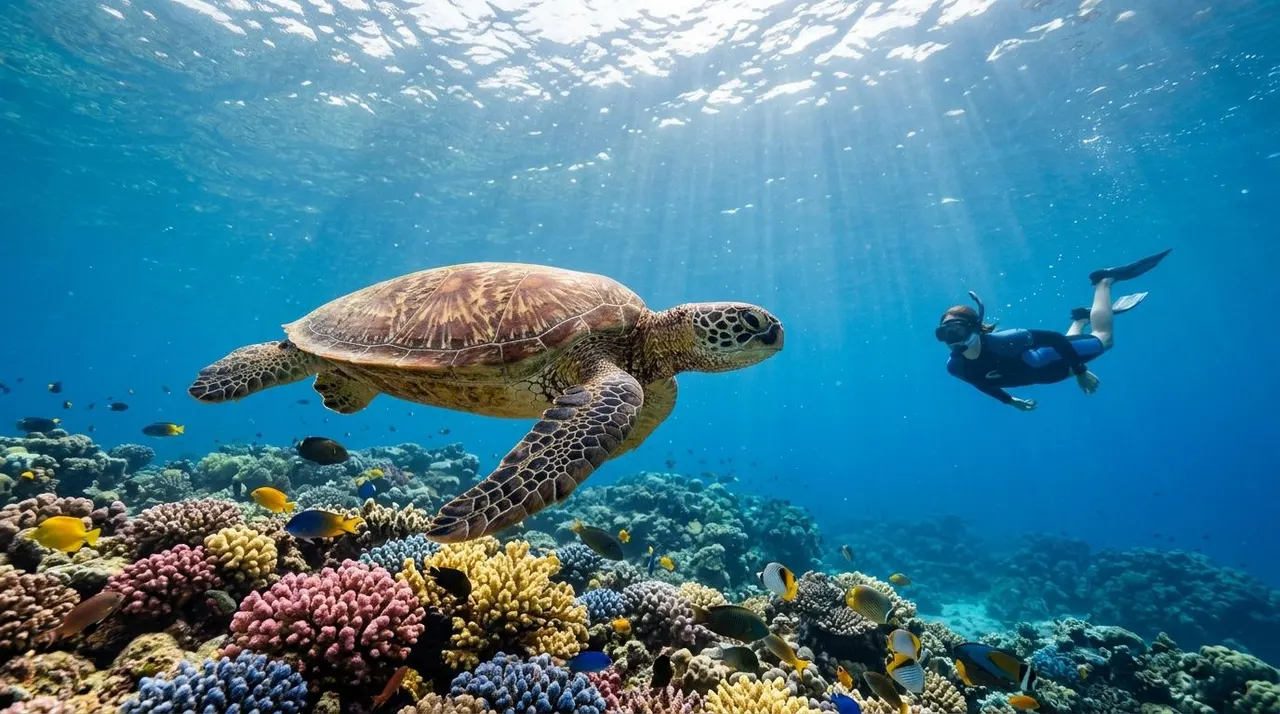
If you remember one rule, remember this one. Stay at least 10 feet away from the turtles. Oahu’s conservation efforts helped drive a major honu comeback, with nesting activity rising by over 900% to 83 nests recently, and NOAA rules require that minimum distance to protect that recovery, as noted in this guidance on swimming with turtles on Oahu.
That law isn’t there to make your trip harder. It’s there because stressed turtles change their behavior. They dive when they should rest. They move when they should feed. They lose space they need.
The simple rules that matter most
When guests ask me what respectful snorkeling looks like, I keep it plain:
- Keep your distance: Stay outside the 10-foot buffer.
- Never touch: Not the shell, not the flippers, not even if the turtle seems relaxed.
- Don’t chase: If you swim after a turtle, you’ve already changed the encounter for the worse.
- Don’t block its path: Especially when it’s headed upward for air.
- Move slowly: Calm swimmers get better wildlife moments.
- Use reef-safe sunscreen: Protecting turtles also means protecting the reef they depend on.
Why slow is better
Fast kicks, splashing, and crowding do two things. They stress the turtle and ruin visibility for everyone else.
Many people imagine a great turtle encounter as active. It’s usually the opposite. Float. Watch. Let the turtle decide where to go. If it changes direction because of you, you were too close or too aggressive.
Practical rule: If you have to kick hard to stay near a turtle, you’re not observing anymore. You’re pursuing.
The etiquette good guides repeat constantly
A quality crew will brief these points before anyone gets in the water. That’s not filler. It’s one of the biggest reasons guided trips tend to feel smoother and more respectful.
Good briefings usually cover:
- How to enter calmly
- How to float without flailing
- Where to position yourself around marine life
- What to do if a turtle approaches on its own
- How to avoid contact with reef and wildlife
If you want a closer look at on-water expectations, these Turtle Canyon Oahu rules are worth reading before your trip.
The best snorkelers aren’t the fastest swimmers. They’re the calmest people in the water.
Shore vs Boat Choosing the Best Place to Find Turtles
Visitors often compare two options. Walk in from shore and hope for a sighting, or head offshore by boat to a known turtle habitat.
Both can work. They don’t work equally well.
What shore snorkeling gets right
Shore entry appeals to people because it feels simple. No departure time. No boat. No schedule beyond your own.
If conditions line up, shore snorkeling can be enjoyable. You can move at your own pace, spend time on the beach, and keep the day flexible.
But there are trade-offs:
| Option | Main upside | Main downside |
|---|---|---|
| Shore snorkeling | Easy to attempt on your own | Sightings and conditions can be inconsistent |
| Boat access | Direct route to offshore habitat | Requires booking and a set departure |
The downsides on shore tend to stack up fast. Parking, crowds, surf, murky water near the beach, and the simple fact that turtles don’t gather at every accessible shoreline in the same way.
Why offshore changes the odds
At Turtle Canyon, the draw isn’t luck. It’s habitat. The site is an offshore turtle cleaning station where turtles gather and reef fish clean their shells. Because it’s offshore and sheltered by Diamond Head, conditions are often calmer and clearer than many shore spots, which supports the near-100% sighting success associated with guided tours, according to this overview of the best place to snorkel with turtles in Oahu.
That combination matters more than people expect.
You’re not just looking for any place turtles might pass through. You’re looking for a place turtles already use for a reason.
Real-world trade-offs
From a guide’s perspective, this is usually what separates the two experiences:
- Shore spots: Easier to access in theory, but more variable once you deal with surf and visibility.
- Boat-only reefs: More structured, but much more efficient for actual turtle encounters.
- Crowded beach areas: Fine for sunbathing, not always great for calm wildlife observation.
- Offshore sites: Better water movement, less sediment, and fewer shoreline distractions.
If you’re deciding between the two, this comparison of Waikiki snorkeling shore vs boat lays out the differences clearly.
For travelers with kids, grandparents, or anyone who wants the best shot at seeing turtles without turning the day into a logistics exercise, boat access usually wins.
Gear Safety and Snorkeling Tips for the Whole Family
Bad gear ruins good water. That’s the quickest way I can put it.
Most first-timers don’t struggle because snorkeling is hard. They struggle because their mask leaks, their snorkel feels awkward, or they tense up the second they put their face in the water.
What to bring and what should already be handled
Bring the basics yourself:
- Towel
- Swimsuit
- Dry clothes for after
- Sun protection
- Waterproof phone case or camera if you want photos
A quality tour should handle the in-water essentials. That includes mask, snorkel, fins, and flotation support for anyone who wants it.
Tips that help beginners immediately
Here’s what works fastest with nervous snorkelers and kids:
- Start by floating, not swimming: Get comfortable breathing through the snorkel before you move anywhere.
- Keep your face relaxed: A clenched jaw and scrunched face usually lead to leaks.
- Use small fin kicks: Big bicycle kicks tire people out and stir up the bottom.
- Lift your head only when needed: Constantly popping up creates fatigue and breaks your rhythm.
One calm minute at the start saves ten frantic minutes later.
If you can float and breathe comfortably, you can enjoy the reef. Speed has nothing to do with it.
For non-swimmers and casual swimmers
For non-swimmers and casual swimmers, guided support makes a huge difference here. Professional tours can make the experience accessible by providing flotation belts, life jackets, and in-water guides, which helps non-swimmers and families feel safer in the water, as described in this article on snorkeling with turtles on Oahu.
That doesn’t mean every person will feel the same level of comfort. It means the right setup removes a lot of the barriers people assume make turtle snorkeling off-limits.
Some practical advice if someone in your group is anxious:
- Say so before the trip starts
- Ask for flotation right away
- Stay near the guide from the start
- Enter slowly and get settled before looking for turtles
A few mistakes families can avoid
The most common ones are preventable:
- Skipping the gear check: Fix mask fit before you enter.
- Going too hard in the first five minutes: Pace matters.
- Forgetting reef awareness: Don’t stand on coral or kick toward it.
- Letting kids drift without a clear plan: Stay grouped and communicate often.
For a practical safety refresher before your trip, this Oahu reef safety guide is useful.
When everyone has the right gear and realistic expectations, the day gets easier fast.
Booking the Best Tour An Inside Look at Turtle Canyons
You can tell a lot about a turtle tour before the boat ever leaves the harbor. Good operators explain how they run the site, how they handle nervous swimmers, and how they protect wildlife. Weak ones sell the turtle photo and gloss over the rest.
That difference matters at Turtle Canyons.
This reef off Waikiki is popular for a reason. Turtles use the area regularly, but good sightings still depend on ocean conditions, boat positioning, group control, and guides who know how to keep people calm in the water without crowding the animals. If you want a useful primer on the site itself, this Turtle Canyon snorkel guide gives a solid overview.
What to look for before you book
A strong tour makes the process clear on shore, not after you have already paid and checked in. Look for plain answers to practical questions.
- How is the trip run? You should know the departure point, the likely time on the water, and whether guides enter the water with guests.
- How do they handle turtle encounters? A responsible crew talks about spacing, no-touch rules, and how they prevent guests from chasing wildlife.
- Who is this trip suited for? Families, beginners, and hesitant swimmers should be able to find out what support is available before booking.
- Why this site? The crew should be able to explain why they use Turtle Canyons and what conditions make it a better call than a random reef stop.
The right question is simple. How does this crew produce a calm, respectful turtle encounter?
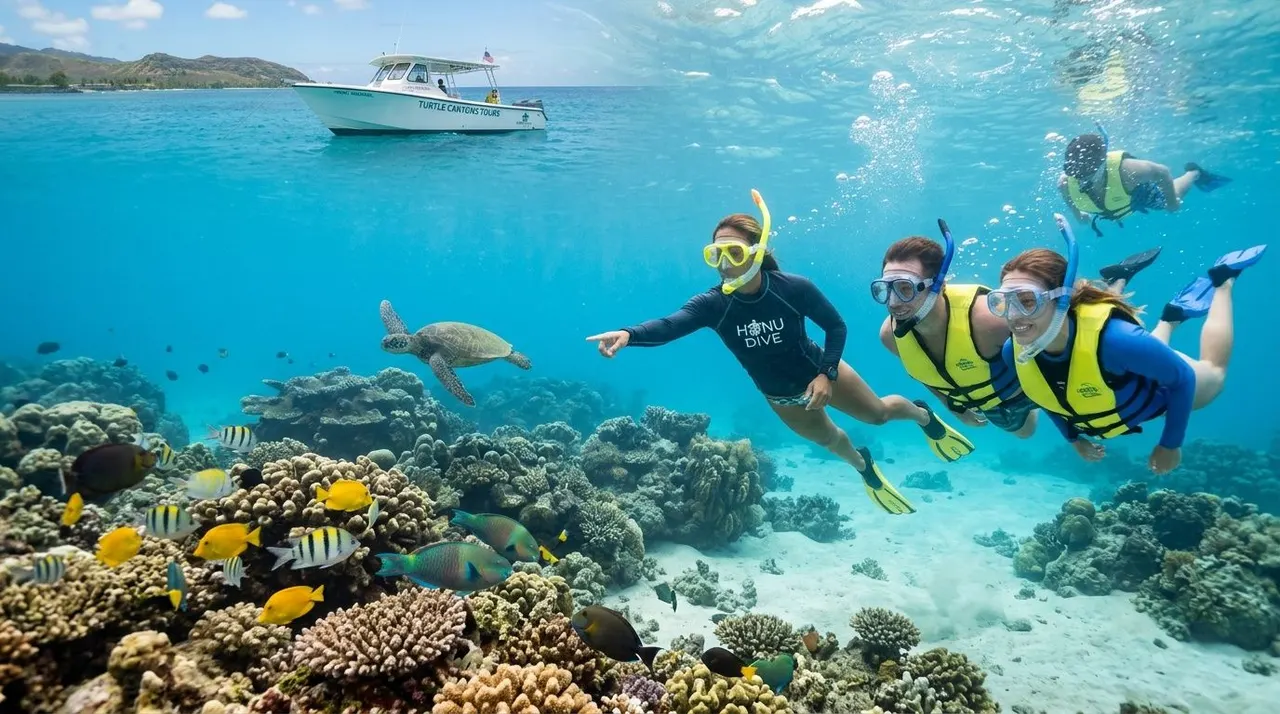
What experienced operators do differently
From a captain’s side of things, the job starts well before guests step onto the swim platform. Crews watch swell, wind, current, and visibility, then decide whether Turtle Canyons will give people a safe, worthwhile snorkel that day. Local knowledge shows up in small choices. Where to set up the boat. When to send guests in. How to position the group so turtles can keep doing what turtles do.
A capable crew will usually do the following:
| What they do | Why it matters |
|---|---|
| Assess conditions before departure | Safer entries and better visibility |
| Choose timing carefully | Calmer water often makes the snorkel easier |
| Use known cleaning station areas responsibly | Better chance of natural turtle activity |
| Keep in-water guides with the group | Stronger safety oversight and better wildlife etiquette |
That is why boat tours outperform the do-it-yourself approach so often. Shore snorkelers spend a lot of time guessing. A good boat crew shortens the search, puts you over proven habitat, and manages the group so the experience stays orderly instead of turning into a scramble.
One guided option to consider
If you want a direct boat trip built around Turtle Canyons, the Turtle Canyons Snorkel Excursion is one option to look at. It is a straightforward choice for travelers staying near Waikiki who want to spend their snorkel time on a reef with regular turtle activity instead of piecing the day together with transportation, rentals, and uncertain shore access.
For many visitors, that trade-off is the whole point. Less guesswork. More time in the water. Better supervision around protected wildlife.
Your Day on the Water What to Expect on a Turtle Snorkel Tour
The easiest way to calm first-trip nerves is to know what the day usually feels like.
Most Waikiki-area turtle tours start with check-in at Kewalo Basin Boat Harbor. That’s a straightforward departure point and a quick run from the harbor out to the reef, so the trip starts moving quickly.
Before you get in the water
Once you’re aboard, expect a short settling-in period. Crew members point out where to sit, where gear is stored, and how the snorkel setup works.
Then comes the important part. The safety briefing.
A good briefing covers entry technique, where the guides will be, what to do if you’re uncomfortable, and how to behave around turtles and reef life. Listen to that part. The people who have the smoothest swim are usually the ones who paid attention before the boat stopped.
The ride out and the first look down
The ride itself is part of the day. You get the Waikiki coastline from the water, Diamond Head off to the side, and a much better sense of how quickly the city falls away once you’re offshore.
When the boat reaches the snorkel site, things usually happen in a clean sequence:
- Gear goes on.
- Masks get checked.
- Fins are sorted out.
- Nervous swimmers get flotation.
- Guests enter in an organized order.
That structure matters. Rushed entries create stress.
Enter calm, float first, then start looking around. The reef isn’t going anywhere.
What the snorkel itself feels like
Once everyone settles, the underwater scene starts opening up. Turtles may be below the group, moving across the reef, surfacing farther off, or hovering around the cleaning area while fish work over their shells.
Guides in the water make a big difference here. They can point out turtles, reef fish, and good viewing angles while also helping anyone who needs a pause or reset.
For families, this is often the turning point. Kids stop thinking about the mask. Adults stop worrying about whether they’re doing it right. People relax and start watching.
If you want extra variety on a separate snorkeling day, the Waikiki Snorkel Waterslide tour is another option for a more activity-focused outing.
Back on the boat, people usually look pleasantly surprised by how manageable the whole thing felt. That’s what a good turtle trip should feel like. Organized, safe, and easy to enjoy.
Frequently Asked Questions About Swimming with Turtles on Oahu
What’s the best time of year to swim with turtles on Oahu
Turtles are present year-round, but summer months from June to October offer the calmest seas and strong visibility on Oahu’s South Shore. That usually makes the experience easier for beginners and families.
Do I need to be a strong swimmer
No. Many guided tours support casual swimmers with flotation gear and in-water guidance. The key is choosing a trip that’s built for mixed comfort levels, not assuming every snorkel outing works the same way.
Is seeing a turtle guaranteed
No ethical operator can guarantee wildlife on command. That said, guided tours to Turtle Canyons are known for very high sighting success because they visit a reef turtles use consistently.
What if the weather is bad
Ocean conditions decide everything. If conditions aren’t suitable, operators may adjust plans, reschedule, or cancel for safety. That’s a good sign, not a disappointment.
Is this suitable for kids
Often, yes. Family-friendly boat tours are usually the best fit because the crew can assist with gear, flotation, and entry. Children still need to be comfortable following instructions and staying with the group.
If you want a well-run way to experience swim with turtles Oahu with a crew focused on snorkeling, safety, and responsible wildlife viewing, take a look at Living Ocean Tours.


