
Sunset Cruise Hawaii Waikiki: Stargazing After Sunset
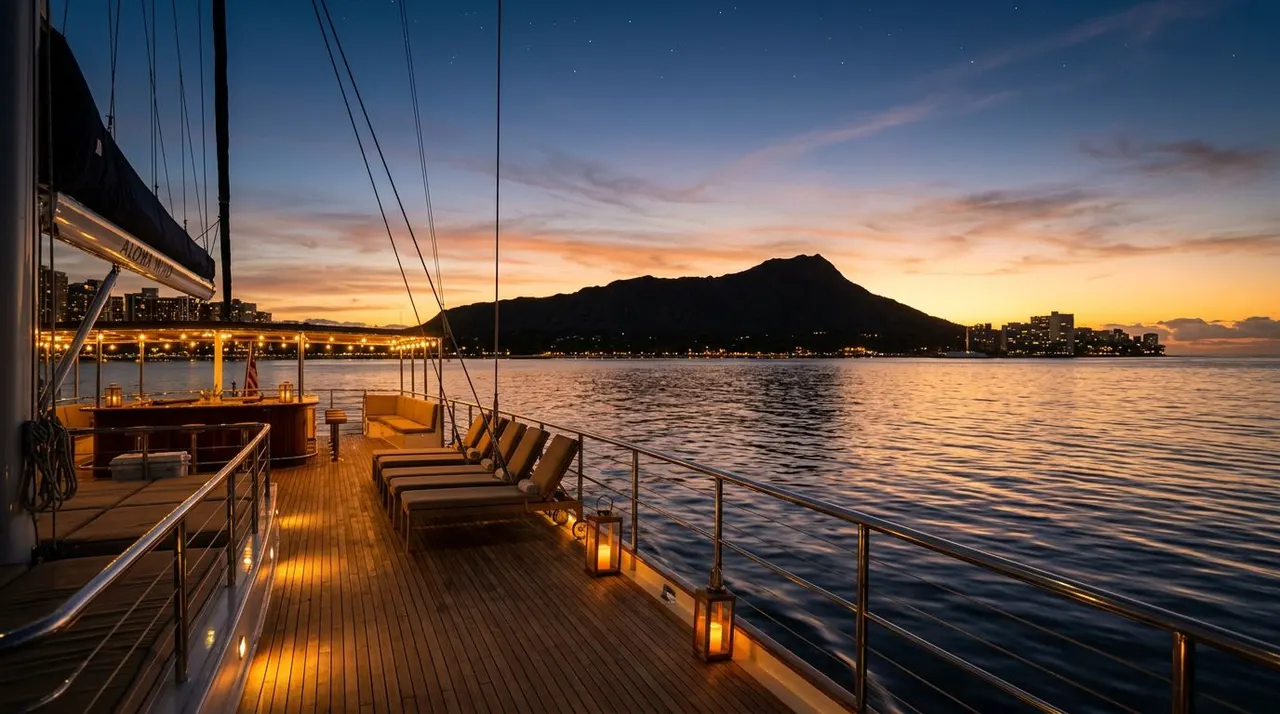
Sunset is only the first act of an evening on the water. If you search for “sunset cruise Hawaii Waikiki,” you’re probably hoping to see more than a colorful horizon. You want a comfortable boat ride, clear ocean views, and a chance to watch the first stars appear above Diamond Head.
Stargazing from Waikiki won’t match a remote mountain observatory, but the experience can still be beautiful. The timing, moon phase, weather, boat position, and your expectations all shape the view. Start by understanding what happens after the sun disappears.
What a sunset cruise Hawaii Waikiki evening really looks like
A Waikiki sunset cruise usually begins while the sky still holds plenty of daylight. You may watch the shoreline glow orange and pink before the boat reaches calmer water offshore. As the sun drops, Diamond Head becomes a dark outline against the fading color.
The cruise then moves through several stages of twilight. The sky doesn’t turn black at the exact moment the sun slips below the horizon. Instead, the light fades gradually, which gives you time to enjoy the scenery, take photos, and settle into the evening.
The first stars arrive during twilight
The brightest stars and planets may become visible before full darkness. During nautical twilight, the horizon remains easier to see, while many of the brighter points of light begin to stand out overhead. The National Weather Service twilight guide explains how these stages relate to the sun’s position below the horizon.
For more exact definitions, the U.S. Naval Observatory twilight information separates civil, nautical, and astronomical twilight. Those distinctions matter because your cruise may end before the sky reaches its darkest point.
Your eyes need time to adjust
Bright lights from hotels, buildings, and boats can make faint stars difficult to see. Give your eyes a few minutes away from phone screens and bright deck lighting. You may notice more stars once your vision adjusts to the darker sky.
Keep your phone brightness low, and use the boat’s safety lighting as directed. A safe deck matters more than chasing one faint constellation. You can still enjoy the view without turning the cruise into a formal astronomy session.
Planning a sunset cruise Hawaii Waikiki for stargazing
The best cruise for stargazing depends on what you want from the whole evening. If sunset photography is your priority, choose a departure that gives you a clear view of the western horizon. If you care more about stars, look for a cruise that stays on the water after sunset.
Departure times change throughout the year because sunset shifts with the season. Check the exact schedule for your travel date instead of relying on a general estimate. A cruise that leaves too early may return before the sky darkens. A later departure may provide better stars but less time for sunset colors.
Check the moon before you book
Moonlight changes the appearance of the night sky. A bright full moon can illuminate the ocean and create a memorable scene, but it can also wash out faint stars. A thin crescent or a moon below the horizon usually gives you darker conditions.
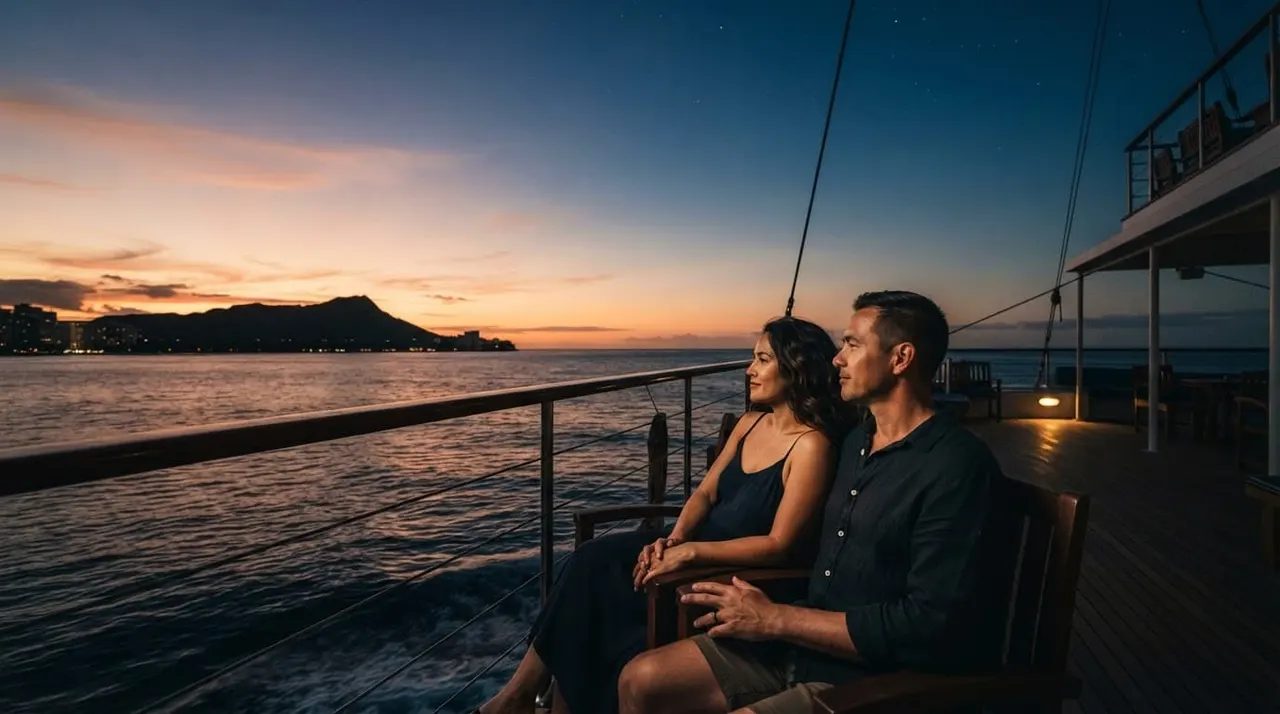
You don’t need a perfectly moonless night to enjoy the cruise. Moonlight can help you see the water, shoreline, and boat deck. Couples often prefer a brighter moon for photos, while guests focused on constellations may prefer less moonlight.
Match the cruise length to your goal
A one-hour ride can offer a beautiful sunset and the first visible stars. A longer evening gives your eyes more time to adjust and allows the boat to spend more time away from shore lights.
Ask how long the boat remains offshore and whether the route changes after sunset. You should also confirm whether the cruise focuses on sightseeing, dining, live entertainment, or quiet ocean views. A sunset cruise is usually a broad evening experience, with stargazing as one part of the trip.
Why leaving Waikiki helps you see more stars
Waikiki’s beachfront is bright after dark. Hotel towers, streetlights, restaurants, and traffic create a strong glow along the shoreline. That light can overpower dim stars, especially close to the horizon.
Once your boat moves away from the brightest part of the coast, the glare becomes less direct. You may see more stars above the boat than you would from a crowded beach promenade. The difference depends on cloud cover, haze, moonlight, and the direction you face.
You should still keep expectations realistic. A cruise near Honolulu doesn’t create completely dark-sky conditions. However, the unobstructed ocean horizon gives you a wider view and removes many buildings from your line of sight.
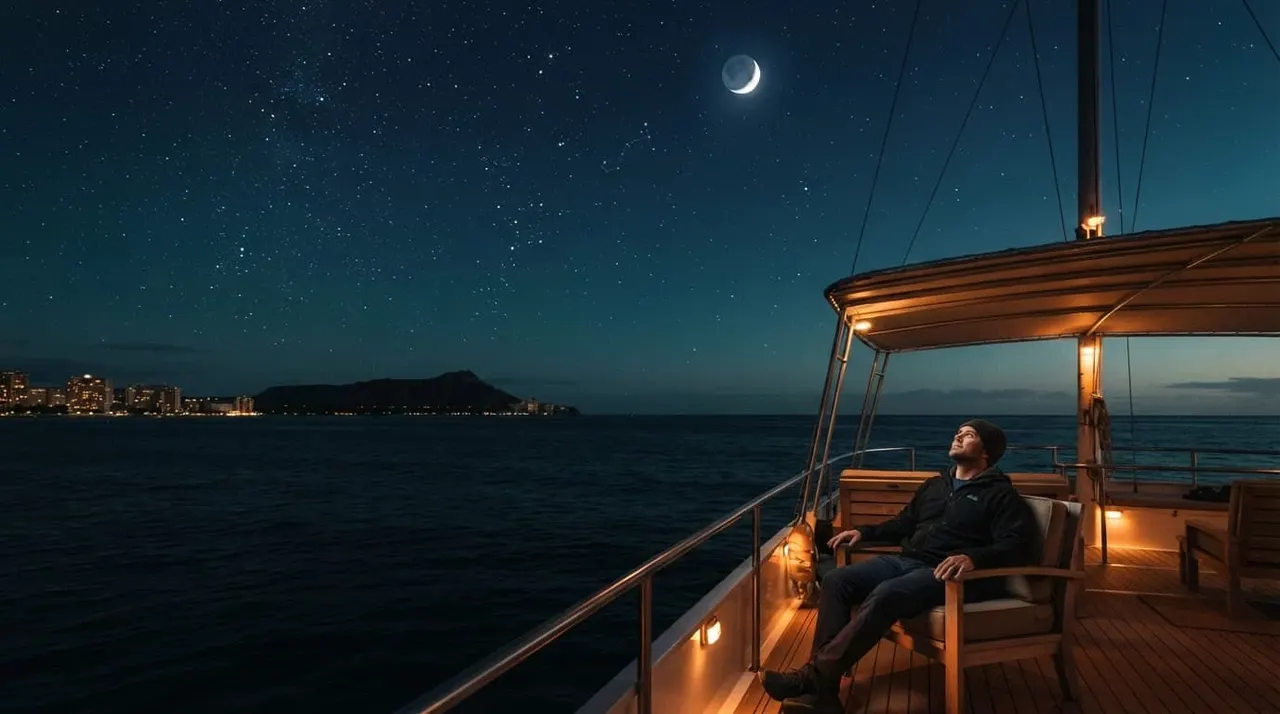
The southern sky can be especially interesting from Hawaii. Depending on the season and time, you may spot bright stars near the southern horizon that are difficult to see farther north. Summer skies often feature Scorpius and Sagittarius, while winter brings Orion into view.
Download a simple star map before leaving the hotel. Choose one that works offline, then dim your screen. You won’t need advanced equipment to identify a few bright stars and constellations.
What to bring for a comfortable evening cruise
Your packing list can stay simple, but a few items make the ride more enjoyable. Ocean air may feel cooler after sunset, even when the afternoon was warm.
Bring:
- A light sweater or windbreaker for the ride back to the harbor.
- Comfortable shoes with secure soles for moving around the deck.
- A phone or camera with enough battery for sunset photos.
- A reusable water bottle if the operator permits one onboard.
- Motion-sickness medication if you know you need it, taken according to the product directions.
- Reef-conscious sunscreen for the daylight portion of the trip.
If your cruise offers BYOB, confirm the rules before you arrive. Some boats allow personal drinks, while others offer a cash bar. Use a container that closes securely, and keep drinks away from the rail.
Avoid packing more equipment than you can manage on a moving boat. A large tripod, telescope, or complicated camera setup can take up space and make it harder to enjoy the view. Your eyes will give you the best experience when you aren’t busy adjusting gear.
Choose the right boat, deck, and seat
Your position onboard changes what you can see and how comfortable you feel. The upper deck usually offers the widest view of the sky, while a shaded lower area can feel more comfortable during boarding or the early part of the trip.
Open deck or shaded seating?
An open deck gives you a clear view above and around the boat. It works well for sunset photos, horizon views, and watching stars appear. Choose a seat with a safe view of the sky, but don’t block walkways or stand near the edge while the boat moves.
Shaded seating helps if you want a break from the sun before sunset. It can also provide shelter if wind picks up. You can move between areas when the crew permits it, so you don’t have to commit to one location for the whole cruise.
Consider motion and comfort
Ocean conditions can change after dark. If you are sensitive to motion, sit near the center of the vessel and keep your eyes on the horizon. Avoid reading during the ride, and eat a light meal before boarding.
Living Ocean Tours operates Coast Guard-inspected, custom-built double-decker vessels. The Lokahi includes a SeaKeeper stabilization system designed to reduce rolling, along with shaded seating, restrooms, dry storage, and sturdy ladders. Those features help you enjoy the scenery without spending the evening worrying about comfort.
The best stargazing seat is one where you can stay relaxed. A stable, comfortable passenger is more likely to notice the sky than someone constantly moving around the deck.
Why Living Ocean Tours fits a Waikiki evening
When you choose Living Ocean Tours, you depart from Kewalo Basin Boat Harbor, a short drive from Waikiki Beach. The location puts you close to the open water without requiring a long trip across Oahu before your cruise begins.
The company’s fleet includes the Coral Kai and Lokahi, both double-decker boats built for ocean excursions. You get open-deck views, shaded seating, onboard restrooms, dry storage, and heavy-duty ladders for easy water access. The Lokahi also includes a cash bar and upper-deck water slide, although the sunset cruise remains focused on relaxing coastal sightseeing.
Living Ocean Tours is the only tour company with professional snorkel guides. That expertise matters if you want to combine an evening cruise with a daytime ocean experience. The company also emphasizes responsible wildlife viewing, including observing Hawaiian green sea turtles without touching or feeding them.
For the sunset-focused option, review the available Waikiki sunset cruises and compare departure times, drink policies, and boat details before booking.
You can also use the CHECK AVAILABILITY link to check the current sunset cruise schedule.
Sunset cruise or dedicated stargazing outing?
A sunset cruise works well when you want scenery, ocean air, and a relaxed evening in one experience. A dedicated astronomy outing may provide more darkness or specialized equipment, but it usually won’t include the same coastal views and sunset setting.
Use this comparison to choose the experience that matches your priorities.
| Experience | Best for | Night-sky conditions | Main consideration |
|---|---|---|---|
| Waikiki sunset cruise | Couples, families, and first-time visitors | First stars and bright planets after sunset | Shoreline light remains visible |
| Beach sunset viewing | Guests who want a simple, low-cost plan | Limited by hotel and street lighting | Less open horizon |
| Dedicated astronomy outing | Guests focused on constellations and planets | Often darker, depending on location | Less focus on Waikiki scenery |
| Friday fireworks cruise | Guests who want a scheduled show | Fireworks become the main evening attraction | Bright flashes interrupt stargazing |
A sunset cruise is the better fit when you want variety. You can watch the horizon change, enjoy the coastline, and look upward as the sky darkens. If your main goal is photographing faint stars, prioritize a dark location instead.
Protect Hawaii’s ocean while you enjoy the night
A responsible cruise protects the place you came to see. Your choices matter even when you aren’t snorkeling or swimming.
Observe, don’t touch
If you see marine life during the cruise, keep your distance and follow the crew’s instructions. Never touch, chase, feed, or surround an animal. Hawaiian green sea turtles need space at the surface and along the reef.
Professional snorkel guides can help you understand animal behavior and safe viewing distances during daytime excursions. Their guidance also makes the experience easier for first-time swimmers and families with children.
Keep lights controlled
Bright lights can affect your view and distract other guests. Use your phone’s lowest practical brightness, turn off the flash, and avoid shining a light across the water. Follow crew instructions whenever you need to move around the deck.
Safety lighting remains essential. Don’t cover, switch off, or obstruct any boat light. Good stargazing depends on darkness, but safe navigation and secure footing always come first.
Photograph the sunset, then put your phone away
Sunset provides easier photo opportunities than stars. Your phone can capture strong colors without a complex setup, especially when you keep the horizon level and include a recognizable feature such as Diamond Head.
Capture the changing light
Take a few photos before the sun reaches the horizon. The strongest colors may appear shortly afterward, when clouds catch the last warm light. Reduce exposure slightly if the sky looks washed out, and tap the screen near the brightest part of the horizon.
Include a small amount of the boat deck in one frame. That detail gives the image a sense of place and reminds you that the view came from the water, not a crowded shoreline.
Shoot stars with simple settings
Night mode can help with bright stars, but it may blur the horizon if the boat moves. Hold your phone against a stable surface without blocking a walkway. Keep the lens clean, turn off the flash, and take several photos rather than expecting one perfect image.
A camera with manual controls can capture more detail, but the ocean’s movement creates limits. Use a fast shutter speed when possible. For casual photos, enjoy the sky directly instead of spending the entire cruise reviewing blurry shots.
Weather, clouds, and ocean motion can change the view
A clear sunset doesn’t guarantee a clear night sky. Clouds may arrive after the sun disappears, and thin haze can scatter city light across the horizon. Conditions over the ocean can also differ from conditions on Waikiki Beach.
Read the forecast before you leave
Check the weather for Honolulu and the coastline on the day of your cruise. Pay attention to cloud cover, wind, rain, and marine conditions. The National Weather Service astronomical information page provides useful background on sky observations and astronomical data.
The crew makes the final decision about safe operating conditions. Follow their instructions if the route, departure, or schedule changes. A cloudy cruise can still give you a beautiful view of the shoreline and ocean.
Plan for an imperfect sky
Build your evening around more than stars. Sunset colors, Diamond Head, the Honolulu skyline, and the sound of open water remain part of the experience. If clouds cover the constellations, you won’t lose the entire value of the cruise.
Ask about weather policies before booking. You should know whether the operator reschedules, refunds, or continues under light cloud cover. Clear policies make it easier to plan without last-minute confusion.
A simple evening plan for couples and families
Start by arriving at the harbor with enough time to check in without rushing. Wear comfortable clothes and keep your sweater accessible rather than buried in a bag.
During departure, choose a seat with a clear view of the western horizon. Take your first photos while the boat is still moving through the brighter part of the evening. Then put your phone down for a few minutes and watch the colors change.
After sunset, look for the brightest stars first. Your eyes need time to adjust, and the crew may point out visible landmarks or answer questions about the route. Children often enjoy spotting the first star more than identifying a full constellation.
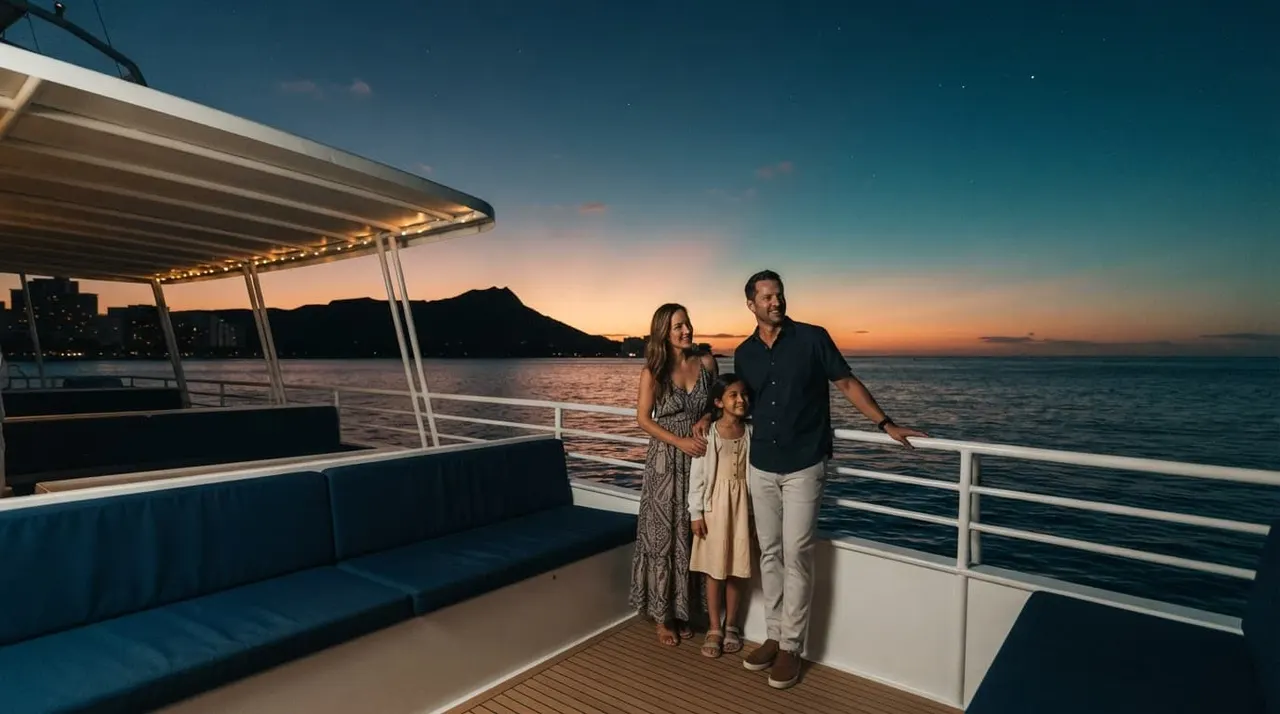
Couples can make the transition to darkness the quietest part of the cruise. Families can share a simple challenge, such as finding the brightest planet or counting how many stars appear above the boat. Keep the activity relaxed so everyone can enjoy the ocean.
Before returning to the harbor, take one final look toward Waikiki. The shoreline lights form a bright contrast against the dark water, giving you a view you can’t get from land.
Booking checklist for your Waikiki sunset cruise
Before you reserve, confirm the details that affect your evening.
Confirm departure and inclusions
Check the departure harbor, check-in time, cruise duration, drink policy, and seating arrangement. Ask whether the boat provides water, restrooms, dry storage, and shaded areas. If you are traveling with children, confirm age requirements and life-jacket procedures.
You should also ask which vessel operates your departure. The Coral Kai and Lokahi offer different onboard features, so the boat can affect your seating and activity options.
Ask the right stargazing questions
A few direct questions can prevent disappointment:
- Does the cruise remain offshore after sunset?
- How long does the boat stay on the water after the sun disappears?
- Is the upper deck available for sightseeing?
- Does the route include a clear view of Diamond Head?
- What happens if rain or rough conditions affect the trip?
- Can you bring a camera, small bag, or personal drink?
Use the answers to compare the cruise with your schedule. If you want a quiet sky-watching experience, avoid choosing a departure where loud entertainment or a scheduled fireworks show is the central feature.
The astronomical twilight explanation from Space.com can also help you understand why the darkest part of twilight may occur after a standard sunset cruise ends. That detail lets you choose a trip that fits your actual expectations.
Conclusion
A sunset cruise in Waikiki gives you two distinct views of Oahu: the warm coastline at dusk and the open sky after daylight fades. You may see only the brightest stars, or you may enjoy a clearer sky when the boat moves beyond the strongest shoreline glare.
Choose your departure time carefully, check the moon and forecast, bring a light layer, and give your eyes time to adjust. With a comfortable boat and realistic expectations, your evening on the water can become more than a sunset photo. It can be a calm introduction to Hawaii’s night sky.


