
Snorkeling Waikiki Made Easy for First Timers
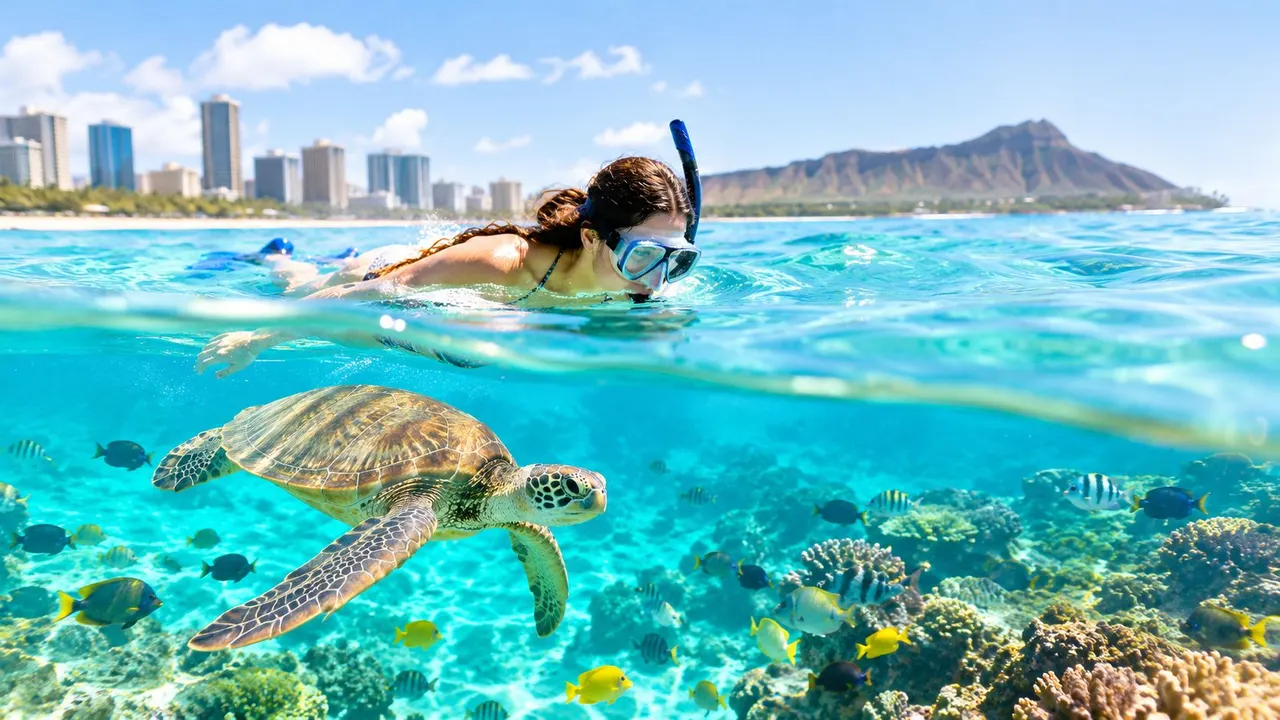
You've just finished breakfast in Waikiki, the water looks calm, and someone in your family is asking the practical question: Where should we snorkel? The answer isn't “swim toward the bluest patch and hope.” Waikiki snorkeling works best when you treat the coastline like an outdoor classroom, choose a protected reef area, watch the weather, and give yourself enough support to stay relaxed in the water.
Waikiki is an urban snorkeling destination, not a remote reef expedition. The beach is a 2-mile stretch made up of 6 connected beaches, and the clearest beginner-friendly snorkeling is concentrated near protected reef areas rather than the surf-heavy central beach, according to an independent guide to snorkeling in Waikiki. That easy access is why families, first-time snorkelers, and visitors staying near major hotels can make snorkeling part of an ordinary vacation morning.
Introduction to Snorkeling Waikiki for First Time Visitors
You step off the beach with a mask in hand, hear the city behind you, and see a reef just below the surface. That is the useful starting point for snorkeling Waikiki. Protected nearshore areas around the Waikiki Marine Life Conservation District, Sans Souci, and Queen's Beach create an urban classroom for learning about the ocean, without requiring a trip to a remote island coastline. Reef fish and, at times, Hawaiian green sea turtles can be seen in this habitat. Learn more about Waikiki's protected reef environment.
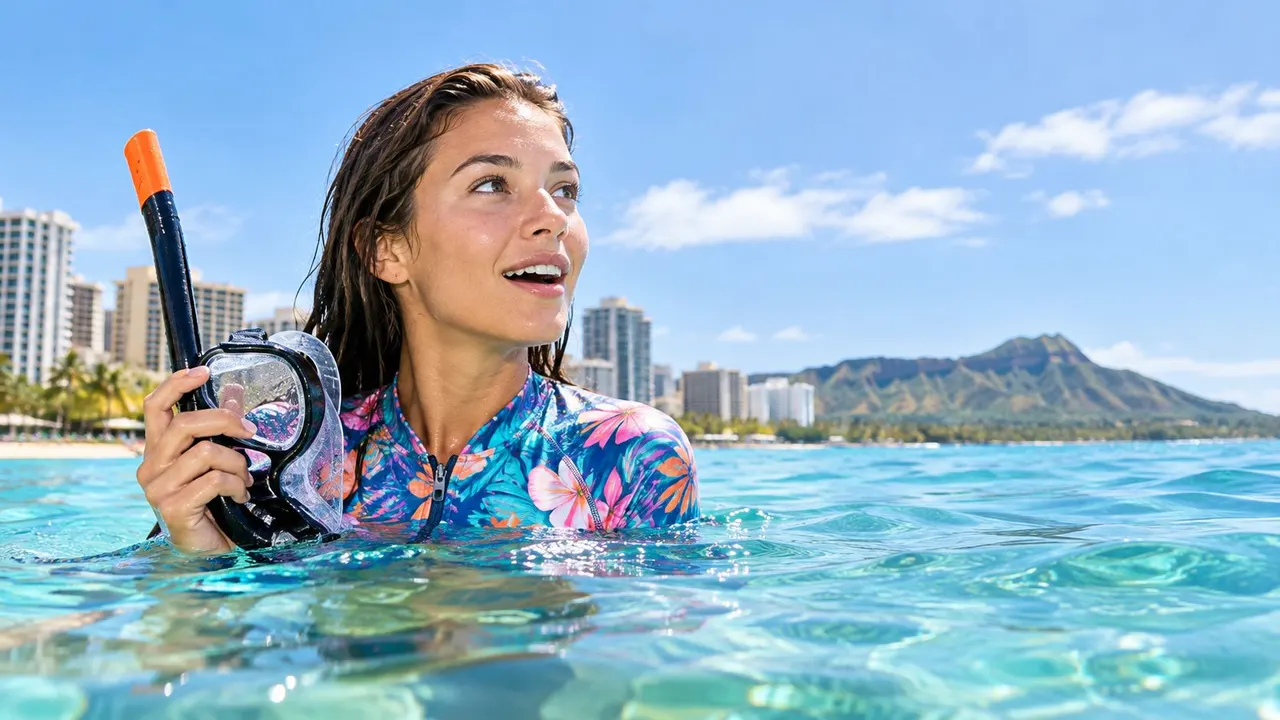
Your swimming ability matters less than your comfort in the water. Begin by practicing a steady breath through the snorkel. Keep your legs loose, your fins underwater, and your movements small. The mask acts like a window, while the snorkel lets you watch that window without lifting your head. Once the seal feels comfortable and your breathing slows, fish and coral structure become easier to notice.
A calm snorkel starts with a calm body. You don't need to swim hard to see more. You need to float, breathe, and make sensible choices.
The rest of this guide builds those skills in a practical order. You'll learn how rain, waves, wind, and time of day can change what you see. Then you'll compare Waikiki's main snorkeling areas, consider whether a guided trip suits your group, review safety habits, and prepare for a departure from Kewalo Basin Boat Harbor. You'll also learn how to watch turtles and reefs without touching or crowding them.
Instruction and flotation support can make the first outing easier. Living Ocean Tours runs guided Waikiki snorkeling departures from Kewalo Basin Boat Harbor, near Waikiki Beach. Its choices include a turtle-focused excursion and a deluxe snorkeling and wildlife cruise with family-friendly water features. View the Waikiki snorkeling tour options before deciding between a beach session and a boat outing.
Understanding Waikiki Snorkeling Conditions and Best Times to Go
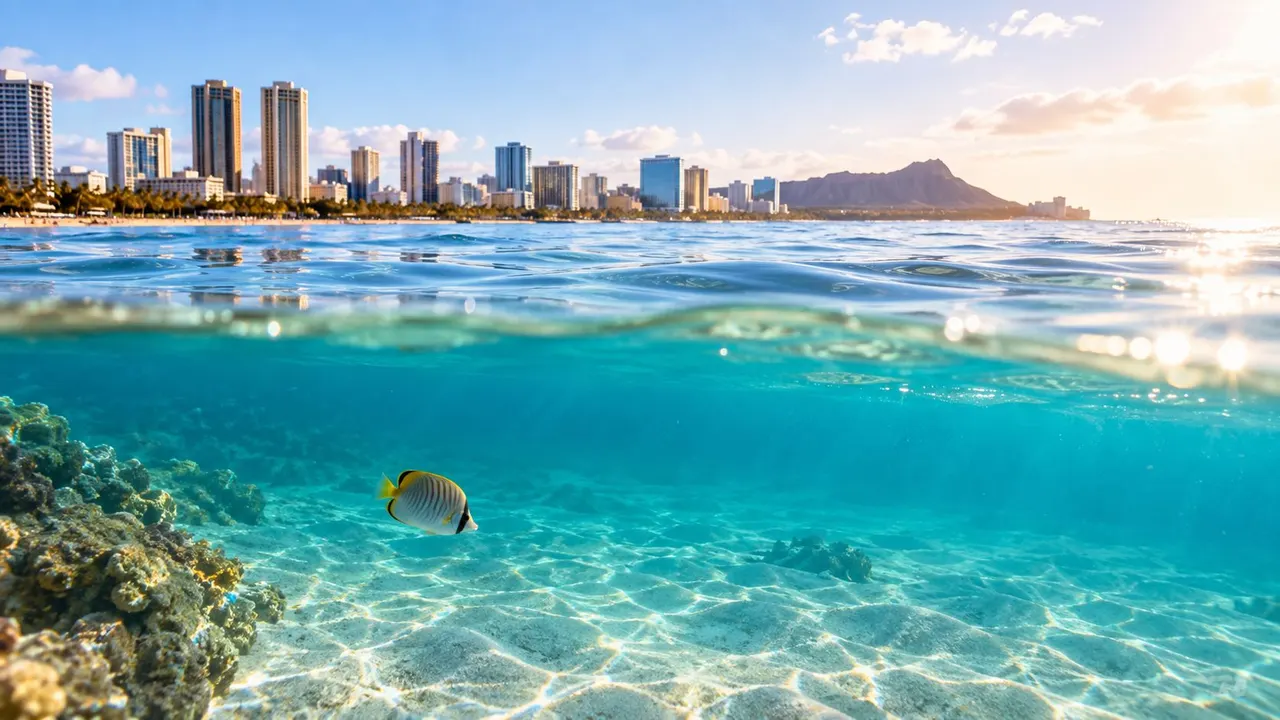
A calm Waikiki morning can feel like looking through a clean aquarium. After rain or rough surf, the same water may resemble a tabletop covered with fine dust after someone shakes it. Waves and chop stir that sediment from the ocean floor, while runoff can add more. The surface may still look inviting, yet the underwater view can be cloudy.
The Ala Wai Canal deserves special attention. Rain can carry runoff through the canal and reduce clarity near Waikiki. Drier, calmer weather usually leaves the water easier to see through, as explained in this Waikiki snorkeling conditions guide.
Why morning water often looks better
Morning is usually the most forgiving time for first-time snorkelers. Hawaii ocean-safety guidance recommends morning snorkeling because conditions are often more settled, visibility is higher, and marine life is more active. The same guidance advises avoiding dawn, dusk, and murky water, then checking with lifeguards if conditions seem uncertain. Review Hawaii's morning snorkeling guidance.
For a practical visibility window, aim for early morning, before about 9 a.m., especially during the May to September period, when calm, dry weather is more common. On better days, independent condition guides estimate visibility at approximately 15 to 30 feet.
How to make the go or no-go decision
Use three simple checks before entering:
- Look at the surface: Repeated waves breaking across your planned entry usually mean a less comfortable, less clear view below.
- Think about recent rain: Fresh runoff can cloud the water and may arrive with more unsettled conditions.
- Ask locally: Lifeguards and experienced guides can notice changes that are difficult to judge from a hotel balcony.
Protected reef does not guarantee comfortable water every hour. Higher swell and trade-wind chop create turbulence, stir sediment, and produce surge. An independent Waikiki safety guide recommends skipping shore snorkeling when surf exceeds 3 feet or after heavy rainfall, particularly for beginners. Read the site-selection guidance for Waikiki reefs.
The practical lesson is simple: choose the window, not just the beach. Waikiki works like an easy-entry urban snorkeling classroom. A less famous entry during a calm morning can be more enjoyable than a popular spot after rain and rising surf. Calm water and local guidance often matter more than strong swimming ability.
Top Snorkeling Spots in Waikiki and What You Will See
A first Waikiki snorkel does not need to feel like a remote reef expedition. The shoreline works more like an outdoor classroom, with several nearby settings that let you match the water to your group's comfort and curiosity. The east end near Queen's Beach and Sans Souci is generally more suitable for beginners because protected reef areas reduce exposure to the heavier surf found near central Waikiki.
A quick comparison for first-timers
| Spot | Entry and Conditions | Best For | What You May See |
|---|---|---|---|
| Queen's Beach | Protected nearshore reef corridor with generally steadier entry conditions | Families and beginners choosing a shore session | Reef fish, coral structure, and possible sea turtle sightings |
| Sans Souci and Kaimana | Calmer east-end setting, though surge and current can still vary | Nervous swimmers and patient independent snorkelers | Reef fish and nearshore marine habitat |
| Central Waikiki Beach | More surf exposure and less dependable visibility for snorkeling | Beach swimming rather than focused snorkeling | Occasional fish near suitable structure, depending on conditions |
| Turtle Canyons | Offshore boat-access site with a known turtle cleaning-station habitat | Visitors making turtles the main goal | Hawaiian green sea turtles and colorful reef fish |
Queen's Beach gives first-timers a practical place to learn the basics: fitting a mask, breathing calmly, and watching the reef without rushing. Sans Souci and Kaimana offer a similar east-end setting, although surge and current can still change. Central Waikiki may suit a beach day better than a focused snorkeling session because breaking waves make entry and underwater visibility less dependable.
The east-end reef corridor stands out for urban convenience with protected habitat. You can reach it without turning the day into a major expedition, while still checking the conditions and your group's confidence before entering. Protection lowers exposure to surf, but it does not remove every risk.
Match the spot to your goal
If your family mainly wants to practice breathing through a mask, choose the most protected entry available under current conditions. A calm, simple session teaches more than a longer swim in unsettled water. Once everyone is comfortable, Sans Souci may provide a more satisfying look at reef structure than central Waikiki.
Turtle Canyons serves a different purpose. It is a boat-access destination for travelers focused on Hawaiian green sea turtles at a cleaning station, where reef fish may gather around the animals. A boat places you near habitat selected for that purpose, but wildlife still moves on its own schedule. You can learn about the Turtle Canyons Snorkel Excursion, or consider Snorkel Turtle Canyon as an alternative provider.
A turtle seen from shore is a welcome possibility, not a scheduled encounter. Shore snorkeling offers flexibility and lets you enjoy reef fish and structure even when no turtle appears. A dedicated boat trip fits visitors whose main goal is spending time near turtle habitat.
Guided Snorkeling Tours in Waikiki Worth Booking
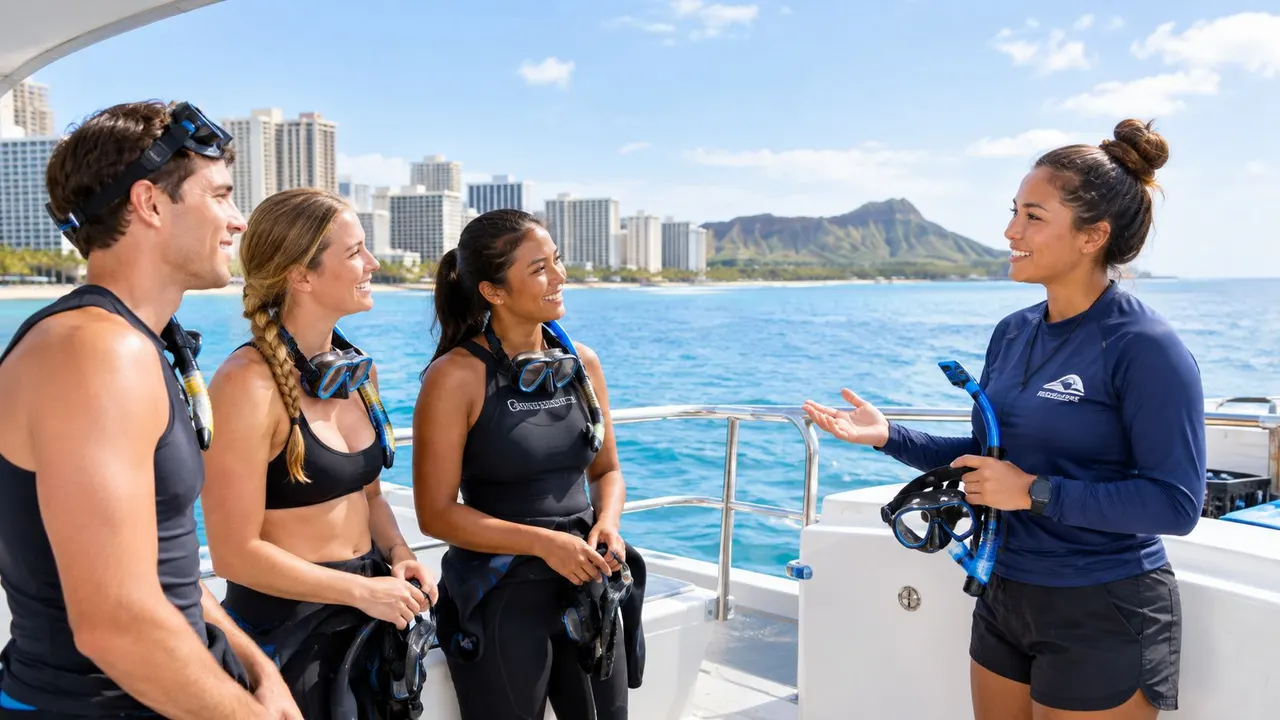
A first-time visitor may feel comfortable in a pool yet struggle with an ocean mask, moving water, or a tiring swim back to shore. A guided tour adds a calm layer of instruction. The guide helps choose a suitable site, checks equipment, explains what to do if a mask leaks, and keeps watch while the group explores. Swimming ability and ocean comfort aren't the same thing, so supervision can matter more than speed or distance.
Hawaii welcomed 5.81 million visitors in 2024, according to Hawaii visitor statistics. That steady demand helps explain why guided trips are common around Waikiki. It does not make every outing safe automatically. The same safety source summarizes 204 snorkeling-related fatalities from 2012 to 2021, with 90% involving tourists, making flotation, condition checks, and attentive supervision practical parts of the plan.
Choose the tour by the job you need done
A turtle-focused trip suits a group with one clear wildlife goal. Living Ocean Tours' Turtle Canyons Snorkel Excursion heads toward offshore turtle habitat and provides gear, instruction, and flotation support. The guide handles much of the route planning, allowing beginners to focus on breathing, floating, and observing without treating the outing like a test of swimming strength.
Families seeking snorkeling with additional water activities may prefer the Deluxe Waikiki Snorkel and Wildlife Cruise. Its waterslide, water trampoline, and lily pad give children and mixed-ability groups other ways to enjoy the boat. Everyone can participate at a comfortable pace, even when continuous snorkeling is not suitable.
Living Ocean Tours is one option to compare alongside other operators. Review the departure location, included equipment, supervision, cancellation terms, and the type of water experience your group wants before booking.
Safety Tips and Skill Level Advice for Families and Beginners
Waikiki can look gentle from the sand while feeling surprisingly demanding in the water. Snorkelers may become tired, panic when a mask leaks, or misjudge how difficult it will be to swim back against surge. These problems can happen in shallow water, not only in deep offshore conditions.
Hawaii safety materials report that more visitors drown while snorkeling than during any other ocean activity in the state. Separate state data summarized by an ocean-safety source records 169 snorkeling-related drownings between 2007 and 2016, including 156 tourist deaths. Read the Hawaii snorkeling safety summary.
The habits that protect a nervous swimmer
Start with flotation, not pride. A properly fitted flotation device lets a tired swimmer stop, breathe, and regain control without wasting energy trying to tread water. Children, older adults, and anyone who feels uncertain should stay close to a capable buddy or supervised group.
- Use a buddy system: Keep partners close enough to notice fatigue, drifting, or distress.
- Check with lifeguards: Ask about surf, current, and safe entry areas before a shore session.
- Avoid murky water: Poor visibility makes it harder to orient yourself and judge distance.
- Skip dawn and dusk: Follow ocean-safety guidance and choose a clear daytime window.
- Leave early: Cold, cramps, heavy breathing, or rising anxiety are reasons to exit, not push through.
For families, “I can swim” isn't the same as “I can comfortably manage open water.” Give each person permission to stop before a small problem becomes an emergency.
A guided trip adds another layer of support. Guides can help with mask fit, explain breathing technique, identify a safer position in the group, and adjust plans when conditions change. That structure often helps beginners enjoy the water because they aren't spending the whole session guessing whether they're doing something wrong.
A simple confidence progression
Have first-timers practice on land before entering. Place the mask correctly, breathe through the snorkel, and rehearse clearing the face without rushing. In the water, begin by floating near the entry point, then move only when breathing feels steady.
Don't chase fish or turtles. Fast kicking burns energy and makes breathing feel harder. Slow, compact fin movements keep your body level and help you see more while using less effort.
Gear Checklist Packing Tips and Booking Logistics from Kewalo Basin
A good gear plan keeps the morning simple. On a guided outing, confirm what the operator supplies before you leave the hotel. Typical snorkeling equipment includes a mask, snorkel, fins, flotation gear, drinking water, and instruction, while personal items such as reef-safe sunscreen, a towel, and a dry bag may still be useful.
Pack for comfort and convenience
- Reef-safe sunscreen: Apply it before boarding or entering the water, and follow local guidance about marine life.
- Towel and dry clothing: A light layer feels good after a breezy boat ride.
- Dry bag: Protect phones, room keys, and other items that shouldn't get wet.
- Water: Hydration matters before and after saltwater activity.
- Fitted swimwear: Choose something that stays comfortable while climbing a ladder or using a waterslide.
Leave glass containers, loose valuables, and unnecessary electronics behind. Ask where personal belongings should go during the snorkel instead of assuming a boat or beach will keep them secure.
Plan the departure
Living Ocean Tours departs daily from Kewalo Basin Boat Harbor near Waikiki Beach. Morning departures can align with the clearer, calmer conditions discussed earlier, and they leave room in your day if your group wants lunch, rest, or another activity afterward.
On check-in, expect to confirm the reservation, receive basic instructions, and get fitted for equipment. Arrive with enough time to find the harbor, use the restroom, and settle children before boarding.
Shared trips suit families and travelers who enjoy a social outing. Private charters are available for groups of up to 40 guests, making that format useful for celebrations, corporate outings, or a multi-generational group that wants more control over the pace and atmosphere.
Responsible Wildlife Viewing Sustainability and Great Alternatives to Try
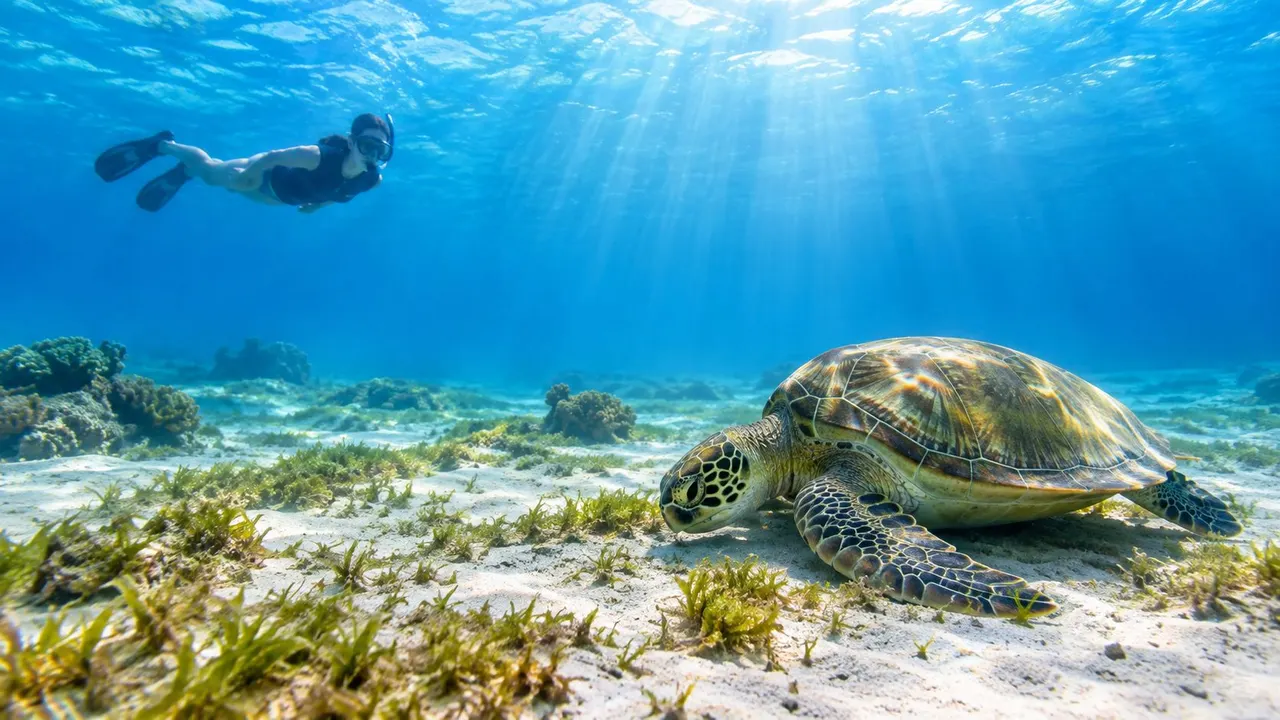
A turtle encounter is successful when the turtle can continue its normal behavior. Stay at least 10 feet from sea turtles, and never touch coral, turtles, or monk seals. A widely cited Hawaii snorkeling safety summary connects those rules to Hawaii Revised Statutes §195D and responsible snorkeling practices.
Keep your body quiet, hold your position, and let the animal decide whether to pass nearby. Don't block a turtle's route to the surface, surround it with swimmers, or reach toward it for a photograph. These small choices help protect the reef experience that makes the Waikiki Marine Life Conservation District valuable.
If the ocean isn't suitable for snorkeling, you can still enjoy the coastline. Living Ocean Tours offers a Waikiki Sunset Cruise with BYOB and cash-bar options. Another option is Sunset Cruise Waikiki. Seasonal whale watching is also available from January through March through the Waikiki whale watch tour.
For an easy first Waikiki snorkeling morning, Living Ocean Tours provides guided trips with equipment, instruction, flotation, and knowledgeable crew support from Kewalo Basin Boat Harbor. Visit Living Ocean Tours to compare the Turtle Canyons excursion, deluxe snorkeling cruise, sunset sailing, and seasonal whale watching, then choose the ocean experience that fits your family.


