
Snorkeling Oahu: Identify Parrotfish Without Disturbing Them
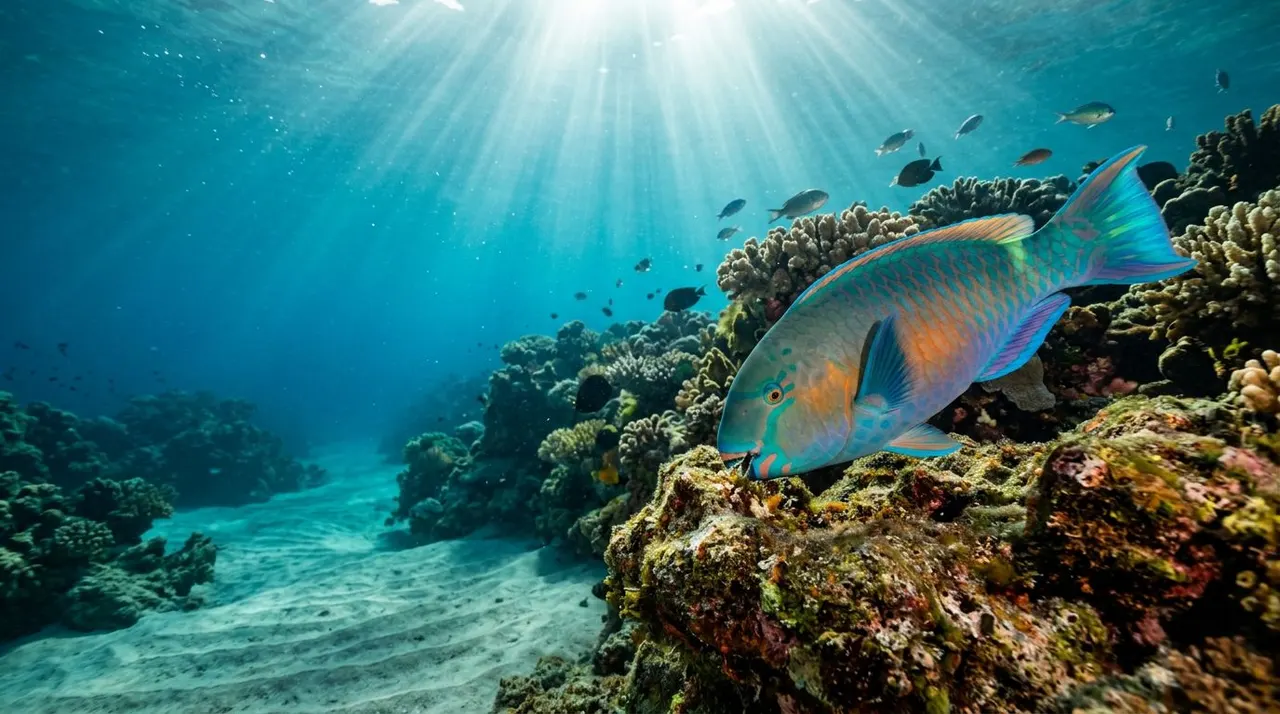
Parrotfish can look like bright pieces of the reef until you notice the beak-shaped mouth moving across the rocks. When snorkeling Oahu, you may spot these colorful grazers feeding near coral heads, reef edges, and sandy channels.
The best way to identify them is to watch their shape and behavior, not chase them for a closer look. You can enjoy a better encounter by staying calm, keeping your distance, and letting the fish follow its natural feeding route.
What a Hawaiian Parrotfish Looks Like
Hawaiian parrotfish are commonly called uhu. Their most recognizable feature is a fused set of teeth that forms a hard, parrot-like beak. The mouth may look small at first, but it gives the fish a powerful bite for scraping algae from rocks and dead coral surfaces.
Look for a deep-bodied fish with a rounded head, large scales, and a broad tail. Most parrotfish swim with steady movements, using their pectoral fins to hover over the reef while they feed. They often pause, bite the surface, and move a short distance before biting again.
Color can help, but it shouldn’t be your only clue. Hawaiian waters contain several parrotfish species, and their colors change with age, sex, and social role. Juveniles may look muted or striped, while mature fish can show blue, green, pink, purple, or yellow tones. Some adults have strong color blocks, while others appear mostly gray or olive at a distance.
A pale fish isn’t automatically a different species. Light, depth, and the angle of the sun can change how its scales appear through your mask. The beak, body shape, and grazing motion are more dependable identifiers.
You may also hear a faint crunching sound when the water is calm. Parrotfish scrape reef surfaces with their teeth, taking in algae and small amounts of carbonate material. Their digestive process helps create some of the fine sand found around tropical reefs. For another visual reference, compare the beak and body shape in this Hawaiian reef fish guide.
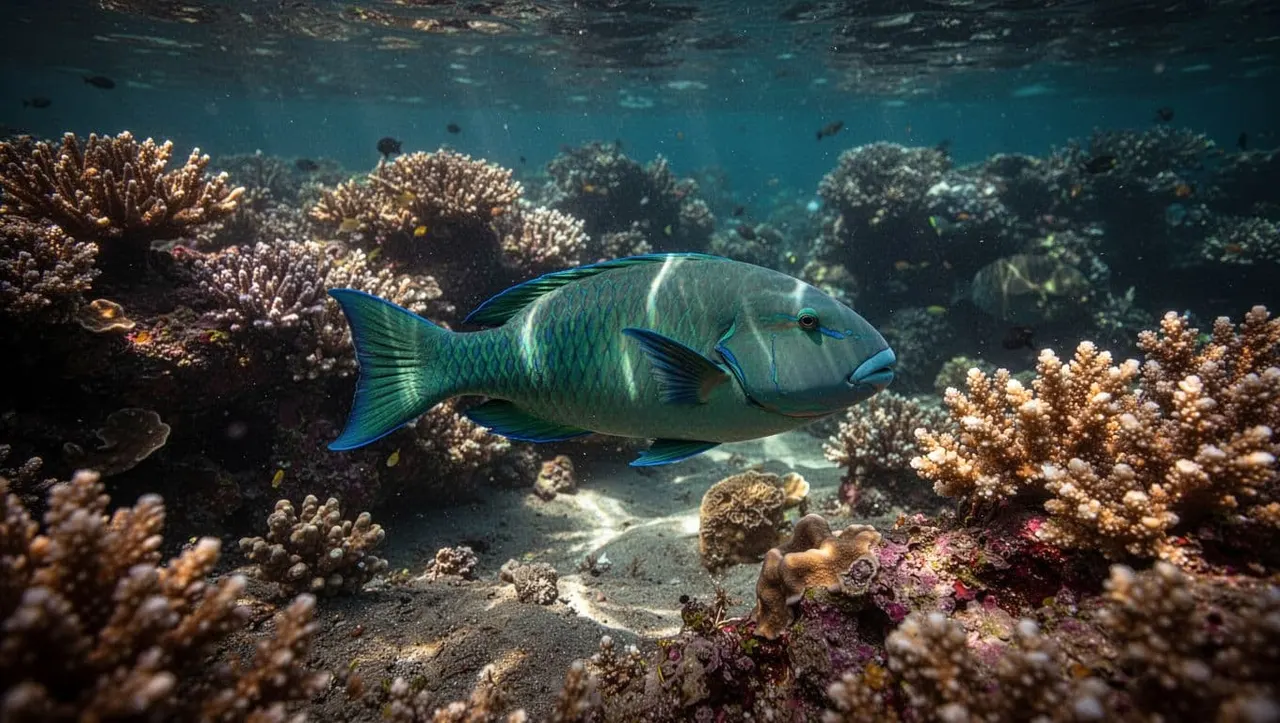
A parrotfish’s fused teeth create the beak-like profile that makes it easier to recognize underwater.
Snorkeling Oahu: Where to Look for Uhu
When snorkeling Oahu, look for parrotfish where algae grows across hard surfaces. Reef edges, coral outcrops, and the border between rock and sand are good places to watch. You may see one fish feeding alone, or several spread across the same reef without forming a tight group.
Stay near the surface and scan slowly. Fast head movements make fish disappear into the reef, while a steady gaze gives you time to notice their feeding pattern. If you see a fish bite the rock, drift backward, and return to a nearby patch, you may be watching a parrotfish at work.
The reefs along the Waikiki coastline can offer several types of marine life, including tropical fish and Hawaiian green sea turtles. Conditions change with wind, waves, visibility, and currents, so the most productive viewing area can vary each day. A calm morning may provide clearer water, but your guide will choose the safest available location.
Turtle Canyons is a popular place to look for reef life while visiting a natural turtle cleaning station. Living Ocean Tours reports a 95% success rate for spotting Hawaiian green sea turtles on its Turtle Canyons Snorkel Excursion. While turtles are the main attraction, your guide can also help you recognize fish such as parrotfish, butterflyfish, and other reef species.
You can review the available Living Ocean Tours excursions before choosing a guided trip. The company operates from Kewalo Basin Boat Harbor, just minutes from Waikiki Beach, which makes the departure convenient when you’re staying in Honolulu.
Color variations can make identification difficult, especially for first-time snorkelers. This parrotfish guide from Maui offers additional examples of how uhu may look different as they mature.
How to Watch Parrotfish Without Disturbing Them
Good wildlife viewing starts before you enter the water. Use a mask that fits, adjust your fins securely, and practice floating without touching the bottom. When you control your position, you won’t need to grab coral or kick against the reef.
Once you spot a parrotfish, stop swimming toward it. Let the fish continue its route while you remain several body lengths away. If the fish changes direction because you moved closer, you’ve entered its comfort zone. Back away slowly and give it room to return to feeding.
Avoid blocking the fish between you and the reef. Parrotfish need access to the surface they are grazing, and a swimmer hovering directly above them can interrupt their behavior. Move to the side and watch at an angle instead.
Your fins also need attention. Keep your legs relaxed and use small movements. A strong kick can strike coral, stir up sand, or send a cloud across the fish’s feeding area. Never stand on the reef, even if the water feels shallow.
Follow these habits during every encounter:
- Keep your hands off fish, coral, turtles, and other marine life.
- Don’t feed parrotfish or toss food into the water.
- Turn off your camera flash when you’re close to wildlife.
- Leave enough space for fish to swim away without changing course.
- Follow your guide’s instructions about currents, reef boundaries, and safe entry points.
Parrotfish are important herbivores. Their grazing keeps algae from covering every hard surface, which gives coral and other reef organisms room to grow. Their feeding also supports the movement of material through the reef ecosystem.
That role gives you another reason to watch without interference. A fish that keeps feeding is a fish behaving naturally. A fish that flees, hides, or stops eating has received too much pressure from nearby swimmers.
The clearest identification often comes after you stop moving. A calm snorkeler sees more than a fast swimmer chasing color.
Responsible snorkeling also protects your experience. When you avoid touching the reef, you preserve the place for the next group and reduce the chance of damaging fragile coral. Respectful observation keeps the encounter exciting without turning wildlife into a performance.
Experience Snorkeling Oahu With Professional Guides
A guided trip can make fish identification easier because you don’t have to find every animal alone. Living Ocean Tours is the only tour company with professional snorkel guides, and its crew helps beginners understand where to look, how to enter the water, and how to observe marine life safely.
The company operates Coast Guard-inspected, custom-built double-decker vessels named the Coral Kai and the Lokahi. Both boats offer shaded seating, restrooms, dry storage, and sturdy ladders for water entry. The Lokahi also includes a SeaKeeper stabilization system that reduces rolling while you’re underway.
That steady ride can help if you’re new to boating or concerned about seasickness. Once you reach the snorkeling area, professional guidance lets you focus on the reef instead of worrying about current direction or boat traffic.
Living Ocean Tours welcomes first-time snorkelers and families with children ages 3 and older. The Turtle Canyons excursion combines guided reef time with the chance to see Hawaiian green sea turtles at a natural cleaning station. You may also have opportunities to identify uhu feeding across the reef.
If Turtle Canyons fits your plans, you can CHECK AVAILABILITY before your preferred date fills.
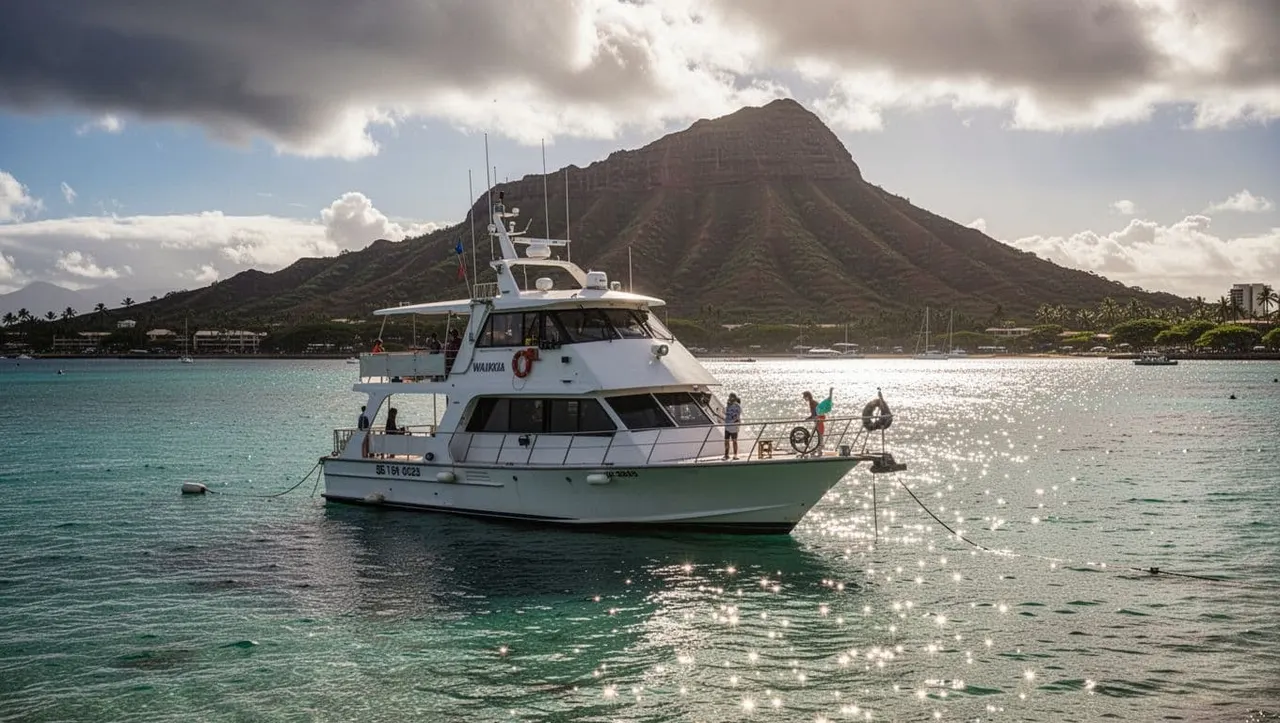
Living Ocean Tours departs near Waikiki, giving you access to reef areas along the Honolulu coast.
Conclusion
A parrotfish is easiest to identify when you look for its beak, rounded head, deep body, and steady grazing motion. Color adds useful detail, but it can change with age, species, light, and sex.
During snorkeling Oahu excursions, stay still, keep your distance, and let the fish choose the encounter. With professional guidance from Living Ocean Tours, you can spot uhu and other reef animals while protecting the habitat that makes the experience possible.


