
Snorkeling Oahu Without Fin Blisters: A Comfortable Fit Guide
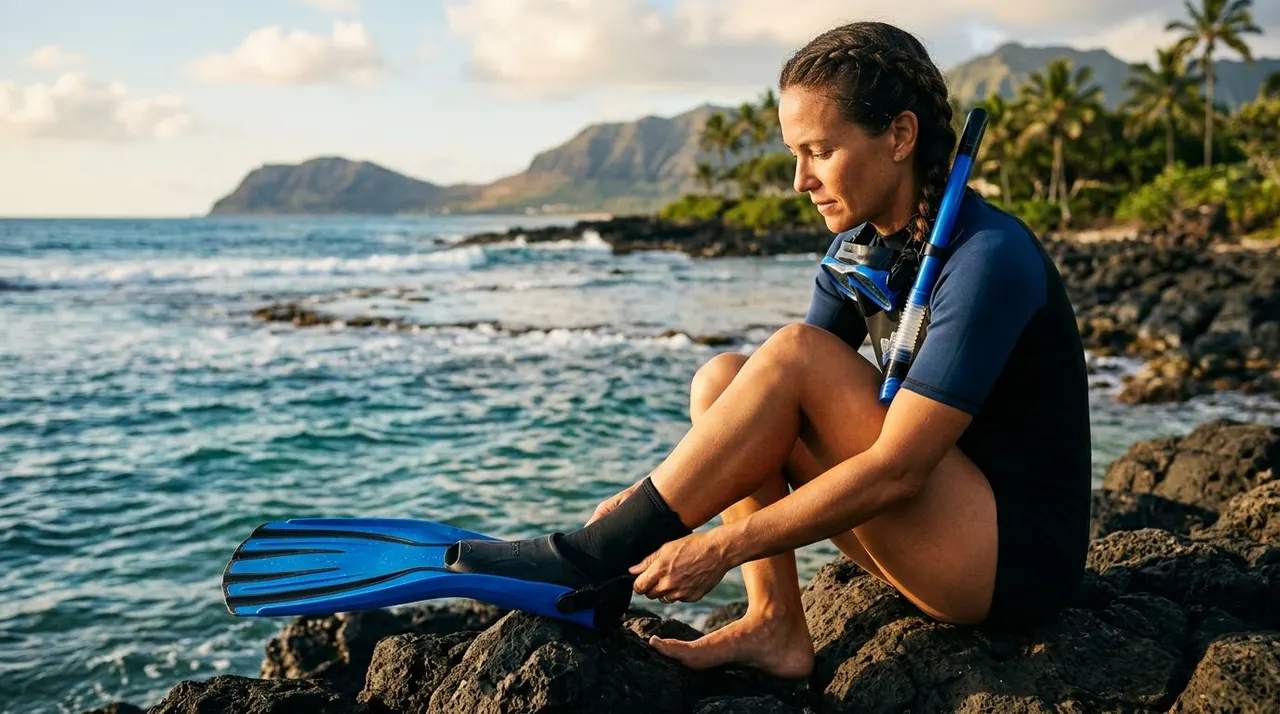
A painful heel can ruin an otherwise perfect day in the water. When you’re snorkeling Oahu, fin blisters often come from small fit problems that become worse with saltwater, sand, and repeated kicking.
The good news is that you can prevent most rubbing before you reach the reef. Choose the right socks, test your fins on dry land, and respond to hot spots early. Start with the fit.
Key Takeaways
- Wear thin neoprene or Lycra fin socks to reduce rubbing.
- Your fins should feel snug without pinching, sliding, or curling your toes.
- Test your gear before your tour and adjust it before entering the water.
- Stop when you feel a hot spot instead of swimming through the pain.
- A professional snorkel guide can help you check your equipment and enter the water safely.
Why Snorkeling Fins Cause Blisters
A fin blister develops when repeated friction damages the skin. Your heel, Achilles tendon, ankle, and the tops of your toes are common trouble spots because the fin pocket moves against them with every kick.
Full-foot fins can rub when the pocket is too tight, especially if your feet swell after walking around Honolulu. A loose fin creates a different problem. It shifts with each kick, dragging across your skin instead of moving with your foot.
Moisture also changes the way your skin handles friction. Wet skin becomes softer, while fine sand can act like grit inside the fin pocket. Even a tiny grain can create a sore spot during a long swim.
Fin shape matters, too. A stiff pocket may press against your heel, while a soft pocket can fold and rub around your toes. If you borrow equipment, don’t assume the first pair you try will fit correctly.
A practical overview from swim-fin blister prevention tips also recommends using socks as a buffer between your feet and the fin material. That small layer can make a major difference during a reef swim.
Choose Fins and Socks That Fit Your Feet
Fin socks are one of the simplest ways to prevent blisters while snorkeling. Neoprene socks provide padding and warmth, while thin Lycra socks create a smooth layer between your skin and the fin pocket.
Choose a sock that fits closely without bunching. Folds can create new pressure points, so pull the material flat around your heel and toes. A thin sock may fit full-foot fins, but thicker neoprene can require a larger pocket.
Your fins should feel secure when you lift your foot, yet they shouldn’t squeeze your toes. Check for these signs:
- Your heel stays in place when you kick.
- Your toes remain relaxed instead of curled.
- The fin pocket doesn’t press sharply against your toenails.
- You don’t feel a hard edge along your Achilles tendon.
- The blade moves when your foot moves, without sliding around.
If you use open-heel fins, adjust the strap while your foot is wet. Tighten it enough to prevent movement, then check that it doesn’t cut into your skin. A strap that feels fine on the boat may become painful after hundreds of kicks.
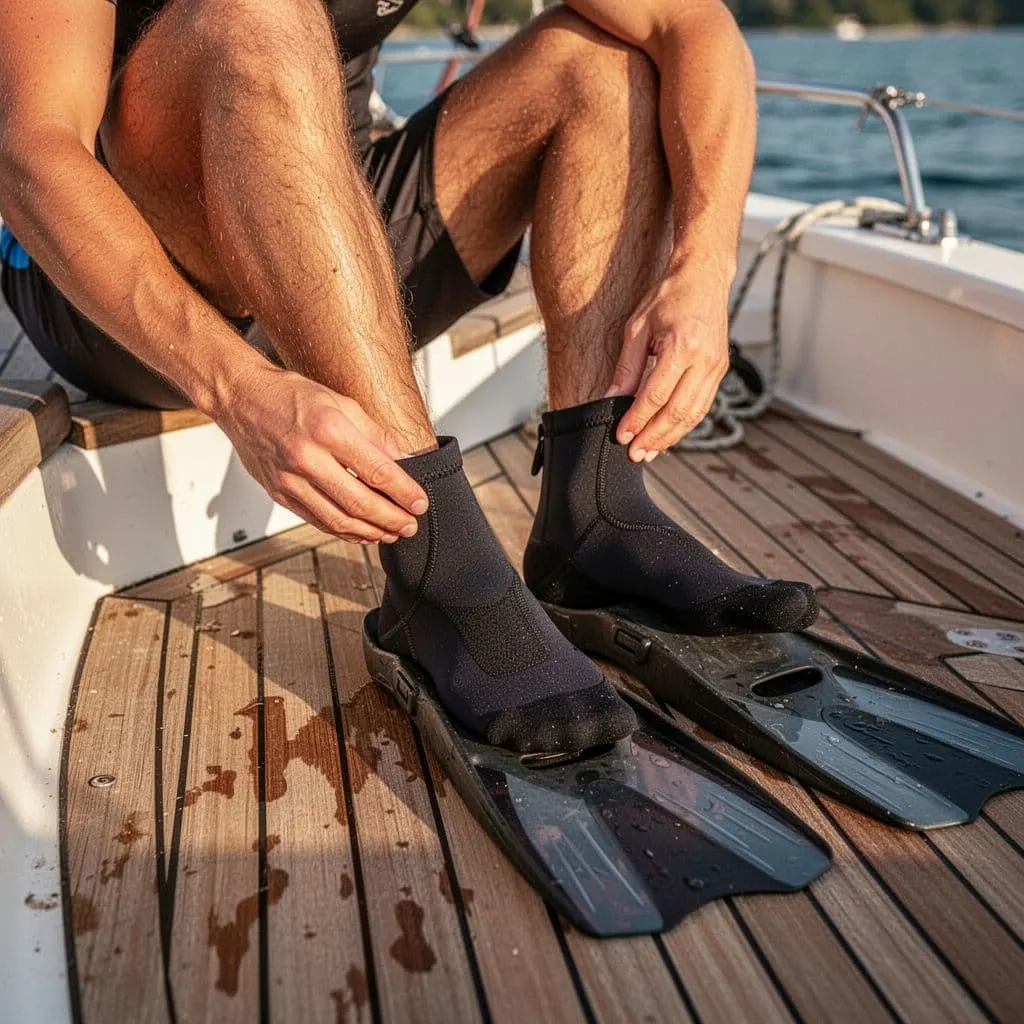
Never judge your fins only by standing still. Walk carefully on the boat, sit down, and move your ankles through a kicking motion. If you notice rubbing before you swim, ask for another size or add a suitable sock.
Prepare Your Feet Before You Reach the Reef
Your preparation should start before you leave your hotel. Trim long toenails, but don’t cut them too close to the skin. Rough edges can catch against the fin pocket and create irritation.
Avoid applying oily lotion inside your fins. It can make your foot slide, which increases friction rather than reducing it. If you use an anti-chafe product, choose one made for water activities and apply only a small amount to problem areas.
Test your fins for 10 to 15 minutes before your tour if possible. Sit on the edge of a pool, walk around your room, or move your feet while wearing the complete setup. You’re looking for pressure, slipping, and rubbing before your skin becomes wet.
Pack a few useful items in your day bag:
- A spare pair of fin socks
- Waterproof blister bandages
- A small towel for drying your feet
- Freshwater for rinsing sand from your gear
Don’t use cotton socks as a substitute for fin socks. Cotton holds water, bunches inside the pocket, and can create more friction. Snorkelers also commonly discuss using two thin sock layers, but reports from divers with fin blisters show why you should test that approach before your actual ocean trip. Two layers can make a fin too tight.
Prevent Hot Spots During Your Snorkel
The first warning sign is usually warmth or rubbing, not sharp pain. Treat that feeling as useful information. Stop at the boat ladder or signal your guide before the spot turns into an open blister.
Take off the fin and inspect your foot. Sand may be trapped inside the pocket, or the heel may have shifted out of position. Rinse the fin, smooth your sock, and put your foot back in carefully.
Your kick can also affect comfort. Use relaxed, steady movements that begin at your hips. Bending your knees sharply can make the fin wobble and increase rubbing around the heel. If you’re new to snorkeling, ask your guide to watch your kick and help you find a comfortable rhythm.
Keep your fins in the water when you enter from a boat ladder. Walking across coral, rocks, or sand in fins puts extra pressure on the heel pocket and can damage the reef. A professional crew can show you how to use the ladder without dragging your feet.
Responsible snorkeling also protects Oahu’s marine life. Stay clear of coral, observe sea turtles without touching them, and avoid chasing fish. Your fins should help you glide over the reef, not push against it.
What to Do If a Blister Starts
Stop swimming when you feel a hot spot. Continuing for another 20 minutes can turn mild irritation into a painful wound that affects the rest of your vacation.
Dry your foot, rinse away sand, and cover the area with a waterproof blister bandage. If the skin is intact, leave the blister alone. Popping it removes a natural protective layer and increases the chance of infection.
For an open blister, wash the area with clean water and mild soap, then cover it with a clean dressing. Keep the wound dry when you can. Increasing redness, swelling, warmth, drainage, or worsening pain are reasons to seek medical care.
You can also read a swimmer discussion about preventing fin blisters for personal equipment ideas, but your own foot shape and fin fit matter more than any single tip. What works for one swimmer may make another person’s fins too tight.
Make Your Oahu Snorkel Easier With a Guided Crew
You can remove much of the guesswork by choosing a guided snorkeling trip. Living Ocean Tours departs from Kewalo Basin Boat Harbor, a short drive from Waikiki Beach, and provides professional snorkel guides who help beginners and experienced swimmers prepare for the water.
Living Ocean Tours is the only tour company with professional snorkel guides, so you can ask for help with fin sizing, sock placement, and safe water entry before discomfort begins. The crew also provides guidance on responsible wildlife viewing, including keeping a respectful distance from Hawaiian green sea turtles.
The Turtle Canyons Snorkel Excursion visits a natural turtle cleaning station and has a stated 95% success rate for spotting Hawaiian green sea turtles. You can view guided snorkeling tours in Oahu and choose an experience that matches your comfort level.
The company’s Coast Guard-inspected double-decker vessels include shaded seating, restrooms, dry storage, and sturdy ladders. Those features matter when you need to adjust your fins, take a break, or re-enter the water without rushing.
If you’re ready to snorkel Turtle Canyons with help from a professional crew, CHECK AVAILABILITY.
Comfortable Fins Make a Better Oahu Swim
Fin blisters usually begin with a poor fit, trapped sand, or a hot spot you ignore. Thin fin socks, a careful equipment check, and relaxed kicking can protect your feet before you reach the reef.
When you’re snorkeling Oahu, comfort lets you focus on clear water, coral, tropical fish, and sea turtles. Take a few minutes to adjust your fins before swimming, and your feet will be ready for the adventure.


