
Snorkeling Oahu Near Boat Traffic: Dive Flag Safety
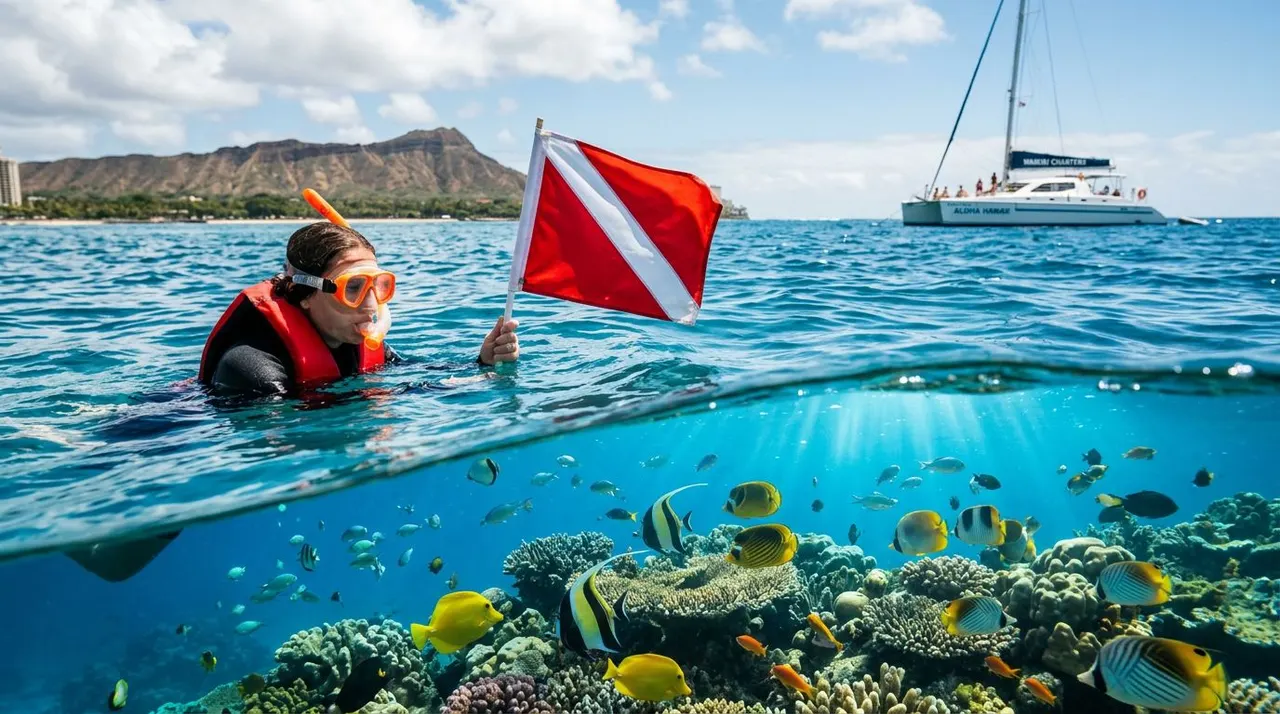
When you’re snorkeling Oahu near active boat traffic, a dive flag is helpful, but it isn’t a force field. You still need a clear plan for where you enter, where you surface, and how you respond when a vessel approaches.
The safest snorkeling Oahu experience keeps you away from active channels and places you with a crew that watches the water. A flag is one part of your safety plan, not permission to swim wherever you want.
A few smart choices before you get wet can protect your group and leave you free to enjoy Waikiki’s reef life.
What a Dive Flag Means Near Boat Traffic
A red-and-white diver-down flag tells nearby boaters that someone is underwater or swimming below the surface. A blue-and-white Alpha flag may appear on a vessel when diving activity limits its ability to maneuver.
Your flag helps boats find you, but visibility can change quickly. Waves may hide a small float. Glare can obscure a person in the water. A swimmer’s head and snorkel can also blend into the surface, especially when a boat operator is watching several directions at once.
The flag does not create a protected swimming area. Boats can still approach too closely, and wakes can move you farther than expected. Never assume an approaching captain has seen your flag.
Hawaii’s Division of Boating and Ocean Recreation explains the use of dive flags and the Coast Guard navigation rules that apply around diving operations. Before your trip, review the Hawaii boating safety FAQ and follow any local instructions posted at your launch point.
If a boat enters your area, stop exploring and look up. Stay with your buddy or guide, keep your flag visible, and avoid swimming toward or beneath the vessel. Never cross an active boat path to retrieve a drifting flag. Signal for help and leave the water by the safest route if traffic increases.
A dive flag tells boaters where to look. It does not tell you where it is safe to swim.
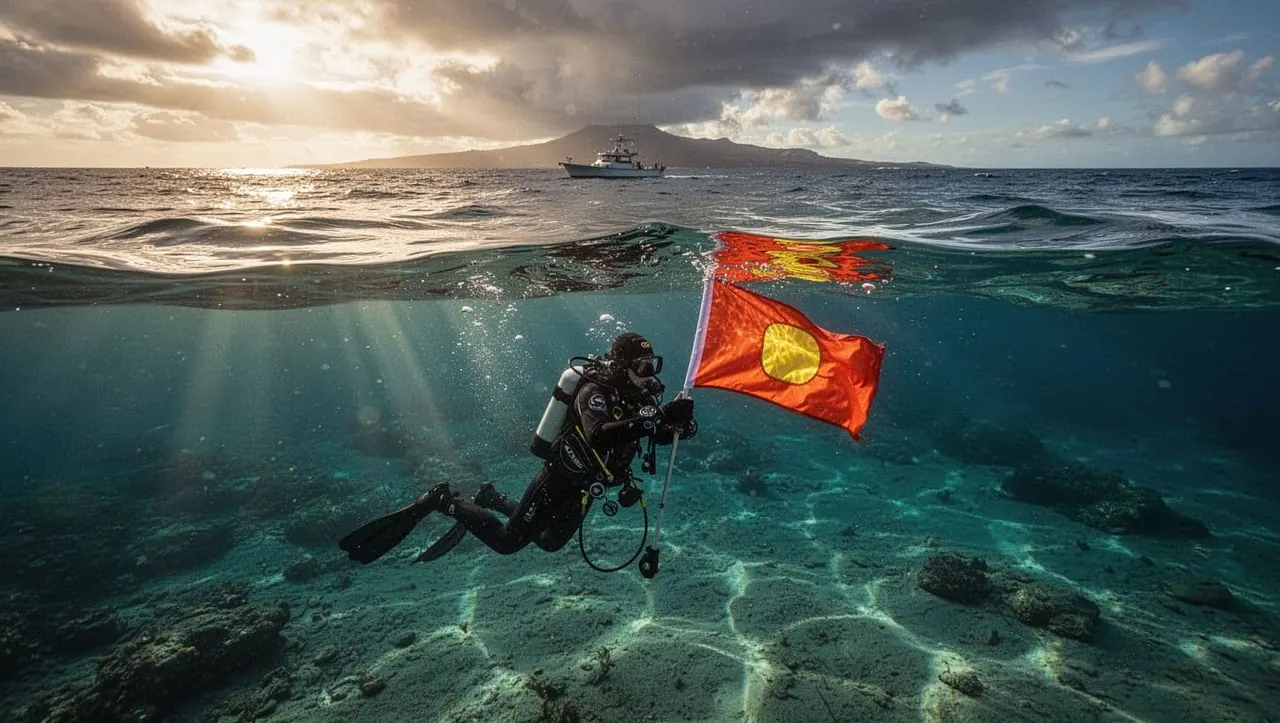
Snorkeling Oahu Safely Starts With Your Location
The location you choose matters more than the color of your float. Harbors, boat ramps, channels, mooring areas, and harbor entrances are poor choices for casual snorkeling. Even calm-looking water may have boats arriving from outside your view.
For snorkeling Oahu near busy coastal areas, choose a reef site reached by an experienced operator. A professional crew can check traffic, visibility, wind, swell, and current before you enter. You avoid guessing whether a distant vessel is moving toward your group or turning away.
Boat wakes create another problem. A wake can lift your body, loosen your mask, or push you toward a route used by watercraft. Strong wind can also move a surface float while you focus on fish below. If the current starts carrying you away from your group, look up immediately and follow your guide’s directions.
On a self-guided outing, attach your flag to a properly sized dive float and keep it close. Stay with a buddy, maintain a distance that lets you communicate, and take regular surface checks. Your snorkel should never keep you so focused on the reef that you stop watching the water around you.
Do not wear headphones, swim alone, or enter water with poor visibility. If you can’t see boats, other swimmers, or your exit point, conditions have already become too difficult for a relaxed snorkel.
Most importantly, leave wildlife and the reef alone. Don’t touch turtles, coral, fish, or the seafloor. Respectful observation protects the habitat and keeps your hands free for balance when you need to respond to changing water conditions.
Why Guided Snorkeling Makes Open Water Safer
A guided boat trip reduces the guesswork that comes with snorkeling near a busy coastline. You still need to listen and follow instructions, but you won’t have to choose a reef, judge boat patterns, and manage a flag without support.
Living Ocean Tours operates from Kewalo Basin Boat Harbor, just minutes from Waikiki Beach. Its Coast Guard-inspected double-decker vessels, Coral Kai and Lokahi, are built for ocean sightseeing and water access. Both boats have shaded seating, restrooms, dry storage, and sturdy ladders.
Lokahi also has a SeaKeeper stabilization system that reduces rolling on the water. That added steadiness can help you feel more comfortable before entering the ocean. Coral Kai offers wide open-deck space for guests who want clear views of the coastline.
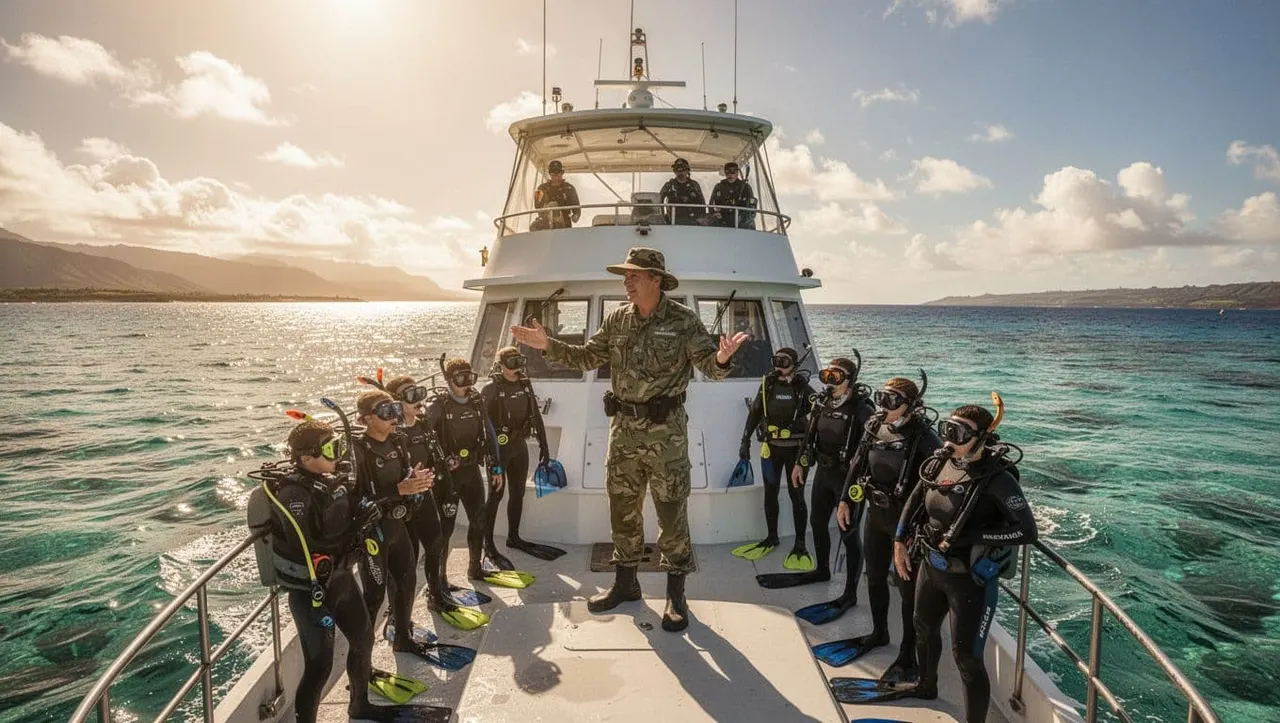
Living Ocean Tours is the only tour company with professional snorkel guides. Onboard guides explain how to enter and exit, establish the swimming boundaries, watch surrounding traffic, and help beginners adjust their masks before they swim away from the boat.
That support helps families and first-time snorkelers stay focused. You can spend less time wondering whether a boat is too close and more time watching the reef. Guides also reinforce Hawaii’s “observe, don’t touch” approach around marine life.
A professional guide cannot remove every ocean hazard. However, clear briefings, active water monitoring, and a stable boat give you a much stronger safety plan than entering unfamiliar water alone.
Choose a Tour That Keeps the Safety Plan Simple
If snorkeling Oahu is a main goal for your vacation, a boat tour can place you at a reef without requiring you to cross busy water from shore. You board at the harbor, receive a safety briefing, and enter the ocean with a crew already watching the surrounding conditions.
The Turtle Canyons Snorkel Excursion visits a natural underwater cleaning station near Waikiki. Living Ocean Tours reports a 95% success rate for spotting Hawaiian green sea turtles. Your guide helps you observe them without touching, chasing, or blocking their movement.
You can review the Turtle Canyons snorkeling excursions and check dates before your trip.
For families and couples who want more time on the water, the Deluxe Waikiki Snorkeling and Wildlife Cruise visits a less-crowded reef. The Lokahi adds a boat-mounted water slide, water trampoline, and floating lily pad, so you can enjoy the boat even when you aren’t snorkeling.
That option combines a guided reef stop with room to relax between water activities. You can CHECK AVAILABILITY and choose a departure that fits your plans.
Your Pre-Water Safety Check
Before you leave the boat or shoreline, take a minute to confirm the basics:
- Ask where the dive flag will be positioned and what boundaries you must follow.
- Check whether wind, swell, current, or visibility has changed since the briefing.
- Fit your mask and snorkel before entering, then confirm you can breathe comfortably.
- Stay close enough to your buddy or guide to communicate without waving frantically.
- Look up often, especially after hearing an engine or feeling a wake.
- Leave the water if traffic increases or you can no longer see your group clearly.
If you feel tired, cold, anxious, or separated, signal early. A guide would rather bring you back aboard before a small problem becomes an emergency.
Conclusion
Snorkeling Oahu near boat traffic requires more than carrying a dive flag. You need a suitable location, clear visibility, steady communication, and the discipline to leave the water when conditions change.
A guided trip with Living Ocean Tours gives you professional snorkel guides, a stable boat, and a structured way to enjoy Waikiki’s marine life. Keep your flag visible, observe wildlife without touching it, and treat every active boat route as a place to avoid.


