
Snorkeling Oahu After Scuba Diving, Before Flying
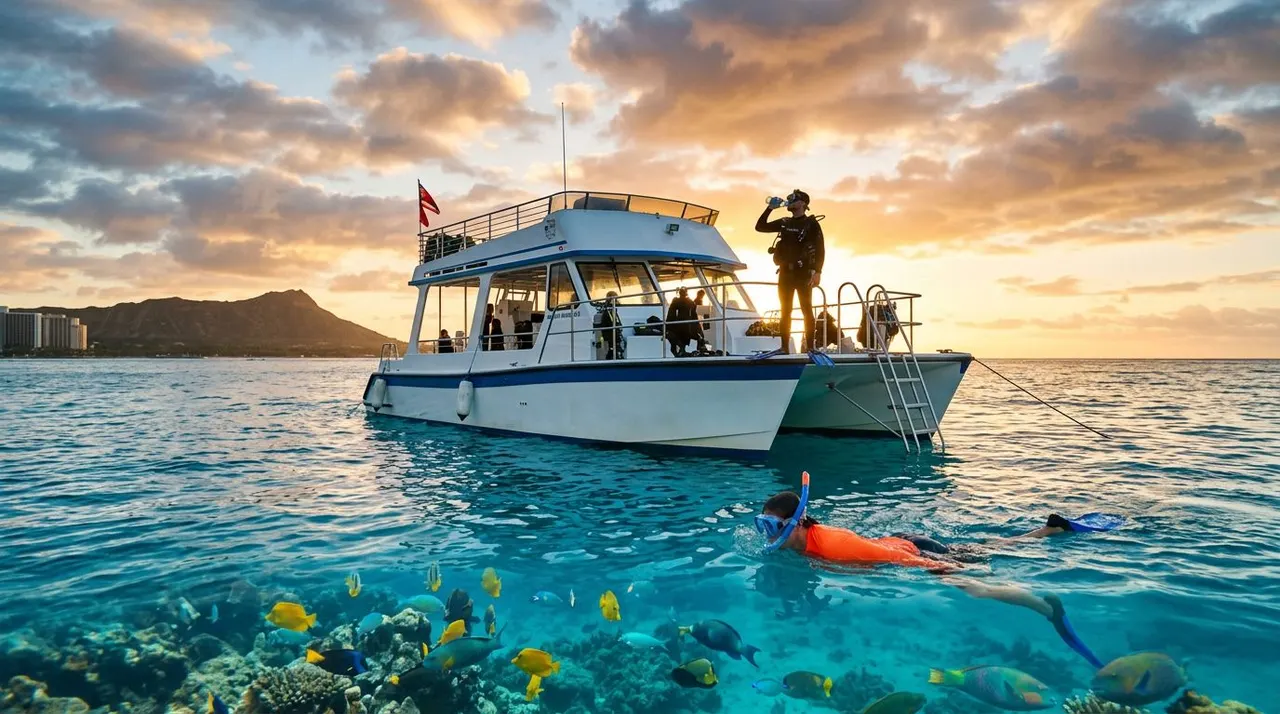
A scuba dive, a relaxed snorkel, and a flight home can fit into one Oahu day, but the order matters. Snorkeling Oahu after scuba diving requires attention to your surface interval, energy level, and planned flight time.
Living Ocean Tours makes the snorkel portion easier for beginners and experienced swimmers with professional snorkel guides, supplied equipment, and steady double-decker vessels departing near Waikiki. Before you book, build your schedule around safe recovery rather than squeezing every ocean activity into a few hours.
Key Takeaways
- After a single no-decompression scuba dive, wait at least 12 hours before flying.
- After multiple dives or several consecutive dive days, wait at least 18 hours before flying.
- Keep post-dive snorkeling at the surface and avoid repeated breath-hold descents.
- Leave extra time for hydration, rest, boat transfers, and changing ocean conditions.
- Schedule your final snorkel well before your flight, especially if you need to reach Daniel K. Inouye International Airport.
Why Scuba Diving and Flying Need Careful Timing
Scuba diving exposes you to increased pressure underwater. Your body absorbs nitrogen during the dive, then releases it as you return to normal surface pressure. A commercial aircraft cabin also has lower pressure than sea level, so flying too soon can increase the risk of decompression sickness.
Your exact wait time depends on your dive profile. For a single no-decompression dive, the commonly recommended minimum is 12 hours before flying. After multiple dives in one day or repeated diving across several days, plan for at least 18 hours.
Those numbers are minimum guidelines, not targets to beat. A longer interval gives your body more time to off-gas. Follow your dive computer, instructor, and operator’s instructions if they call for a more conservative schedule.
You should also allow extra time if you completed a decompression dive, exceeded your planned profile, made a rapid ascent, or experienced equipment problems. In those situations, speak with a qualified dive professional or dive-medicine physician before flying.
Your flight itinerary matters as much as your dive plan. A late-afternoon scuba trip followed by an early morning departure may leave too little margin. When possible, schedule your final scuba dive early in your Oahu stay and place your flight on the following day.
Can You Snorkel After Scuba Diving?
Yes, many divers can enjoy a gentle surface snorkel after scuba diving. However, snorkeling should stay easy and shallow. The goal is to observe marine life from the surface, not add another demanding underwater session.
Surface snorkeling doesn’t expose you to the same pressure changes as scuba. Still, swimming against current, climbing ladders, and repeatedly diving down to the reef can increase fatigue. Breath-hold descents also create pressure changes that ordinary surface floating does not.
After scuba, take a real break before entering the water again. Eat a light meal, drink water, and assess how you feel. If you’re tired, chilled, dizzy, short of breath, or unusually uncomfortable, skip the snorkel.
A conservative post-dive snorkel looks like this:
- Rest on land and follow the dive operator’s recommended surface interval.
- Tell your snorkel guide that you scuba dived earlier.
- Stay near the surface and avoid repeated duck dives.
- Use a flotation aid if you need help conserving energy.
- Exit the water if you develop headache, joint pain, weakness, numbness, confusion, or unusual fatigue.
Decompression sickness symptoms need prompt medical attention. Don’t assume they are seasickness or sun exposure. If symptoms appear after scuba diving, don’t fly or enter the water again until you’ve received professional guidance.
Your best post-dive snorkel should feel relaxed. If you need to push your pace, chase a wave, or make repeated deep dives, wait for another day.
How to Plan Snorkeling Oahu Before Your Flight
Snorkeling before a flight is different from scuba diving before a flight. Ordinary surface swimming doesn’t create the same nitrogen load as compressed-air diving. Even so, you should plan the activity with enough margin to rest, dry off, return your rental car, and reach the airport without rushing.
A morning snorkel is usually easier to manage than a late afternoon trip on departure day. You’ll have time to monitor how you feel afterward, replace fluids, and handle traffic between Waikiki, Kewalo Basin, and the airport.
If your snorkel includes frequent breath-hold diving, treat it more cautiously. Deep or repeated duck dives add exertion and pressure changes. Stay on the surface when your flight is later that day, and avoid any snorkeling session that leaves you exhausted.
Build your schedule around these practical details:
- Tour duration: Include transportation, check-in, safety instructions, and cleanup.
- Airport transfer: Honolulu traffic can slow the trip, especially during morning and afternoon commuter periods.
- Sun exposure: Ocean glare can hide dehydration until you leave the boat.
- Weather: Wind, swell, and visibility can change the day’s conditions.
- Recovery time: Leave space for a shower, meal, and calm transition before travel.
A snorkel should not be your last-minute airport activity. If your flight departs at 3 p.m., a boat returning around noon may create unnecessary pressure. A private vehicle, checked luggage, rental-car return, and airport security all take time.
For the most comfortable plan, snorkel at least several hours before your departure and keep the session moderate. If you scuba dived within the previous day, use the stricter scuba-to-flying interval, even if you also completed a gentle snorkel.
Choosing a Guided Oahu Snorkel After Diving
A guided boat tour can be a better choice than an independent beach snorkel after scuba because you receive safety instructions, equipment support, and a clear way to communicate with the crew. You also avoid spending extra energy searching for parking, carrying gear, and swimming long distances to reach a reef.
Living Ocean Tours departs from Kewalo Basin Boat Harbor, a short drive from Waikiki Beach. The company is the only tour company with professional snorkel guides, and the crew welcomes first-time snorkelers as well as confident swimmers.
Its Coast Guard-inspected vessels, the Coral Kai and the Lokahi, include shaded seating, restrooms, dry storage, and sturdy ladders. The Lokahi also has a SeaKeeper stabilization system that helps reduce rolling, which can make the ride more comfortable after a morning dive.
For a post-dive outing, the Turtle Canyon Snorkel Excursion is a natural fit when conditions and your energy level are right. The tour visits a natural underwater cleaning station where Hawaiian green sea turtles are often spotted. Living Ocean Tours reports a 95% turtle-spotting success rate, although wildlife sightings always depend on the animals and ocean conditions.
Professional guides help you stay together, conserve energy, and observe wildlife without touching it. That matters around Hawaiian green sea turtles and fragile reef habitat. Keep your hands off turtles, coral, and other marine life, even when an encounter feels close enough to touch.
Living Ocean Tours supplies snorkel gear and provides guidance for safe water entry. Before booking, tell the crew about your earlier scuba dive and your flight time. The team can help you decide whether a surface snorkel fits your schedule.
A Safer Schedule for Your Oahu Ocean Day
Suppose you complete a scuba dive on Monday morning. A gentle snorkel later that afternoon may be possible if you feel well, stay at the surface, and follow the operator’s advice. Your flight should still wait at least 12 hours after that single scuba dive.
If you complete two or more scuba dives on Monday, plan for at least 18 hours before flying. A Tuesday afternoon flight gives you more room than an early morning departure. If you dive on multiple days, count your interval from the final dive.
A comfortable itinerary might place scuba diving early in your vacation, snorkeling on a later day, and flying home the day after your last dive. That setup gives you time to enjoy Turtle Canyon without watching the clock.
For departure day, choose a surface-focused snorkel only when your previous dive profile, health, and schedule support it. Don’t book a demanding excursion if you need to carry heavy bags, drive immediately afterward, or board a long flight with no recovery time.
You should also skip the water if you have ear pain, congestion, a recent illness, or symptoms that could affect equalization. A beautiful reef will still be there when you’re rested and ready to enjoy it.
Conclusion
You can combine scuba diving, snorkeling, and air travel during an Oahu vacation when you protect the time between activities. Keep post-dive snorkeling gentle, avoid deep breath-hold descents, and follow the 12-hour or 18-hour scuba-to-flight guidance.
The strongest plan gives you room to rest instead of racing between the ocean and the airport. With professional guides, a steady boat, and honest communication about your dive history, your snorkeling Oahu experience can finish your trip on a calm, memorable note.


