
Snorkeling Oahu: How Coral Larvae Find a Home
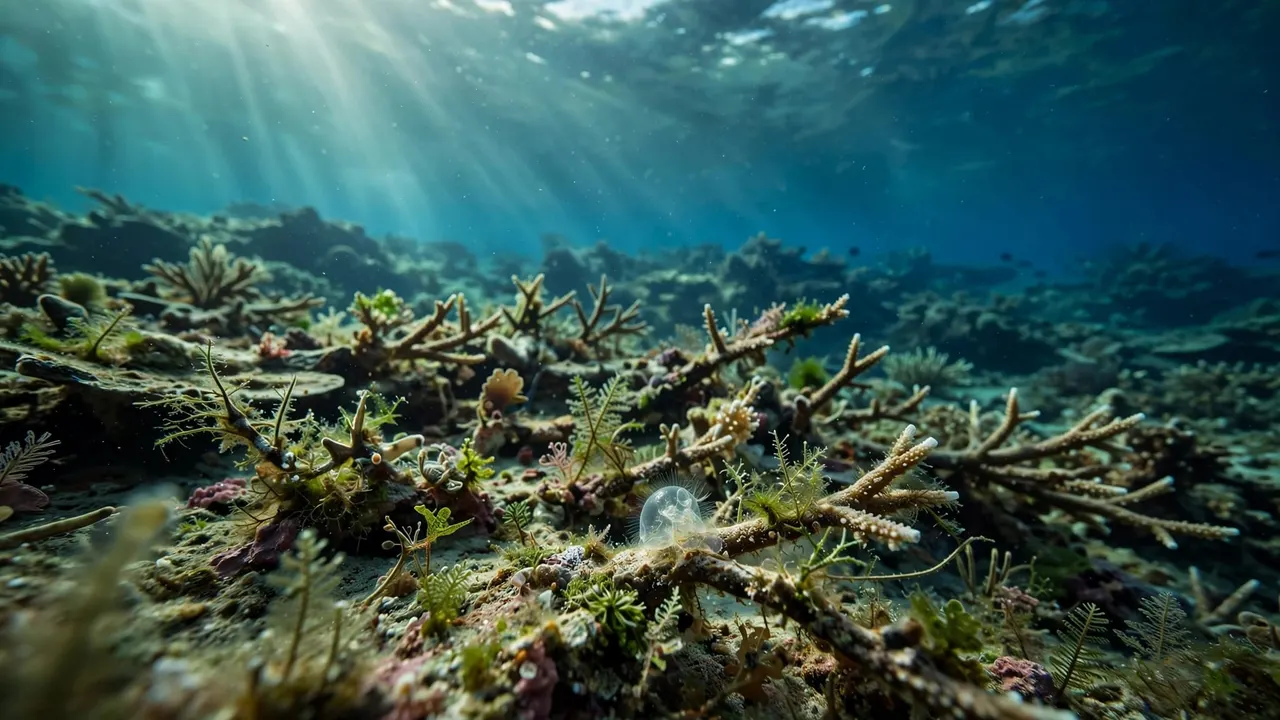
Coral larvae find places to settle by responding to their surroundings, including chemical signals on reef surfaces and, in some studies, reef sound. When you’re snorkeling Oahu, the colonies beneath you reveal the grown-up results of that tiny beginning.
At Living Ocean Tours, you can explore these living communities with professional snorkel guides and a deeper appreciation for what happens beyond your mask’s view. Start with the journey that turns a drifting larva into an attached coral polyp.
Key Takeaways
- Coral larvae can swim, but currents strongly influence where they travel.
- Chemical signals associated with algae, microbial films, and other reef organisms may influence settlement.
- Research also points to possible roles for reef sounds, although responses vary.
- While snorkeling Oahu, you can observe reef habitat, but you generally won’t see individual larvae choosing attachment sites.
Settlement begins a coral’s life on the reef. Survival afterward determines whether that new arrival becomes part of a larger colony.
From Coral Spawning to Free-Swimming Larvae
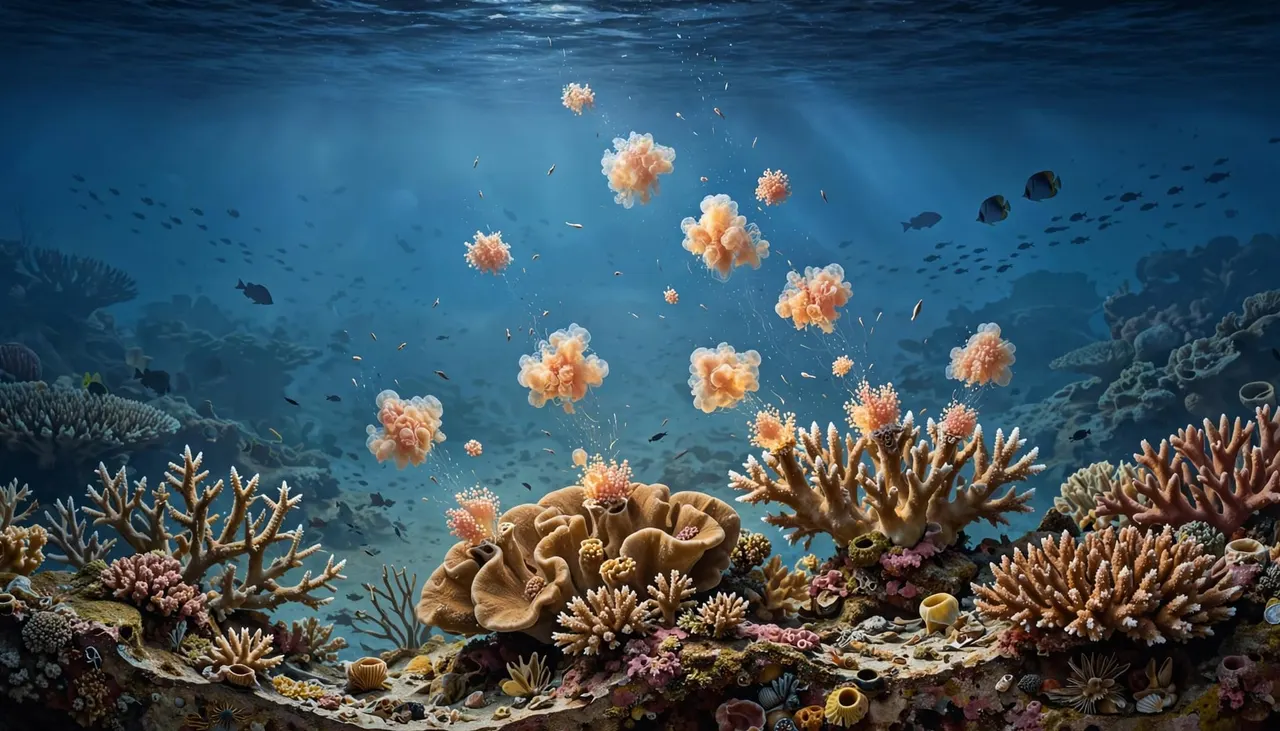
Before a young coral attaches to limestone, it has a mobile stage. That brief description hides considerable variety: coral species reproduce differently, and their larvae don’t all follow identical schedules.
Two Routes Into the Water
Many corals release eggs and sperm into the water, where fertilization occurs. The resulting embryos develop into larvae called planulae.
Other corals brood developing offspring and release larvae. Either route produces a young animal that must eventually find suitable habitat if it is to establish itself on the reef.
You can picture the contrast with an adult colony: the coral beneath your fins stays attached, while its offspring may spend part of their early lives moving through open water.
Swimming Within Moving Water
Tiny hairlike structures called cilia help coral larvae swim. However, swimming doesn’t give them complete control over their destination.
Currents transport larvae, while their own movements influence their position within the water and their encounters with surfaces. A larva must also reach a developmental stage when it can settle.
As a result, arriving near a reef and being ready to attach are separate conditions. Successful settlement requires both, along with a suitable surface.
What May Guide a Larva Toward a Settlement Site
A reef contains chemical signals, moving water, light, and sound. Scientists study how those conditions influence settlement, but no single cue explains every coral species or habitat.
For your snorkeling Oahu experience, the distinction matters: reef appearance alone doesn’t reveal every condition a larva encounters.
Chemical Signals From Algae and Microbial Films
Some settlement signals occur on or near the surface a larva encounters. Crustose coralline algae, often shortened to CCA, and associated bacterial biofilms are important subjects of this research.
These algae can form hard crusts over reef surfaces. Meanwhile, biofilms contain microscopic communities that change the chemistry of those surfaces.
Research on coral settlement microenvironments describes CCA and their associated bacterial films as sources of chemical signals linked to settlement.
That doesn’t mean every patch of coralline algae attracts every coral. The response depends on the organisms involved and the surrounding conditions.
Possible Acoustic Cues
Reefs also produce sound through animal activity. Those underwater soundscapes may provide information beyond the patch of rock directly beneath a larva.
The NOAA report on coral settlement cues describes evidence that chemical signals or acoustic cues may play a role.
Keep that conclusion measured. Sound may influence behavior, but it doesn’t establish that all larvae locate reefs the same way.
Evidence that a cue influences settlement doesn’t mean that cue guarantees a young coral’s survival after attachment.
Why the Surface Matters
Finding a reef is only part of the challenge. The actual attachment site can differ dramatically over a small distance.
A bare-looking ledge, an algae-covered patch, and a sediment-filled depression offer different conditions. For a tiny animal, those differences can determine whether attachment leads to continued growth.
Living Surfaces Carry Different Signals
A reef surface is more than limestone. It may also hold algae, bacteria, other attached animals, and loose material.
A 2022 study describes crustose calcifying red algae as recruitment substrates for stony corals. That group includes diverse seaweeds, rather than one uniform type of surface.
For you, a pinkish crust may look like a simple splash of color. To a larva, the surface’s biological and chemical properties can influence its response.
Color alone, however, doesn’t establish whether a patch supports successful settlement.
Attachment Begins Another Challenge
After settlement, a larva changes into a polyp and begins the attached phase of its life. Reef-building corals produce a hard calcium carbonate skeleton.
Yet a settled polyp still faces competition, sediment, grazing, and other sources of mortality. Its small size leaves it vulnerable to changes immediately around it.
That’s why researchers distinguish initial settlement from later survival. Counting newly attached corals answers a different question than measuring how many persist and grow.
The colony you see while snorkeling reflects success across both stages.
What Snorkeling Oahu Can Reveal
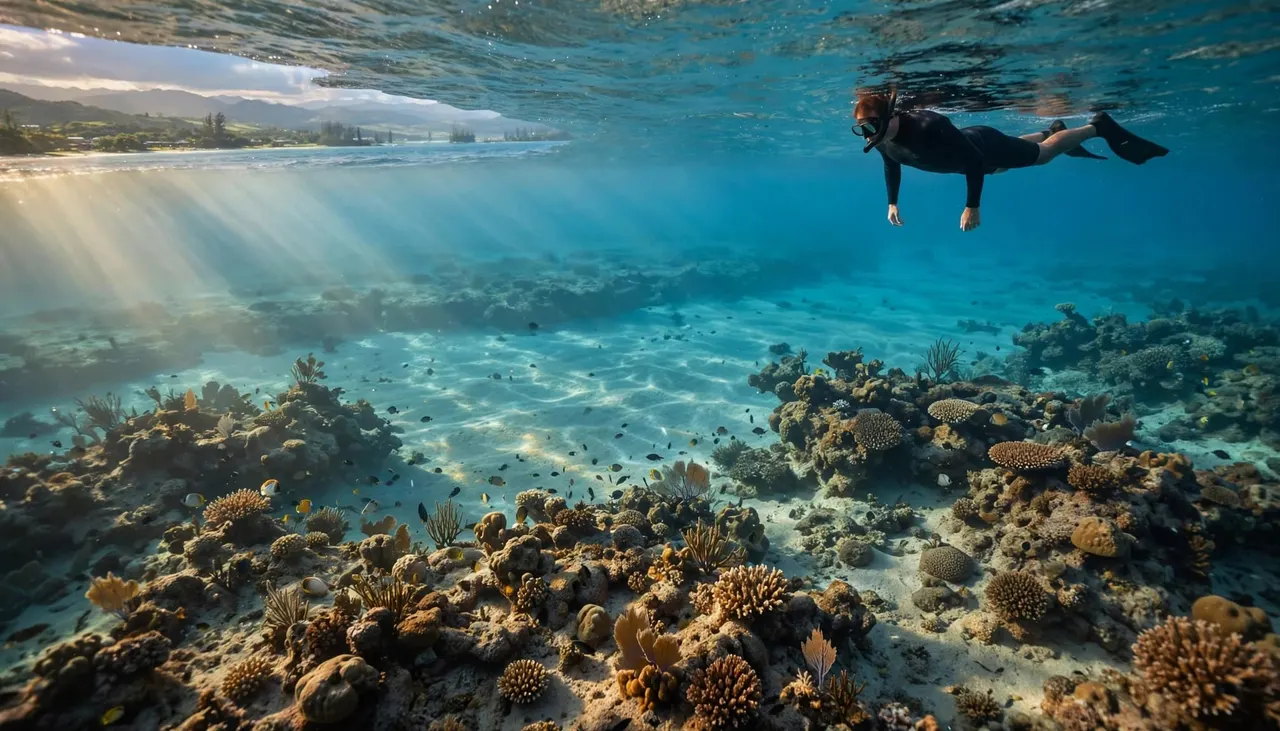
You don’t need to spot a larva to appreciate the settlement story. A reef visit gives you a wider view of the habitat that young corals must enter.
The useful distinction is between observing the surroundings and claiming to have witnessed the microscopic process.
The Habitat You Can Observe
During your swim, you may notice differences in coral cover, reef shape, and the amount of algae on exposed surfaces. Fish activity adds another visible part of the community.
Those observations help you recognize that a reef contains many different neighborhoods. Nearby patches can offer different surfaces and shelter.
For families snorkeling Oahu, this provides a focused observation game: notice how the reef changes across your view. You can compare shapes and textures without needing to identify every organism.
The Processes Beyond Your Mask
Individual coral larvae are generally too small for reliable identification during an ordinary snorkel. Newly settled corals can also be difficult to distinguish without close scientific examination.
A small coral colony therefore isn’t proof that you have found a recent settlement event. Its age and history require more evidence.
Likewise, a reef with many adult colonies doesn’t automatically reveal current recruitment success. You are seeing established animals, while the newest generation may remain out of sight.
How Researchers Study Coral Settlement
Scientists separate the settlement process into questions they can test. They may examine whether larvae respond differently to particular surfaces, biological films, or other environmental conditions.
Controlled comparisons help distinguish a response to one treatment from background settlement. Researchers can then follow attached juveniles to learn whether early differences persist.
The Marhaver Lab’s coral settlement research includes work involving Caribbean Favia fragum larvae exposed to organic and inorganic cues. That provides a concrete example of testing settlement choices.
However, Caribbean findings don’t automatically describe what happens on Oahu. Coral species, local communities, and environmental conditions differ. A useful explanation preserves those boundaries instead of treating all reefs as interchangeable.
Researchers also distinguish attraction from attachment and later growth. A larva moving toward a treatment hasn’t necessarily settled, and an attached coral hasn’t necessarily survived.
When you’re snorkeling Oahu, this gives you a sound way to interpret interesting reef observations. Describe what you can see, while keeping the invisible processes separate from your conclusions.
You can appreciate the science without turning a single swim into a reef survey.
Explore Waikiki With Our Professional Snorkel Guides
At Living Ocean Tours, we’re Oahu’s only tour company with professional snorkel guides. You can bring your curiosity about reef life to our family-friendly Oahu ocean experiences, including outings along the Waikiki coast.
Your visit offers a chance to connect the larger reef community with the coral biology behind it. Even when larvae remain invisible, established colonies give you plenty to observe and discuss.
If you’re snorkeling Oahu with children or a curious partner, choose one question to carry into the experience. Comparing coral shapes or noticing which surfaces support attached life can make your observations more focused.
You don’t need to identify a settlement cue underwater for the science to enrich your trip. Understanding the hidden early stages adds another layer to the animals already in view.
Frequently Asked Questions About Coral Larvae
Can You See Coral Larvae While Snorkeling?
You generally won’t recognize individual coral larvae during a normal snorkel. They are tiny, and other small particles or organisms can look similar without magnification.
What you can observe is the habitat surrounding them: established coral colonies, exposed reef surfaces, algae, and the wider animal community. Those features provide context, rather than proof of an active settlement event.
For your reef visit, understanding that limit makes the biology clearer. The visible colony and its microscopic beginning belong to the same story, but they require different observation methods.
Does Coralline Algae Guarantee Coral Settlement?
Coralline algae don’t guarantee settlement or survival. Research identifies certain algae and associated microbial communities as important substrates or sources of settlement signals.
Responses still depend on the coral involved and the surrounding conditions. Later survival adds another set of challenges after attachment.
You also can’t judge a surface’s suitability by its color alone. Identifying the organisms present and measuring actual recruitment require more than a passing view through a snorkel mask.
A Reef Begins With a Tiny Arrival
While snorkeling Oahu, you see the visible outcome of many small arrivals, attachments, and periods of growth. Chemical signals, possible acoustic cues, and surface conditions help explain how that process can begin.
The strongest takeaway is the distinction between settlement and survival. Finding a place to attach starts a young coral’s life on the reef; persistence turns that beginning into the colonies you can admire today.


