
Snorkeling Oahu: How Coral Bands Record Reef History
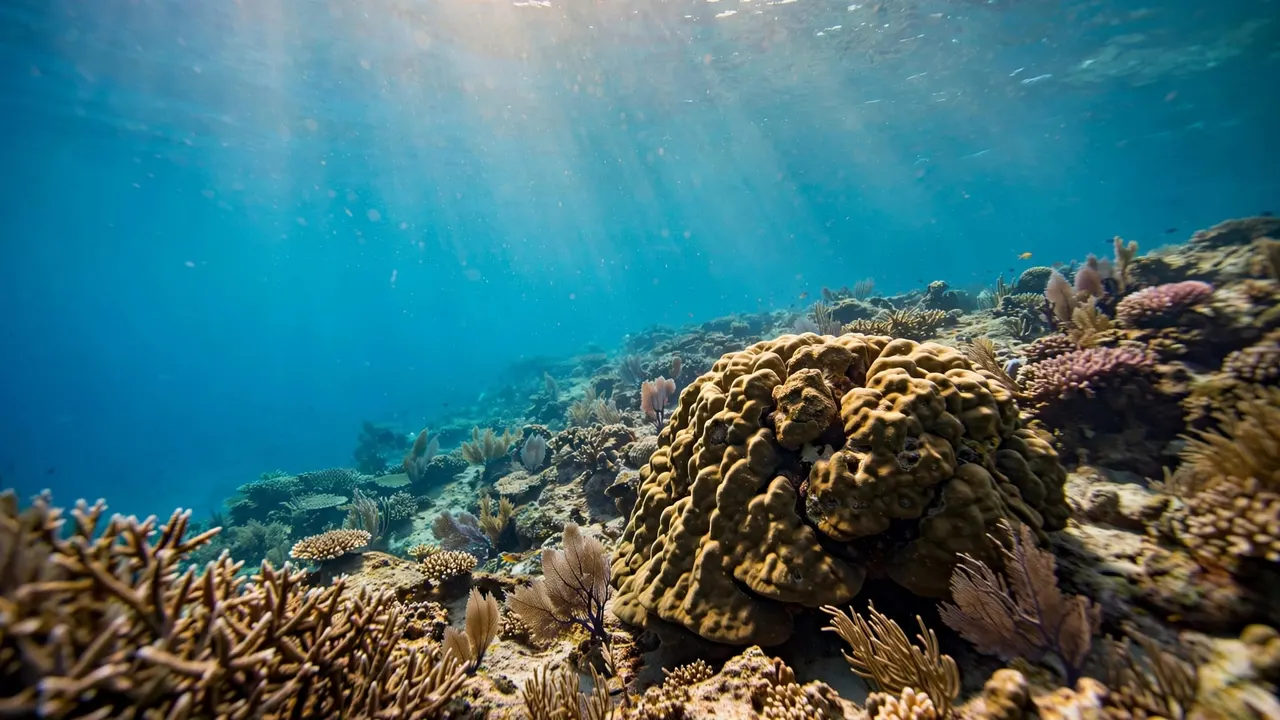
Coral growth bands preserve a timeline of reef growth inside a coral’s skeleton, although you won’t ordinarily see them while snorkeling Oahu. At Living Ocean Tours, we help you explore the living reef with professional guidance and a hands-off approach.
Beneath the surface, some coral colonies hold records that began long before your visit. Understanding that hidden history starts with separating what you can observe through your mask from what scientists measure in a laboratory.
Key Takeaways
- Many massive reef-building corals develop alternating skeletal-density bands that researchers can use to reconstruct growth.
- Annual bands lie inside the skeleton, so surface patterns aren’t a calendar you can read while swimming.
- Growth, skeletal chemistry, and stress bands provide different information, and scientists interpret them together.
- Your role is simple: float above the reef, control your fins, and leave coral undisturbed.
The Living Reef Beneath Your Fins
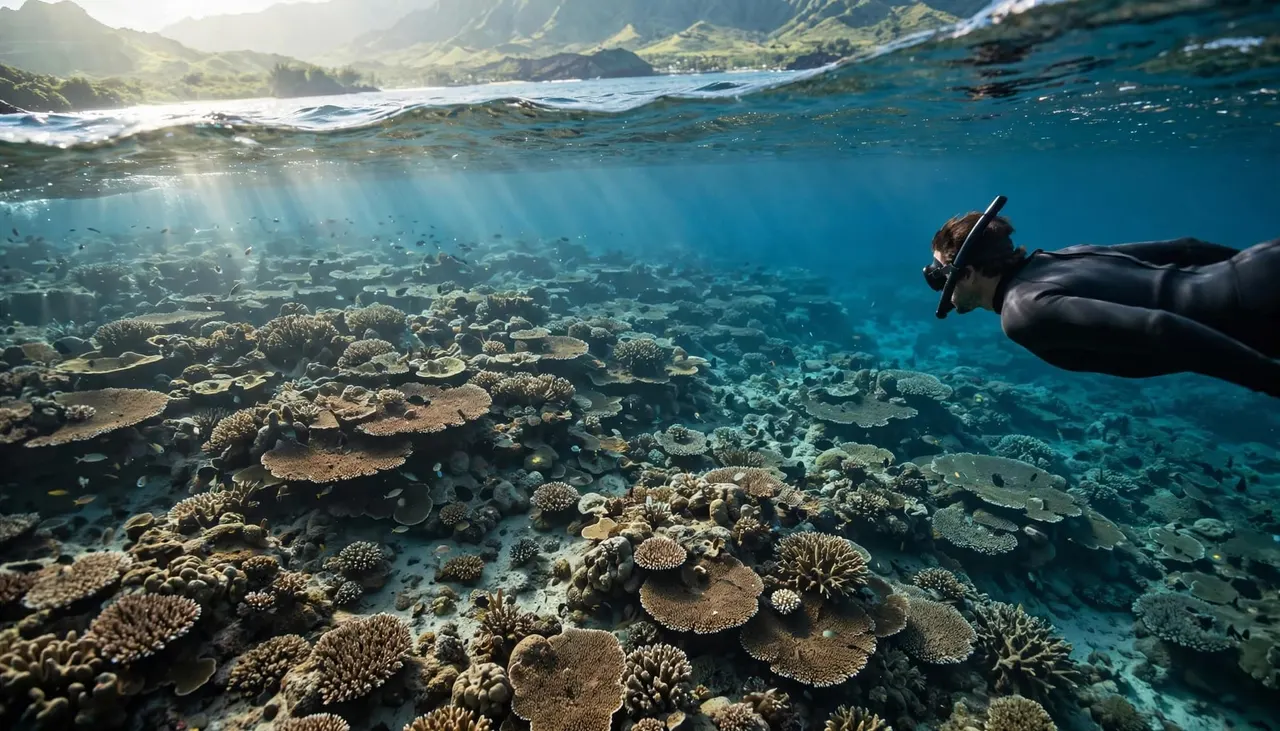
The surface is a living colony
When you look at a coral head, you’re usually seeing a colony of tiny animals called polyps. These animals build a calcium-carbonate skeleton beneath their living tissue.
Many shallow-water corals also host microscopic algae that use sunlight to produce energy. That partnership helps support the growth that gradually adds structure to a reef.
For families snorkeling Oahu, recognizing coral as an animal changes the experience. A rounded coral head becomes a living community, rather than a convenient place to rest a hand.
The skeleton holds older growth
As a colony grows, it adds skeletal material. In many massive corals, seasonal differences produce alternating areas of higher and lower skeletal density.
These internal patterns differ from the ridges, branches, and repeating polyp shapes visible on the surface. You can admire those textures without approaching closely enough to touch them.
However, you can’t reliably estimate a colony’s age by looking at its size. Species, growing conditions, partial mortality, and the colony’s history all affect its appearance.
How Coral Growth Bands Build a Timeline
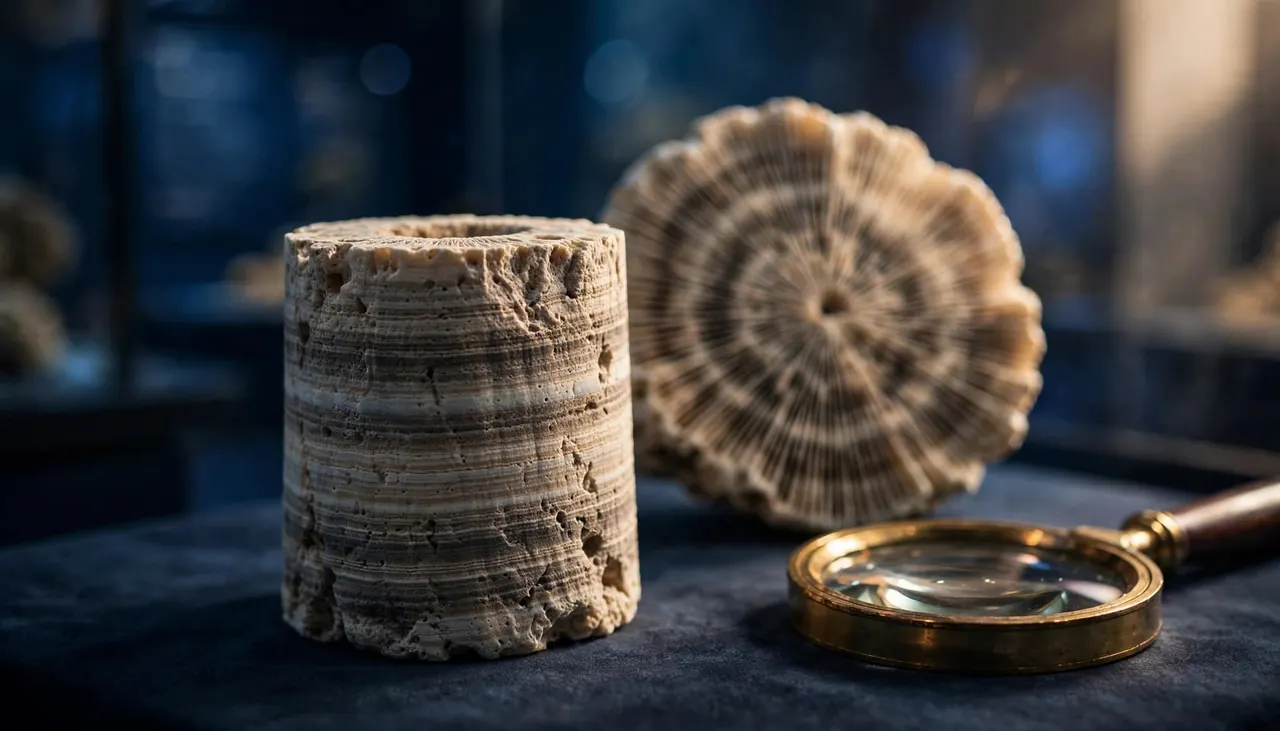
Researchers look inside the skeleton
Scientists examine coral cores or skeletal slices to reveal growth patterns hidden beneath the surface. X-ray images help distinguish denser material from less-dense material.
Where the seasonal pattern is clear, one high-density band and one low-density band can form an annual pair. Researchers then work backward through that sequence to assign dates.
The pattern isn’t equally distinct in every species or location. Therefore, reliable dating requires more than counting every visible stripe.
A broken coral fragment on the seabed isn’t a ready-made history lesson. Its origin, orientation, and growth sequence may be unknown.
Band spacing measures extension
The distance between annual markers shows how far the skeleton extended during that interval. Scientists call this linear extension.
A 15-year study at Pila’a, Kaua’i used distances between high-density bands to calculate average annual extension rates. That Hawaiian example demonstrates the method, although the study site was on Kauai rather than Oahu.
Density adds another measurement. Researchers calculate calcification using both skeletal density and extension, because adding length and depositing skeletal material aren’t identical processes.
A wider growth interval alone doesn’t provide a complete measure of reef health.
What a Coral Record Can Reveal
Growth and chemistry answer different questions
A coral skeleton contains more information than the spacing between bands. Its chemical composition can also preserve clues about the water in which it formed.
Researchers analyze features such as oxygen isotopes and trace-element ratios to investigate past environmental conditions. Different measurements respond to different influences, so interpretation requires care.
If you’re snorkeling Oahu, the distinction matters: a growth band isn’t a simple temperature reading. Light, water conditions, and biological processes can affect growth.
Scientists build stronger reconstructions by comparing measurements rather than assigning one cause to every change in band width.
Stress can leave a skeletal signature
Severe environmental stress can also alter skeletal growth. In some corals, unusual dense bands provide evidence of past bleaching stress.
Research on repeated bleaching at Jarvis Island followed skeletal stress-band formation through the 2015-2016 El Niño. It helped establish the value of these features as records of bleaching history.
Jarvis is in the central Pacific, so those findings shouldn’t be presented as an Oahu reef assessment. They demonstrate how coral skeletons can preserve events that a present-day visitor never witnessed.
A coral’s skeleton can retain evidence of an earlier stressful period even when its living surface tells only today’s story.
Connecting Coral Records to Oahu’s Reefs
Your snorkeling Oahu experience captures one place on one day. Reef research adds the longer view needed to understand change.
Around Oahu and Maui, NOAA Fisheries surveys conducted between March 2010 and November 2011 documented coral cover, colony size, condition, and other reef characteristics. Those observations provide historical information rather than a description of today’s conditions.
More recently, a 2023 study examined different bleaching and recovery trajectories at PR13 in southern Kāneʻohe Bay. It considered the effects of successive marine heatwaves over a decade.
That local research helps explain why you shouldn’t judge the whole island by one coral patch. Colonies and locations can respond differently, even during a shared period of environmental stress.
Growth bands add another kind of evidence alongside underwater surveys. Together, these records help researchers distinguish a brief observation from a longer pattern.
You don’t need to identify every coral to appreciate that difference. Watching the reef carefully is worthwhile without turning your swim into an informal health assessment.
Protect the History While You Snorkel
When snorkeling Oahu, give coral enough clearance for your body and your equipment. A gentle-looking contact can still damage living tissue or break fragile skeletal structures.
Practice floating and controlled kicks before approaching reef areas. If you need to adjust your mask, move away from coral and signal your guide rather than standing on the bottom.
Keep camera straps and accessories close to your body. A wrist lanyard can help retain your camera, but the camera still needs enough clearance to avoid striking coral.
You can also protect wildlife interactions by staying back. At Turtle Canyons, fish clean Hawaiian green sea turtles at a natural cleaning station. Chasing a turtle or blocking its route interrupts the behavior you came to observe.
A rash guard reduces the skin area that needs sunscreen. For exposed areas, mineral-based sunscreen is an option, but a “reef-safe” label doesn’t guarantee zero environmental impact.
Finally, leave coral fragments where they are. Collecting a piece removes material from the reef and doesn’t give you a scientifically interpretable record.
Explore Waikiki With Our Professional Snorkel Guides
If you’re snorkeling Oahu for the first time, guidance helps you focus on wildlife while building confidence with your equipment. At Living Ocean Tours, we’re Oahu’s only tour company with professional snorkel guides.
Our trips depart from Kewalo Basin Boat Harbor near Waikiki. You can discuss your swimming comfort with our crew before entering the water.
Our Turtle Canyons Snorkel Excursion gives you an opportunity to observe the natural turtle-cleaning area with snorkeling equipment and crew support. You don’t need to dive toward coral to enjoy the activity.
Stay at the surface, follow your guide’s boundaries, and let wildlife move freely. The experience centers on observing living reef communities, rather than collecting or exposing their hidden growth records.
When you’re ready to plan your Turtle Canyons outing, CHECK AVAILABILITY for your travel dates.
You can also browse our Waikiki snorkeling tours as you plan your time on the water.
Frequently Asked Questions About Coral Growth Bands
Can you see annual bands while snorkeling?
You ordinarily can’t see annual skeletal bands on an intact living coral. Researchers examine internal material, often with X-rays, to distinguish density patterns. Surface ridges and polyp arrangements are different features, so photographing those patterns won’t reveal the colony’s annual growth history.
Does every coral stripe represent one year?
No single stripe automatically represents a year. In many massive corals, alternating high- and low-density material forms an annual pair when seasonal patterns are clear. Researchers must interpret that sequence carefully because band visibility and formation vary among corals and locations.
Can white coral tell you when bleaching happened?
Color alone can’t establish a bleaching date. Bleached coral has lost much of its algal partnership, while exposed skeleton may indicate tissue loss. Neither observation gives you an annual timeline. Scientists use repeated observations and skeletal evidence to investigate when stress occurred and how colonies responded.
A Deeper Appreciation of the Reef
Coral growth bands give researchers a longer view of reef history than any single swim can provide. You can appreciate that hidden record without seeing or touching it.
During your next outing, watch the living colony above the skeleton and keep your fins clear. Leaving the reef undisturbed protects both the wildlife you enjoy today and the growth that continues its story.


