
Snorkeling Oahu: Native vs. Introduced Reef Fish
When you’re snorkeling Oahu reefs, you can identify fish by their shape and markings, then connect each species with its origin. Color alone won’t tell you whether a fish belongs naturally in Hawaii.
At Living Ocean Tours, we help you observe reef life without disturbing it. A familiar fish can be introduced, while a brightly patterned fish can be native.
Start with two native species and three introduced ones, then practice spotting their differences.
Key Takeaways
- Native fish reached Hawaii without human introduction; endemic fish occur naturally only in Hawaii.
- Roi, ta’ape, and to’au are introduced reef fish, despite their familiar Hawaiian names.
- Compare body shape with several markings before deciding what you’ve seen.
- While snorkeling Oahu waters, leave every fish undisturbed, regardless of its origin.
Understand Native, Endemic, and Introduced Fish
A fish’s origin is part of its species history. You can’t determine that history by watching one animal swim. Instead, identify the species and learn its status.
Native Doesn’t Always Mean Unique to Hawaii
Native species arrived without people transporting them. Some also occur elsewhere in the Pacific, so finding the same fish overseas doesn’t make it introduced here.
Endemic species have a narrower natural range. The Hawaiian cleaner wrasse, for example, is endemic to the Hawaiian Islands. Yellow tangs are native, but they aren’t Hawaiian endemics.
These terms describe different things. “Native” explains how a species belongs here; “endemic” describes where it naturally occurs.
Introduced Doesn’t Automatically Mean Invasive
Introduced fish arrived through human activity. Hawaii’s aquatic invasive species management plan documents the state’s history of marine fish introductions.
“Invasive” adds another consideration: harm associated with a nonnative species. Impacts vary, and a fish’s abundance alone doesn’t measure its ecological effects.
Also, a Hawaiian name isn’t proof of native status. Ta’ape and to’au both have Hawaiian names, yet people introduced them.
Recognize Two Native Reef Fish
You don’t need a long species list to begin. These two native fish give you useful contrasts in body shape and pattern.
Yellow Tang: Solid Yellow and a White Tail Spine
The yellow tang (Zebrasoma flavescens), or lau’ipala, has a thin, oval body when viewed from the side. Its bright-yellow coloring is largely uniform.
Look for the small white spine near the tail base. Observe it without approaching closely or attempting to touch the fish.
The main comparison is with ta’ape. Yellow tangs have a tall, compressed outline, while ta’ape have a longer snapper shape and blue horizontal stripes.
Hawaii’s Division of Aquatic Resources includes species information in its Hawaiian fish identification manual. Pair names with body shapes rather than memorizing colors alone.
Reef Triggerfish: Angular Shape and Contrasting Markings
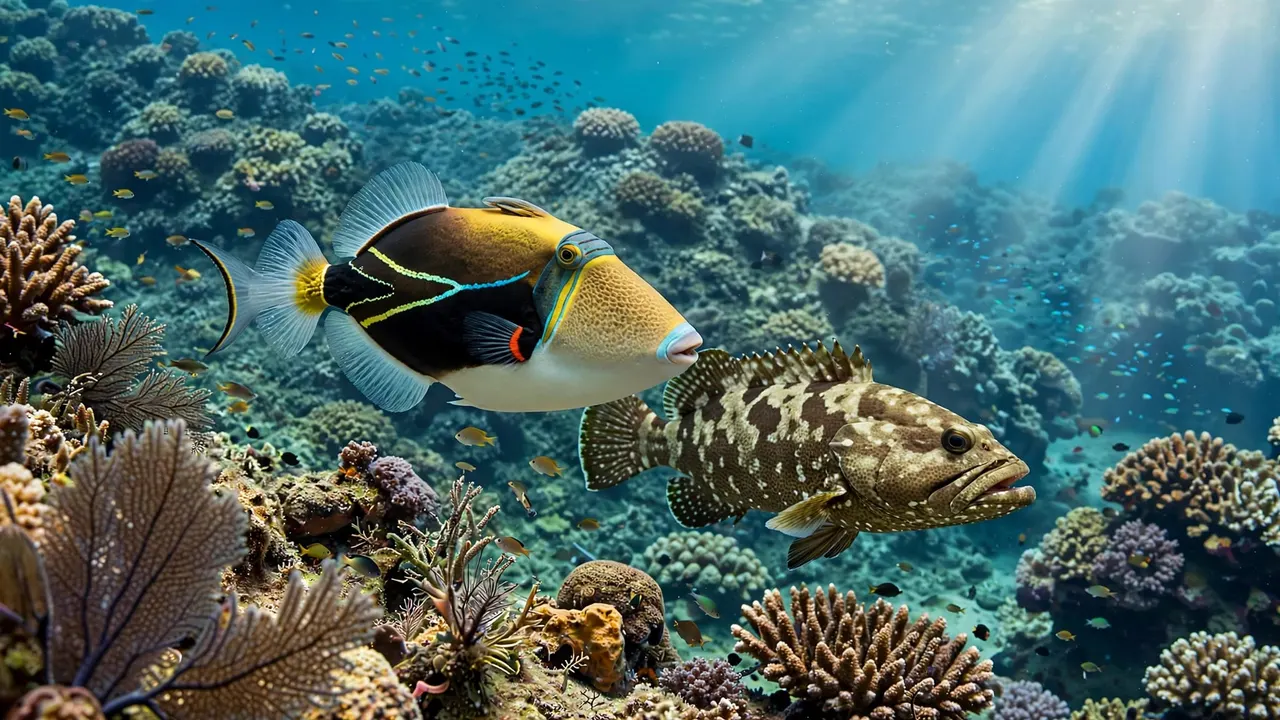
The humuhumunukunukuapua’a (Rhinecanthus rectangulus) is Hawaii’s state fish. Look for its angular body, pointed snout, and bold contrasting markings.
A dark diagonal pattern across the body helps distinguish it from uniformly colored fish. However, several triggerfish species inhabit Hawaiian waters, so the general silhouette isn’t enough for an exact identification.
When snorkeling Oahu reefs, watch a triggerfish turn sideways. That angle often reveals more of its pattern than a head-on view.
Don’t chase it toward a crevice. A patient look gives you a clearer view without blocking its escape route.
Learn the Three Introduced Fish to Recognize
Roi, ta’ape, and to’au came from French Polynesia during Hawaii’s fish-introduction program between 1955 and 1961. They became established, although their abundance and distribution differ.
Roi: A Stocky Grouper With Blue Spots
Roi, the peacock grouper (Cephalopholis argus), has a thick body and a large mouth. Numerous small blue spots cover its head and body.
Its background color can appear brown, olive, or gray underwater. Therefore, use the combination of grouper shape and spotting rather than expecting one fixed shade.
You may notice a roi holding near rock or coral shelter. That position can help you observe it, but location alone isn’t an identification.
A common grouper on an Oahu reef doesn’t become native through familiarity.
Ta’ape: Yellow Body With Blue Horizontal Stripes
Ta’ape, the bluestripe snapper (Lutjanus kasmira), often forms conspicuous groups. Look for a yellow body crossed by four narrow blue horizontal stripes.
Those stripes separate it from the solid-yellow tang. Also compare their outlines: ta’ape are longer-bodied, with the familiar streamlined shape of a snapper.
Schooling is supporting evidence, not proof. Plenty of native fish gather in groups too.
If glare hides the stripes, wait for the school to change direction. A side view can reveal markings that disappear when fish face you.
To’au: A Dark Tail on a Snapper-Shaped Fish
To’au, the blacktail snapper (Lutjanus fulvus), requires more care. Its brownish or reddish body is less distinctive than ta’ape’s striped yellow sides.
Look for the dark tail, then compare the whole fish with a reliable species reference. Don’t identify every dark-tailed snapper as to’au.
This species also came through the introduction program, but it hasn’t spread as widely as ta’ape.
If you only glimpse a retreating tail, leave the sighting uncertain. An honest partial identification is more useful than a confident mistake.
Use a Simple Fish-Identification Routine
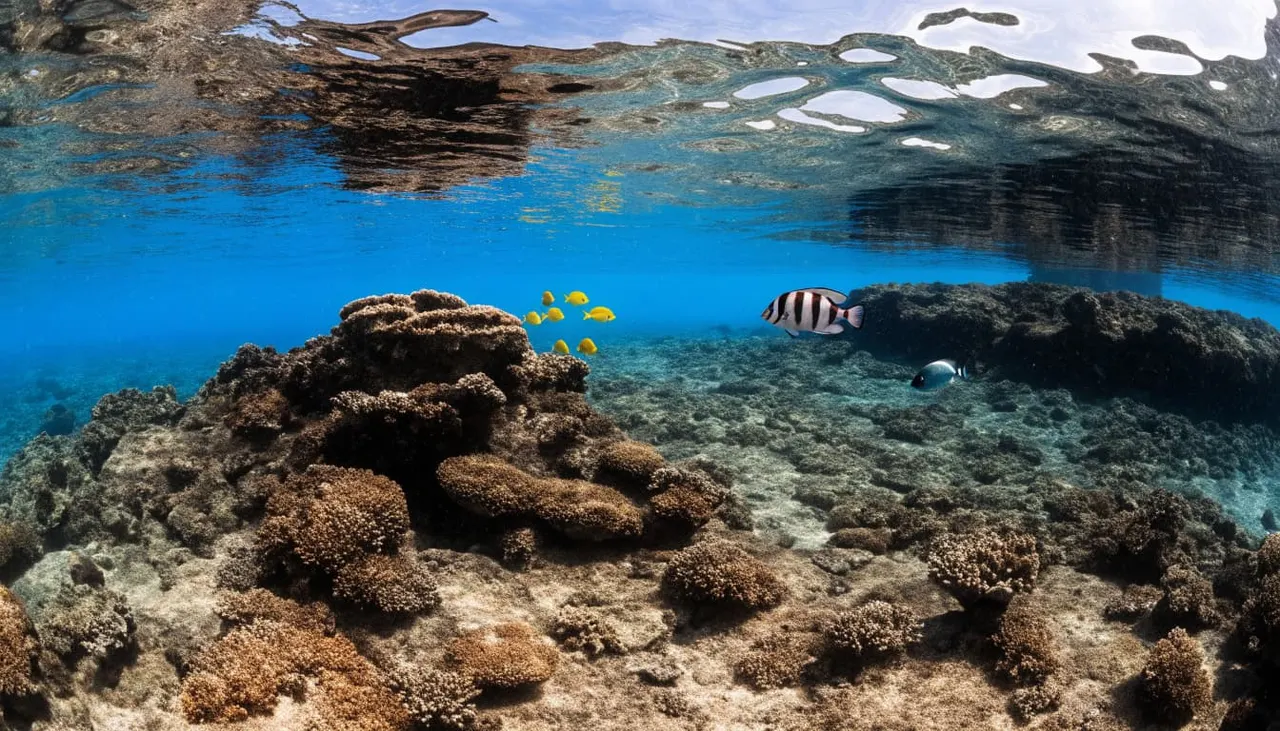
When snorkeling Oahu waters, slow observation works better than swimming after every moving shape. Start with one fish rather than trying to name an entire school.
- Notice the outline first. Decide whether the fish looks tall and thin, long and streamlined, or thick-bodied.
- Find two supporting features, such as horizontal stripes, blue spots, an angular snout, or a contrasting tail.
- Watch briefly for a side view, then discuss the sighting after you surface or return aboard.
Underwater light changes how colors appear. Distance, shade, and suspended particles can also hide small markings.
If you photograph a fish, take the image from where you’re already floating. Don’t trade safe positioning or reef clearance for a closer shot.
For children, make the activity manageable: compare one solid-yellow fish with one striped fish. Then add another species once those differences feel familiar.
Understand What Introduced Fish Mean for the Reef
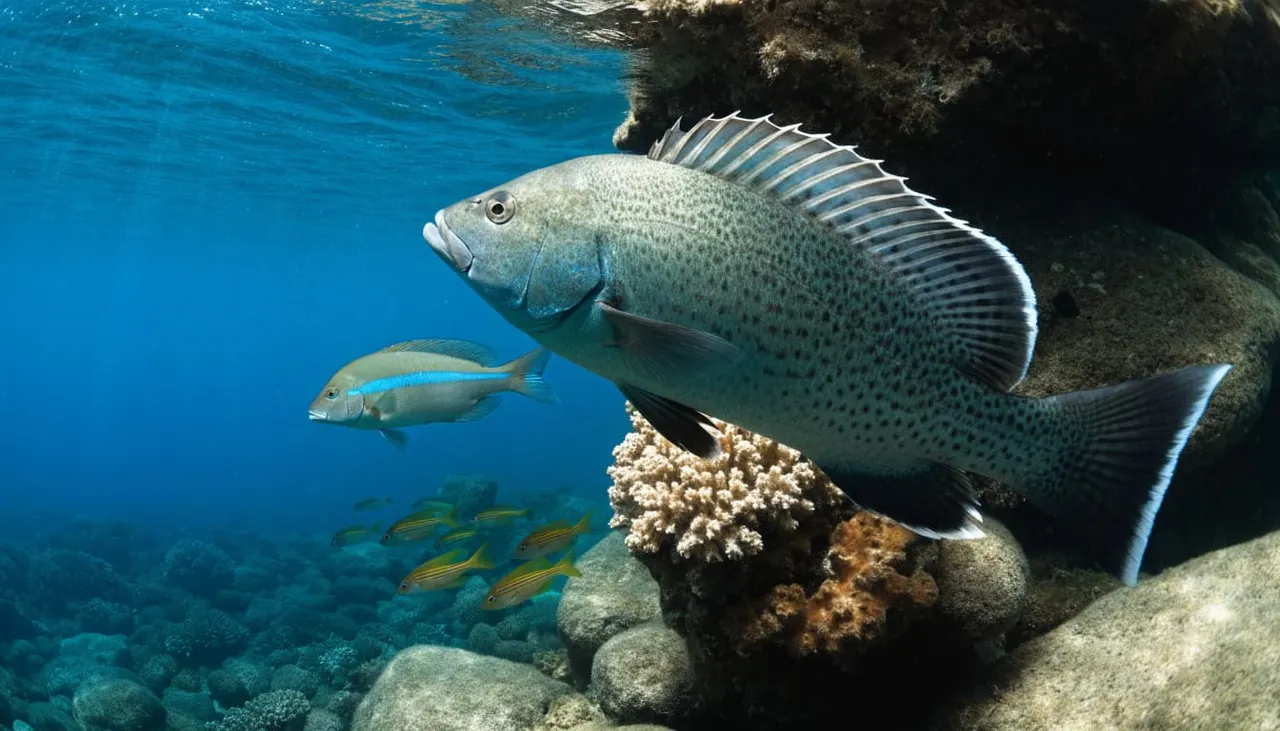
Introduced predators and competitors can affect reef communities, but each species needs its own evidence. Roi eat other fish, while ta’ape raise concerns about competition with native species.
Avoid turning those concerns into claims that one fish explains every change on a reef. Fishing pressure, habitat condition, and other environmental factors also affect fish populations.
A South Kohala roi-removal study reported no significant location differences in fish biomass two years after removal. That finding cautions against assuming a simple, immediate reef-wide response.
Recognizing an introduced fish doesn’t give you permission to capture it, move it, or disturb its habitat.
Your role during a snorkel is observation. Keep your hands and fins clear of coral, and never feed fish to bring them closer.
Also, avoid blocking turtles or fish at cleaning stations. Smaller fish remove material such as parasites from larger animals, and crowding can interrupt those interactions.
Practice Fish Spotting With Professional Snorkel Guides
If you’re snorkeling Oahu reefs for the first time, support in the water helps you focus on observation. We’re Oahu’s only tour company with professional snorkel guides.
Our crew provides equipment and instruction, while our guides offer direct in-water support. You can compare our Waikiki snorkeling and wildlife tours to choose an outing that fits your group.
Our Deluxe Waikiki Snorkeling and Wildlife Cruise combines reef snorkeling with a waterslide, water trampoline, and floating lily pad. That variety suits families whose interests extend beyond fish identification.
You can watch reef life, take a break, and enjoy the boat without making every moment an identification exercise. Wildlife sightings depend on conditions and animal behavior, so no particular fish encounter is guaranteed.
For a family reef outing, CHECK AVAILABILITY and bring a short list of fish you’d like to recognize.
Frequently Asked Questions About Oahu Reef Fish
Can You Tell Whether a Fish Is Native by Its Behavior?
Behavior helps you identify a species, but it doesn’t reveal its origin. Native and introduced fish both school, defend space, hide, and feed around reefs.
For example, a ta’ape school can provide a useful clue when paired with yellow bodies and blue stripes. Schooling alone proves nothing about native status.
When snorkeling Oahu reefs, treat behavior as one part of the identification. Once you know the species, you can connect it with its documented history.
Should You Remove Introduced Fish While Snorkeling?
No. A recreational snorkel isn’t a fish-removal activity, and introduced status doesn’t cancel fishing regulations or protected-area restrictions.
Don’t carry equipment to chase or capture fish during a wildlife-viewing outing. Attempts to corner an animal can damage coral and put you in an unsafe position.
Instead, remember its shape and markings, or take an unobtrusive photograph. If you’re uncertain, describe what you saw to your guide rather than forcing an identification.
Leave With Better Fish-Identification Skills
The most useful habit is matching a fish’s outline with several markings before naming it. Then connect that identity with its native or introduced status.
As you continue snorkeling Oahu reefs, build your knowledge a few species at a time. Patient observation gives you more to notice while leaving fish free to feed, shelter, and move naturally.


