
Snorkeling Oahu: Coral Fluorescence and Reef Colors
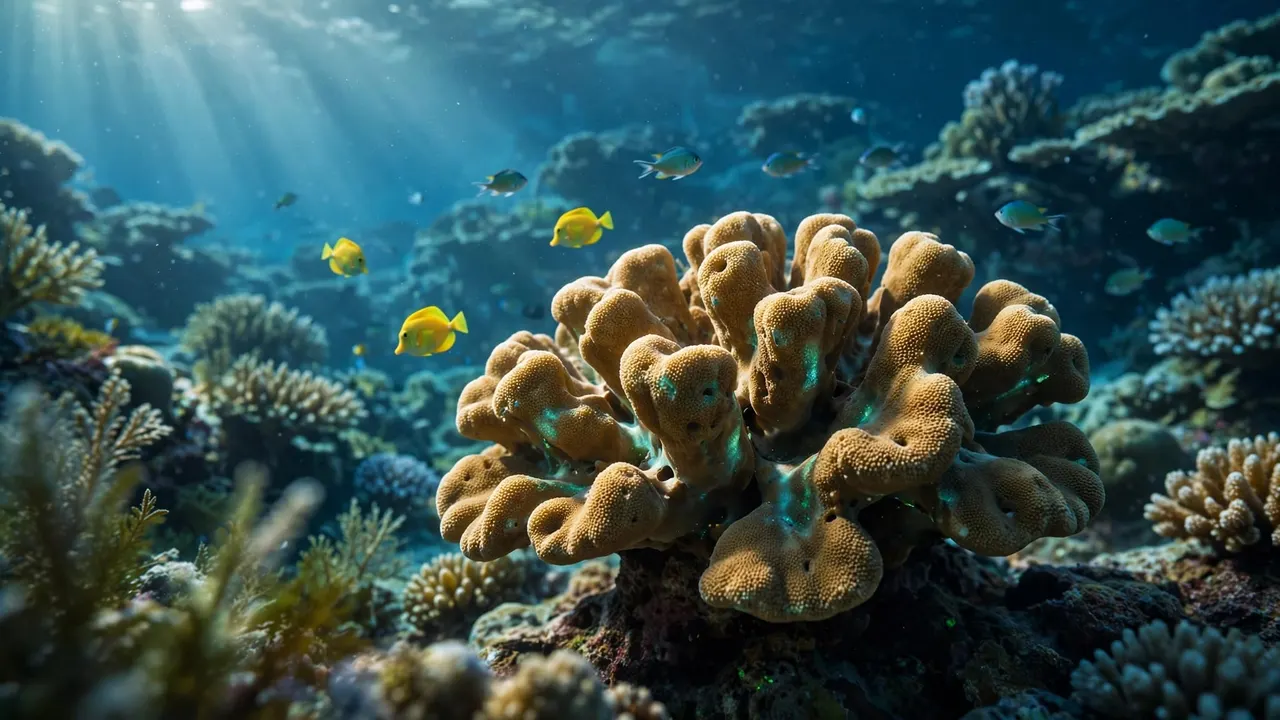
When you’re snorkeling Oahu, you’ll usually see coral in tan, brown, gold, and occasional brighter tones. Coral fluorescence produces a different effect: certain pigments absorb light and release it as another color, most clearly under specialized viewing conditions.
At Living Ocean Tours, we help you appreciate these living reefs through professional guidance and respectful wildlife observation. You don’t need a glowing reef to enjoy a colorful underwater encounter, but understanding how light changes color helps you recognize what you’re seeing. Start with the difference between reflected sunlight and fluorescence.
Key Takeaways for Your Reef Adventure
- Daylight snorkeling reveals natural coral pigments, reef fish, and changing underwater light, rather than a guaranteed neon display.
- Fluorescent pigments absorb incoming light and release light at a longer wavelength. Specialized blue-light viewing makes this easier to distinguish.
- Brown and golden corals can be healthy. Neither ordinary color nor fluorescence gives you a reliable health diagnosis.
- Clear water, a comfortable mask, and steady floating help you appreciate reef details without approaching or touching coral.
How Coral Fluorescence Works
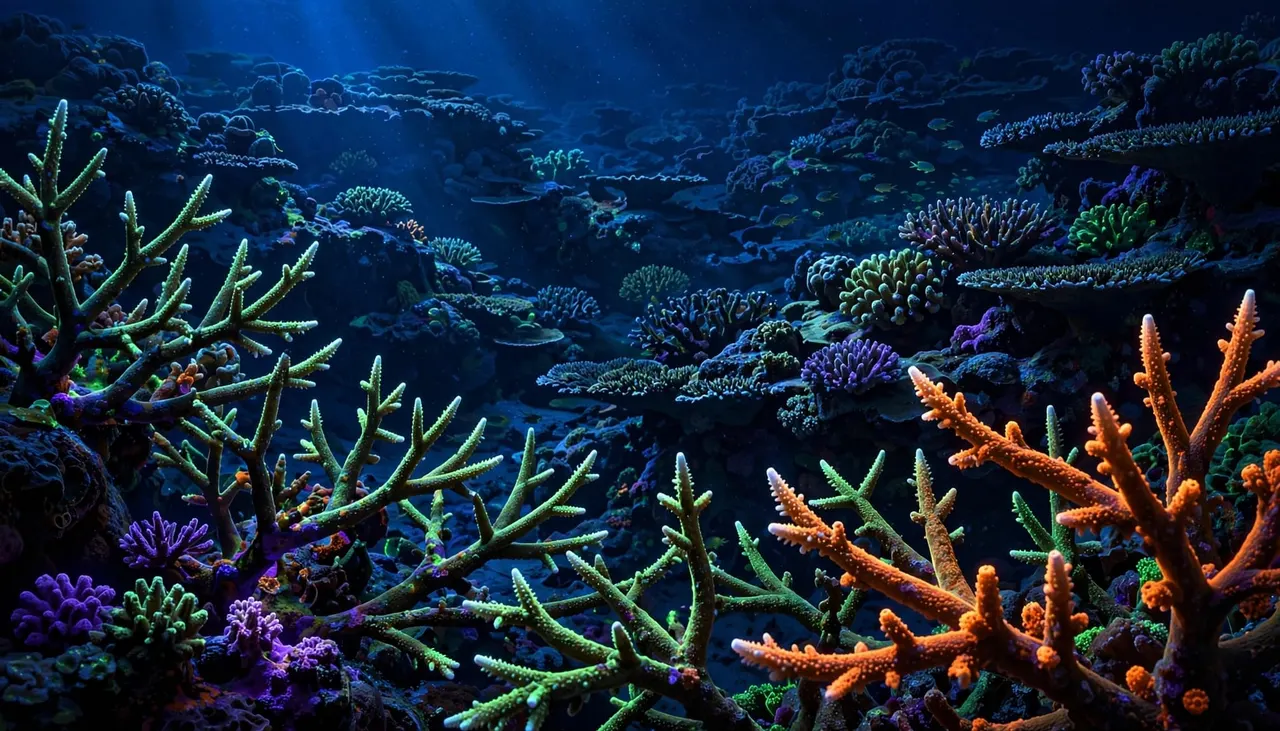
Conceptual illustration of fluorescence under specialized blue light, rather than an ordinary daytime snorkel view.
The Coral Absorbs One Color and Emits Another
Fluorescence begins when a substance absorbs incoming light. It then releases some of that energy as light at a longer wavelength.
Certain coral pigments produce this effect. Depending on the pigment and illumination, emitted colors can include cyan, green, yellow, or red. NOAA’s archived report on fluorescence for underwater research explains this light-conversion process and its usefulness for observing marine organisms.
Fluorescence also differs from bioluminescence. A fluorescent organism needs an outside light source to excite its pigments. Bioluminescent organisms generate light through chemical reactions.
Blue-Light Viewing Separates the Glow
Specialized fluorescence viewing commonly pairs a blue excitation light with a yellow barrier filter. The filter blocks much of the reflected blue light, so emitted colors become easier to see.
That equipment changes your view considerably. Meanwhile, ordinary daylight contains reflected light that can overwhelm subtle fluorescence.
A bright green coral in an underwater photograph therefore doesn’t tell you how it appeared to a daytime snorkeler. Lighting, filters, and camera settings all affect the finished image. The dramatic glow in a specialist photograph shouldn’t become your expectation for an everyday reef visit.
The Colors You’ll See While Snorkeling Oahu
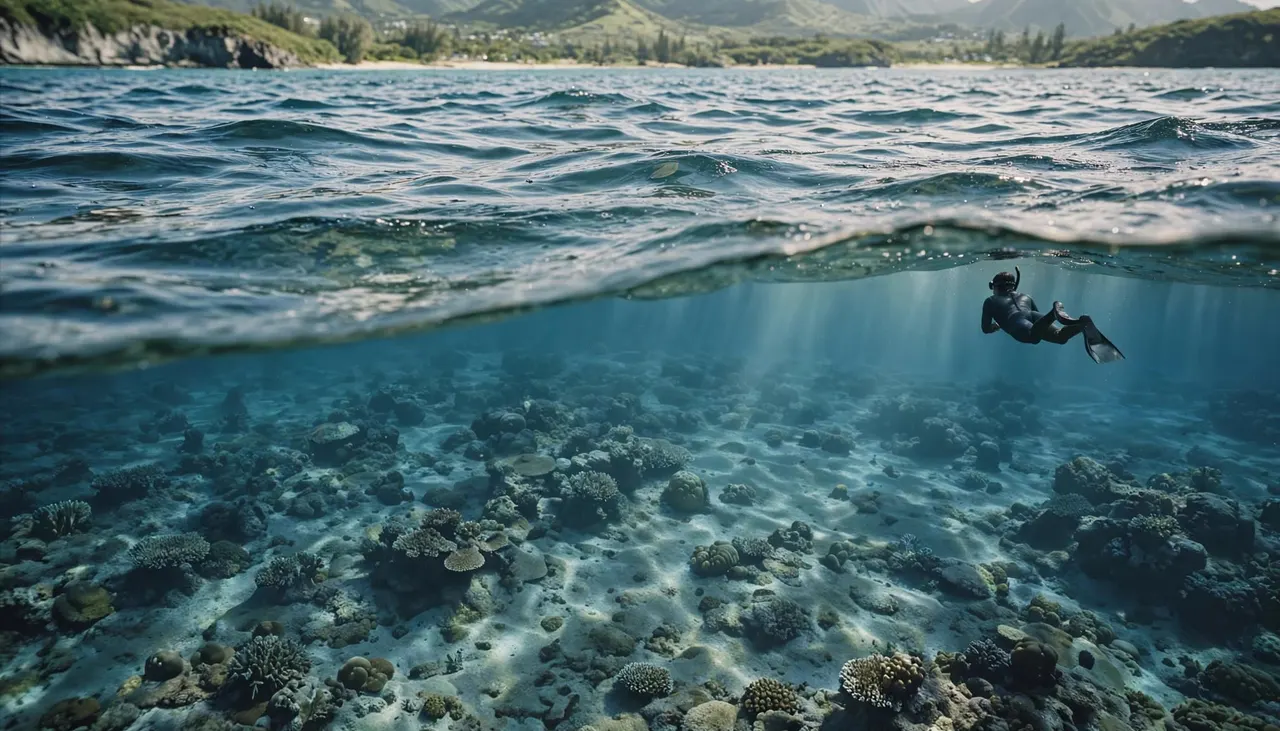
Brown and Gold Are Part of a Living Reef
Many Hawaiian reef-building corals have brown, tan, or golden coloration. Microscopic symbiotic algae, often called zooxanthellae, contribute much of that familiar appearance.
These algae live inside coral tissue and use sunlight to produce energy. Their partnership supports the coral animal, although coral pigments also influence the colors you see.
Look beyond brightness. Repeated surface patterns, branching shapes, and small fish moving between colonies give the reef its character. A colony with understated colors can still reward your attention.
You may also notice butterflyfish with yellow markings, boldly striped Moorish idols, or colorful parrotfish nearby. Their ordinary reflected colors add contrast without requiring fluorescence.
Water Changes the Palette
Water absorbs different wavelengths at different rates. Reds disappear relatively quickly, while blue light travels farther through clear ocean water.
As a result, a distant reef often looks bluer and less colorful than a nearby subject. Suspended particles can further reduce contrast.
Your viewing angle matters too. Surface glare, shadows, and ripples change the apparent brightness of the same colony. Rather than expecting uniformly vivid colors, enjoy those shifts as part of the underwater scene.
Coral Color Isn’t a Health Diagnosis
While snorkeling Oahu, you can’t judge an entire coral colony’s condition from its brightness alone. Species, pigments, sunlight, and water depth all influence appearance.
Fluorescent proteins also have several possible biological roles. Research on coral fluorescent proteins and antioxidants examines their potential involvement in antioxidant defenses. That research doesn’t make visible fluorescence a simple measure of reef health.
Coral bleaching involves the loss of symbiotic algae or their pigments. However, a pale-looking patch viewed through moving water isn’t enough for a confident diagnosis.
A coral’s apparent color can change with lighting and viewing conditions, even when the coral itself hasn’t changed.
You can make more useful observations by noticing the broader scene. Look at colony shapes, fish behavior, and the difference between living tissue and exposed surfaces, while keeping your distance.
For your snorkel, curiosity is more useful than assigning a health label. Leave scientific assessments to monitoring programs that can compare observations over time.
How to Notice More Without Getting Closer
Get Comfortable Before Studying the Reef
A leaking mask or rushed breathing pulls your attention away from everything below you. Begin with equipment fit, a clear safety briefing, and a comfortable surface position.
If you need an adjustment, signal your guide and move away from coral. Use available flotation as instructed, rather than reaching down for support.
Once you’re settled, watch one small area for a little longer. A fish may return to the same feeding patch, or another animal may emerge between coral heads. Patient observation often reveals details that a fast swim misses.
Keep Your Camera Within Your Swimming Space
If you’re snorkeling Oahu with a camera, favor a clear, steady view over chasing brighter colors. Hold the camera close enough that you remain aware of your surroundings.
A wide reef scene can show depth and habitat better than a close-up taken at the expense of safe positioning. Also, keep straps and accessories away from coral branches.
Underwater camera settings can change white balance and saturation. Heavy editing can make a photograph look unlike the scene you remember.
Treat photographs as memories of your encounter. They don’t need exaggerated neon colors to show why the reef held your attention.
Explore Waikiki’s Reef With Professional Guides
If you’re snorkeling Oahu for the first time, our crew helps you focus on the experience instead of managing every detail alone. At Living Ocean Tours, we’re Oahu’s only tour company with professional snorkel guides.
Our Oahu snorkeling and ocean tours depart from Kewalo Basin Boat Harbor, minutes from Waikiki. You receive equipment support and guidance on observing marine life without disturbing it.
Our Turtle Canyon Snorkel Excursion is a two-hour outing priced at $79 for guests ages 3 and older. It includes approximately one hour of snorkeling, with gear and guides supplied.
At Turtle Canyons, you can observe a natural turtle-cleaning area, where fish clean Hawaiian green sea turtles. This daytime wildlife experience gives you a reason to watch animal behavior as well as reef color.
The emphasis is on natural encounters and responsible observation, rather than specialized fluorescence viewing. For a guided turtle outing, CHECK AVAILABILITY.
Protect the Reef You’re Enjoying
Keep Your Fins and Equipment Clear
Coral is a living animal colony. Standing on it, grabbing it, or brushing it with equipment can damage delicate tissue and break its structure.
Float horizontally when comfortable, and leave enough room beneath your fins. Before turning toward a fish or lifting your head to speak, notice where your feet will move.
Hawaii’s Division of Aquatic Resources offers a coastal stewardship guide for caring for marine resources. Your role during a snorkel is practical: observe wildlife without touching, feeding, chasing, or blocking its movement.
Let turtles travel and surface freely. Also, leave shells, rocks, and other habitat material where you find them.
Protect Your Skin and Respect Your Limits
A rash guard covers skin and reduces the area that needs sunscreen. For exposed skin, choose broad-spectrum mineral sunscreen containing zinc oxide or titanium dioxide. Don’t rely on a “reef-safe” label alone.
Your comfort matters as much as your equipment. Tell your guide about fatigue, uncertainty, or difficulty breathing before continuing becomes harder.
Flotation can support you, but it doesn’t replace swimming ability or make rough conditions suitable. You can return to the boat when you need a break.
Respectful snorkeling begins with enough control to enjoy the reef without using it for support.
Frequently Asked Questions
Will I See Glowing Coral on a Daytime Snorkel?
Don’t expect the neon appearance associated with specialized blue-light photographs. During daylight, reflected sunlight usually dominates your view.
You can still enjoy natural coral tones, colorful fish, and sunlight moving across the reef. Those sights are the foundation of an ordinary snorkeling experience.
Do I Need Special Equipment to Enjoy Coral Colors?
Your standard mask lets you appreciate the reef’s daylight appearance. Comfortable fit and clear water matter more than extra accessories.
Dedicated fluorescence observation uses specialized lighting and filters. Buying a blue flashlight alone doesn’t turn a regular snorkel into an appropriate fluorescence excursion.
Does a Brown Coral Mean the Reef Is Unhealthy?
Brown coloration commonly comes from the coral’s symbiotic algae. It doesn’t automatically indicate poor health.
Similarly, vivid fluorescence doesn’t prove excellent health. Appreciate what you can observe, but avoid drawing conclusions from one color or one colony.
Enjoy the Reef’s Natural Palette
Your reward for snorkeling Oahu is a closer look at a living reef, with colors shaped by sunlight, water, and biology. Fluorescence adds another layer to that story, but everyday coral colors deserve your attention too.
Give yourself time to float comfortably and watch what happens beneath you. With respectful observation, you can enjoy the reef’s details while leaving its animals and delicate structures undisturbed.


