
Snorkeling Oahu: Keep Your Fins Above Fragile Coral
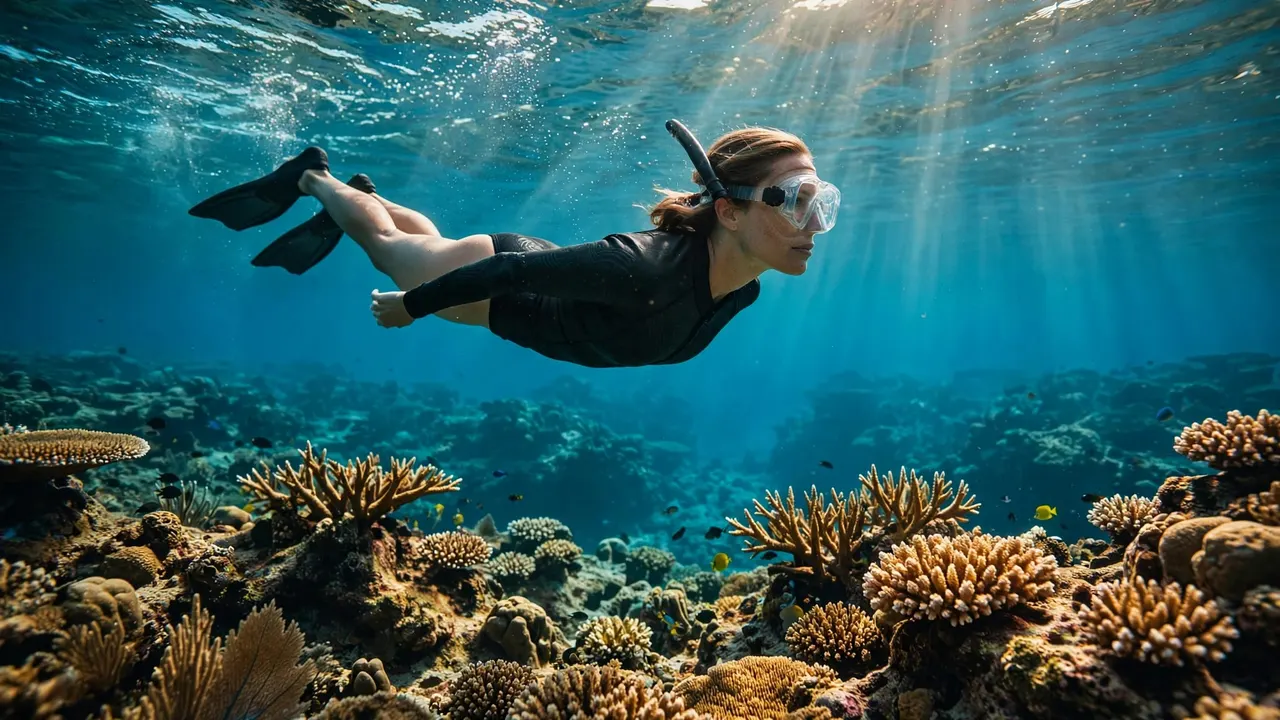
When you’re snorkeling Oahu’s reefs, keep your fins clear by floating horizontally, using small kicks, and choosing water with room beneath you. Good control starts before you reach the coral, with comfortable equipment, suitable conditions, and a plan for resting.
At Living Ocean Tours, our professional snorkel guides help you prepare before entering the water. Whether you’re exploring with your partner or introducing your family to reef life, start with one habit: know where your fins are, even when your eyes follow a fish.
Key Takeaways for a Reef-Friendly Swim
- Practice floating and adjusting your equipment away from coral before approaching a reef.
- Keep kicks small, secure loose accessories, and leave enough water beneath your entire body.
- If you’re tired or uncomfortable, signal for help instead of using the reef for support.
Coral Is Living Habitat, Not a Rest Stop
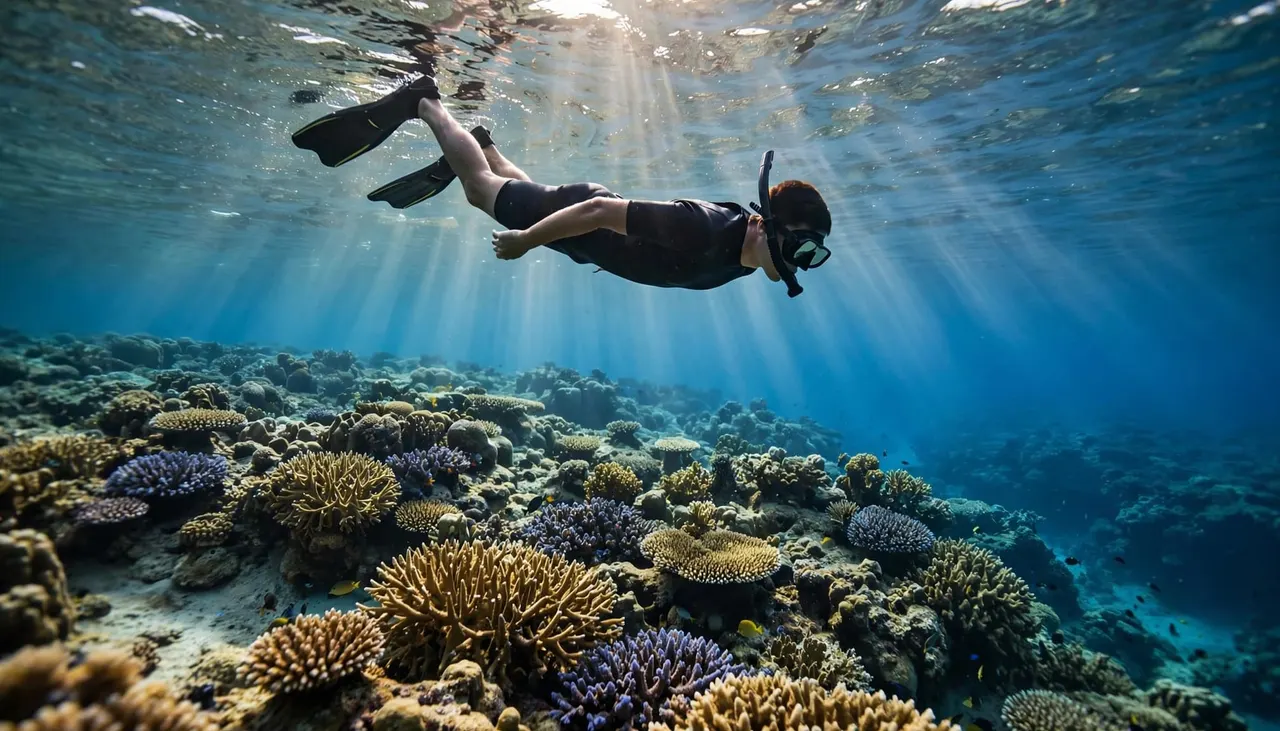
Illustrative reef scene.
Coral’s hard surface can look sturdy, but living colonies of tiny animals build that structure. Your fin blade can scrape living tissue or break delicate growth even when you barely feel contact.
NOAA’s responsible diving guidance explains that even a minor brush from hands, fins, or equipment can damage coral animals. The same caution applies when you snorkel at the surface.
Because you’re snorkeling Oahu’s living habitat, treat every coral formation as something to pass above without contact. Never stand, kneel, or brace a hand against it.
Also, avoid assuming that pale or brown reef surfaces are safe footholds. You don’t need to identify every patch underwater to follow a reliable rule: keep your body and equipment off the reef.
Keep Your Fins Clear of the Reef
A mask gives you a forward view, while your fins trail behind. That separation makes body awareness especially important around shallow coral.
Float horizontally and shorten your kick
Aim for a relaxed, nearly horizontal position when your comfort and conditions allow. Keep your legs near the surface and use small movements rather than forceful kicks.
Pedaling your knees as though riding a bicycle can drop your fins toward the bottom. Instead, practice gentle kicks in clear water before approaching reef formations.
When snorkeling Oahu’s shallow reefs, choose a route with enough clearance for your full kick. If coral comes too close, stop kicking and move toward open water under your guide’s direction.
NOAA’s reef etiquette guidance emphasizes buoyancy control and avoiding reef contact. Give yourself room for movement, rather than trying to hover just beyond touching distance.
Look ahead before turning or stopping
Scan the route in front of you before following a fish. Coral can rise toward the surface, so a clear stretch of water doesn’t guarantee clearance farther ahead.
Also, remember that turning swings your fins sideways. Move into open water before making a broad turn or regrouping with your buddy.
When you stop to look, your fins still need space. Keep track of what’s behind your heels before turning toward another swimmer.
For photographs, stay at the surface and use your camera’s framing. Don’t lower your body toward coral for a tighter shot.
Choose Conditions That Give You Room to Float
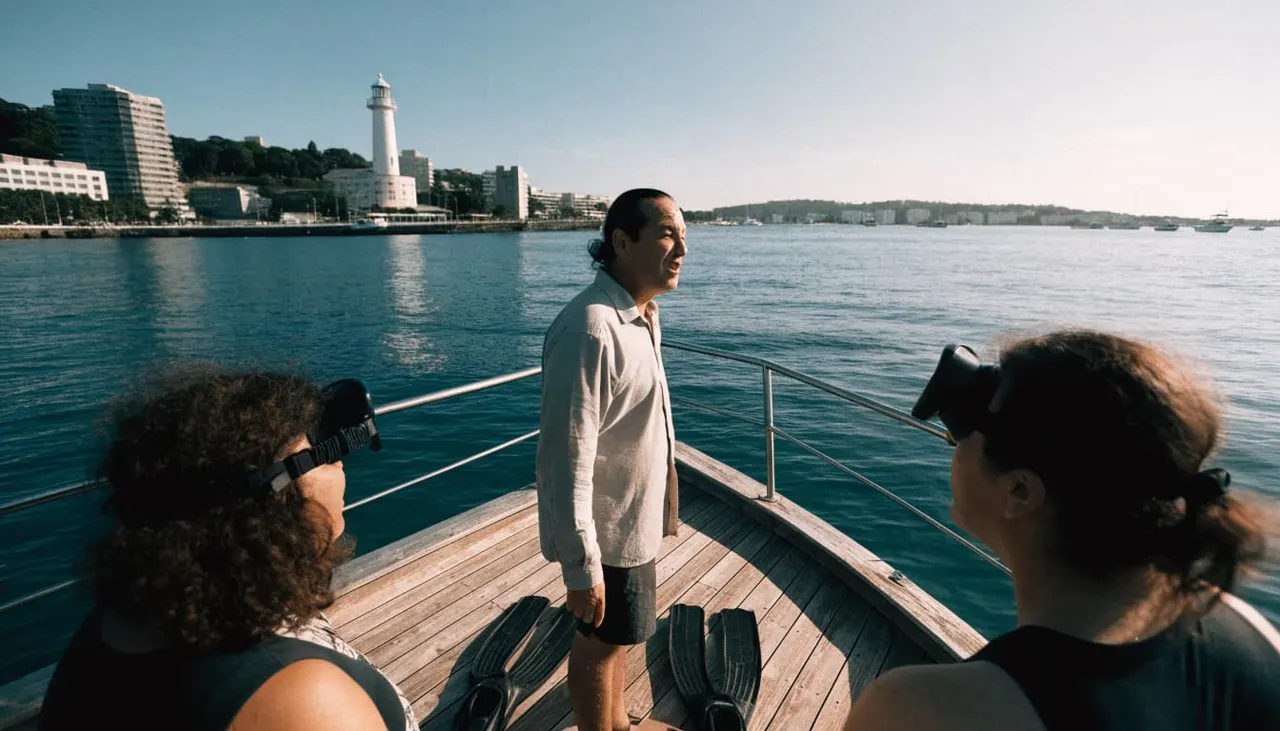
Illustrative pre-snorkel briefing.
Favor control over shallow water
Shallow water can feel reassuring because the bottom looks close. However, that same closeness leaves less space between your fins and coral.
Surge can move you back and forth over a reef even when you’re trying to remain still. Breaking waves and strong currents also demand more effort, which makes controlled swimming harder.
If you’re snorkeling Oahu’s North Shore, seasonal swell matters, but a summer date never guarantees calm water. The National Weather Service’s Hawaii surf forecast describes surf conditions across the islands.
Stay out when conditions exceed your ability. An attractive reef doesn’t justify an entry you can’t manage comfortably.
Plan your entry and return
Before entering, understand where you’ll swim, where you’ll regroup, and how you’ll leave the water. At a shore site, favor a clear sandy approach when conditions permit.
Never walk across coral to reach deeper water. Water shoes protect your feet in some settings, but they don’t make stepping on coral acceptable.
For boat snorkeling, follow the crew’s entry instructions and stay within the designated area. Keep your buddy nearby, and start returning before fatigue affects your control.
Fix Gear Problems Without Standing Up
A leaking mask or loose fin can turn your attention away from the reef. Handle fit problems early, while you’re somewhere with room to pause.
Make equipment comfortable before exploring
Your mask should sit comfortably without needing constant adjustment. Keep hair clear of the seal, and tell your guide if water keeps entering.
Likewise, fins should feel secure without painful pressure. A fin that slips can prompt sudden kicking or a scramble to recover it.
Secure camera straps and other accessories close to your body. The Maui Nui Marine Resource Council’s snorkeling conservation guidance emphasizes keeping both fins and equipment away from the reef.
A short strap still needs attention. Keep your camera within your swimming space rather than extending it into coral branches or crevices.
Use support when you need a break
If your mask needs adjustment, signal your guide and move away from coral. Use available flotation as instructed, or follow the approved route back to the boat.
Don’t grab the reef to steady yourself. Also, avoid dropping your feet automatically when you lift your head to speak.
Tell your buddy or guide about fatigue before it becomes difficult to swim. Flotation can help you rest, but it doesn’t replace swimming ability or make rough conditions suitable.
You can end your swim whenever you need to. Protecting your comfort also reduces the chance of accidental reef contact.
Give Wildlife Space Without Losing Reef Awareness
The reward of snorkeling Oahu’s reefs is watching marine life carry on around you. That experience improves when you let animals choose their direction and distance.
At a turtle-cleaning station, fish gather around turtles and remove material from their bodies. Watch without swimming into the activity or surrounding a turtle with other snorkelers.
Keep its route to the surface open. Never chase, touch, feed, or block a turtle, and resist following one into water with less clearance beneath you.
Fish deserve the same patience. If an animal disappears behind coral, let it remain out of sight instead of reaching into its shelter.
Meanwhile, keep scanning your own position. Looking toward a turtle can distract you from a rising reef edge or another swimmer.
Leave shells, rocks, coral, and sand where you find them. Caring for the ocean, often expressed as mālama i ke kai, includes leaving its habitat undisturbed.
Explore Waikiki With Our Professional Snorkel Guides
For couples and families snorkeling Oahu’s Waikiki coastline, guidance helps connect reef etiquette with decisions in the water. At Living Ocean Tours, we’re the only tour company on Oahu with professional snorkel guides.
Our guided Oahu snorkeling options depart from Kewalo Basin Boat Harbor, near Waikiki. You can discuss swimming confidence and equipment comfort with our crew before entering.
Our Turtle Canyons Snorkel Excursion visits Waikiki’s natural turtle-cleaning area. We supply snorkeling gear and knowledgeable guidance, so you can focus on comfortable swimming and respectful observation.
You don’t need to dive toward the reef to enjoy the activity. Stay at the surface, follow your guide’s boundaries, and give turtles room to move.
When you’re ready to plan your Turtle Canyons outing, CHECK AVAILABILITY for your travel dates.
Frequently Asked Questions About Reef-Friendly Snorkeling
Can you stand on coral if you’re wearing water shoes?
No. Footwear doesn’t protect coral from your weight or prevent damage. Use a clear sandy entry where appropriate, and never cross coral on foot. If you need support while swimming, signal your guide rather than searching for a foothold on the reef.
What should you do if you accidentally touch the reef?
Stop kicking and regain control without grabbing coral for balance. Move into clear water and signal your guide if you need help. Don’t touch the area again to inspect it. Before continuing, adjust your route or equipment so you have more clearance.
Is deeper water always better for avoiding coral?
More depth can provide clearance, but it doesn’t automatically mean suitable conditions. Currents, waves, swimming distance, and your ability still matter. Choose an area where you can remain comfortable and controlled, and follow your guide’s designated boundaries.
Leave the Reef Undisturbed
Keeping your fins above coral starts with room to move. Comfortable gear, gentle kicks, and an early request for help make reef-friendly swimming easier.
Watch wildlife without pursuing it, and keep track of the space beneath your whole body. Your most useful habit is simple: when you need to pause, use open water and appropriate support rather than the reef.


