
Snorkeling Oahu: Hand Signals for First-Time Swimmers
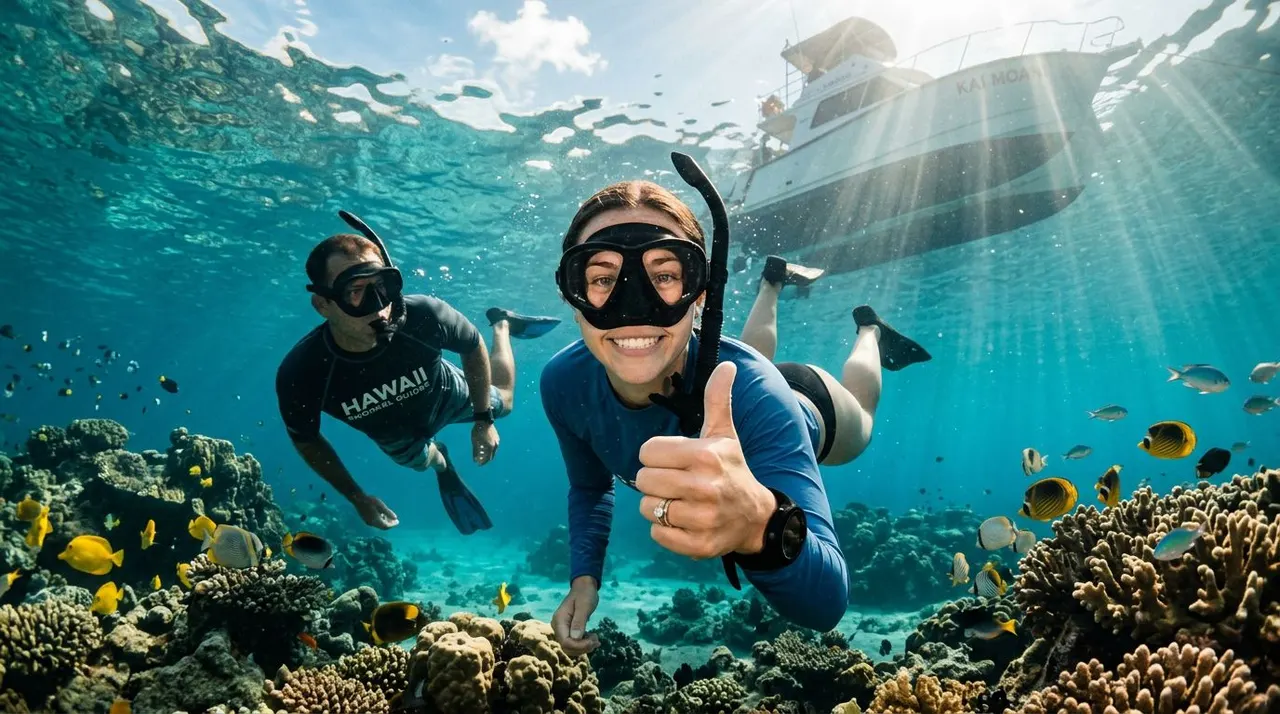
Snorkeling Oahu waters becomes easier when you can communicate without speaking. For a first-time swimmer, one clear hand signal can tell your guide that you feel comfortable, need help, or want to return to the boat.
If snorkeling Oahu is on your itinerary, learn the basic signs before your mask hits the water. You will feel calmer, stay connected to your group, and respond faster when the ocean gets busy. Living Ocean Tours’ professional snorkel guides review these signals before each outing, so you never have to guess.
Why Hand Signals Matter When Snorkeling Oahu
A snorkel mouthpiece makes conversation impossible once you enter the water. Even if you lift your head to speak, waves, wind, and boat noise can make your voice difficult to hear. Hand signals give you a simple way to communicate while keeping your face in the water.
Clear signals also help your guide manage the group. A guide may need to tell you to slow down, stay near the boat, look toward marine life, or move away from a shallow reef. You can answer with a quick gesture instead of swimming closer and shouting.
Ocean conditions can change within minutes. A calm reef may develop more surge, or another swimmer may drift between you and your guide. Good communication helps everyone maintain safe spacing without creating panic.
The signs used in snorkeling often resemble those used in scuba diving, but your guide’s briefing always comes first. SCUBAPRO’s illustrated hand-signal guide shows common gestures such as “OK,” “stop,” “follow me,” and “slow down.”
Mastering Basic Communication Before You Enter the Water
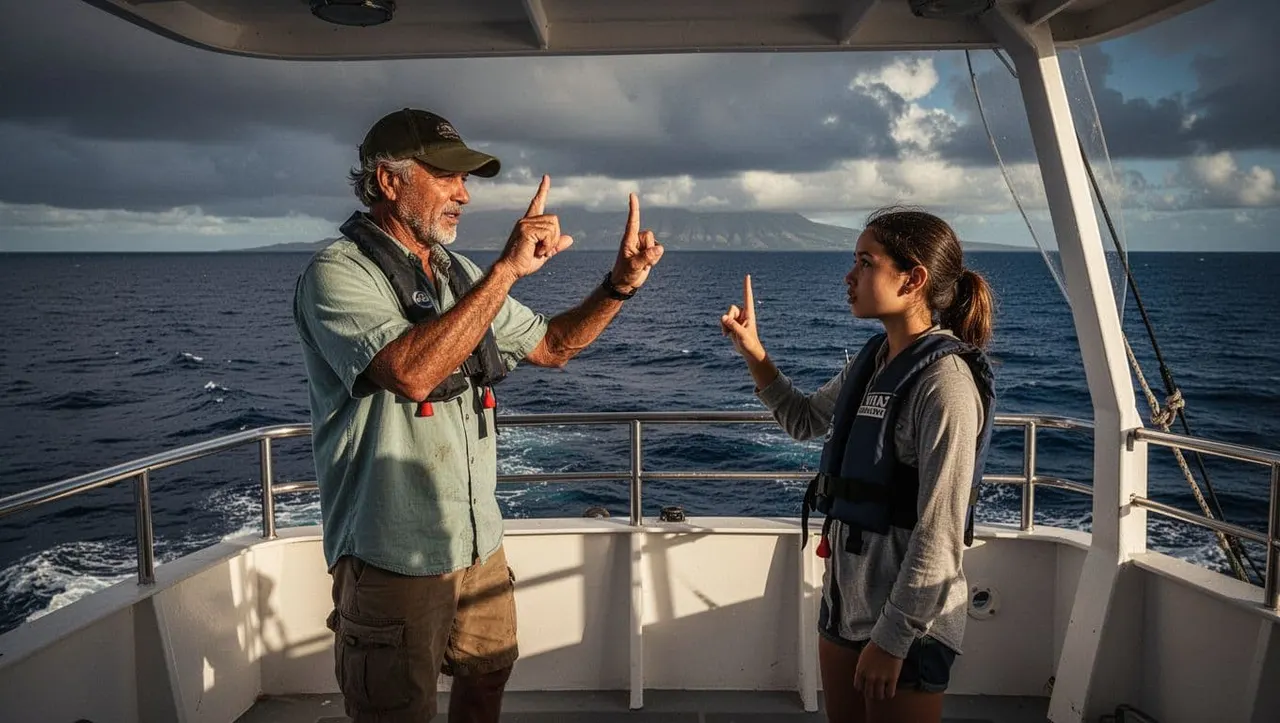
Your guide should demonstrate the signals on the boat before the group gets in. Pay attention to the exact motion, then repeat it so the guide can confirm that you understand. Different operators may use slightly different signs, especially for help, wildlife, or returning to the vessel.
Practice while wearing your mask. Your vision changes underwater, and a signal that looks obvious on deck may appear small through a mask lens. Hold your hand where your guide can see it, use deliberate movements, and pause until the other person responds.
Keep your gestures near your chest or shoulder area. Waving an arm wildly can look like an emergency, especially when several swimmers are in the water. Use one hand for a signal and keep your other hand relaxed on your flotation device or at your side.
Practice the Signals With Your Mask On
Before you enter, rehearse these simple actions:
- Make an “OK” sign, then wait for the guide to return it.
- Raise an open palm to practice “stop” or “hold.”
- Point toward the boat, then practice the agreed signal for returning.
- Point toward an object and ask the guide to confirm the “look there” gesture.
- Show how you will signal a problem or ask for assistance.
Tell the crew if you are a weak swimmer, feel nervous, or need extra flotation. Your guide can position you where you feel secure and explain how to use the ladder when you are ready to exit.
Essential Underwater Hand Signals for First-Time Snorkelers
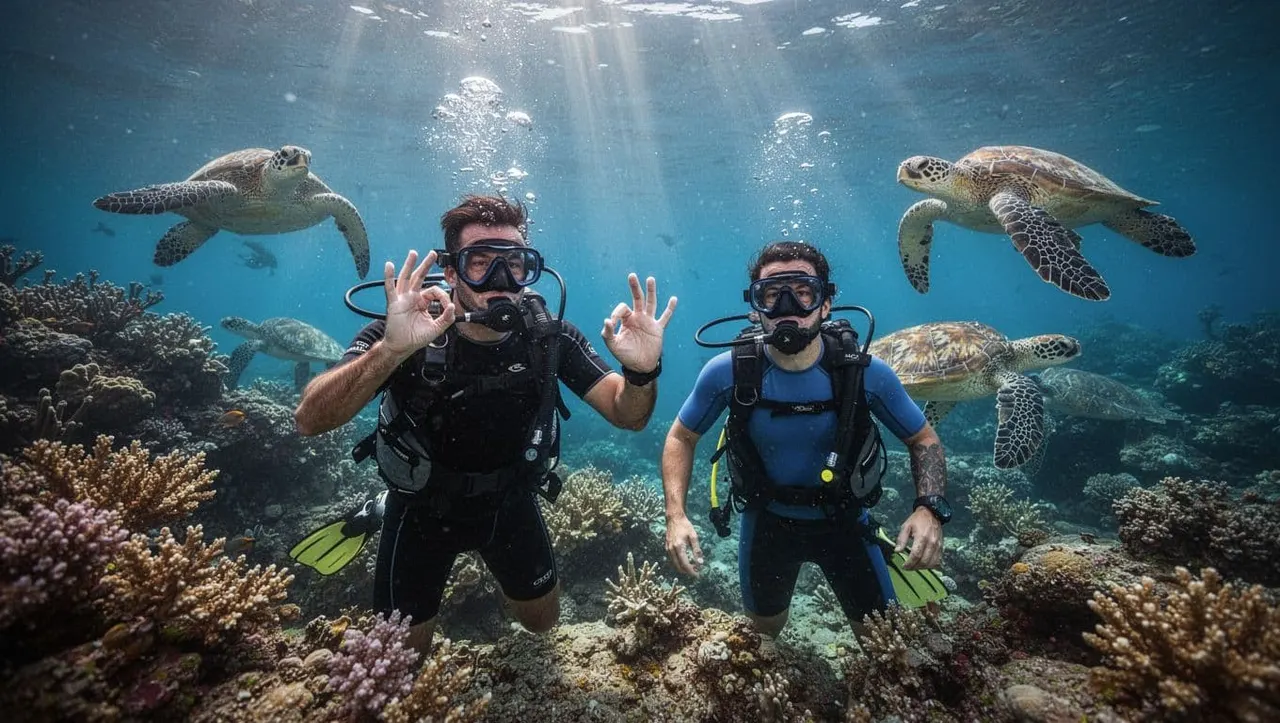
These signals cover most conversations you will have during a guided snorkel. Practice each one slowly rather than trying to memorize a large set of gestures.
- “OK” uses your thumb and index finger to form a circle, with the other fingers relaxed. Use it to say you feel fine, and look for the guide’s response.
- “I have a problem” is often shown by moving a flat hand gently side to side. Then point to the source, such as your mask, snorkel, ear, or fin. Confirm your tour’s version during the briefing.
- “Stop” or “hold here” uses an open palm facing the guide. Keep your arm steady rather than waving.
- “Follow me” usually involves the guide pointing ahead and moving a flat hand forward. Stay behind the guide instead of passing or spreading away from the group.
- “Slow down” uses a palm facing down and moving gently toward the water. Use it when you need more time to adjust your mask, breathe, or regain your position.
- “Look there” starts with a clear point toward the reef, fish, or turtle. Point once, then look back at the guide so they know you are sharing an observation.
- “Return to the boat” should be agreed on before entry. Many guides point toward the vessel and use a repeated motion, but your tour may use a different sign.
Be careful with a thumbs-up. In diving hand signals, it often means “go up” or “ascend,” not “everything is good.” For snorkeling, your guide may use it to ask you to surface or end the activity. Use the agreed “OK” sign when you want to report that you feel comfortable.
Safety Signals You Should Rehearse
If you need immediate help, make eye contact with the guide and use the agreed problem signal. At the surface, raise one arm high and call out if you can. A small underwater gesture may be missed when the guide is watching several swimmers.
A hand across your chest, a point to the boat, or a deliberate shake of the head can communicate discomfort. Don’t wait until you feel overwhelmed. Signal early, keep breathing slowly, and follow the guide’s direction.
The same habits help when snorkeling Oahu with children. Ask young swimmers to use one signal for “OK” and another for “help.” Keep them close enough that you can see their hands and face without chasing them through the water.
Respect Sea Turtles and Reefs While You Communicate
Hand signals help you observe marine life without shouting, splashing, or swimming after an animal. When you spot a Hawaiian green sea turtle, point from a respectful distance and let the guide decide how close the group should remain.
Use the “look there” signal instead of reaching toward wildlife. Observing, not touching protects the animal and keeps you from accidentally damaging coral or disturbing a cleaning station. Never block a turtle’s path to the surface.
Your fins also need attention. Kicking close to the reef can break coral and stir sand over the habitat. Keep your body horizontal, use small fin movements, and follow the guide’s route through deeper water whenever possible.
PADI describes underwater signals as a shared language for divers, but its scuba hand-signal overview also highlights the need for agreed communication. That point matters for snorkelers too. A signal only works when everyone in your group knows what it means.
Avoid pointing repeatedly at a turtle or fish. One clear gesture is enough. After the guide acknowledges it, return your attention to your breathing and position in the group.
Choose Guided Snorkeling Oahu for Your First Trip
A guided outing gives you more than equipment and a place to swim. You get a crew that explains entry procedures, watches the group, and helps you communicate in real time.
Living Ocean Tours departs from Kewalo Basin Boat Harbor, just minutes from Waikiki Beach. The company is the only tour company with professional snorkel guides, and its crew welcomes first-time swimmers, families, and confident ocean lovers.
The Living Ocean Tours Honolulu boat excursions include access to custom-built, Coast Guard-inspected double-decker vessels. Shaded seating, restrooms, dry storage, and heavy-duty ladders make the trip easier before and after your time in the water.
For turtle encounters, the Turtle Canyon Snorkel Excursion visits a natural underwater cleaning station where the company reports a 95% success rate for spotting Hawaiian green sea turtles. Your guide can point out marine life while you focus on breathing, buoyancy, and safe communication.
The Deluxe Waikiki Snorkeling and Wildlife Cruise adds a less-crowded reef and family-friendly water features, including a boat-mounted waterslide, water trampoline, and floating lily pad. The Lokahi also has a SeaKeeper stabilization system, which helps reduce rolling while you prepare to enter the water.
Both boats have ladders designed for easier water entry. If you are unsure about your swimming ability, tell the crew before the briefing ends. You can ask questions, practice your signals again, and choose the level of support that makes you comfortable.
Conclusion
You don’t need advanced swimming skills to communicate well during a guided snorkel. Learn “OK,” “problem,” “stop,” “follow me,” “slow down,” “look there,” and the signal for returning to the boat before you enter.
Once you know those gestures, you can focus on steady breathing and respectful wildlife viewing. During snorkeling Oahu adventures, a clear signal keeps you connected to your guide and lets you enjoy the reef with greater confidence.


