
Snorkeling Oahu: A Hawaiian Trumpetfish Field Guide
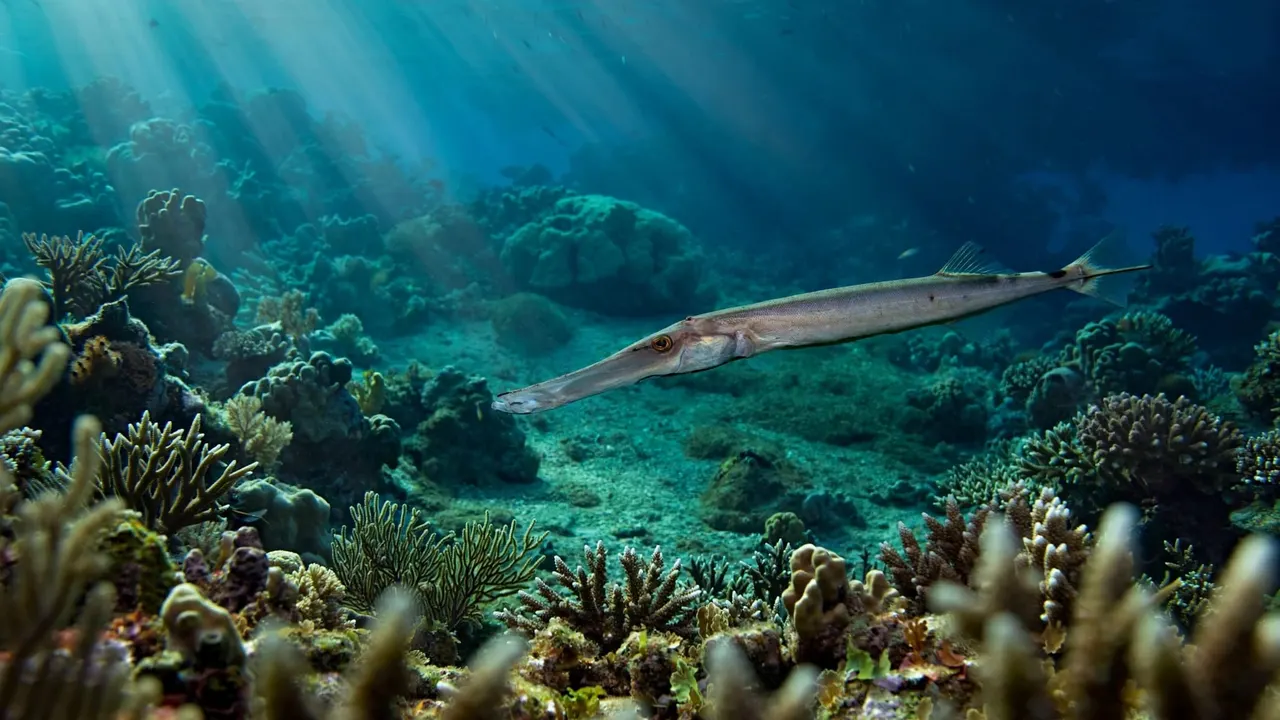
You can swim past a Hawaiian trumpetfish without recognizing the long, narrow fish beneath you. If snorkeling Oahu is on your vacation list, learning a few field marks gives you a better chance of identifying one.
Living Ocean Tours helps you explore Waikiki’s marine life with professional snorkel guides, equipment, and welcoming instruction. However, a trumpetfish encounter is a wildlife possibility, never a promised part of your outing.
Start with its distinctive silhouette, then check color and smaller details without moving closer to the reef.
Key Takeaways
- Look for an elongated body, tubular snout, and small mouth rather than relying on color alone.
- Expect gray-brown or orangish-brown coloration; an almost entirely yellow form also occurs.
- Observe from the surface without chasing the fish, touching wildlife, or standing on coral.
- Choose conditions that match your swimming ability, and treat every sighting as a bonus.
Before snorkeling Oahu, remember that recognizing a fish and finding one are separate challenges. Good identification skills help with the first; conditions and wildlife determine the second.
Recognize the Hawaiian Trumpetfish
Start with the body and snout
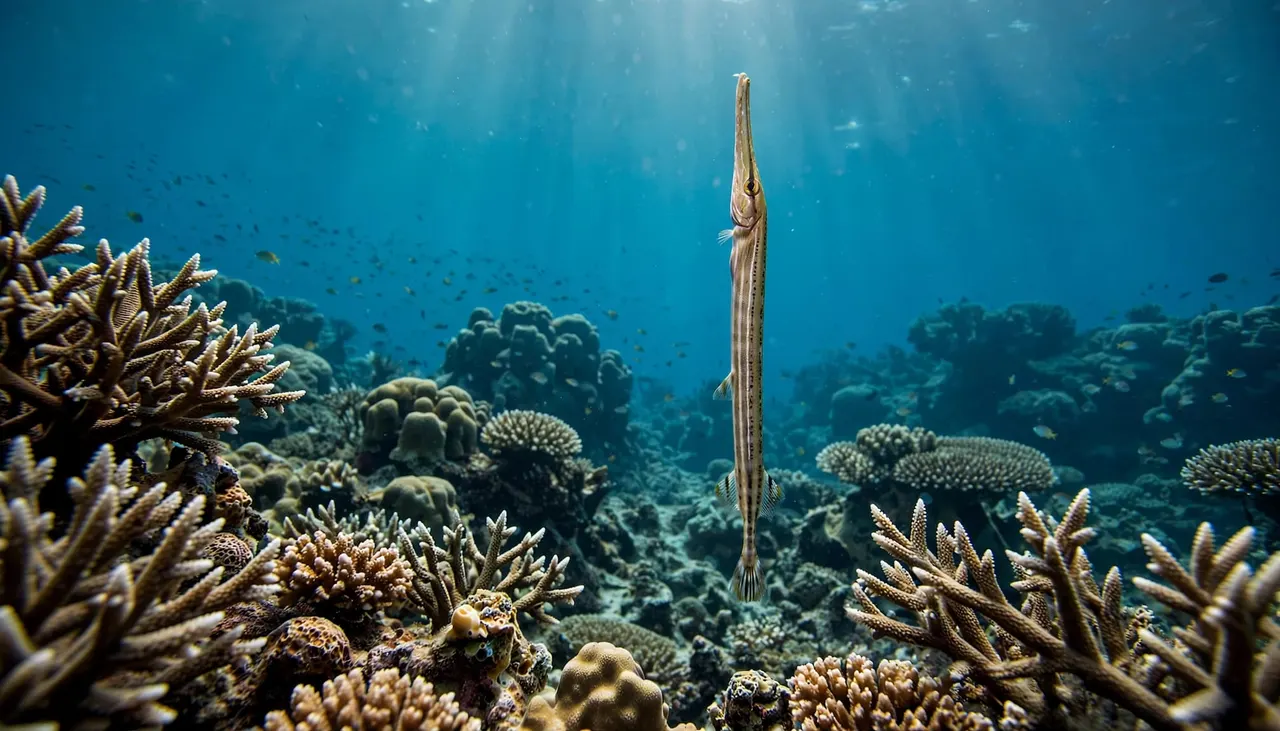
Your strongest clue is the fish’s elongated body and long, tube-shaped snout. Its mouth is small, so the face looks different from the broader heads of many familiar reef fish.
You may also notice a small chin barbel, a short projection beneath the mouth. However, don’t approach closely just to confirm that detail.
In NOAA’s Hanauma Bay fish guide, you’ll find the species listed as Chinese trumpetfish, Aulostomus chinensis, with the Hawaiian name nūnū. The guide records lengths of at least 30 inches, so an adult can be surprisingly substantial despite its slender appearance.
Use color as supporting evidence
Look for gray-brown to orangish-brown coloration with faint whitish stripes. Two black spots on the tail fin provide another identification clue when visibility allows.
An occasional nearly all-yellow form belongs to the same species. Therefore, a brown fish and a yellow fish can both be trumpetfish.
Don’t let a bright yellow photograph set your expectations for every encounter. Shape is the more useful starting point, especially when you’re viewing a fish through moving water.
You can also keep a short mental description: long body, tubular snout, small mouth. That combination is easier to remember underwater than several color details.
Understand What the Trumpetfish Eats
Watch for suction feeding
The small mouth doesn’t mean this fish feeds only on tiny drifting particles. NOAA’s guide describes a predator that eats mainly small fish.
It captures prey by expanding its snout and drawing the food inward. That feeding mechanism helps explain why the long face matters beyond identification.
If you happen to see feeding activity, stay back and watch without interfering. Don’t introduce food to encourage action or attempt to steer smaller fish toward it.
You may see no feeding at all during a short encounter. A useful observation can be as simple as noting the mouth, body shape, and direction of movement.
Separate observation from assumptions
When snorkeling Oahu, describe what you can actually see rather than assigning a purpose to every movement. A fish near another fish isn’t automatically hunting it.
Likewise, one encounter doesn’t establish a preferred depth, favorite reef, or reliable time of day. Your own sighting is valuable, but it remains a single observation.
Despite its familiar Hawaiian name, this species isn’t found only in Hawaii. NOAA gives its range as the east coast of Africa to the Hawaiian Islands and Easter Island.
That distinction matters: seeing a trumpetfish in Hawaii doesn’t make it a Hawaiian endemic species.
Where to Focus While Snorkeling Oahu
Search the reef you can safely observe
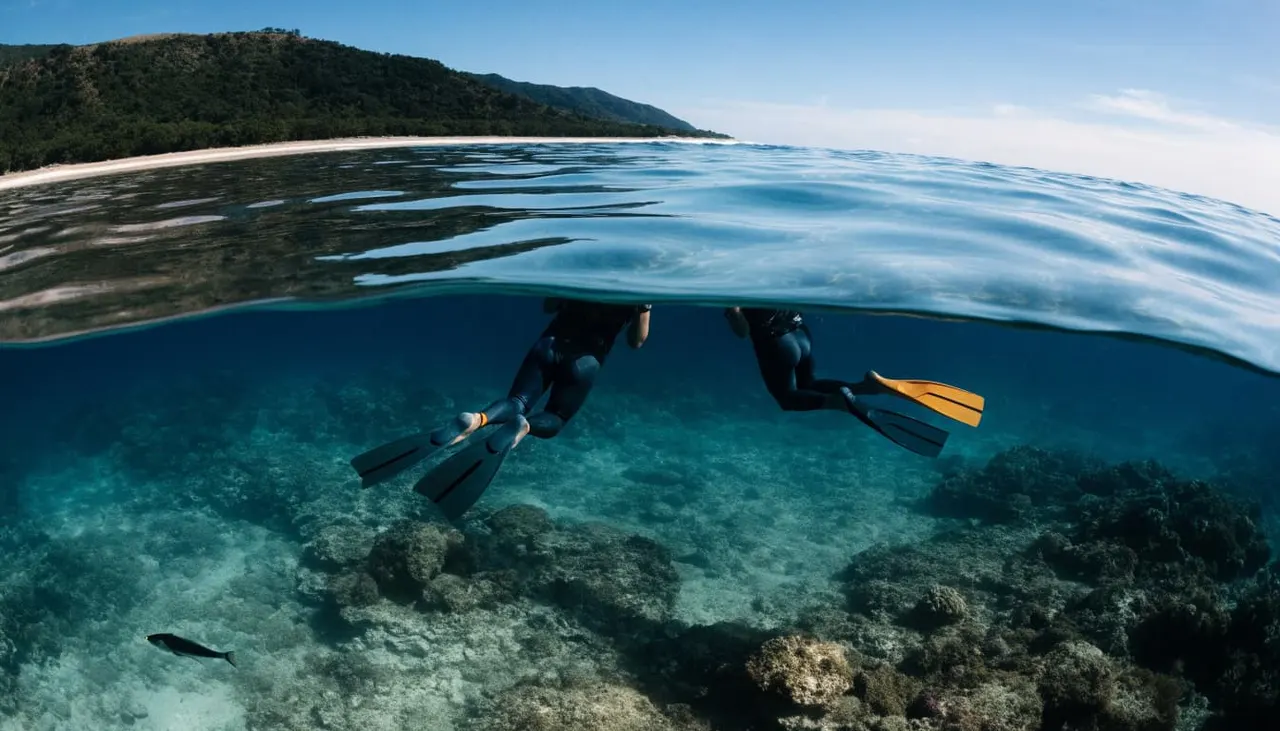
A reef-associated fish gives you a reason to pay attention to visible reef structure rather than spending your entire swim over bare sand. Scan slowly across the area within your comfortable snorkeling zone.
Look at individual fish shapes instead of following only the largest school or brightest colors. A narrow body deserves a second look, provided you can remain safely positioned.
However, don’t cross unfamiliar channels or swim farther offshore because you haven’t found your target. Reef habitat supports a search, but it doesn’t guarantee a sighting.
Your goal while snorkeling Oahu is to observe the available habitat well, without expanding your route beyond your ability.
Choose access and conditions first
Match your outing to the least-confident swimmer in your group. Couples with different experience levels and families with children benefit from making that decision before entering the water.
Shore access and boat access involve different logistics. On a guided outing, listen to the crew’s instructions about the snorkeling area and return route.
For independent snorkeling, check current conditions and ask a lifeguard before entering. High surf, strong currents, heavy shorebreak, high winds, and murky water are reasons to skip the swim.
A famous snorkeling location can still have unsuitable conditions on the day you visit.
Observe More Without Swimming Closer
Slow your scan and keep your position
Once you notice a possible trumpetfish, reduce unnecessary movement. Keep enough distance to observe without pursuing it or blocking its path.
Check the outline first, then the snout. Color and tail markings can follow if visibility is good enough.
If the fish moves beyond your comfortable range, let it go. Chasing adds effort and can pull your attention away from currents, your buddy, and your return point.
A closer view isn’t worth losing track of your buddy or drifting outside the designated snorkeling area.
For photographs, accept the view your position allows. Don’t lower yourself toward coral or follow a fish into water beyond your planned route.
Share the sighting with your buddy
Agree on simple signals before entering the water. You can point toward a fish without reaching down or trying to draw it closer.
With children, make identification a calm observation activity. Ask them to notice whether the body is long or rounded, then compare what you both saw after returning aboard or ashore.
Meanwhile, keep checking your group’s comfort. Fatigue, a leaking mask, or anxiety deserves attention before another wildlife observation.
If you’re new to the activity, review Living Ocean Tours’ beginner snorkeling advice before your outing.
Protect the Reef and Its Residents
Coral is a living colony of animals, so treat it as wildlife rather than a place to stand. Keep your fins, hands, and equipment clear of the bottom.
If you need a break, use the designated resting option or return to the boat or shore. Standing on coral can damage the habitat you’re there to enjoy.
The same observe, don’t touch approach applies to trumpetfish and other reef residents. Never chase, corner, handle, or feed them.
If your outing also includes sea turtles, follow NOAA’s Hawaii wildlife viewing guidance. It recommends staying at least 10 feet, or 3 meters, away on land and in the water.
That turtle recommendation isn’t a trumpetfish-specific distance rule. For fish, give them room to continue moving without your interference.
Hawaii’s marine species protection guidance also helps you prepare for encounters with other protected wildlife.
Responsible viewing means accepting the encounter you receive, including the moment an animal swims out of sight. You don’t need a close-up to have a worthwhile reef experience.
Plan a Guided Reef Outing With Living Ocean Tours
If you’d rather spend your vacation observing fish than organizing equipment, explore Living Ocean Tours’ guided ocean adventures. You depart from Kewalo Basin Boat Harbor, conveniently located near Waikiki.
Professional snorkel guides provide instruction and in-water support. You also receive snorkeling equipment and flotation devices, so you can focus on getting comfortable before looking for wildlife.
For first-time snorkelers, tell the crew about your experience level and concerns. Families should also discuss children’s needs and swimming confidence before booking.
The company’s double-decker boats, Coral Kai and Lokahi, have shaded seating, onboard restrooms, dry storage, and ladders for water access. Those practical comforts matter when your group needs a break between ocean activities.
However, guided access doesn’t make wildlife predictable. You may encounter turtles and reef fish without seeing a trumpetfish, and changing conditions can affect the day’s experience.
When planning snorkeling Oahu with a guide, ask about the snorkeling area, available assistance, and current conditions. Mention your interest in identifying reef fish, but keep your expectations flexible.
If you’d like a turtle-focused snorkeling outing, you can CHECK AVAILABILITY for your preferred vacation date.
Hawaiian Trumpetfish FAQ
Can you see trumpetfish while snorkeling Oahu?
Yes, the species occurs in Hawaiian waters, and scientific records document it on Oahu. However, that doesn’t establish dependable visitor sightings at a particular snorkeling spot.
Are Hawaiian trumpetfish always yellow?
No. NOAA describes the usual coloration as gray-brown to orangish brown, with faint pale stripes. An almost entirely yellow form occurs occasionally, so use body shape and snout structure first.
Is a trumpetfish sighting guaranteed on a guided tour?
You shouldn’t expect a guarantee. A guided outing provides equipment, instruction, and reef access, while wildlife sightings depend on animals and conditions.
Should you move closer to confirm the identification?
Stay within your planned snorkeling area and maintain wildlife space. If you can’t see the smaller details, keep the identification tentative rather than pursuing the fish.
Make Your Next Reef Swim More Observant
The reward of snorkeling Oahu includes noticing fish you might otherwise pass by. With a trumpetfish, start with the elongated body and tubular snout, then check color when conditions allow.
Choose a comfortable outing and protect both your position and the reef. You’ll return with a better-trained eye, whether you spot a trumpetfish or discover other marine life along the way.


