
Snorkeling Oahu: Why Damselfish Defend Their Algae Gardens
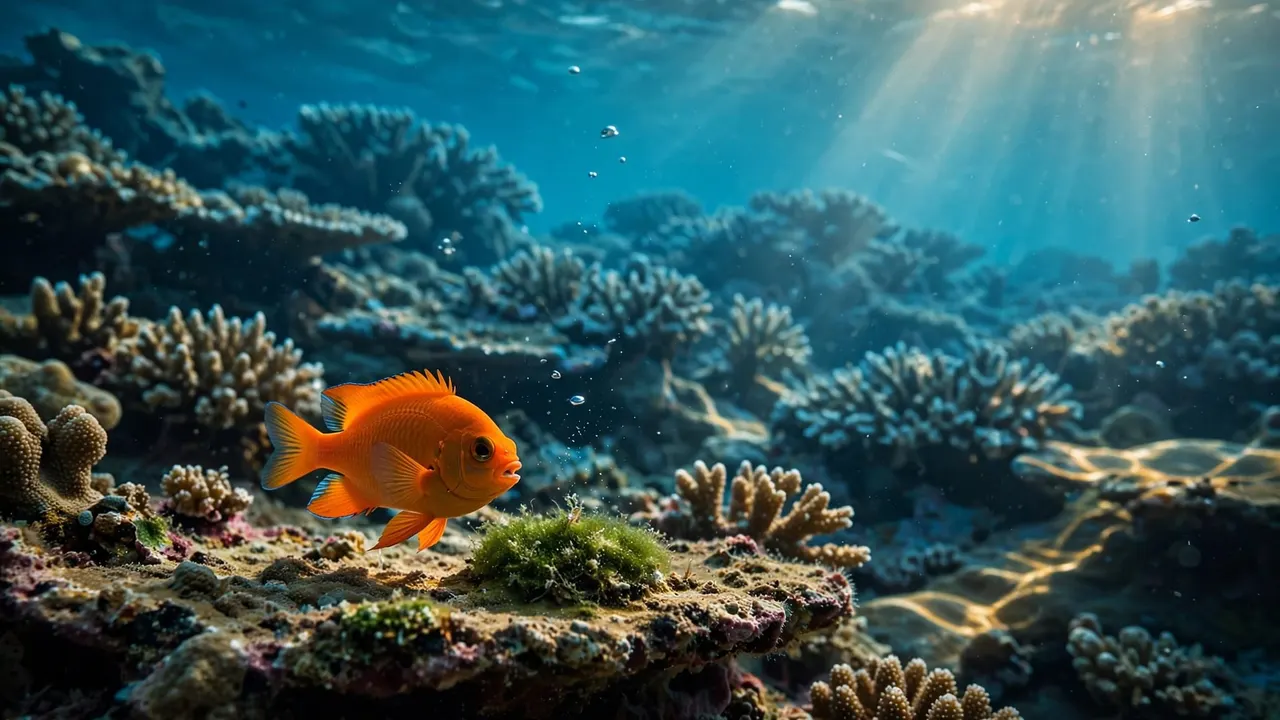
A small fish charging across the reef may be protecting its next meal. When you’re snorkeling Oahu reefs, that sudden dash can reveal an algae garden defended by a territorial damselfish.
Living Ocean Tours brings you from Kewalo Basin near Waikiki to offshore reef habitat with professional snorkel guides in the water. That support gives you time to notice the reef’s smaller stories, alongside any turtles that appear.
Start by watching where a fish returns after a chase, because its favorite patch may explain its behavior.
Why Damselfish Defend Their Algae Gardens
For farming damselfish, an algae garden is a feeding area worth defending. However, this behavior belongs to certain species, not every member of the damselfish family.
You can understand the defense by watching the relationship between the fish and its patch. The repeated return matters more than the speed of a single chase.
A Protected Patch Provides Food
Algae grow on reef surfaces exposed to sunlight. Farming damselfish cultivate and defend portions of that growth within their territories.
Because other grazing animals also eat algae, an unprotected patch can attract competing mouths. Defending it helps the resident maintain access to its food.
Research also shows that these fish can influence garden growth. A 2019 study of Stegastes nigricans found greater algal turf growth with damselfish present. Its nutrient tests connected increased nutrients with faster growth.
That finding concerns the studied species and conditions. You shouldn’t assume every fish you encounter produces the same result.
Defense Limits Competing Grazers
A farming damselfish may rush toward another fish entering its territory, then return after the intruder leaves.
Although the defender can look small beside its opponent, the encounter is about access to a particular space. Watch the direction of its retreat as closely as its approach.
If it repeatedly returns to the same patch, you’re seeing a useful clue to territorial behavior.
How to Spot a Garden While Snorkeling Oahu
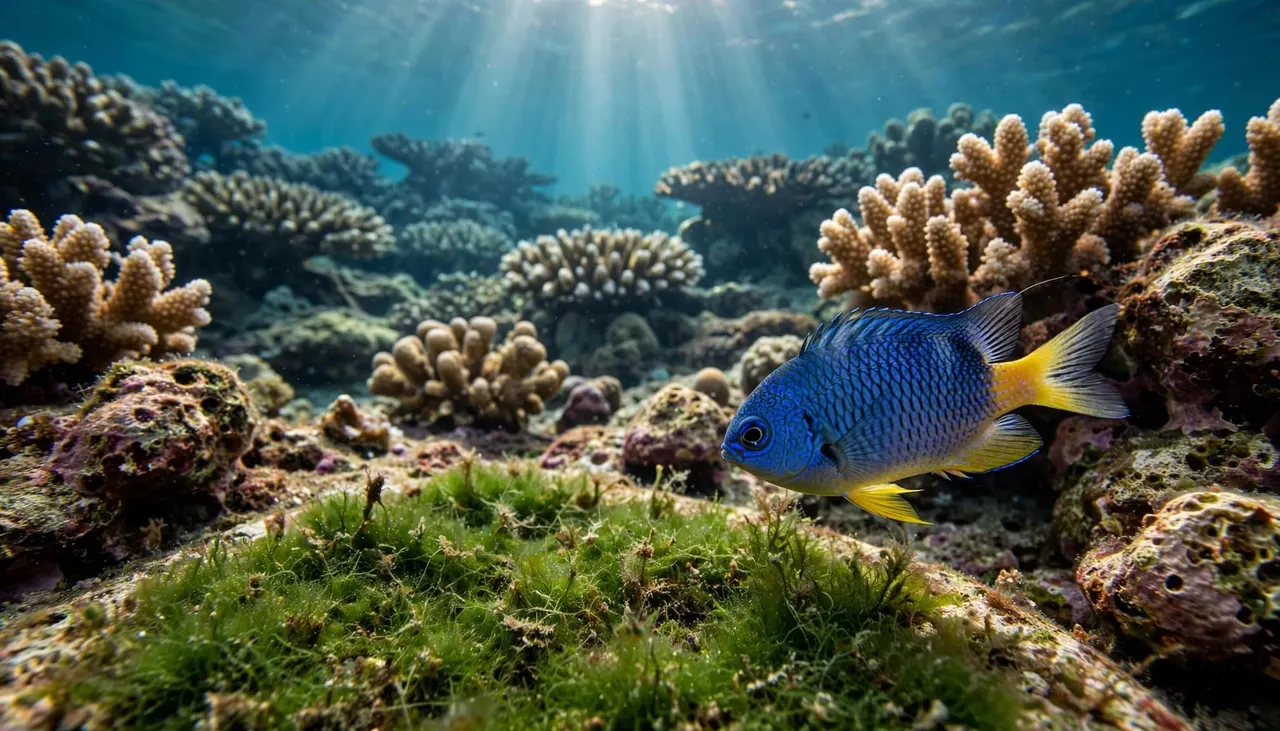
An underwater garden won’t have tidy rows or an obvious boundary. Instead, you’re looking for a relationship between reef growth and a resident fish.
While snorkeling Oahu, pause above a reef section long enough to notice repeated movements. A brief glance often misses the pattern, especially when larger wildlife draws your attention.
Look for Low Algal Growth
An algae garden can include short turf attached to the reef surface. You may notice a fuzzy-looking patch near coral structure or rock.
However, algae alone don’t identify a garden. Reef surfaces support many kinds of growth, and an ordinary patch can look similar from the surface.
Look for a fish that spends time near the same area. Keep your distance rather than swimming down to inspect the texture.
Water clarity and depth affect what you can recognize, so accept an incomplete view when conditions limit detail.
Follow the Return Route
Watch one fish for roughly 20 to 30 seconds while staying aware of your surroundings. Notice whether it moves away briefly, then returns to a consistent location.
Repeated feeding visits and short chases can help you recognize a possible defended feeding area. Still, a chase alone doesn’t prove algae farming.
Ask your guide what you’re seeing. Behavior, habitat, and identification together provide a stronger explanation than color or size alone.
Not Every Damselfish Is a Farmer
The damselfish family includes fish with different diets and ways of using reef habitat. Some feed on plankton in the water, while farming species defend algae-growing surfaces.
As a result, recognizing a damselfish doesn’t automatically identify an algae gardener. When snorkeling Oahu, treat the behavior as something to observe before assigning a label.
Gardening Behavior Varies Among Species
Research across the Indo-West Pacific describes different damselfish gardening systems. That variety matters because one species’ habits don’t describe the entire family.
You don’t need to memorize scientific names to enjoy the encounter. Instead, note whether the fish stays close to a surface or spends its time feeding above the reef.
Those observations give your guide useful information. They also make identification more rewarding than matching a fish to a photograph based on color alone.
Research Elsewhere Doesn’t Promise an Oahu Sighting
Studies of named farming species help explain the behavior. However, they don’t establish which species you’ll encounter on your outing.
Likewise, a photograph can’t confirm that a particular Oahu snorkeling location contains an actively defended garden.
Keep your expectations broad. You may see territorial behavior without confirming algae farming, or enjoy other reef activity instead. Either experience gives you something real to watch.
What Algae Gardens Mean for the Wider Reef
A defended patch affects more than its resident fish. By keeping some grazers away, farming damselfish influence which animals can use that space.
A 2020 study of farming damselfish describes how garden cultivation and protection shape local fish assemblages. In plain language, a territorial fish can change which neighboring fish gather around its patch.
That doesn’t make every garden beneficial to every reef resident. The gardener protects its own feeding area, and other animals have different needs.
When you’re snorkeling Oahu, watch the reef as shared habitat. One fish may hold a small territory while others travel across several coral heads.
Pay attention to those differences in movement. A roaming grazer and a resident defender can occupy the same reef while using it differently.
This is why patient observation adds so much to your swim. A small patch can reveal feeding activity and competition that you would miss while following larger animals.
Watch Without Interrupting the Defense
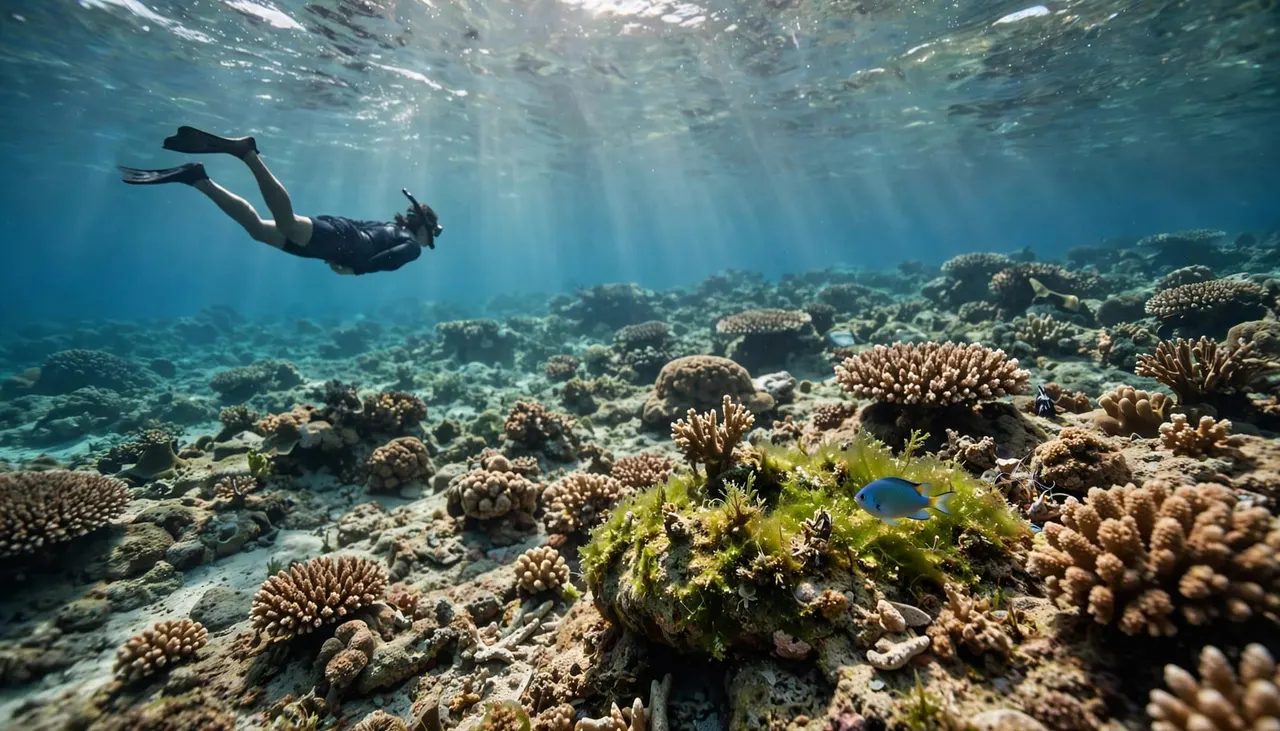
Your position affects the behavior you came to observe. If you crowd a fish, its response may concern your presence rather than another grazer.
Responsible snorkeling Oahu means giving wildlife room to continue its normal activity. Never provoke a territorial fish to demonstrate its defense.
Keep Your Body and Gear Above the Reef
Float horizontally when comfortable, and use short, controlled kicks. Check where your fins trail before turning near shallow coral.
Coral is living habitat, so don’t stand on it or grab it to steady yourself. If your mask needs adjustment, use available flotation support or signal your guide.
A comfortable position helps you stay patient without reaching toward the bottom. Meanwhile, keeping your gear secure reduces accidental contact.
If current carries you toward the reef, follow your guide’s directions rather than trying to hold yourself against coral.
Let the Fish Choose the Distance
Never feed, chase, corner, or touch reef fish. Keep your camera within your swimming space instead of extending it into a crevice.
A fish repeatedly charging toward your camera may be responding to your intrusion, not displaying an undisturbed feeding routine.
Back away if your presence changes the activity. If a turtle passes nearby, give it at least 10 feet of space and leave its route to the surface open.
Choose Guided Reef Time Near Waikiki
A guided outing gives you help with equipment and a clear swimming plan. You still need to respect conditions and tell the crew about your comfort level.
For couples and families snorkeling Oahu, that support makes it easier to focus on wildlife without managing every detail alone.
Get Comfortable Before Looking for Fish
Living Ocean Tours departs from Kewalo Basin Boat Harbor, minutes from Waikiki. The company says it’s the only Oahu tour company with professional snorkel guides in the water with guests.
You can ask for help with mask fit, flotation, or returning to the boat. Its Coast Guard-inspected vessels, Coral Kai and Lokahi, offer shaded seating, restrooms, dry storage, and sturdy boarding ladders.
Before entering, mention swimming nerves or a child who needs extra support. Ask about participation requirements rather than assuming every passenger should swim.
Enjoy Turtle Canyons With Open Expectations
The Turtle Canyon snorkel excursion visits Waikiki’s natural turtle-cleaning habitat. Living Ocean Tours reports a 95% turtle-sighting rate, but wildlife encounters remain unpredictable.
That figure concerns turtles, not damselfish or algae gardens. Enjoy whatever reef activity appears rather than expecting a particular fish.
For a turtle-focused guided outing, CHECK AVAILABILITY before choosing your date.
Key Takeaways for Your Reef Day
Keep these points in mind before entering the water:
- Certain damselfish cultivate and defend algae gardens, but the behavior doesn’t describe every species.
- Watch where a fish returns after feeding or chasing another fish.
- Keep your body, fins, and camera clear of coral and wildlife.
- Ask your guide for identification help without expecting a guaranteed garden sighting.
- Let conditions and your swimming comfort determine whether you enter the water.
Frequently Asked Questions
Does a Chasing Damselfish Mean I’m Too Close?
It can. If a fish repeatedly approaches you or your camera, increase your distance. However, a chase directed toward another fish may be territorial defense. Watch from farther away so your presence doesn’t become the main event.
Can You Find Algae Gardens at Turtle Canyon?
You shouldn’t book expecting a confirmed damselfish garden. Turtle Canyons is known for turtle-cleaning habitat, and your sightings depend on wildlife and conditions. Ask your guide about interesting fish behavior encountered during the swim.
Do You Need to Dive Down to Watch?
No. Stay at the surface when that matches your ability and the crew’s instructions. Clear water may let you observe repeated movements from above, although depth can limit detail. Never sacrifice safe positioning for a closer look.
Make Room for the Reef’s Smaller Stories
The next time you’re snorkeling Oahu, give a small resident fish your attention. Its repeated route may reveal a defended feeding area you would otherwise swim past.
Protect that view through patient observation. Keep clear of coral, accept identification limits, and let your guide help when needed.
A fish returning to its patch can be as memorable as a larger animal passing through.


