
Snorkeling Oahu: Hand Signals Every Buddy Should Know
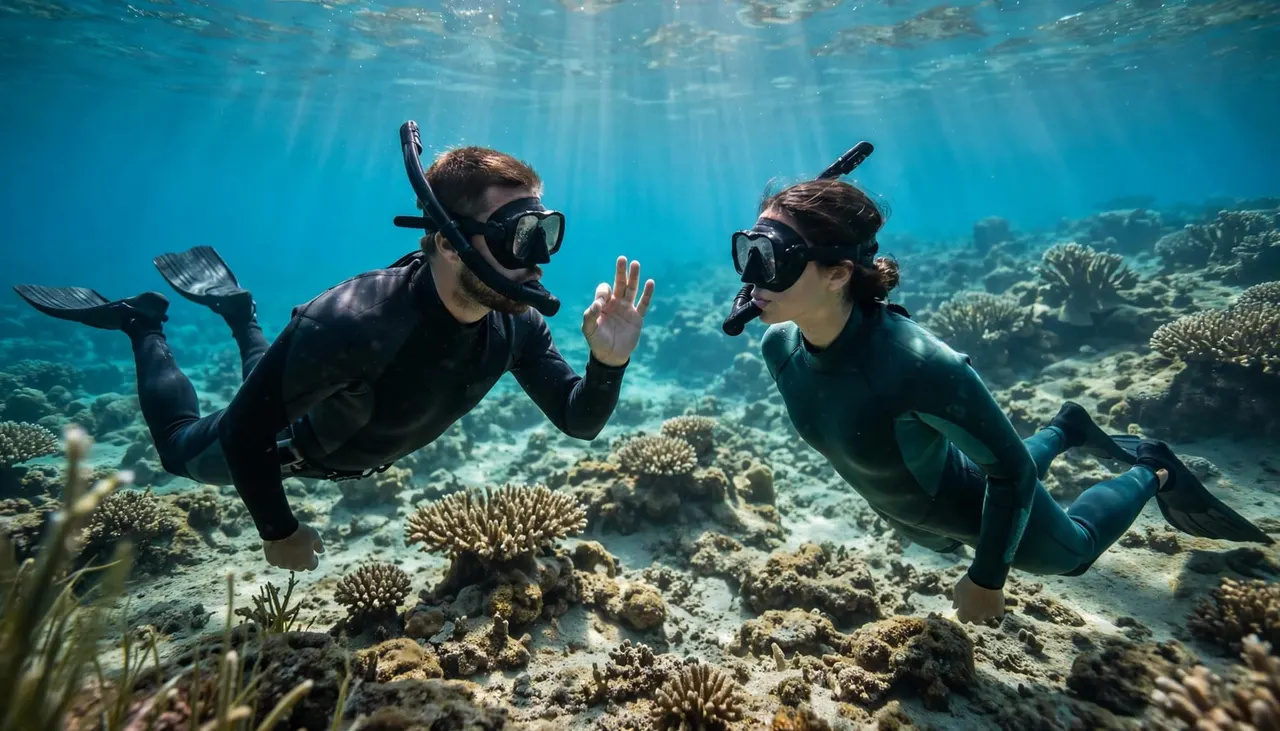
Your buddy can’t hear a question through a snorkel, but a clear hand signal can get an answer. If snorkeling Oahu is on your vacation list, agree on a few gestures before you enter the water.
Living Ocean Tours offers professional in-water snorkel guidance near Waikiki, so you can ask questions before exploring the reef. Your buddy plan still matters: start with signals you both recognize, then practice responding to them.
Build your buddy plan for snorkeling Oahu
Hand signals work only when someone sees them and understands their meaning. Don’t assume your partner remembers the same gestures you learned years ago.
Agree on meanings before entry
Ask your guide to demonstrate the signals used on your outing. Then repeat them with your buddy while you’re still aboard or standing safely on shore.
Confirm how you’ll communicate “OK,” “stop,” “follow me,” and “I need help.” Also settle how you’ll indicate that you want to return.
Divers Alert Network’s hand-signal guidance describes communication tools for divers. Some familiar diving gestures are useful for snorkeling, but your crew’s briefing should settle their meaning for your outing.
Stay close enough to notice
Choose a buddy position that lets you check on each other without constantly turning around. Don’t let a fish sighting pull you beyond easy visual contact.
Because glare and surface chop can hide gestures, lift your head regularly and look for your partner. Keep cameras secondary to that check-in.
For families snorkeling Oahu together, an adult should remain responsible for supervising a child. A child’s hand signal doesn’t replace close attention.
Use the OK signal as a two-way check-in
Make the underwater OK gesture clearly
The familiar underwater OK signal joins your thumb and index finger into a circle. Keep your remaining fingers extended comfortably, and hold the gesture where your buddy can see it.
Use it to ask whether your partner is comfortable. Your buddy should return the signal only when everything feels fine.
Give the gesture deliberately, rather than flashing it while looking elsewhere. Eye contact helps distinguish a check-in from an accidental hand movement.
Wait for an answer before continuing
An unanswered OK signal deserves attention. Your partner may be looking away, dealing with a mask leak, or struggling to see your hand.
Move into their view without crowding them, then check again. At the surface, speak plainly if gestures aren’t getting through.
If your buddy indicates a problem, pause the swim and involve your guide. Don’t interpret silence as permission to continue.
An OK check-in is complete only after your buddy answers. Showing the gesture and swimming away can leave a problem unnoticed.
Agree on signals for stopping and changing direction
Before snorkeling Oahu, rehearse movement signals alongside comfort checks. These gestures help you stay together without pulling on your partner or grabbing their equipment.
Stop first, then slow down
A raised, open palm commonly communicates “stop.” Confirm that meaning with your guide, and practice holding the signal steadily.
When you receive it, stop forward swimming and look at the person signaling. Check your position so your fins don’t drift into coral or another swimmer.
Also ask your guide to demonstrate “slow down.” Use that agreed gesture when the pace feels uncomfortable, then adjust to the slower swimmer.
Stopping should give you time to communicate, not pressure your buddy to catch up.
Follow your buddy without guessing
Have your guide show the group’s “follow me” gesture before entry. Pair it with a clear direction, and wait until your buddy acknowledges you.
A thumbs-up commonly means ascend in diving communication. It doesn’t mean underwater approval, which can surprise first-time snorkelers.
If you remain at the surface, agree separately on how you’ll indicate “back to the boat” or “back to shore.” Follow the crew’s return instructions rather than assuming every upward gesture means the same thing.
Make surface signals visible to your crew
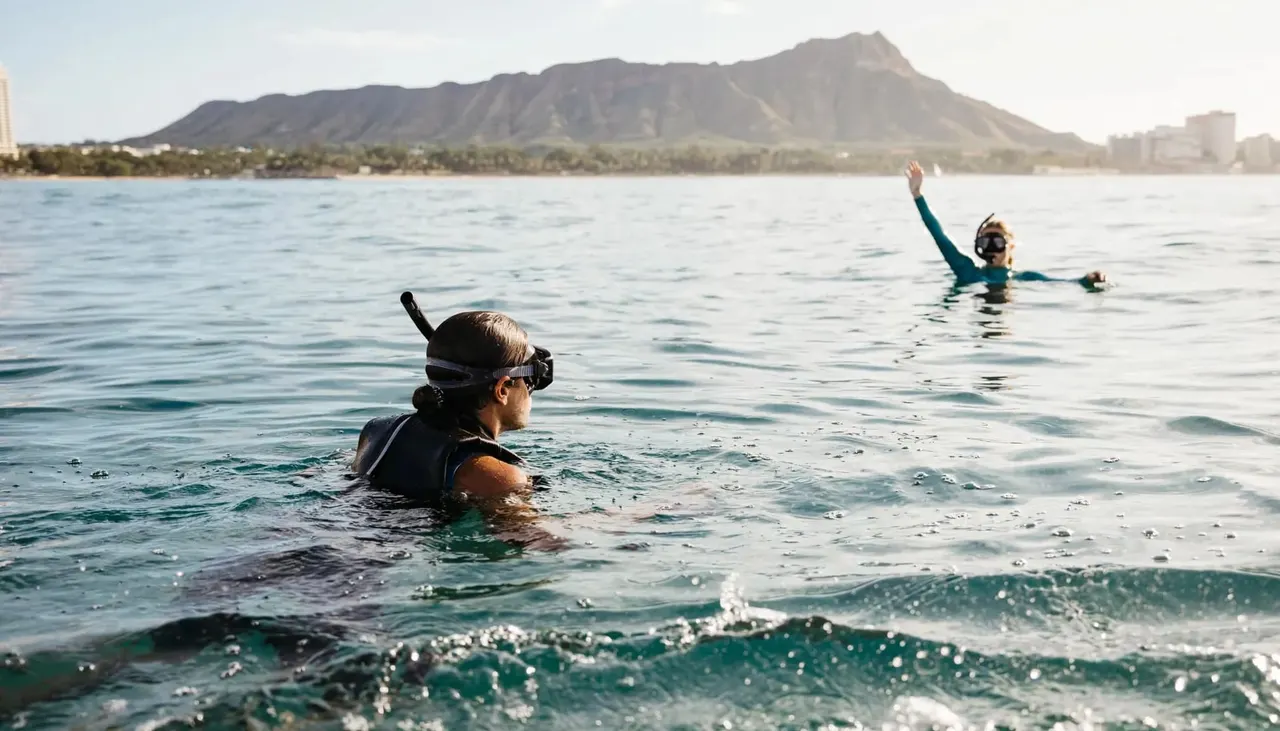
Signals that work face-to-face underwater may be hard to recognize from a boat. Ask which surface gestures your crew expects before you leave the swim step.
Show a clear surface OK
A larger overhead OK signal is easier to distinguish at a distance than a small finger circle. Have your guide demonstrate the version used on your outing.
Keep underwater and surface communication separate. A small gesture near the waterline may disappear behind a wave or look like a request for attention.
When a crew member checks on you, respond clearly. If you’re close enough to speak, a direct verbal answer also helps remove doubt.
Keep help signals distinct
Learn your crew’s distress signal, and reserve it for requesting assistance. Casual waving can create confusion when someone is watching several swimmers.
If you need help, signal immediately and call out when you can. Don’t wait until you’re exhausted because you hope the problem will pass.
For an independent shore outing, agree on surface help signals beforehand. However, that agreement doesn’t replace choosing suitable conditions, identifying an exit, or knowing how to contact emergency services.
Signal early when gear or breathing feels wrong
A leaking mask can distract you from your buddy. Fatigue, anxiety, or uncomfortable breathing deserves prompt attention too.
While snorkeling Oahu, make asking for help early part of your plan. You don’t need to wait for a serious problem.
If something feels wrong:
- Stop exploring and get your buddy’s or guide’s attention using the agreed signal.
- Explain the problem at the surface when you can speak comfortably.
- Follow instructions for resting, adjusting equipment, or returning to the boat.
Pointing toward troublesome equipment can help your guide understand, but don’t create a complicated gesture sequence during a stressful moment. Plain words at the surface are often clearer.
If you feel dizzy, short of breath, unusually tired, or frightened, end your swim and request assistance. A guide can help with your next step.
Never stand on coral to adjust a mask. Use appropriate flotation support or return as directed.
Get professional guidance near Waikiki
Living Ocean Tours departs from Kewalo Basin Boat Harbor, close to Waikiki. The company describes itself as Oahu’s only tour operator with professional snorkel guides in the water with guests.
That support is useful when you’re learning unfamiliar equipment or want help communicating with your buddy. You can compare its guided Waikiki snorkeling options before choosing an outing.
Ask the crew to demonstrate signals for equipment problems, fatigue, and returning to the vessel. Also explain your swimming experience honestly; guided support doesn’t remove the need to follow instructions.
The company’s Coast Guard-inspected double-decker boats, Coral Kai and Lokahi, offer shaded seating, restrooms, dry storage, and sturdy boarding ladders. Those features give you a comfortable place to prepare and rest afterward.
For a turtle-focused guided swim, CHECK AVAILABILITY for your vacation dates. Wildlife sightings depend on conditions and the animals’ movements.
Explore available departures for your group below.
Let reef etiquette and conditions guide your decisions
Good communication also helps you protect marine life. If a turtle approaches your viewing area, stop moving forward and give it a clear route to travel and surface.
Observe Hawaiian green sea turtles without touching, chasing, feeding, or surrounding them. Keep your fins and equipment clear of coral, even while turning toward your buddy.
Before snorkeling Oahu from shore, check conditions and tell someone your plan. Hawaii Ocean Safety advises snorkeling with a buddy and avoiding dawn, dusk, and murky water.
Strong wind, high surf, heavy shorebreak, or currents can make your planned swim unsuitable. Hand signals can’t compensate for conditions beyond your ability.
On a boat outing, listen to the captain and crew’s assessment. You can stay aboard or finish early if you aren’t comfortable.
Key takeaways for your buddy briefing
- Practice the crew’s signals before entering, including how to request help and return.
- Treat OK as a question and answer, and check again when your buddy doesn’t respond.
- Keep surface signals distinct, ask for assistance early, and leave wildlife and coral undisturbed.
Your plan should give either buddy permission to stop. A shorter, comfortable swim is a better choice than pushing through fatigue.
Frequently asked questions
Do beginners need to memorize every diving signal?
No. Focus on the small set your guide uses for checking comfort, stopping, following, requesting help, and returning.
Scuba signals about air supply or decompression aren’t part of a basic surface-snorkeling buddy plan. Instead, practice the gestures relevant to your outing until you both recognize them.
If you forget one, get your partner’s attention and speak at the surface when conditions allow.
What should you do if you lose sight of your buddy?
Stop exploring and check the surface and nearby area. Get your guide’s attention rather than continuing farther along the reef.
Follow the separation procedure discussed before entry. Don’t swim blindly toward another group or boat because you assume your buddy went there.
On a shore outing, use the emergency plan you agreed beforehand and seek assistance promptly if someone is missing.
Make clear communication part of your reef day
Snorkeling Oahu is more enjoyable when you and your buddy can check in without confusion. Agree on a few clear gestures, answer each other’s signals, and ask for help before discomfort grows.
Keep your buddy in sight and follow your guide’s instructions. The reef can hold your attention, but your partner should never have to guess whether you’re comfortable.


