
Snorkeling Oahu: Clear a Flooded Mask With Your Group
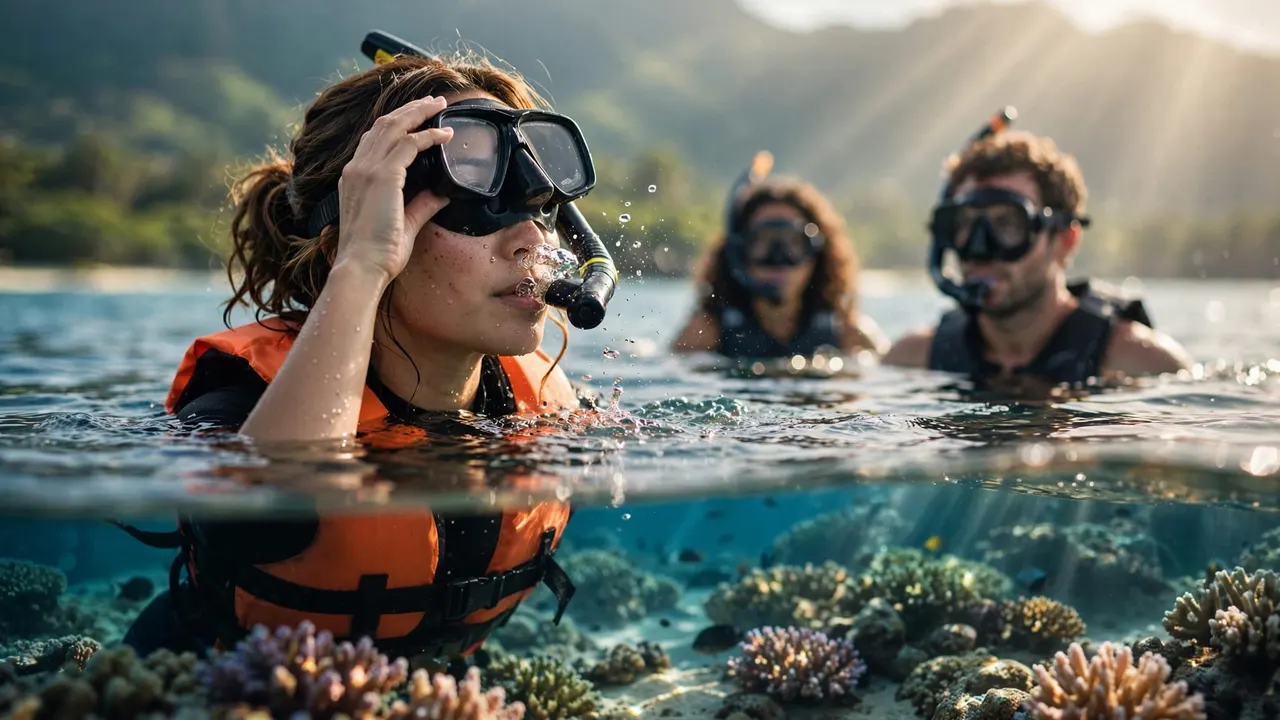
Water slips into your mask, the reef blurs, and your companions keep swimming. When you’re snorkeling Oahu, your first move is to pause and communicate, then clear the mask from a comfortable position.
Living Ocean Tours gives you access to gear support and knowledgeable guides, so speak up about mask concerns before entering. Staying with your group matters, but breathing comfortably takes priority over keeping pace. Start with a plan that lets everyone pause together.
Key Takeaways for a Flooded Mask
- Signal your buddy or guide before adjusting your mask, and keep your face above water while you regain comfortable breathing.
- Use appropriate flotation support, drain the mask at the surface, and check its seal before swimming again.
- Practice nose-exhale clearing with supervision rather than learning it while distracted offshore.
- If flooding continues or you feel unwell, ask for help and end the swim instead of repeatedly fixing gear.
A small leak can be manageable. However, staying close to your companions never requires you to push through discomfort.
Prepare for snorkeling Oahu Before You Enter
A clear-mask plan starts while you’re still dry. Check the equipment, then confirm where your group will swim and how you’ll request help.
Check the seal without overtightening
Move hair away from the soft skirt around the mask. Then position the strap flat against the back of your head, following the crew’s fitting instructions.
The strap should hold the mask comfortably. Pulling it tighter doesn’t automatically stop a leak; excessive tension can distort the skirt and cause discomfort.
If the mask presses painfully against your nose or keeps shifting, ask for another fit before entering. Also, tell the crew if you wear contact lenses or feel nervous about water near your nose.
Check conditions and the return plan
Before snorkeling Oahu, look beyond the sunny sky. Hawaii Ocean Safety’s snorkeling guidance identifies high surf, strong winds, heavy shorebreak, and strong currents as poor snorkeling conditions.
Ask where you should wait if your mask floods. On a boat outing, confirm which flotation support you may use and how to request assistance.
For shore snorkeling, identify an exit that suits your ability and the conditions. Don’t enter simply because other swimmers are already out there.
Clear Your Flooded Mask at the Surface
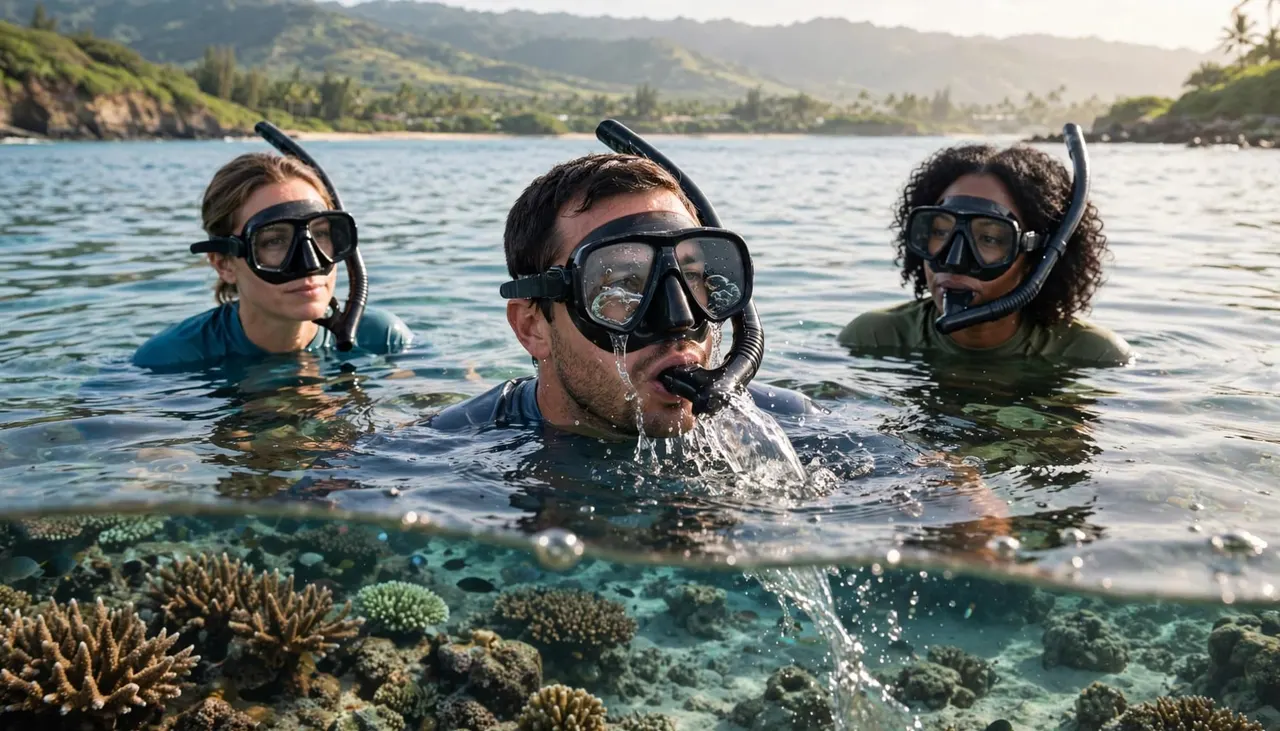
For a beginner, draining a conventional mask with your face above water is usually simpler than clearing it underwater. This approach gives you time to breathe, communicate, and check the fit.
- Stop moving forward and alert your companion. Use the signal agreed during the briefing. Ask your buddy to pause rather than swimming away to fix the problem alone.
- Get supported at the surface. Use approved flotation if available. Keep your mouth and nose above water, and remove the snorkel mouthpiece when speaking or breathing directly.
- Drain the mask. With your face clear of the water, gently lift its lower edge enough to let water escape. Keep hold of the mask rather than letting it hang loose.
- Reseat the skirt. Clear trapped hair, position the mask evenly, and check that the strap hasn’t twisted. Avoid tightening it repeatedly.
- Test before continuing. Once your breathing feels comfortable, lower your face briefly while your buddy or guide stays nearby. Confirm that the mask remains clear and the snorkel functions properly.
If water entered the snorkel too, address that separately using the method you’ve practiced or ask the guide for help. Clearing the mask doesn’t clear the snorkel.
Don’t rush back toward a turtle or your departing group. Have your companion stay with you while you confirm that the problem is resolved.
Practice Nose-Exhale Clearing With Supervision
Nose-exhale clearing can remove water without taking the mask off. However, snorkeling Oahu is more enjoyable when you’ve practiced the skill before you need it offshore.
Understand how the technique works
For a conventional mask that covers your eyes and nose, air exhaled through your nose displaces water inside the mask.
PADI’s mask-clearing instructions describe sealing the upper edge and exhaling through the nose. Its instructions also advise closing your eyes if you wear contact lenses.
Ask a qualified instructor or your guide to demonstrate before trying it. You don’t need to deliberately flood your mask during an open-water outing. Instead, practice in a controlled setting with appropriate support and permission to stop.
Keep breathing and positioning simple
Press the upper mask edge gently against your forehead, look slightly upward, and exhale through your nose. The lower edge must allow displaced water to escape.
Use a small, controlled breath rather than straining. If the movement feels confusing, return to the surface-draining method.
A snorkel supplies air only when its opening remains above water. Never inhale through it while the opening is submerged.
For full-face masks, follow the manufacturer’s instructions and the crew’s advice. Don’t assume conventional mask-clearing steps apply to a different design.
Agree on a Group Signal Before Swimming
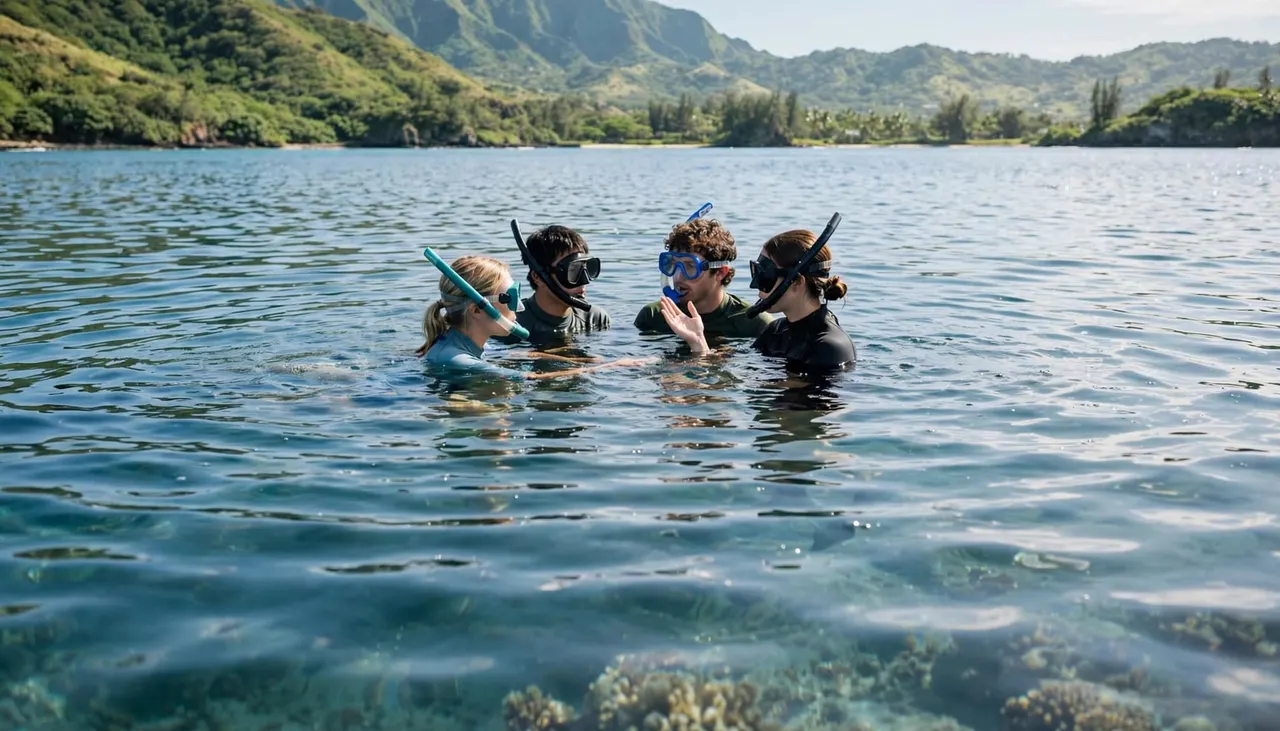
Your group can’t respond to a problem it hasn’t noticed. Before snorkeling Oahu, agree on how you’ll indicate a routine pause and how you’ll signal urgent help.
Make your buddy part of the pause
Ask the guide which signals the group uses. Don’t invent a gesture offshore and expect everyone to understand it.
When a mask floods, get your buddy’s attention before concentrating on the adjustment. Once both faces are above water, say what you need clearly: “My mask is leaking. Please stay with me.”
For families, establish which adult stays with each child. Children shouldn’t have to follow a moving group while independently troubleshooting equipment.
Watch for drift while you adjust
Keep your companion and guide in view during the pause. Your buddy can help monitor your position while you focus on the mask.
However, floating at the surface doesn’t mean you’ve stopped moving. Hawaii Ocean Safety’s current guidance explains that strong currents can be difficult to swim against.
If you notice separation or drift, alert the guide immediately. Don’t exhaust yourself chasing the group.
A mask adjustment needs a shared pause. One swimmer fixing gear while everyone else continues creates an avoidable separation problem.
Stop Repeated Leaks Without Touching the Reef
If the mask fills again, treat it as a fit problem rather than an interruption you must tolerate. Check for hair beneath the skirt, a twisted strap, or a displaced mask.
Facial movement can affect the seal, too. Relax your expression while checking the fit, and avoid tugging on the frame as you swim.
If a simple adjustment doesn’t help, ask the crew to assess or replace the mask. Your snorkeling Oahu experience shouldn’t require constant draining just to see the reef.
Meanwhile, keep your body and fins clear of coral. Never stand on the reef or grab coral to steady yourself.
Use approved flotation support or ask a guide for assistance instead. Move over clear water only when you can do so without separating from your companion.
If you become short of breath, dizzy, exhausted, or unable to manage your equipment, signal for help and end the swim. Don’t keep experimenting with mask adjustments while your comfort declines.
Get Gear Support With Living Ocean Tours
Living Ocean Tours operates from Kewalo Basin Boat Harbor near Waikiki. You can compare its guided Oahu snorkeling options when your group wants supplied gear and knowledgeable guides.
The company describes itself as Oahu’s only tour operator with professional snorkel guides. That in-water support gives you someone to ask about mask fit, flotation, and your return to the boat.
Tell the crew about swimming nerves, children’s needs, seasickness, or previous mask problems before entry. Then ask for a demonstration and test your gear before following the group farther.
A guided outing still depends on ocean conditions. Hawaii’s ocean-safety advice for visitors warns about unexpected waves and rip currents, so follow the crew’s directions and respect your limits.
At Turtle Canyons, Hawaiian green sea turtles may visit natural cleaning stations. Sightings aren’t guaranteed, and a passing turtle is never a reason to ignore leaking gear. Observe without touching, chasing, feeding, or blocking wildlife.
For a guided Turtle Canyons outing, CHECK AVAILABILITY when planning your reef day.
You can also check Living Ocean Tours’ available departures below.
Frequently Asked Questions About Flooded Masks
Should you remove your mask completely when it floods?
You usually don’t need to. At the surface, lifting the lower edge can drain water while you keep control of the mask. If you need a complete refit, use support and ask your guide for assistance.
Can you keep swimming with some water inside?
A small amount may be tolerable, but stop if it affects your vision, breathing comfort, or attention. Draining it beside your buddy is better than becoming distracted while following the group.
What if your child gets frightened by a flooded mask?
Help them keep their face above water and use appropriate flotation support. Alert the guide and let them stop. A calm break matters more than finishing the swim or reaching a particular sighting.
What if the group has already moved away?
Signal your guide or crew and stay with your buddy. Follow the briefing’s separation plan rather than rushing after swimmers you can barely see.
Keep Your Clear View and Your Group Together
A flooded mask calls for a shared pause, comfortable breathing, and a fit check. Surface first when you need to, use available support, and ask for help before a small leak becomes distracting.
When you’re snorkeling Oahu, staying together works best when everyone knows how to stop together. A clear mask is worth taking the time to fix.


