
Snorkeling Oahu: How to Use a Boat Ladder With Fins
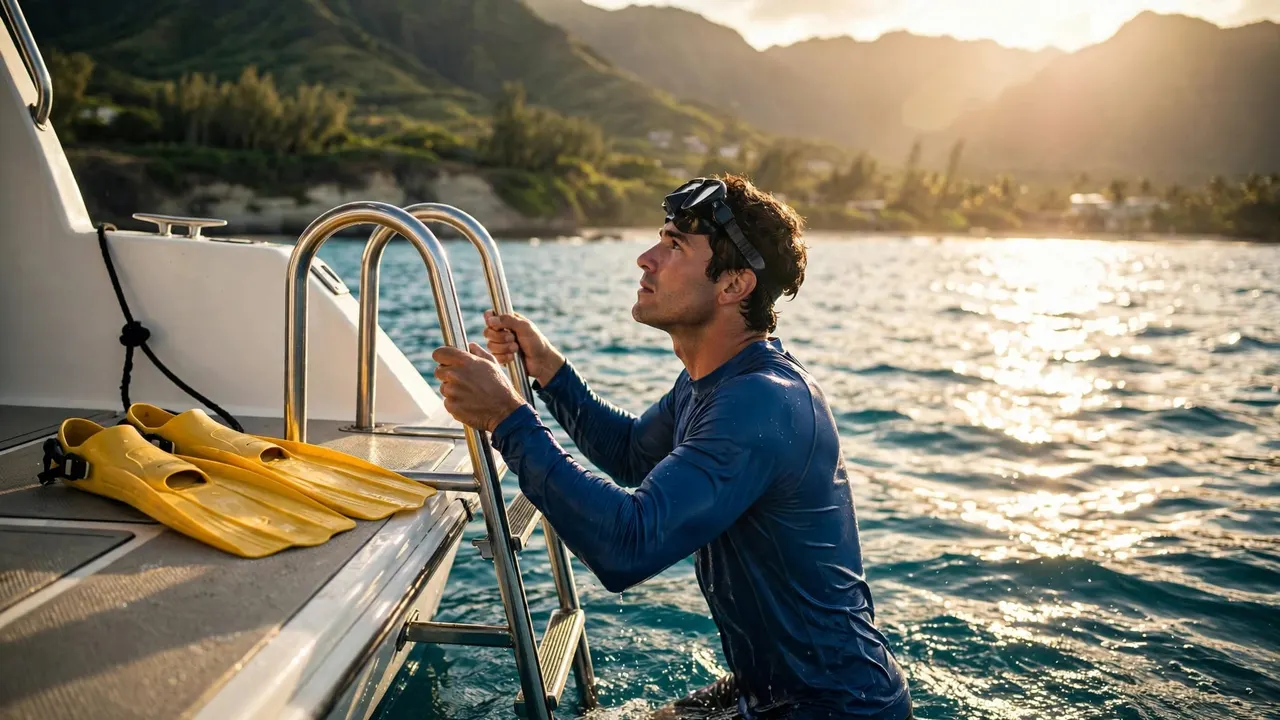
Living Ocean Tours takes you out onto the water near Waikiki, but your reef swim doesn’t end when you reach the boat. When you’re snorkeling Oahu by boat, the return ladder can feel awkward if you’re tired, holding fins, or waiting in moving water.
The simplest plan is to slow down and follow the crew’s directions. Know where you’ll exit before you jump in, keep your fins clear of the rungs, and ask for help before you feel worn out. A little preparation makes the climb much less intimidating.
Plan your return before you enter the water

During the safety briefing, look toward the stern and identify the ladder you’ll use to get back aboard. Ask where swimmers should wait, whether the crew wants you to remove your fins in the water, and how they’ll receive your gear. Boat layouts differ, so the crew’s instructions come first.
Notice how far the lowest rung extends into the water. You don’t need to practice climbing before your swim, but you should know where to place yourself when you return. If you expect to need help, say so while you’re still on deck.
Also, start your return before you’re exhausted. It’s easier to manage fins and a ladder when you have energy left. If you’re snorkeling Oahu’s reefs with children or less-confident swimmers, agree on a time to head back together rather than waiting until someone is cold or tired.
How to approach a boat ladder when snorkeling Oahu
A calm approach gives you room to watch the boat and listen to the crew. Keep your face above water as you near the boarding area so you can hear instructions clearly.
Approach from the designated swim area
Swim toward the ladder by the route the crew has shown you. Stay clear of the hull, other swimmers, and any area the crew has told you to avoid. Never swim beneath the boat to take a shortcut.
As you get close, switch to small, gentle kicks. Long fin strokes can bump the ladder or the person ahead of you. If the water moves you off course, pause and reposition rather than grabbing blindly at the boat.
Wait until the ladder is clear
Give the person ahead of you time to reach the deck. If you crowd the bottom rung, you may have nowhere to hold steady while they climb.
Use your flotation device as instructed while you wait. Keep watching the boarding area, especially when people are handing up fins or stepping onto a wet deck. When it’s your turn, move in close enough to reach the handholds without stretching.
Decide what to do with your fins before climbing
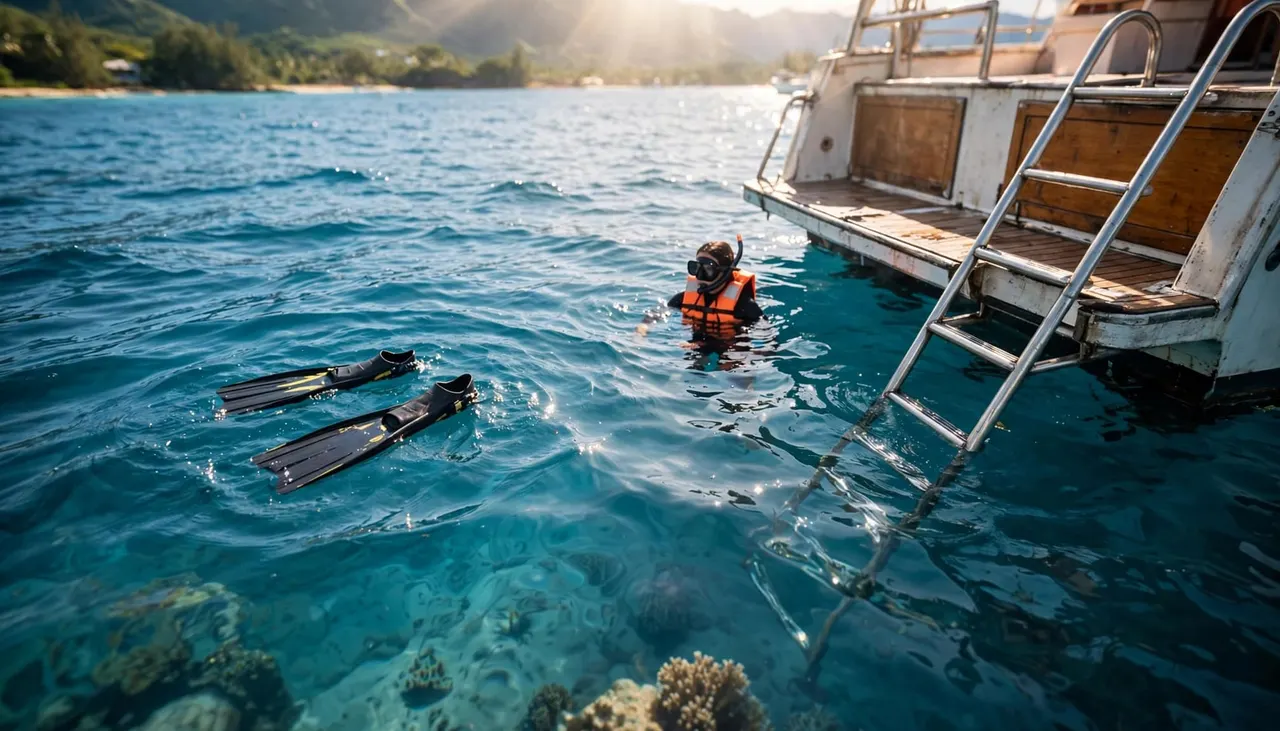
Fins help you move through the water, but their long blades can get in the way on narrow steps. Follow the crew’s fin-removal procedure, rather than assuming every boat handles boarding the same way.
If the crew asks you to remove them in the water
Stop beside the ladder or in the waiting area they identify. Keep yourself supported while you slip off one fin, then the other. If removing a full-foot fin takes both hands or upsets your balance, ask a guide for help.
Hand your fins up only when a crew member is ready to take them. Don’t toss them onto the deck or leave them where another swimmer might reach the ladder. Once they’re out of the way, you can focus on your footing.
If you’re told to keep them on briefly
Some crews may want you to stay fully equipped until you reach a particular point. In that case, wait for their signal and ask exactly where to remove your fins. Avoid placing a fin blade across a rung or trying to walk across the deck in fins.
When snorkeling Oahu from a boat, the right timing depends on the ladder, the boat’s movement, and the crew’s boarding plan. You don’t have to guess while you’re in the water.
Climb one rung at a time
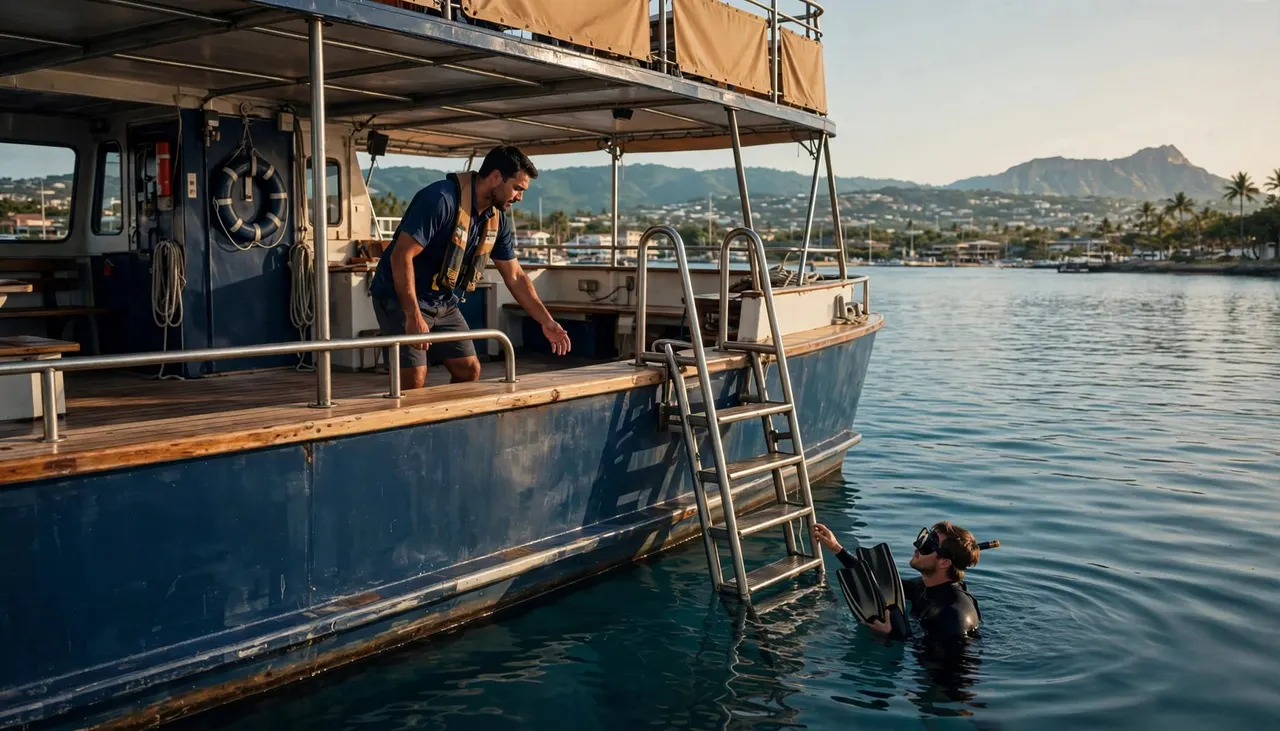
Once you’re at the ladder, resist the urge to pull yourself aboard in one big effort. Steady movements give you more control when your legs feel tired.
Get your feet under you
Face the ladder and take hold of its rails or designated handholds. Bring one foot onto the lowest reachable rung, then shift your weight gradually. Make sure that foot feels secure before you lift the other.
Keep your body close to the ladder. If a swell moves the boat, pause with your hands on the rails until the movement passes. Tell the crew if you can’t find a comfortable first step. They can direct you to a better position.
Finish the transfer onto the deck
The last step deserves as much attention as the first. Wet swim steps and decks can be slippery, and your balance may change when you leave the water. Move across the swim platform only when the crew directs you.
Once aboard, clear the exit so the next person has room. Put your gear where the crew indicates, then take a moment to catch your breath. There’s no prize for reaching your seat quickly.
Keep your other gear from complicating the exit
Your mask and snorkel can stay in place while you’re in the water unless the crew gives different instructions. Before climbing, make sure you can see clearly and breathe comfortably. If a mask strap is slipping, settle it while you’re supported, not halfway up the ladder.
Ask what to do with any flotation device you’re using. Don’t remove it early because it seems easier to climb without it. Your crew can tell you when to take it off and where to pass it.
Keep cameras and loose items out of your hands for the climb. You’ll want your hands free for the rails. Also, secure anything that could fall overboard. NOAA’s boating safety advice includes keeping trash aboard, a small habit that matters around Oahu’s reefs.
Give children and tired swimmers extra time
The ladder can look taller after a long swim. For families snorkeling Oahu, it helps to explain the return routine to children before anyone enters the water: wait your turn, listen for the crew, and climb slowly.
Help children focus on one instruction
Let the crew manage the boarding order. A child may need a moment to stop kicking, find the first rung, and understand where to put their hands. Keep directions simple and avoid calling several instructions from different places.
Don’t try to lift a child onto a moving platform without the crew’s guidance. Tell the crew ahead of time if your child is nervous about the ladder, so they can explain the exit before the swim begins.
Speak up when you’re running low on energy
If your legs cramp, you feel short of breath, or you can’t hold your position comfortably, tell a guide immediately. Stay afloat using the support provided and follow their directions. Trying to climb faster usually makes the task harder.
Returning early is fine. You can rest aboard while others finish snorkeling, and you’ll avoid turning a tiring swim into a difficult exit.
Let the crew judge changing conditions
Water around a boat doesn’t stay perfectly still. Wind, swell, and nearby vessel activity can affect how easy it is to approach the ladder. The National Weather Service’s boating safety resources are useful when you’re planning a day on the water, but your captain and crew must judge conditions at the boat.
If the ladder rises and falls, wait for the crew’s direction before reaching for it. Don’t chase a rung as it moves away. If you drift, signal and reposition as instructed.
For anyone snorkeling Oahu on a guided trip, the most useful safety question is simple: “Where do you want me to wait if I can’t climb right away?” Knowing the answer before you enter the water removes one decision when you’re tired.
Choose a trip where you can ask for help
Living Ocean Tours departs from Kewalo Basin Boat Harbor near Waikiki. Its Oahu boat and snorkel tours include outings to Turtle Canyons, where you can explore reef habitat with supplied gear and guidance. The company says it’s the only tour company with professional snorkel guides, giving you someone to ask about fins, flotation, and your return to the boat.
Before departure, tell the crew if this is your first boat snorkel or if ladders worry you. Ask them to walk you through the exit. Clear instructions are more useful than trying to copy another swimmer whose equipment or comfort level differs from yours.
Key takeaways
- Find the return ladder and learn the crew’s boarding procedure before you swim.
- Keep fins clear of the rungs, and remove them when and where the crew directs.
- Wait for an open ladder, hold the rails, and climb one step at a time.
- Ask for help early if you’re tired, unsteady, or unsure what to do with your gear.
Conclusion
The ladder may be the part of a boat snorkel you’re least excited about, but it doesn’t need to be rushed. A clear return plan lets you concentrate on the reef while you’re in the water.
When it’s time to come aboard, listen to the crew, deal with your fins before they become an obstacle, and take each rung steadily.
Frequently asked questions
Should you take off your fins before using a boat ladder?
Often, removing fins before stepping onto the ladder makes it easier to place your feet. Follow your crew’s instructions, though. They know where you can safely pause, remove your gear, and pass it aboard.
What if you can’t reach the first rung?
Hold your position using the flotation support provided and signal the crew. Don’t strain or repeatedly lunge for the step. Ask them how to position yourself for the boat’s ladder and the current conditions.
Can you keep your mask on while climbing?
You can generally leave it on if it helps you see and feel comfortable. Make sure it isn’t slipping over your eyes, and follow any gear instructions from the crew. Keep your hands available for the ladder rails.


