
Snorkeling Oahu: How Parrotfish Help Make Reef Sand
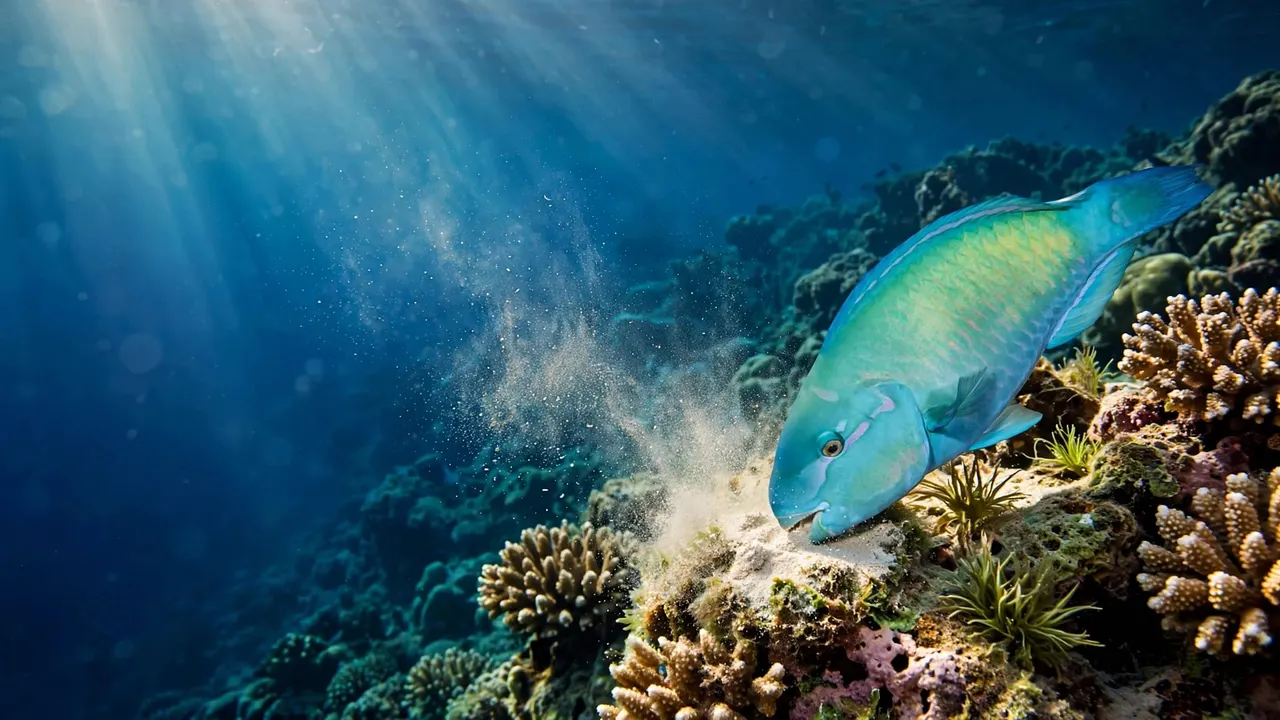
That pale sand beneath a reef may have passed through a fish. If you’re snorkeling Oahu, watch for parrotfish grazing across the coral: their bites help keep algae in check, and some of the reef material they eat returns to the water as sand.
Living Ocean Tours takes guests from Kewalo Basin near Waikiki to offshore reef habitat, where a slower look can reveal more than a quick wildlife sighting. Start with the fish’s repeated movements, then notice what lies beneath it.
Meet the reef’s busy grazers
Parrotfish, called uhu in Hawaiian, are easy to notice when their colors catch the light. Their most useful feature is less flashy: strong, beak-like tooth plates built for grazing.
Watch a parrotfish feed
A parrotfish often follows a short route across the reef, stopping to bite at surfaces where algae grow. If you float still, you may see it return to the same area. Give it room rather than following it from coral head to coral head.
Different parrotfish species feed in different ways. Some scrape the surface, while others take deeper bites into reef material. The National Marine Sanctuary Foundation’s parrotfish profile describes how their beaks can graze algae and bite pieces from dead or unhealthy coral.
Notice what the fish leaves behind
Look at a grazed surface after the fish swims away. You may see a lighter patch where it fed, though a single bite won’t tell you the health of an entire reef.
The more revealing pattern is repeated grazing. Parrotfish spend their days moving among feeding areas, and that activity helps prevent algae from taking over space that coral needs. You can appreciate the work without getting close enough to interrupt it.
How parrotfish turn reef material into sand
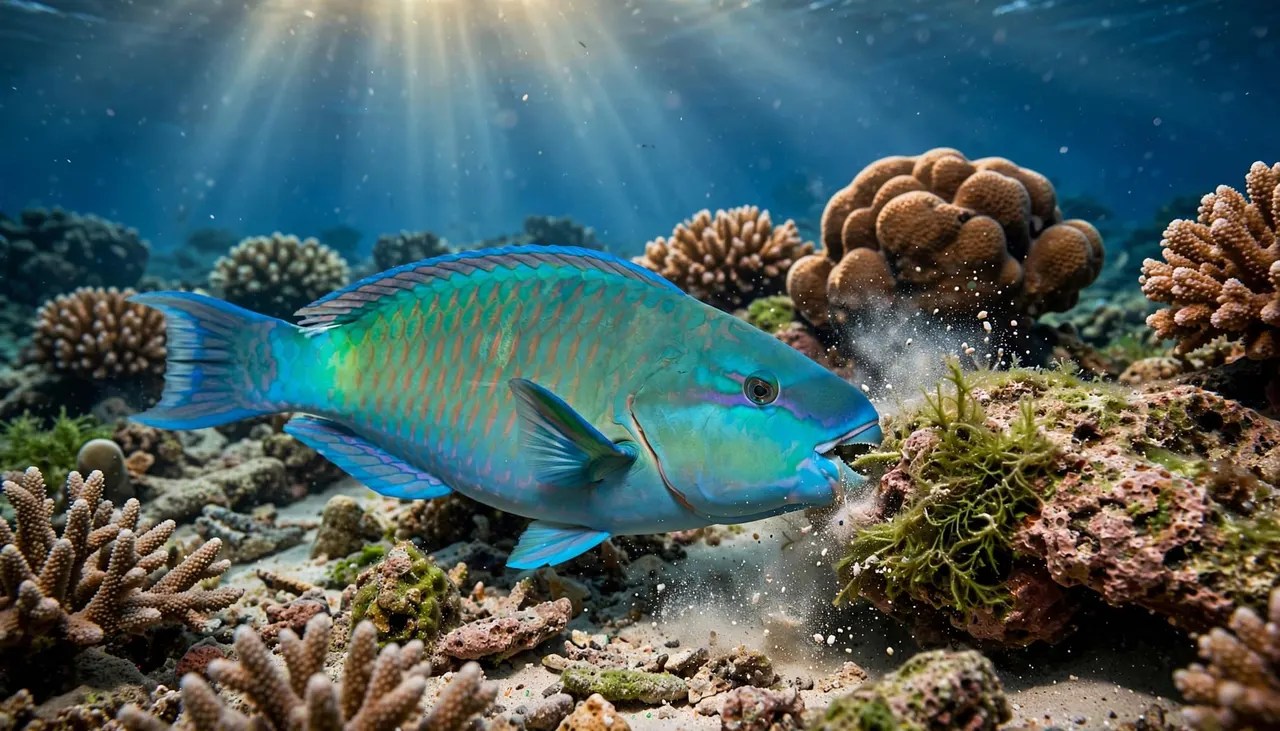
The sand connection starts with a bite. When a parrotfish grazes, it can take in algae along with bits of the hard, calcium-carbonate reef surface beneath them.
A meal with a gritty byproduct
The fish breaks down its food and passes finely ground mineral material back into the water. Those particles can join the sand already moving through the reef.
That doesn’t mean every grain on an Oahu beach came from a parrotfish. Broken coral, shells, and other marine material also contribute to reef-derived sand. Waves and currents determine where particles settle, so sand produced at a reef won’t necessarily end up on a nearby beach.
The University of Hawaiʻi explains the link between parrotfish grazing and sand, along with the role reef herbivores play in limiting algae.
Why species matter
Avoid picturing every parrotfish taking enormous chunks out of coral. Feeding behavior varies by species and by the surface available. NOAA Fisheries describes the especially heavy reef bites of bumphead parrotfish at Wake Atoll, a species-specific example that shouldn’t stand in for every fish you see near Oahu.
For your snorkel, the practical lesson is simple: watch the behavior in front of you. A fish grazing along a reef edge is showing you one small part of a much larger sand-making process.
Why a healthy reef matters to the sand
Parrotfish can produce reef sand only where suitable reef habitat supports them. The reef, the fish, and the sand are connected, but the fish can’t maintain that system alone.
Grazing gives coral room
Algae naturally grow on reef surfaces. When growth becomes too dense, it can compete with coral for space and light. By feeding on algae, parrotfish and other herbivores help maintain the conditions coral needs.
Coral faces other pressures that grazing cannot solve. A reef can have feeding fish and still be affected by warming water, pollution, or physical damage. That’s why seeing one parrotfish is a reason to get curious, not a way to declare the whole reef healthy.
Sand keeps moving
A sandy patch between coral heads isn’t a permanent pile of fish-made grains. Water moves sediment through the reef, and storms can shift it again. Some material stays offshore; some may eventually reach a shoreline.
As you snorkel, notice the contrast between firm reef and sandy channels. That patchwork gives you a better sense of how fish, hard surfaces, and moving water share the same space.
What to watch when snorkeling Oahu reefs
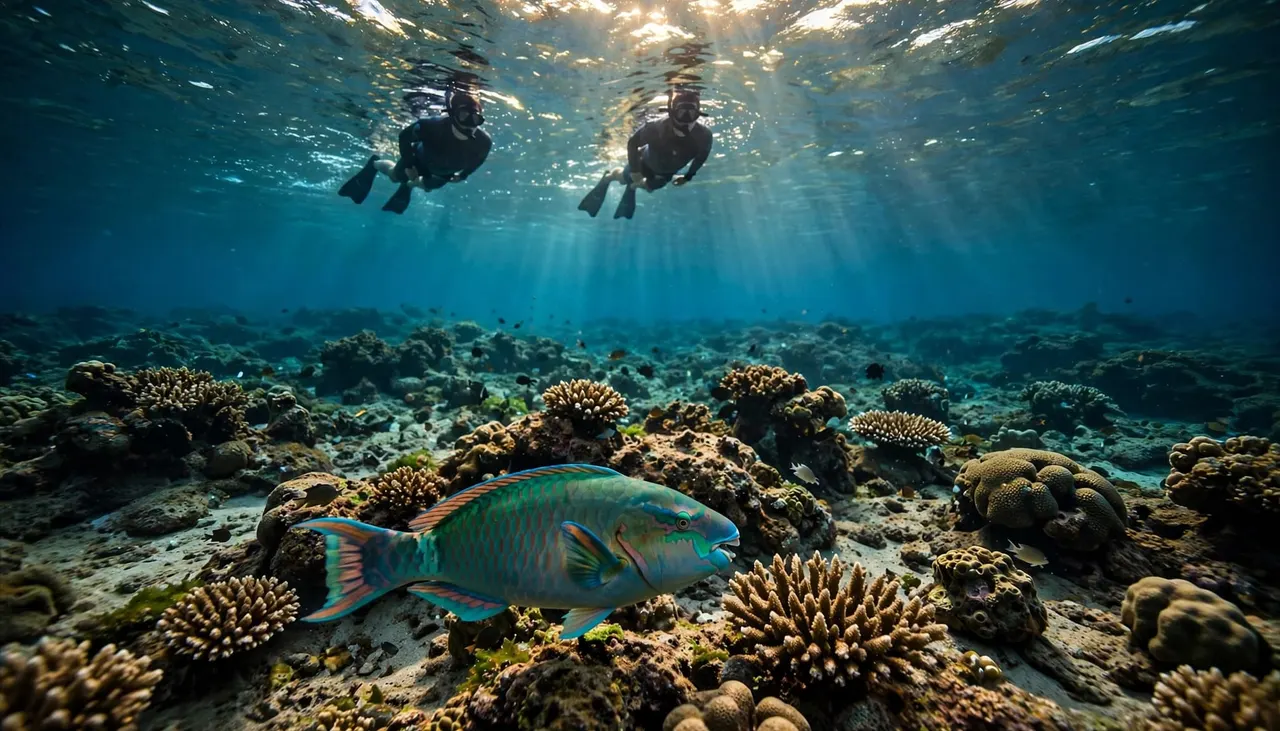
You don’t need to identify every fish to enjoy a reef. Pick one small area, float comfortably above it, and watch before you move on.
Follow a route with your eyes
For 20 to 30 seconds, notice where fish pause and which paths they repeat. A parrotfish may graze along a coral edge, cross a sandy gap, and return. Watching that route is more informative than swimming after its bright tail.
Keep enough distance that the fish continues feeding. If it darts away when you approach, give the area more space. You’ll often see more natural behavior once you stop trying to close the gap.
Look beyond the colorful fish
Check the surfaces around a feeding parrotfish. You’ll see hard reef, algae, and pockets where sand collects. The connection between grazing and sand becomes easier to picture when you can see those materials together.
While snorkeling Oahu’s offshore reefs, stay aware of your group and the route back to the boat. The most absorbing fish sighting isn’t worth losing track of your guide or drifting over shallow coral.
Keep your fins and hands off the reef
Parrotfish need a reef worth grazing. Your simplest contribution is to leave its surfaces undisturbed.
Float above coral, not onto it
Check your fin clearance before crossing a shallow patch. A kick can strike coral behind you even when your hands never touch it. If you need to fix your mask, move into open water, use flotation support, or ask a guide for help.
Don’t stand on a pale or seemingly lifeless coral head. Its appearance doesn’t make it a safe foothold. Sandy areas are easier to recognize, but you should still follow your guide’s instructions about where to swim and pause.
Let wildlife choose its path
Never feed or chase reef fish for a closer view. Food changes their behavior, while pursuit cuts short the grazing you came to watch. If a Hawaiian green sea turtle passes nearby, leave its route to the surface open.
Conditions matter as much as good intentions. Wind, current, and visibility can change your ability to keep a safe distance from the reef. Before snorkeling Oahu on your own, assess the water honestly and go with a buddy. On a guided trip, tell the crew if you need a break.
Choose a guided reef outing near Waikiki
Living Ocean Tours departs from Kewalo Basin Boat Harbor, minutes from Waikiki. Its Coast Guard-inspected double-decker boats have shaded seating, onboard restrooms, dry storage, and sturdy ladders for water entry.
Get comfortable before you look for fish
Living Ocean Tours says it’s the only tour company with professional snorkel guides in the water with you. That support is useful when you’re settling a mask, getting used to flotation, or trying to keep your fins clear of coral. Tell the crew about swimming nerves or a fit problem before you enter.
You can compare Living Ocean Tours’ Oahu trips if you’d rather reach an offshore reef with gear and an organized water-entry plan. Once you’re there, a guide can help you slow down and watch instead of rushing between sightings.
Make Turtle Canyons a reef visit, too
The Turtle Canyons Snorkel Excursion visits a natural cleaning-station area where Hawaiian green sea turtles may appear. Living Ocean Tours reports a 95% turtle-sighting rate for the outing, but no wild animal sighting is guaranteed.
When you’re snorkeling Oahu with turtles on your wish list, leave time to notice the smaller fish, too. A feeding parrotfish can be as interesting as a passing turtle once you know what its bites do.
Match your reef day to your group
A good snorkel choice depends on how comfortable everyone feels in the water. For a family with new swimmers, in-water guidance and an easy route back to the boat may matter more than staying out longer.
If you prefer a shore entry, check access rules and the day’s conditions before setting out. Hanauma Bay has a managed visitor system, while exposed shores elsewhere on Oahu can demand different skills as conditions change. Don’t treat a calm-looking photo as a forecast for your visit.
Pack what helps you stay comfortable: sun protection, water, and a secure place for loose belongings. Tell your crew before departure if someone in your group is prone to motion sickness. Then, once you’re in the water, choose a pace that lets everyone watch the reef without crowding it.
Key takeaways for your reef day
- Parrotfish graze algae, and some reef material they ingest returns to the water as sand.
- Reef sand has multiple sources, so don’t credit parrotfish with every pale grain you see.
- Watch a fish’s repeated feeding route from a distance instead of following it.
- Keep fins, hands, and equipment off coral, and give turtles room to move.
- Choose in-water guidance if gear, entry, or ocean conditions could distract you from the reef.
Frequently asked questions
Do parrotfish make all of Oahu’s white sand?
No. Parrotfish contribute to reef-derived sand, but coral fragments, shells, and other marine material also break down into grains. Currents move those grains, so you can’t identify the source of an entire beach by looking at one nearby reef.
Will you see parrotfish on every snorkel trip?
No wildlife sighting is certain. Your chances depend on the habitat, visibility, conditions, and where you spend your time looking. Ask your guide what fish are active at the site, then watch a small reef area patiently.
Is it safe for beginners to watch reef fish?
It can be, when the conditions suit your swimming ability and you have appropriate support. A guide can help you fit gear, use flotation, and keep clear of coral. If you’re uncomfortable, stay near your group and signal for help rather than pushing farther out.
Leave the reef ready for its next grazer
The sand beneath an Oahu reef has a longer story than its color suggests. Parrotfish are part of it because their feeding both limits algae and releases fine reef material into the water.
When you’re snorkeling Oahu, patient observation lets you see that work without interrupting it. Float above the coral, give the fish room, and take home the sighting rather than a piece of the reef.


