
Snorkeling Oahu: How to Stay Oriented When the Boat Moves
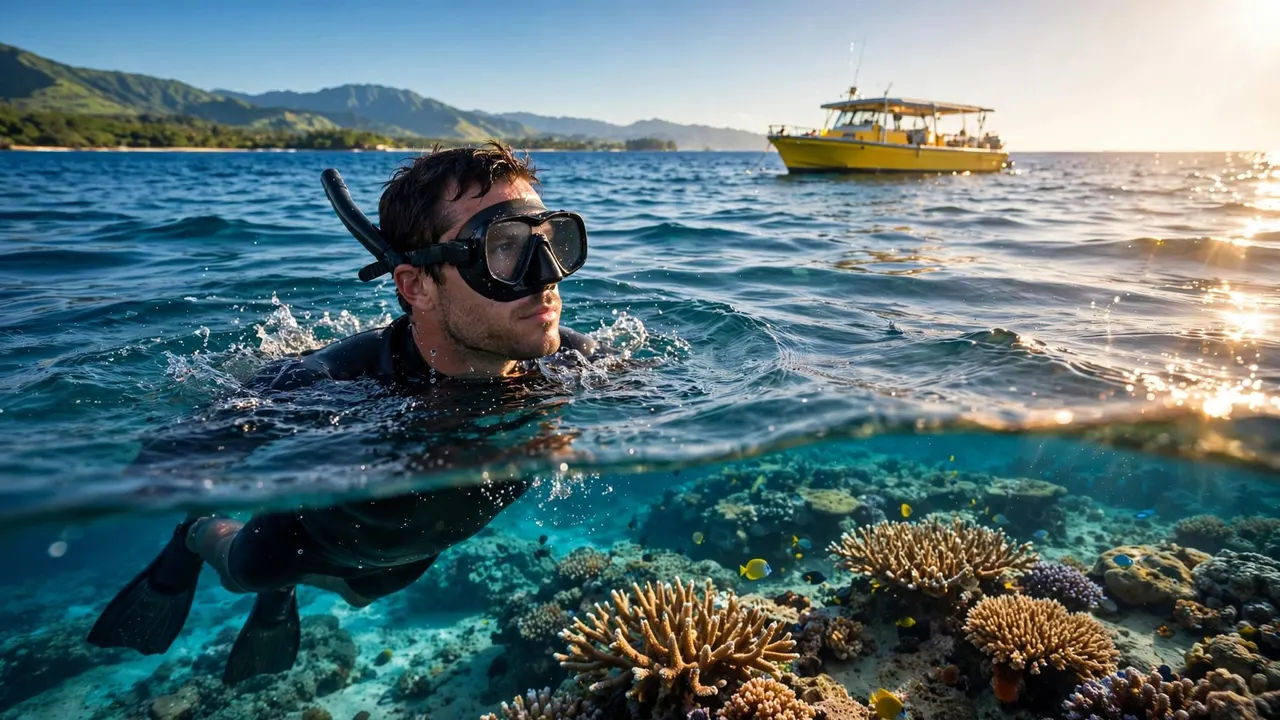
A boat can look farther away after only a few minutes with your face in the water. When you’re snorkeling Oahu, that change can be unsettling, even if you’ve stayed near the reef the whole time.
Your best reference is the crew’s plan, not the spot where the boat happened to be when you entered. Living Ocean Tours takes guests out from Kewalo Basin Boat Harbor near Waikiki and says it’s the only tour company with professional snorkel guides. Whether you’re new to the water or bringing the family, start by learning where to swim, whom to follow, and how to get back aboard.
Before snorkeling Oahu, agree on a return plan
Boat position can change, and so can yours. Wind, current, and your own swimming may shift what you see at the surface. Before you put on your fins, listen for the crew’s boundaries and ask anything that isn’t clear.
Check the conditions and your comfort
Look at the water while you’re still aboard. Hawaii Ocean Safety’s snorkeling safety guidance identifies high surf, strong winds, heavy shorebreak, and strong currents as poor snorkeling conditions. A sunny sky doesn’t settle the question of what the water is doing.
Be honest about your swimming ability, too. If you’re cold, dizzy, nervous, or struggling with your mask, tell a guide before you enter. It’s easier to fix a fin or choose flotation support on the boat than after you’ve lost sight of your group.
Ask what “stay close” means today
Don’t guess at a safe distance. Ask the crew where you may snorkel, whether you should follow an in-water guide, and which ladder you should use to return. Find out what to do if you lose sight of the boat or become separated from your companion.
Living Ocean Tours provides gear and guides on its guided Oahu snorkeling tours. Take advantage of that access: a short conversation before entry gives you a clearer plan than trying to interpret someone’s wave across the water.
Build a visual map before you enter
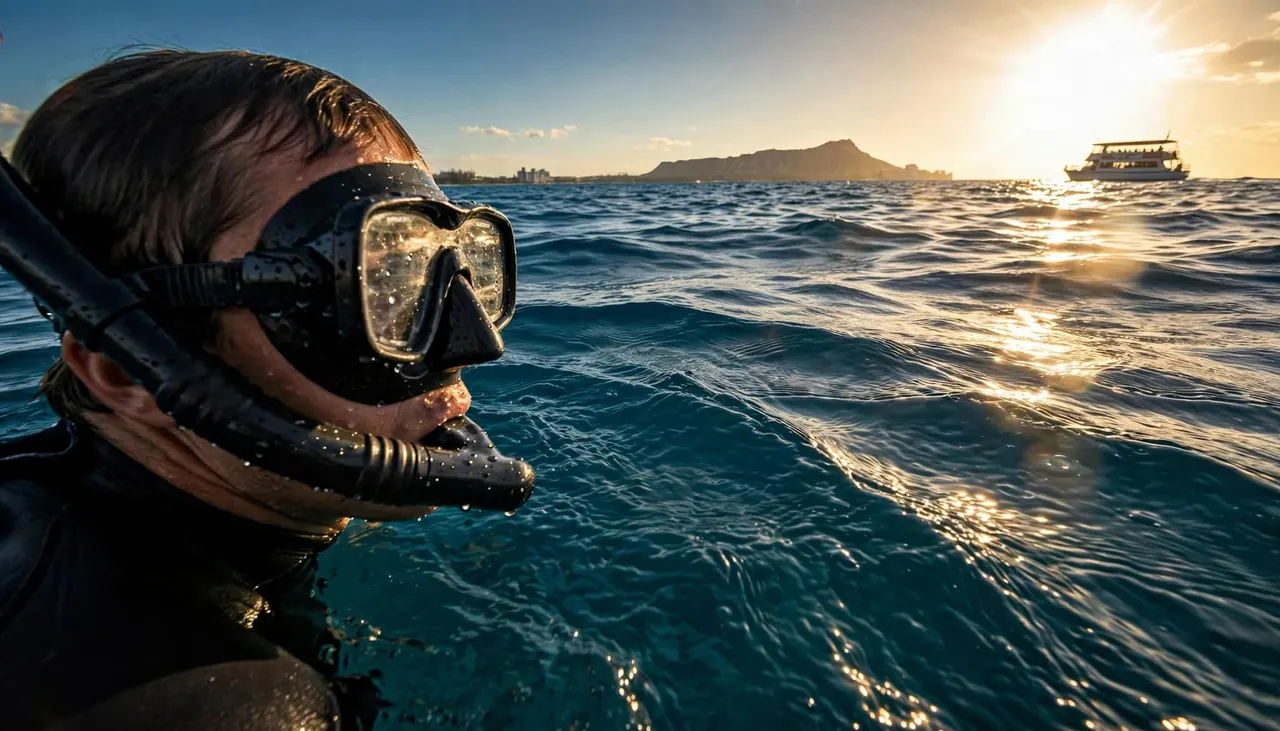
Give yourself a few easy things to recognize before you look underwater. You don’t need to memorize the coastline. You need to know where the boat, guide, and permitted swim area are in relation to one another.
Separate landmarks from your destination
Off Waikiki, Diamond Head may help you recognize which way you’re facing when it’s visible. A landmark is a direction cue, though, not an instruction to swim toward shore. Your route back is the one the crew has approved.
Notice what the boat looks like from the water-entry side. Then check where the guide enters and where other guests gather. Once you’re floating, those nearby cues will usually be more useful than a distant building.
Find the return ladder from the water
Before swimming away, turn and look at the boat from your position at the surface. Locate the ladder or boarding area the crew identified. Also note any part of the vessel the crew told you to avoid.
Repeat that glance after you settle your breathing and adjust your mask. The view from the water is lower than the view from the deck, and a boat may look different when you approach from another angle. If you can’t identify your return point, ask the guide while you’re still close.
Keep checking as the boat changes position
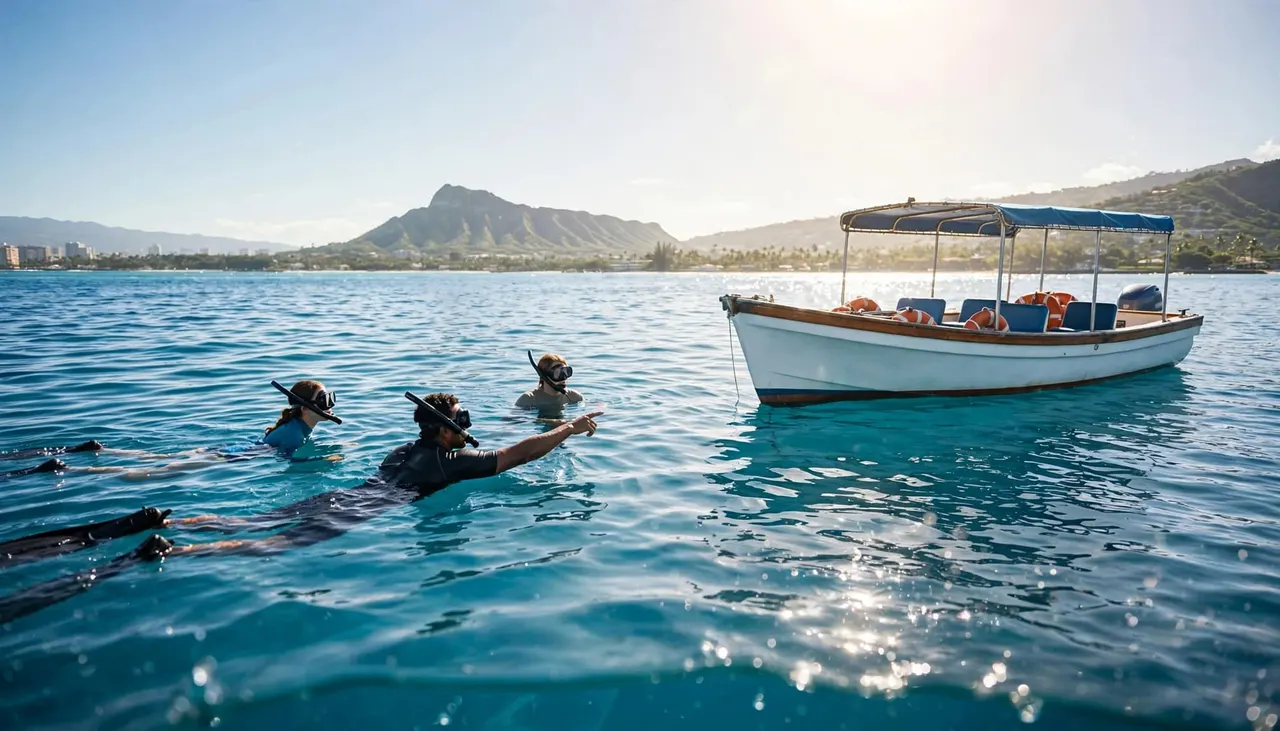
Looking down at fish makes time pass quickly. Brief, regular looks above the surface help you notice a change before the boat feels unexpectedly far away.
Look up during natural pauses
Check the boat and guide when you stop to clear your snorkel, adjust your mask, or rest. You don’t need to interrupt every few kicks. You do need enough awareness to notice if your group has moved or you’re nearing the edge of the designated area.
For families snorkeling Oahu’s reefs, keep your companion agreement simple. Know who stays with each child and regroup whenever someone stops. A turtle sighting is never a reason to split up or leave the guide behind.
Don’t chase a boat that appears to move
A change in the boat’s position doesn’t tell you which way to swim. The vessel may have shifted, you may have drifted, or both may have happened. Stop long enough to check the guide and your group’s position before changing course.
Stay out of the boat’s working area and away from its stern unless the crew directs you there for boarding. Never try to catch up with a vessel that is underway. Follow the crew’s instructions about where to wait and how to approach the ladder.
If the boat isn’t where you expected, check the guide and swim boundaries before you decide where to go.
Stay with your group without crowding the reef
A buddy helps you catch small problems early, such as fatigue or a leaking mask. The pair works best when both of you know the same return plan and can get each other’s attention.
Agree on a meeting point
Before entering, decide where you’ll regroup if one person pauses. Use a meeting point the crew approves, rather than choosing a patch of reef on your own. Keep enough space to swim comfortably, but remain close enough to communicate.
If your partner wants to return early, go together or tell the guide before separating. When snorkeling Oahu with children, don’t assume they’ll recognize the boat or find you after looking underwater. Check in each time your group changes direction.
Give wildlife and traffic room
Hawaiian green sea turtles may draw everyone’s attention at once. Watch without pursuing, touching, or blocking them. Keep your fins above coral, and move to open water if you need to stop and fix your gear.
At the surface, stay aware of other vessels. Don’t drift toward a harbor entrance or a marked boat channel, even if the water appears empty. If the designated snorkel area seems close to boat traffic, tell the guide instead of trying to choose a new route alone.
If you lose sight of the boat, slow down
Losing sight of the vessel can make you want to swim faster. First, lift your face from the water, get comfortable breathing, and look for your guide or companion. Panic and hard kicking can tire you before you’ve worked out where you are.
Recheck without swimming blindly
Pause and scan above the surface. Look for the group and the landmarks you noticed before entry. If a small wave blocks your view, wait for a clearer look rather than choosing a direction from one glimpse.
Stay with your buddy if they’re beside you. If you can’t locate the boat or guide promptly, signal for help according to the crew’s briefing and call out when needed. Don’t head toward a distant vessel merely because it resembles yours. Nor should you make an unplanned swim for shore.
Speak up before a problem grows
Tell the guide early if you’re tiring, getting cold, or finding it hard to breathe comfortably through your snorkel. Returning while you still have energy is sound judgment. You can enjoy the rest of the outing from the deck.
Hawaii Ocean Safety’s ocean-activity planning advice stresses that snorkeling calls for ocean-swimming experience and awareness of its risks. A guided outing gives you people to ask for help, but it doesn’t replace knowing your limits.
Choose a trip that makes orientation easier
If you’re comparing boat-based options, ask practical questions before you book. Find out whether guides enter the water, how guests learn the swim boundaries, and what support is available for someone who wants to return early.
Make guidance part of your plan
Living Ocean Tours departs from Kewalo Basin Boat Harbor, minutes from Waikiki. Its Coral Kai and Lokahi have shaded seating, restrooms, dry storage, and ladders for water entry. The Lokahi’s SeaKeeper system reduces boat roll, although conditions can still change once you’re in the ocean.
The company says it’s the only tour company with professional snorkel guides. That in-water support can be reassuring when you’re fitting gear, finding your group, or learning where to return. Ask the crew for the day’s plan rather than assuming it will match a previous trip.
Keep a turtle outing centered on the group
At Turtle Canyons, green sea turtles may visit an underwater cleaning station. Living Ocean Tours offers a guided excursion there, but wildlife sightings aren’t guaranteed. Watch the reef, stay within the crew’s boundaries, and let a turtle pass without following it away from your guide.
If that sounds like your kind of reef day, CHECK AVAILABILITY for the turtle-focused excursion. When you board, ask the same orientation questions you would on any boat trip: where you’ll swim and how you’ll return.
Key Takeaways
- Learn the swim boundaries, return ladder, and separation plan before you enter.
- Use the boat, guide, and visible landmarks as different cues. A landmark helps you face the right way; the crew tells you where to go.
- Look up during natural pauses, and stay close enough to communicate with your companion.
- If you can’t see the boat, slow down, stay afloat, and follow the crew’s instructions for getting help.
- Leave the water before fatigue or discomfort makes a simple return difficult.
Frequently Asked Questions
Why does the boat look farther away when I’m snorkeling?
You may have moved while looking underwater, the vessel’s position may have changed, or both. Your low viewpoint can also make distance harder to judge. Check the guide and your agreed swim area before deciding how to return.
Should I swim toward shore if I lose sight of the boat?
Don’t choose shore as your backup plan unless the crew has told you to do so. Pause, stay with your buddy, look for the guide, and use the help instructions from your briefing. An unplanned shore swim could take you away from your group or toward boat traffic.
Is a guided trip enough for a first-time snorkeler?
Guides can help you with gear, boundaries, and water entry. You should still tell them about your swimming comfort and pay attention to conditions. If you don’t feel ready to enter, staying aboard is a reasonable choice.
Leave the water with a clear route back
The reef holds your attention, but returning comfortably depends on what you notice above the surface. When snorkeling Oahu from a boat, learn the crew’s plan first, check your position as you go, and ask for help early.
You don’t need to swim far for a memorable reef day. Staying with your group gives you more time to enjoy the water and a clearer way back aboard.


