
Snorkeling Oahu: Why Parrotfish Sleep in Mucus Cocoons
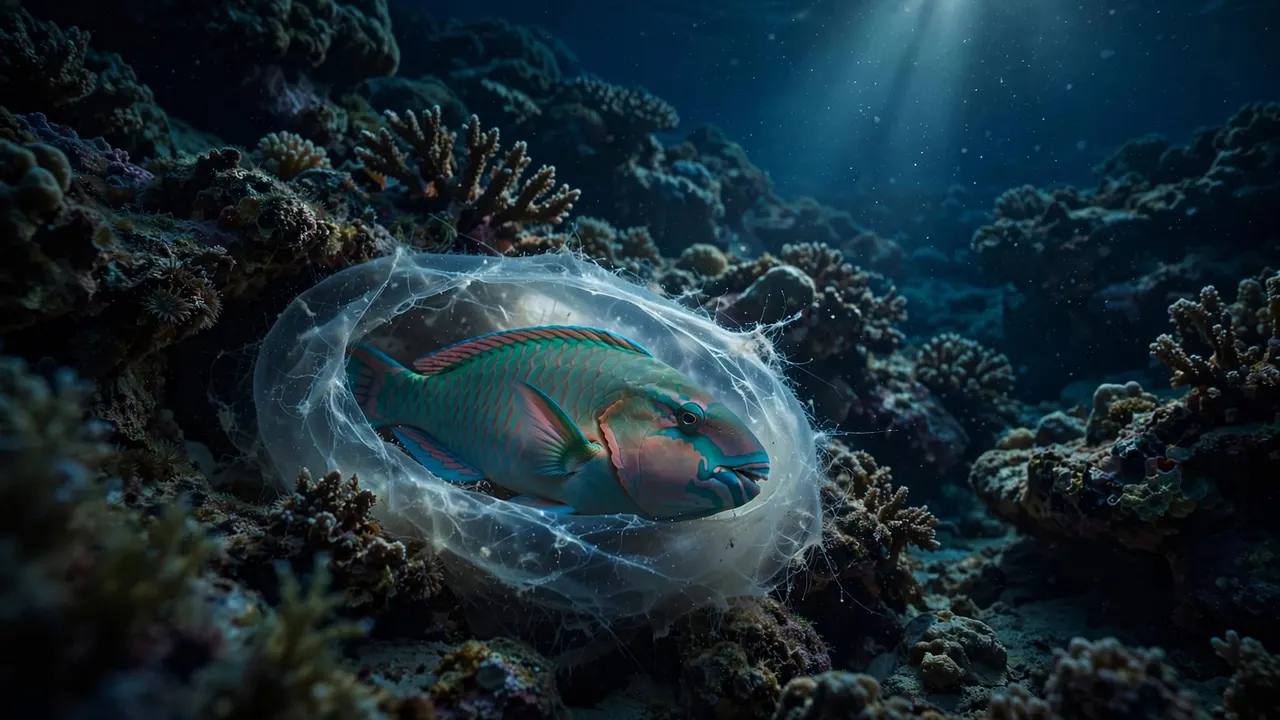
Some parrotfish settle down at night inside a thin mucus cocoon that may help protect them while they rest. If you’re snorkeling Oahu’s reefs with Living Ocean Tours, you’ll usually see these colorful fish during their active daytime hours, long before their unusual bedtime routine begins.
Knowing what happens after dark gives you a new way to appreciate the fish you see grazing over coral. Start with the remarkable covering some parrotfish use when it’s time to rest.
What a Parrotfish Mucus Cocoon Is

Conceptual illustration, not a photograph of an Oahu reef.
A parrotfish cocoon is a delicate envelope of mucus surrounding a resting fish. It can be difficult to see against the reef, especially when the fish has settled into a sheltered spot.
The cocoon is associated with nighttime rest. During the day, you’re more likely to notice a parrotfish moving across the reef and feeding than sitting inside one.
A Different Kind of Bedtime Covering
The fish stays within the mucus covering as it rests. Unlike the shelter offered by a coral ledge, the cocoon surrounds the fish itself.
That doesn’t mean every parrotfish you encounter makes one. Parrotfish include many species, and their behavior isn’t identical. If you spot a fish tucked into the reef, enjoy the sight without assuming a cocoon is present.
Why You Probably Won’t See One on a Daytime Trip
Most snorkeling trips take place while parrotfish are active. The cocoon is part of a nighttime routine, so it isn’t something you should expect to find during a daytime swim.
Instead, use the opportunity to watch what the fish does before bedtime. Its feeding movements and choice of shelter can tell you a lot about its life on the reef.
Why Do Parrotfish Sleep Inside Mucus Cocoons?
The strongest explanation is that a cocoon offers protection while a fish is resting. Researchers have proposed several possible benefits, including defense against parasites and predators. Those ideas don’t all carry the same level of certainty, so it’s useful to separate them.
Protection Against Small Parasites
The cocoon may act as a barrier against small external parasites. A Wildlife Conservation Society fisheries profile compares its protective role to a mosquito net.
That comparison helps explain why a covering could be useful at night. A resting fish spends time in one place, rather than moving around the reef as it does while feeding. The mucus offers a physical layer between the fish and its surroundings.
A Possible Defense Against Predators
Another proposed benefit is protection from predators. The idea is that a mucus covering could make a resting parrotfish harder for a predator to detect.
However, you shouldn’t treat that explanation as a proven benefit for every cocoon-making species. Research on parrotfish movement and habitat use describes both predator avoidance and parasite avoidance as proposed functions. The simple answer is that the cocoon appears to offer protection, while its full role can vary.
How to Recognize Parrotfish While Snorkeling Oahu
You don’t need to identify an exact species to enjoy watching a parrotfish. Look for its sturdy body, colorful markings, and distinctive mouth as it moves close to the reef.
In Hawaiian, parrotfish are known as uhu. Their colors can vary, so the shape of the mouth and the fish’s feeding behavior may be more useful clues than any single color.
Look for the Beak
A parrotfish has teeth fused into beak-like plates. You may notice it approach a reef surface, take a bite, and move to another feeding spot.
If the water is quiet and you’re close enough without crowding the fish, you might even hear a crunch. Stay at the surface and let the fish continue its route rather than chasing it for a closer look.
Watch the Reef Around It
Parrotfish share their habitat with plenty of other reef animals. Butterflyfish may pass nearby, and you could also see a triggerfish or a Hawaiian green sea turtle.
Take a few moments to watch one patch of reef rather than swimming quickly across it. The fish’s repeated stops and movements are often more interesting than a brief glimpse of its colors.
What Parrotfish Do for the Reef
A parrotfish’s daytime feeding is another reason to give it your attention. Its grazing can help limit algae on reef surfaces, and some species also bite or scrape material from the reef.
Different parrotfish feed in different ways. When you’re watching one, focus on what you can see rather than assuming every bite has the same effect.
Grazing on Algae
Algae are part of the reef community, but their relationship with coral matters. Grazing fish help keep some algae in check, which can make space available for coral.
You might see a parrotfish pause at one surface before moving to another. Give it room and keep your fins above the reef, so your observation doesn’t interrupt its feeding.
Helping Create Reef Sand
Some reef material eaten by parrotfish passes through their digestive system and returns to the water as fine particles. Those particles can contribute to sand.
Parrotfish don’t make all of Oahu’s white sand. Shells, coral fragments, and other marine material also break down into grains, and currents can move sand away from the reef where it formed.
Where to Watch Parrotfish Around Oahu

Illustration of parrotfish in a reef habitat.
When you’re snorkeling Oahu’s coastal waters, look for reef habitat where fish have places to feed and shelter. You may spot parrotfish moving near coral or rocky surfaces, but sightings depend on conditions and wildlife activity.
Start by floating comfortably and scanning a small area. A fish that blends into the reef at first can become easier to notice once it moves. Its beak and feeding pattern may catch your eye before its color does.
Give yourself time to see the wider reef, too. A turtle encounter can be exciting, but smaller fish offer their own rewards when you pause and watch.
No particular animal is guaranteed on a snorkeling trip. Visibility, water movement, and the route you take can all affect what you see. Ask your guide about the fish active around your group, and enjoy the animals that appear naturally.
Can You See a Mucus Cocoon at Night?
A nighttime reef can reveal behavior you won’t see during a daytime swim. Still, a parrotfish cocoon is difficult to spot, and searching for one should never mean disturbing a resting fish.
Let Resting Fish Stay Hidden
A fish tucked beneath a ledge has chosen that space for shelter. Don’t reach into the opening, move coral, or shine a light into a hiding place to investigate.
If you happen to notice a resting fish, keep your distance and move on. A close view is never worth forcing an animal out of its shelter.
Choose Conditions That Match Your Skills
Night snorkeling adds challenges, including reduced visibility and a more limited view of your surroundings. Those challenges can make it harder to stay with a buddy, judge your distance from coral, or find your way back.
You don’t need a nighttime encounter to appreciate the cocoon. During the day, the same fish may give you a clear view of its beak and feeding habits while you remain comfortably at the surface.
Snorkeling Oahu With Care for the Reef
Respectful wildlife viewing makes your trip better for you and the animals. You can observe more when you stay calm, give fish space, and avoid contact with the reef.
Float Above Coral and Give Fish Room
Coral is alive and can be damaged by a hand, fin, or foot. Keep your body horizontal at the surface and allow enough clearance beneath you, especially when the water moves.
If a fish changes direction as you approach, give it more space. Don’t touch, chase, or feed wildlife. The best view is one that lets the animal continue its normal behavior.
Make Comfort Your First Priority
A well-fitting mask and comfortable fins make it easier to focus on the reef. If you’re new to snorkeling, take time to practice breathing through your snorkel and use flotation when you need it.
Stay with your buddy or group. If you’re tired, uncomfortable, or having trouble with your gear, signal your guide and return to the boat. Conditions and swimming ability matter more than any sighting on your wish list.
Explore Waikiki’s Reef With Living Ocean Tours
Our snorkeling trips leave from Kewalo Basin Boat Harbor near Waikiki. You have professional snorkel guides in the water with you, along with crew support and equipment for your swim.
Our Turtle Canyon Snorkel Tour visits a natural turtle cleaning-station area. The trip lasts about two hours, including approximately one hour in the water. We report a 95% turtle-sighting rate, although every wildlife encounter depends on the animals.
Parrotfish aren’t guaranteed, either. When you’re snorkeling Oahu with us, your guide can help you take in the reef community while you watch for turtles. You can also explore our Deluxe Waikiki Snorkeling and Wildlife Cruise.
For the Turtle Canyon trip, CHECK AVAILABILITY.
Check Availability
See the Reef With a New Perspective
A parrotfish’s mucus cocoon is a nighttime adaptation you may never see firsthand. Yet knowing about it adds another layer to the daytime fish you watch moving across the reef.
When you’re snorkeling Oahu, slow down and notice its beak, its feeding stops, and the shelter around it. Give the fish room, and you’ll leave its reef home ready for another night’s rest.


