
Snorkeling Oahu: How to Pack Your Mask and Fins for a Flight
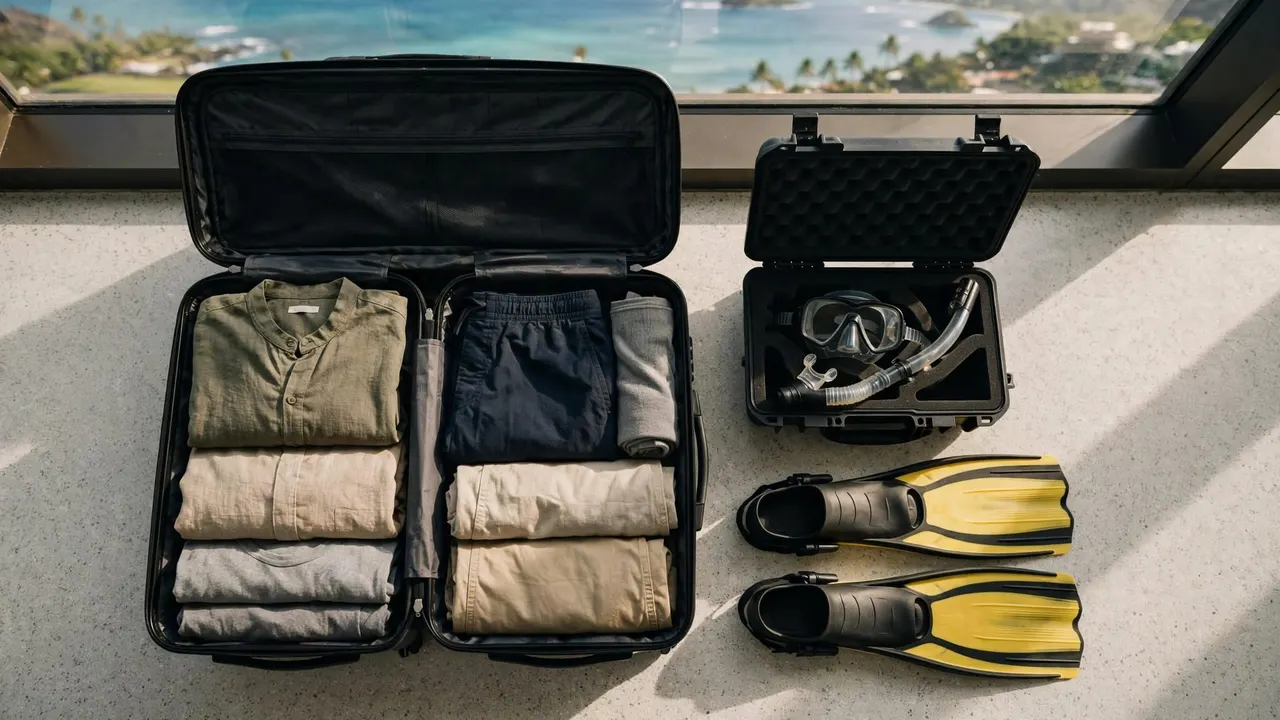
The safest way to pack your snorkel gear for a flight is to protect your mask in a case and lay your fins flat in your luggage. At Living Ocean Tours, we also provide equipment, so you can leave bulky gear at home if you prefer.
If you’re bringing a favorite mask or planning several days of snorkeling Oahu’s reefs, a little care with your packing can prevent bent fins and a damaged mask. Here’s how to get your equipment to Hawaii ready for the water.
Decide Which Snorkel Gear to Bring
Your own mask can be worth the luggage space if it fits well or has prescription lenses. Fins take up more room, so you might pack your mask and snorkel while using the fins provided on your tour.
At Living Ocean Tours, we provide sanitized masks, snorkels, fins, and flotation devices on our snorkeling trips. Our professional snorkel guides help guests get comfortable with their equipment, including families and first-time snorkelers.
You can explore our Oahu snorkeling tours if you’d rather save suitcase space for the rest of your vacation. Departures leave from Kewalo Basin Boat Harbor, near Waikiki.
For a Turtle Canyon snorkel trip, you can also CHECK AVAILABILITY before you pack. If you’re bringing personal gear for other outings, read on for ways to protect it in transit.
Choose Travel-Friendly Snorkeling Gear
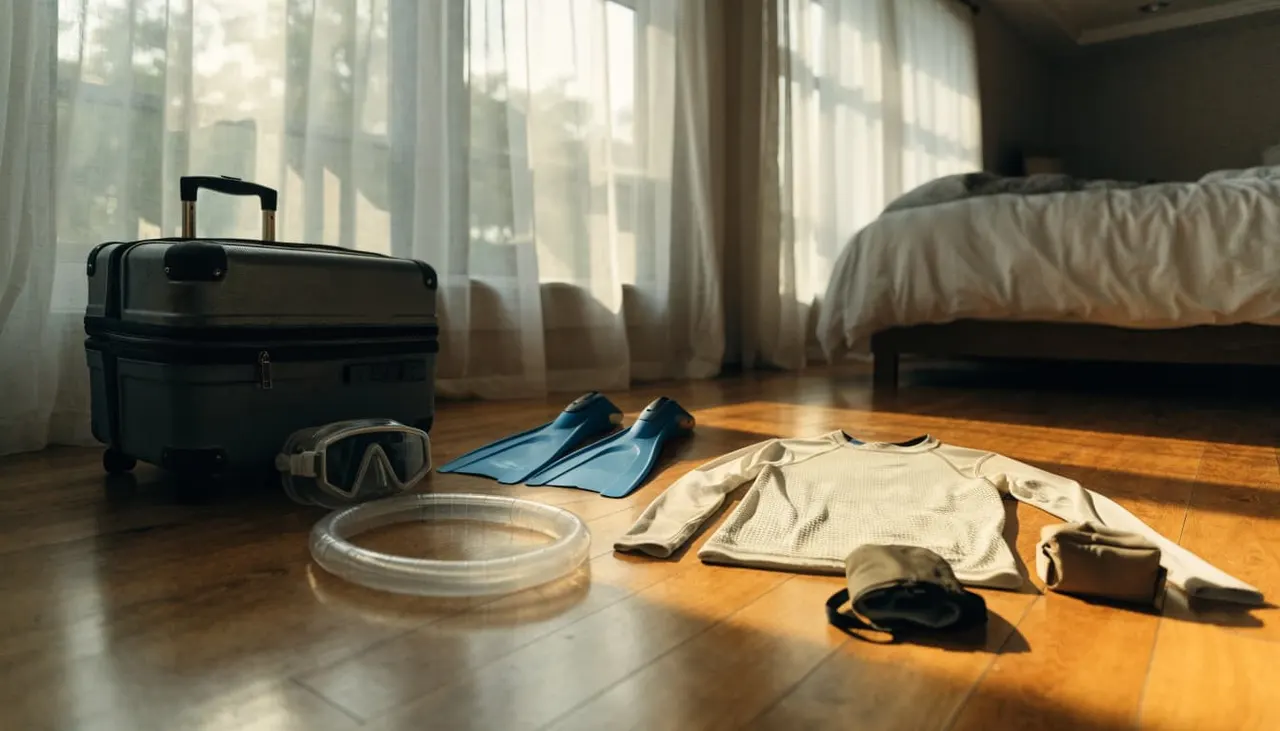
Good travel gear fits your body first and your suitcase second. Before snorkeling Oahu’s waters, try on anything you’ve bought for the trip and make sure you can use it comfortably.
Pick a mask that seals comfortably
Your mask should sit against your face without pinching your nose or pressing uncomfortably on your forehead. Position the skirt flat against your skin and adjust the strap until it’s snug, rather than pulling it as tight as possible.
A mask that fits at home is worth protecting in transit, particularly if it has prescription lenses. Bring its case if you have one. Otherwise, set aside a soft cloth and a protected spot in your bag.
Consider the length and fit of your fins
Shorter travel fins can be easier to pack than long fins, but they still need to fit your feet comfortably. Try them on before departure, including any fin socks you intend to wear.
Lay each fin against your suitcase before you pack. You want the blade to rest flat without folding or forcing the zipper closed. If the fins are too long for your cabin bag, a larger checked suitcase may be the better option.
Protect Your Mask and Fins Inside Your Bag
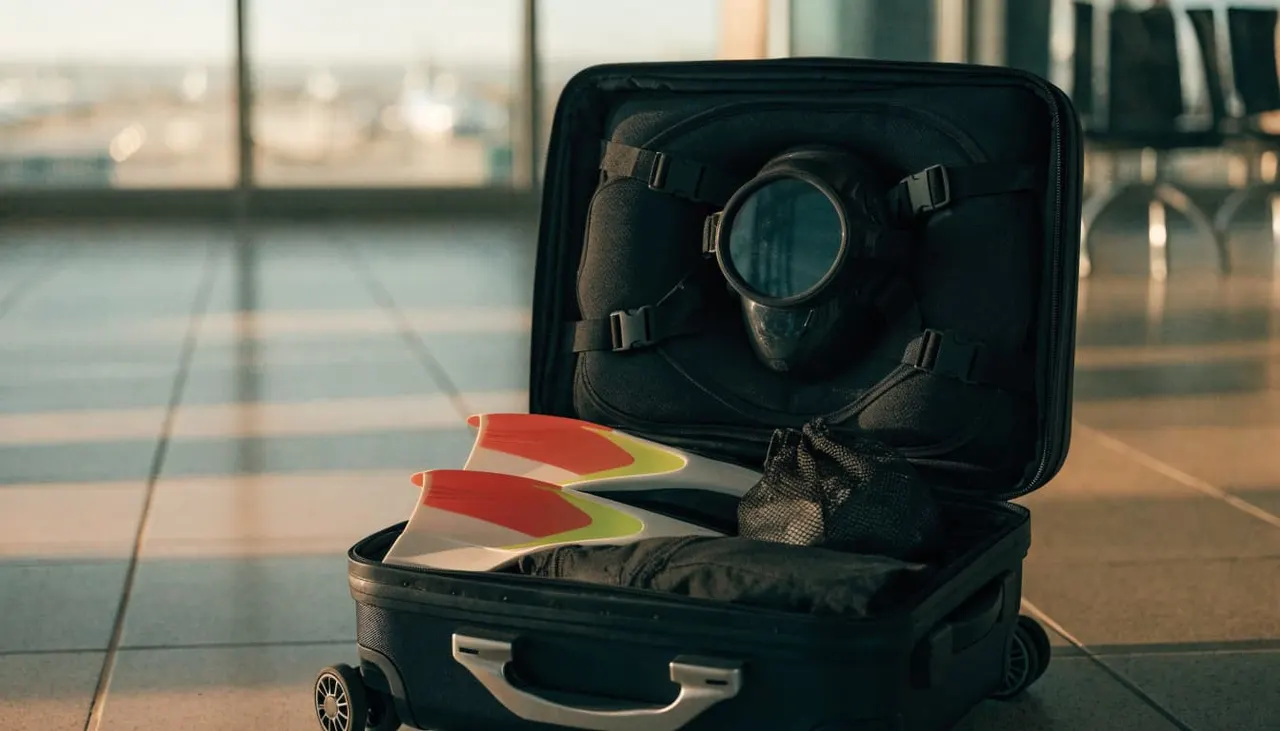
Your mask lens and flexible silicone skirt need different kinds of protection. A case helps shield the lens, while careful placement keeps the skirt from being folded under heavy items.
Keep the lens cushioned and the skirt flat
Place your mask in its protective case, with the skirt resting in its natural shape. If you don’t have a case, wrap the mask in a soft microfiber cloth and place it among clothing near the center of your suitcase.
Keep shoes, toiletries, and other hard objects away from the lens. A rash guard or towel can provide extra padding, but avoid packing so tightly that the mask is crushed when you close the bag.
A prescription mask is especially useful to carry close at hand: protect it in your cabin bag if it fits within your airline’s allowance.
Give fins and snorkels room to rest
Lay your fins along the sides or bottom of your suitcase, with the blades flat. Slide soft clothing around them to reduce movement, and avoid leaving a blade sharply bent beneath other gear.
If your snorkel detaches from the mask, pack it separately. Position it where shoes or a heavy toiletry bag won’t press on the mouthpiece or valves. When everything is in place, close the suitcase gently. If you need to force it shut, rearrange the contents.
Choose Between Carry-On and Checked Luggage
For many travelers snorkeling Oahu’s south shore, the easiest split is a mask in a carry-on and fins in a checked bag. That keeps your most personal piece of equipment nearby while giving longer fins more room.
When to carry your mask on board
A cabin bag is a good choice for a mask you depend on, especially one fitted with prescription lenses. Put the case where you can reach it without unpacking your entire bag at security.
Your swimsuit and a lightweight rash guard also take up little room. Packing them together means you’ll have the basics close at hand when you arrive.
When to pack fins in a checked suitcase
A checked bag gives you more flexibility for longer fins and larger bottles of sunscreen. Use a sturdy suitcase, keep the blades flat, and cushion the surrounding space with clothing.
Measure the outside of your packed bag, including wheels and handles. Carry-on dimensions differ by airline: American Airlines lists a maximum of 22 by 14 by 9 inches, while Southwest lists 24 by 16 by 10 inches. Your fare can also affect which bags are included.
Pack Sunscreen and Other Liquids Separately
When you’re snorkeling Oahu’s reefs, sun protection belongs on your packing list. A long-sleeved rash guard covers your shoulders and back, while sunscreen protects exposed skin.
For carry-on luggage, sunscreen, liquid anti-fog products, and other gels follow the TSA liquids rule. Each container must hold no more than 3.4 ounces or 100 milliliters, and your containers must fit in one clear, quart-size resealable bag. The allowance is one bag per passenger.
The FAA’s PackSafe chart explains baggage restrictions for liquids and other travel items. For a larger sunscreen bottle, use checked luggage and protect it in a sealed bag in case it leaks.
Hawaii restricts the sale of sunscreens containing oxybenzone and octinoxate without a prescription. A mineral-based sunscreen is one option for your trip, though no sunscreen should be treated as a guarantee of zero environmental impact.
Apply sunscreen according to its label, and bring a hat and sunglasses for time on the boat. Alaska Airlines also summarizes liquid and aerosol baggage restrictions alongside its prohibited-item guidance.
Add a Few Comfort Items for Your Snorkel Day
You don’t need a second suitcase for a day on the water. Once your mask and fins are sorted, a few small items can make the trip more comfortable.
Pack for the boat ride
Wear your swimsuit under your clothes if you want to be ready when it’s time to get in. A quick-dry towel and a change of clothes are useful for the ride back to the harbor, while a light cover-up can help when you’re wet.
Bring a reusable water bottle and keep personal medication accessible. A small waterproof bag can hold your phone and other essentials, but leave unnecessary valuables at your accommodation.
Make room for wet equipment
A mesh bag is useful for moving rinsed gear between your accommodation and the beach. It lets water drain and gives equipment more airflow than a sealed plastic bag.
For a camera or waterproof phone case, use a secure strap and test the closure before you board. Keep your hands free when entering and leaving the water, and give yourself time to get comfortable with your mask before focusing on photos.
Use Your Gear Comfortably and Respectfully
Once you’re snorkeling Oahu’s coastline, take a moment to settle in. Adjust your mask and practice breathing through your snorkel in a comfortable, supported position. If you’re new to snorkeling, tell your guide and ask for help with your fit or flotation.
Ocean conditions change, and a good fit doesn’t replace supervision or sound judgment. Stay with your group, listen to your crew’s instructions, and return to the boat if you’re tired, cold, or uncomfortable.
When you see a Hawaiian green sea turtle, enjoy the encounter without reaching for it or blocking its path. Give wildlife room to move, and avoid standing on coral. Your fins help you swim, so keep them clear of the reef as well.
If you’re snorkeling from shore rather than on a guided trip, choose a location suited to your experience and enter with a buddy. Skip the swim when surf, currents, or visibility make you uncertain.
Prepare Your Equipment for the Flight Home
After your last swim, rinse your mask, snorkel, and fins with fresh water. Pay attention to the snorkel mouthpiece and any moving parts, then let the gear dry out of direct sun before packing it.
Give the mask time to dry before placing it back in its case. Store the strap without twisting it, and keep the silicone skirt flat. For fins, a rinse helps remove sand that can otherwise end up throughout your suitcase.
If your equipment is still damp on departure day, separate it from dry clothes with a reusable bag. Avoid leaving wet gear sealed for longer than necessary, and unpack it to finish drying when you get home.
Before closing your suitcase, give the lens one final layer of cushioning. Arrange the fins flat again, rather than folding them into the space left after you’ve packed souvenirs. That small adjustment helps protect the equipment you brought to enjoy your trip.
Pack Light and Enjoy the Water
A protected mask and flat fins are the foundation of a good flight packing plan. Add sun protection and a dry change of clothes, and you’ll be ready for a comfortable day snorkeling Oahu’s waters.
You can also travel lighter by using the equipment we provide. Either way, you’ll have more room to focus on the ocean once you arrive.


