
Snorkeling Oahu: Why Reef Fish Use Countershading
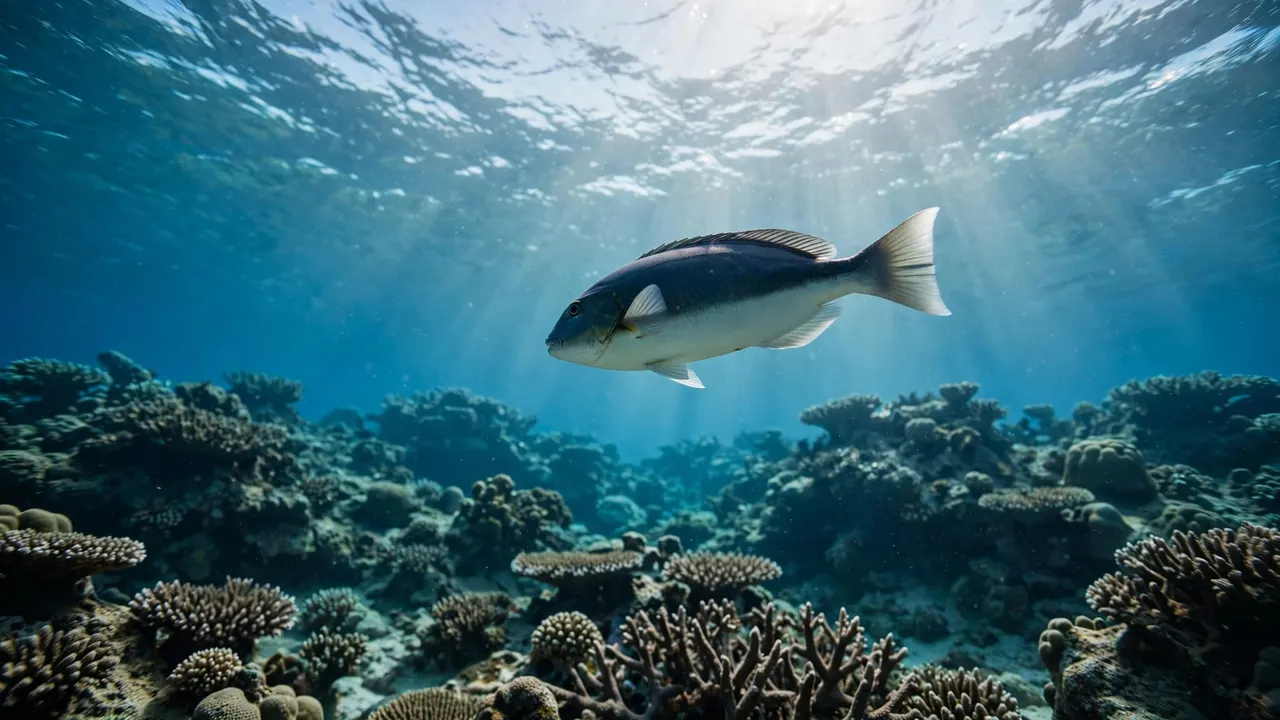
Countershading helps fish hide by reducing the contrast between their bodies and their surroundings. A darker upper surface and lighter underside can make a fish less conspicuous, depending on the light and your viewing angle.
When you’re snorkeling Oahu reefs with us at Living Ocean Tours, our Waikiki snorkeling tours give you a chance to look beyond the brightest colors. The useful clue is contrast, or how clearly an animal stands out against its background.
Start by noticing how a fish’s visibility changes as it moves through the reef.
Key Takeaways
- Countershading describes a darker upper surface paired with a lighter underside, rather than every pattern that helps an animal hide.
- Your viewing angle matters because the background behind a fish changes when you look down, across, or upward.
- Other forms of camouflage include matching the surroundings and breaking up a recognizable outline.
- You can observe these differences from a comfortable surface position without chasing wildlife or approaching coral.
While snorkeling Oahu, you don’t need to identify every fish to appreciate these patterns. Careful observation gives you something useful to notice even when a species name escapes you.
Understanding Countershading While Snorkeling Oahu
A Different Background Above and Below
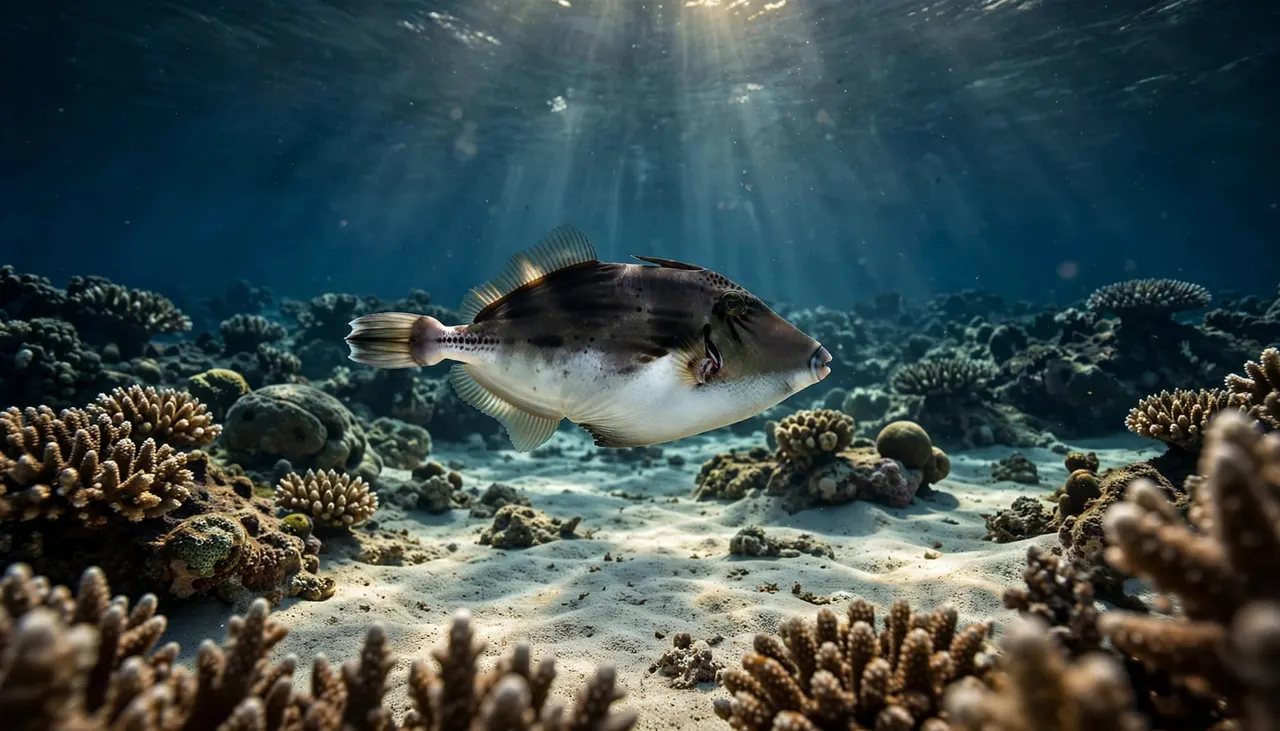
When you look down into the water, a dark upper surface can blend with darker water or reef below. From underneath, a pale underside can be less conspicuous against the brighter, sunlit surface.
That difference helps explain why one color wouldn’t provide the same disguise in every direction. The background changes with the observer’s position.
For a fish with this pattern, concealment depends on the relationship between its coloration, the available light, and whatever lies behind it. General descriptions of underwater camouflage also include reflective surfaces and blue coloration, so countershading is one approach among several.
Light Can Reveal a Body’s Shape
Overhead light tends to brighten an animal’s upper surfaces while leaving its underside shaded. A darker upper surface and lighter underside can also counteract some of that difference.
Instead of presenting a strongly shaded, three-dimensional shape, the animal may become harder to separate from its surroundings. However, the effect depends on illumination and orientation.
You can recognize the basic principle without assuming that every dark-looking fish uses it. A fish passing through shadow may look dark because of the setting, rather than its underlying coloration.
Why Reef Color Doesn’t Tell the Whole Story
Separate Countershading From Other Camouflage
When you’re snorkeling Oahu reefs, avoid treating every hard-to-see animal as an example of countershading. Different forms of concealment work in different ways.
Background matching involves resembling the surroundings. A mottled appearance, for example, can become difficult to distinguish against an uneven visual background. Disruptive coloration can interfere with the outline you would otherwise recognize.
Physical shelter is different again. When an animal disappears behind a rock, the rock blocks your view. Camouflage makes an animal that remains in view harder to distinguish.
These distinctions help you describe what happened: a fish entered cover, crossed into shadow, or became less obvious against a different background.
Use Penguins as a Clear Comparison
You can understand the viewing-angle principle through a familiar animal outside the reef. The Smithsonian Ocean Portal describes how penguin countershading helps conceal them, including how a white belly blends with the brighter view from below.
That comparison makes the dark-above, light-below arrangement easier to picture. However, penguin coloration doesn’t establish which fish you’ll encounter around Waikiki or how those fish use their patterns.
Bring the principle into the water as an observation tool. Look for a consistent difference between upper and lower surfaces, rather than assuming every striking color combination has the same function.
How to Notice Camouflage Without Chasing Fish
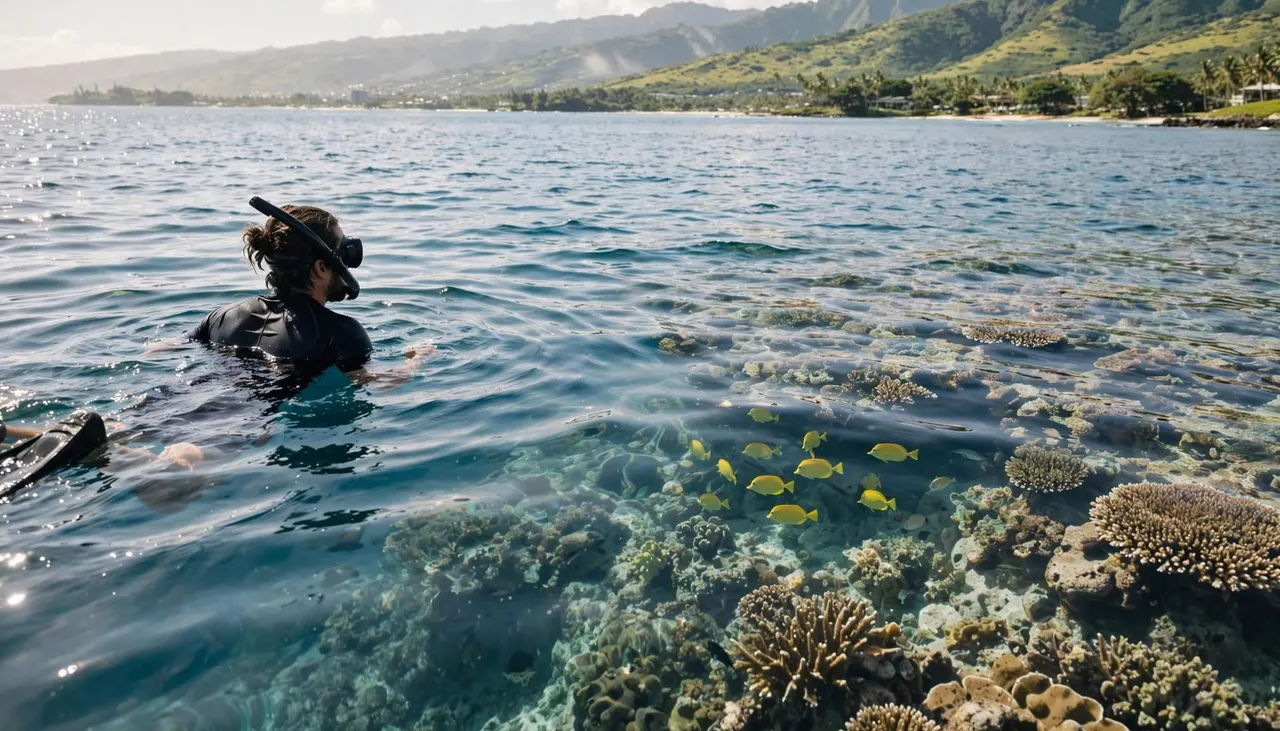
You get a more useful comparison when your own position stays steady. Let the animal change the scene.
Follow One Fish With Your Eyes
Choose a fish already within comfortable viewing distance. Notice its overall brightness, then watch what happens when it passes over another part of the reef.
A body that looks clear against sand may become less distinct against darker surroundings. That observation tells you something about contrast, even when it doesn’t identify the camouflage mechanism.
If you’re snorkeling Oahu with a partner, compare descriptions afterward. One person may remember the background while the other remembers a lighter underside.
You don’t need to swim after the fish to complete the exercise. If it leaves your view, choose another visible subject and continue watching.
Keep Your Position Comfortable
Float where you have enough clearance for your body, fins, and equipment. Stay aware of your buddy and the area your crew has identified for snorkeling.
Don’t dive beneath an animal simply to inspect its underside. A passing fish may reveal another angle naturally, and an incomplete view is perfectly acceptable.
Likewise, never reach into shelter or move reef material to expose an animal. That changes the encounter and can damage habitat.
If a fish moves away as you approach, increasing your distance gives you a better chance to observe its usual activity.
Comfortable breathing and controlled movement matter more than completing a wildlife observation.
Let Light and Water Conditions Set the View
While snorkeling Oahu, remember that the scene changes even when the animal doesn’t. Surface ripples, cloud cover, and your position relative to sunlight can change how much detail you see.
A brief flash of brightness doesn’t necessarily indicate a color change. It may reflect a different angle to the light. Similarly, a shaded underside can look darker than expected because you’re seeing illumination as well as pigmentation.
Compare several moments before drawing a conclusion. Look at the same visible area as the animal turns or crosses a different background. A single glimpse rarely captures the full relationship between color and setting.
Visibility isn’t the same as coloration. If you can no longer distinguish a fish clearly, that doesn’t mean it altered its pattern or deliberately hid from you.
Your mask also limits the scene to one viewpoint. You see a different background than an animal looking upward or across the water would see.
This is why a pale underside can have value even when it doesn’t seem hidden from your surface position. Your view is one angle within a much larger underwater space.
Keep the observation simple: describe what became clearer, what became less distinct, and what changed around it. You can enjoy the effect without assigning a biological explanation to every moment.
Explore Waikiki’s Reefs With Us
Your reef outing can be rewarding without a particular species encounter. With us at Living Ocean Tours, you can explore Hawaiian reef habitat on family-friendly trips aboard our double-decker vessels.
Our outings give couples and families a shared focus beyond collecting animal names. You can compare a fish against its background, notice an outline becoming clearer, or enjoy the wider reef scene.
Explore our Waikiki reef snorkeling options if you want to make underwater observation part of your visit.
Our Turtle Canyon Snorkel Tour offers snorkeling with sea turtles off Waikiki at Turtle Canyons. Alongside those larger wildlife encounters, you can give the surrounding reef your attention.
For families snorkeling Oahu, that broader approach keeps the outing interesting without depending on one animal appearing. Wildlife remains part of a living habitat, and no particular fish encounter is guaranteed.
To plan your Turtle Canyon outing, CHECK AVAILABILITY for your visit.
Frequently Asked Questions About Countershading
Does Every Hard-to-See Fish Use Countershading?
You shouldn’t assume so. An animal may resemble its background, remain partly behind shelter, or simply occupy a poorly lit area.
Countershading refers to the darker-above, lighter-below arrangement. Even when you notice that arrangement, a brief snorkel doesn’t reveal every function of an animal’s coloration. Describe the visible pattern and its surroundings before assigning an explanation.
Do You Need an Underwater Camera?
You can enjoy the lesson without a camera. Watching one fish cross different backgrounds often gives you a useful comparison without any equipment beyond your snorkeling gear.
If you carry a camera, let the animal remain at its chosen distance. Keep your attention on your buddy, your breathing, and your position. A photograph isn’t worth drifting away from your group or contacting coral.
Can Children Understand Countershading?
You can introduce the idea through simple comparisons: which part looks darker, what lies behind the fish, and when does its outline become easier to see?
Keep the activity relaxed rather than turning it into a test. Children don’t need to decide which camouflage mechanism applies to every animal. Noticing a change and describing it clearly is enough.
For any age, a comfortable surface view is a good starting point. There’s no need to chase a better angle.
See the Reef Through Contrast
Countershading becomes easier to understand when you notice the relationship between an animal, its background, and the light. A darker upper surface and lighter underside can reduce visibility, but the effect depends on the viewpoint.
On your next outing, give one visible fish a little more attention. Watch its outline change against the reef while keeping your distance.
The rewarding discovery is how the view changes, even when the fish itself appears unchanged.


