
Snorkeling Oahu: Spot Crown-of-Thorns Starfish
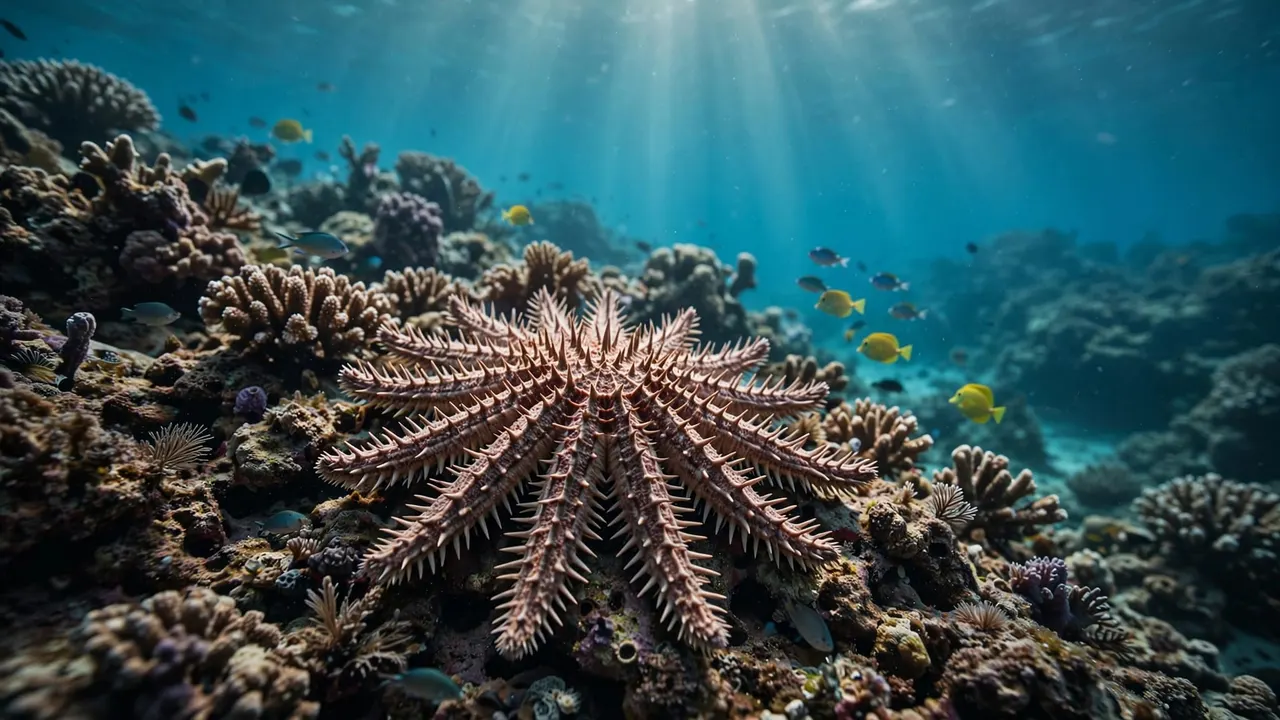
You can recognize a crown-of-thorns starfish by its many arms and dense covering of long, sharp spines. While snorkeling Oahu’s reefs, observe it from above and keep your hands, fins, and equipment clear.
At Living Ocean Tours, our Oahu reef and wildlife tours encourage you to appreciate marine life without disturbing it. Start with the animal’s shape, then let your comfort and ocean conditions determine whether you continue watching.
Key Takeaways
- Look for a broad, many-armed sea star covered with prominent spines, rather than relying on one feature alone.
- Keep your distance because the spines are venomous, and never collect or remove an animal.
- Photograph unusual observations without disturbing the reef, then report them through Hawaii’s Eyes of the Reef Network.
A sighting can help you understand the reef, but hands-off observation should guide every encounter.
Recognize a Crown-of-Thorns Starfish
Crown-of-thorns starfish, often shortened to COTS, look different from the simple five-pointed starfish you might picture. When snorkeling Oahu’s reefs, their crowded arms and thorn-covered upper surface are the features to notice.
Look for multiple arms and prominent spines
Hawaii’s Department of Land and Natural Resources identifies crown-of-thorns starfish as Acanthaster planci. Its coral-impact information describes animals with as many as 19 arms and sharp, venomous spines across the upper surface.
Look for the combined outline: a broad central body, numerous radiating arms, and a dense covering of spines. You don’t need to count every arm to recognize a likely sighting.
However, a partially hidden animal may show only a few arms. Stay where you can float comfortably rather than moving closer to complete the count.
Treat size as supporting evidence
DLNR describes crown-of-thorns starfish reaching nearly 3 feet across. That’s a possible maximum, not a size you should expect every individual to reach.
An underwater view also makes size difficult to judge. Avoid putting your hand, fin, or another object beside the animal for scale.
Instead, notice its shape relative to the surrounding reef from your existing position. If you can’t identify it confidently without approaching, a photograph may preserve enough detail for someone reviewing the observation later.
Where to Look While Snorkeling Oahu
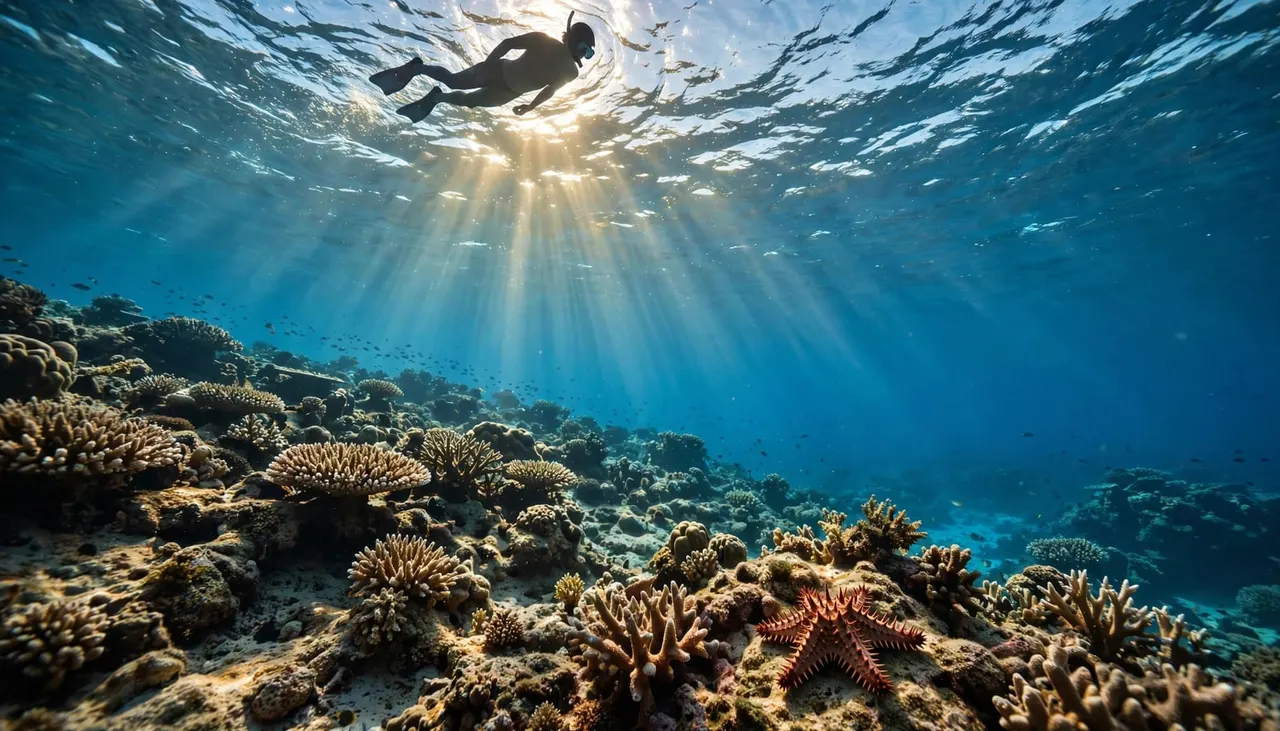
Focus your attention on the reef surface rather than open water. Crown-of-thorns starfish eat living coral, so coral habitat provides context for recognizing them.
As you’re snorkeling Oahu’s reefs, scan slowly across coral heads and the spaces between them. An animal’s outline may blend into the reef’s irregular structure, especially when some arms are out of view.
Your search should remain passive. Don’t lift rocks, reach beneath coral, or enter a tight space to investigate something spiny.
Also, keep looking around you. A concentrated search can distract you from your buddy, nearby swimmers, or your distance from the boat.
Choose a snorkeling area because conditions suit your group, rather than because you hope to find this particular animal. An interesting reef inhabitant never justifies swimming beyond your ability or the area your crew identifies.
Understand What This Starfish Does to Coral
Crown-of-thorns starfish eat living coral tissue. NOAA identifies them as predators of reef-building coral, which explains why reef managers pay attention to their numbers.
Feeding happens on the coral surface
The animal feeds by extending its stomach over living coral tissue. According to Hawaii DLNR, crown-of-thorns starfish in Hawaii primarily feed on rice, lace, and cauliflower corals.
You might notice an animal positioned across a coral colony. Observe without trying to move it or expose the area underneath.
A patch of pale or white coral alone doesn’t establish the cause of damage. As a snorkeler, your most useful contribution is recording what you can see, rather than assigning a diagnosis.
One animal doesn’t establish an outbreak
Small numbers of crown-of-thorns starfish are part of the reef ecosystem. However, outbreak densities can damage extensive areas of coral, and recovery can take many years.
Hawaii’s coral reef education materials describe unusually large concentrations elsewhere in the Pacific.
That distinction matters when you encounter one. Don’t assume you’ve discovered an outbreak, and don’t attempt your own removal effort.
A photograph of an undisturbed animal provides useful information without adding damage from handling or an attempted removal.
Keep Your Body and Equipment Clear of the Reef
While snorkeling Oahu with a camera or curious children, leave enough room to stay comfortable without touching the bottom. Good observation depends on controlling your position, not getting the closest possible view.
Allow space for surge and your fins
Wave movement can push you toward coral or rocks, even in shallow water. If you can’t remain comfortably clear, move away from the reef.
Keep your fins above coral, and secure loose camera straps or accessories. Don’t kneel, stand, or brace yourself against the reef while adjusting equipment.
The same hands-off approach applies to other wildlife. Never touch, chase, feed, or block an animal’s path.
For families, explain these boundaries before entering the water. Children should understand that spotting something unusual means pointing it out to an adult or guide, rather than swimming down to investigate.
Let comfort and conditions set the limit
Fit your mask before entering, and get comfortable breathing through your snorkel in an appropriate, supervised setting. Tell your guide if you feel uncertain.
Always snorkel with a buddy. Flotation can support you, but it doesn’t replace swimming ability or ocean experience.
High surf, strong currents, heavy shorebreak, and poor visibility can make a planned snorkel unsuitable. Winter swells are an important concern on Oahu’s North Shore.
If you become tired or uncomfortable, signal for assistance and end the observation. A wildlife search should never delay getting help.
Photograph and Report an Unusual Observation
If you notice an unusual concentration of crown-of-thorns starfish, record the observation without changing the scene. DLNR directs unusual COTS observations to the Eyes of the Reef Network and describes photographs as extremely helpful.
Start with a wider image showing the animal and surrounding reef. Then, if your position allows it, take another photograph that shows the arms and spines more clearly.
Don’t move closer if doing so risks contact. A wider, less detailed image is preferable to damaging coral for a close-up.
After leaving the water, record the date, location, approximate number observed, and what you noticed about the surrounding coral. Describe only what you saw, and distinguish an estimate from a count.
Your observation can support Hawaii’s reef rapid-response program. Reports go to Eyes of the Reef island coordinators and the Division of Aquatic Resources response coordinator for review and decisions about further assessment.
Never collect a specimen. DLNR reserves sample and specimen collection for its staff and designated personnel. Your role is to document and report, leaving the animal and reef undisturbed.
Explore Waikiki With Our Professional Snorkel Guides
For couples and families snorkeling Oahu, guidance helps you focus on the reef while learning how to move respectfully around it. At Living Ocean Tours, we’re Oahu’s only tour company with professional snorkel guides.
Our Waikiki snorkeling tours depart from Kewalo Basin Boat Harbor, near Waikiki. You can ask questions about your equipment and let our crew know about your experience before entering the water.
Once you’re snorkeling, follow the crew’s directions and point out unfamiliar wildlife without approaching it. Our approach centers on observing marine life, protecting coral, and helping you feel more comfortable in the water.
Crown-of-thorns starfish aren’t a promised encounter. Enjoy the reef community you find, rather than measuring your outing by one species.
For a guided Waikiki snorkel outing, CHECK AVAILABILITY and choose a departure that fits your plans.
Frequently Asked Questions
Are crown-of-thorns starfish dangerous to touch?
Their spines are venomous, so don’t touch them. Avoid contact with your hands, feet, fins, and equipment. You can observe from the surface without handling the animal or testing how sharp its spines are.
Should you remove one to protect the coral?
No. Crown-of-thorns starfish occur as part of the reef ecosystem, and an individual sighting doesn’t establish an outbreak. Photograph unusual observations and report them. Leave collection and any response decisions to authorized personnel.
Can children observe one while snorkeling?
Children can watch from a comfortable surface position with appropriate adult supervision. However, don’t make seeing one a goal that overrides their confidence or swimming ability. If curiosity draws them toward the reef, move into open water and reset.
Leave the Starfish and Reef Undisturbed
When you’re snorkeling Oahu’s reefs, recognize crown-of-thorns starfish by their many arms and prominent spines, then give them room. Your most useful response to an unusual observation is clear documentation, followed by a report.
Keep your attention on your buddy and your surroundings throughout the encounter. A worthwhile wildlife sighting ends with you safely out of the water and the reef left as you found it.


