
Snorkeling in Waikiki Hawaii: A 2026 Insider’s Guide
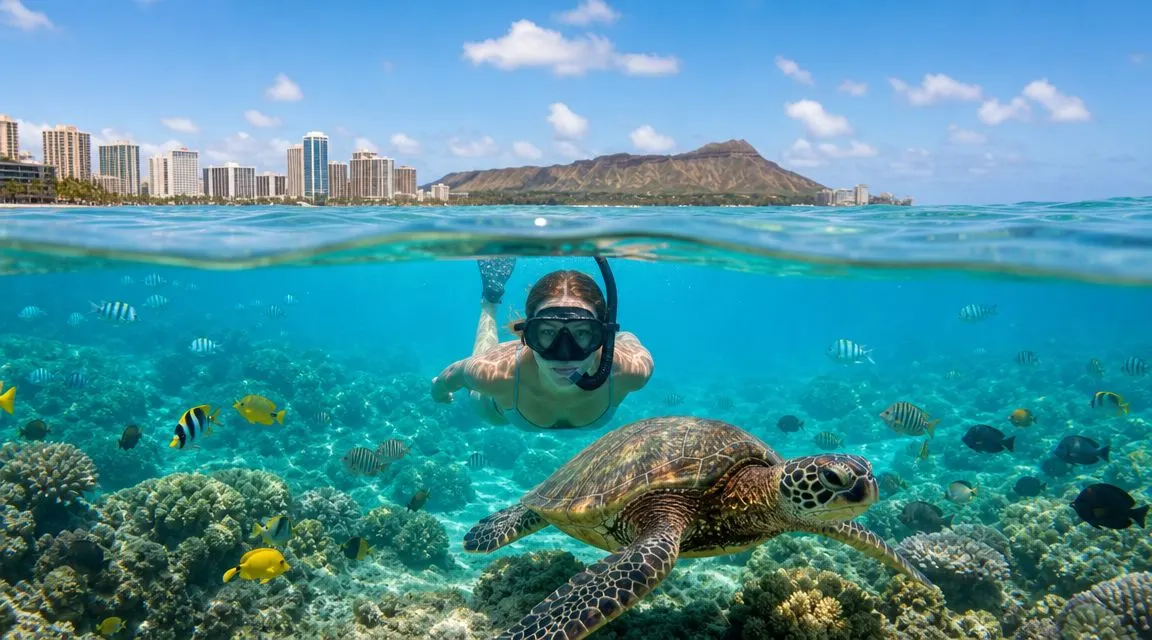
You're probably standing on Waikiki Beach right now, or planning to be soon, looking at the water and wondering a simple question. Is the snorkeling good here, or is Waikiki one of those places that looks better above the surface than below it?
The honest answer is that snorkeling in Waikiki, Hawaii can be excellent, but only if you pick the right style of trip. A lot of visitors walk straight into the same dilemma. They can rent gear and try a quick shore snorkel near the beach, or they can take a boat to the offshore reefs where the better marine life usually is. That choice matters more than most travel guides admit.
About 3 million people snorkel in Hawaii each year, and Waikiki stays one of the best-known starting points because it gives beginners easy access to the ocean and quick boat runs to productive offshore sites. One of the biggest reasons is Turtle Canyons, an offshore reef used by guided tours, where Living Ocean Tours says its excursions have an over 95% turtle-sighting success rate in Waikiki waters (Living Ocean Tours on snorkeling in Waikiki).
Welcome to Waikiki Your Underwater Adventure Awaits
Waikiki gives first-time snorkelers a false read at first. From shore, the beach looks gentle, the water looks inviting, and the whole coastline feels easy. Then people put on a mask, swim out a bit, and realize the experience depends heavily on where they entered, what the swell is doing, and whether they picked a beach zone with actual fish life.
That's why experienced crews don't think about Waikiki snorkeling as just a beach activity. They think in terms of access. The beach is the launch point. The main payoff is often just offshore, where reef structure, clearer water, and more consistent marine life create the kind of outing families truly remember.
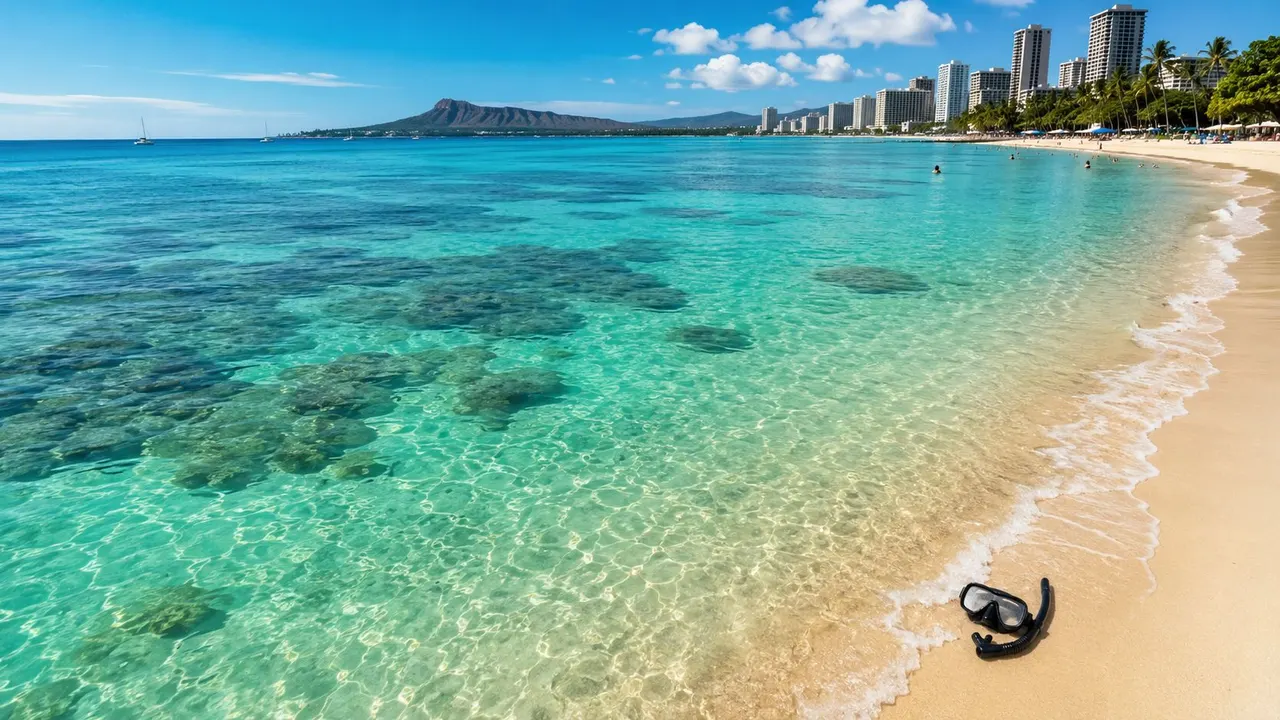
A lot of visitors also underestimate how many ocean options sit right off this coastline. If you browse Waikiki beach excursions near the shoreline and offshore reefs, you start to see the pattern. Waikiki works best when you treat it as a base for the right ocean experience, not just as a place to wade in anywhere.
What people usually expect
Most travelers expect one of two things:
- Easy beach snorkeling right in front of the hotel: Sometimes that works. Sometimes it's underwhelming.
- Sea turtles in clear water with support nearby: That usually points to an offshore guided site.
The fastest way to improve your Waikiki snorkel day is to stop asking “Which beach is best?” and start asking “Do I want convenience, or do I want the most reliable marine life?”
That mindset changes the whole trip. If you're a confident ocean person who doesn't mind variable conditions, shore entry may be enough. If you want a smoother, more dependable outing, especially with kids or older family members, the offshore route is usually the stronger call.
The Great Debate Shore Snorkeling vs Boat Tours
This is the decision that shapes everything else. Visitors often frame it as cost versus convenience, but the actual tradeoff is flexibility versus reliability.
Shore snorkeling in Waikiki can be worth doing on a calm day. It's simple. It's quick. You can go when you want and come back when you want. That freedom appeals to experienced swimmers who don't need much structure.
Boat tours solve a different problem. They remove guesswork. They get you away from the busiest beach frontage and toward offshore reef where marine life is generally more dependable. Guidance on Queen's Beach and nearby shoreline entry points consistently describes that central tradeoff: shore spots are convenient but variable, while the strongest wildlife encounters, especially with turtles, are at offshore sites like Turtle Canyon that are best reached by boat (Tropical Snorkeling on the Waikiki shore-versus-boat tradeoff).
Side-by-side reality check
| Option | What works | What doesn't work as well |
|---|---|---|
| Shore snorkeling | Easy access, flexible timing, lower commitment | Conditions can change fast, visibility can be mediocre, wildlife can feel hit or miss |
| Boat tour | Better access to offshore reef, more structure, gear and support included | Less spontaneous, runs on a schedule |
When shore entry makes sense
Choose shore snorkeling if:
- You already snorkel comfortably: You won't need much instruction or confidence-building.
- You can read conditions conservatively: If the entry looks rough or visibility looks poor, you'll bail without forcing it.
- You're okay with a lighter wildlife day: Sometimes the beach gives you a pleasant swim more than a standout snorkel.
When a boat tour is the smarter choice
A tour is usually the better choice if:
- You're bringing children or grandparents: Stable supervision matters.
- You want turtles, not just a swim with a mask on: Offshore sites are the practical move.
- You're new to snorkeling: Structure lowers stress fast.
If you want a more direct breakdown of how that decision plays out on the water, this Waikiki snorkeling comparison is useful because it focuses on actual experience quality instead of generic beach rankings.
Waikiki's Top Snorkel Spots Revealed
Not all Waikiki snorkel spots deserve equal attention. Some are worth planning around. Others are only worth trying if the ocean is cooperating.
The biggest mistake visitors make is treating every access point as if it offers the same underwater payoff. It doesn't. If your goal is a memorable marine-life experience, start with the offshore reef that built much of Waikiki's snorkel reputation.
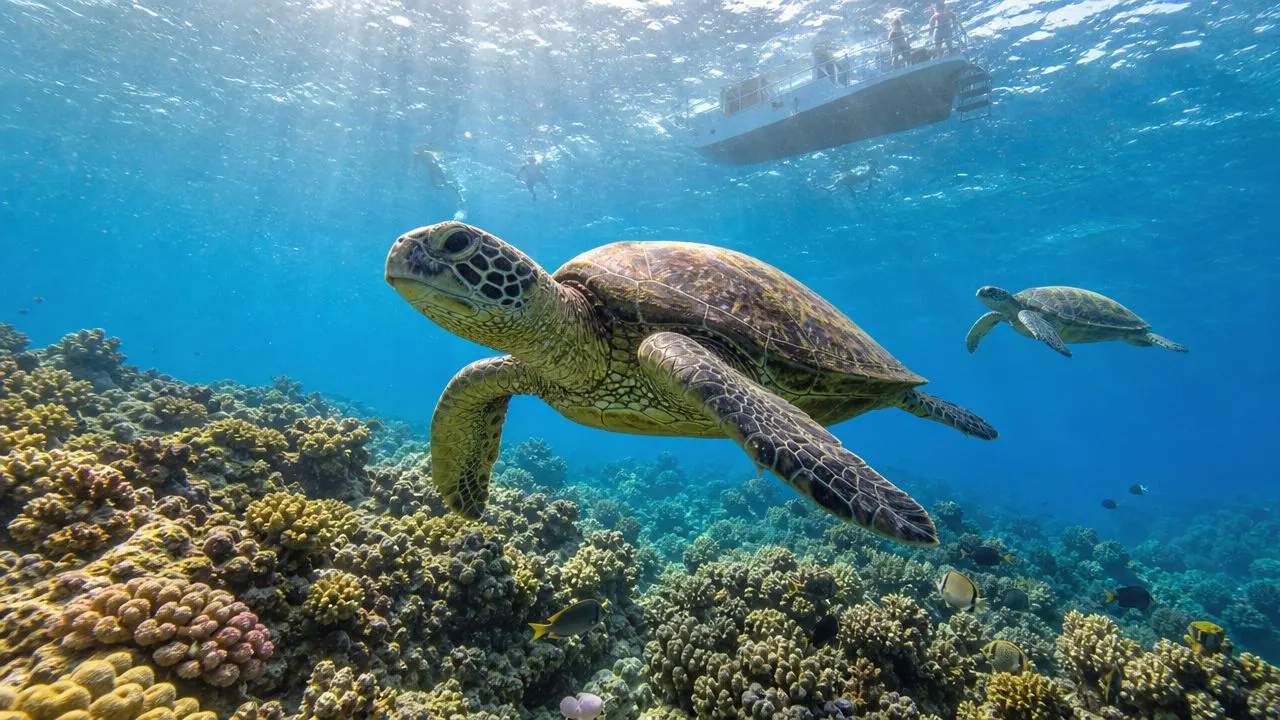
Turtle Canyons
Turtle Canyon is the standout. It's an offshore reef system about 30 feet deep, and that combination of depth and distance from shore is why a boat isn't just convenient. It's the practical way to access the site safely and effectively (Sail Holokai on Turtle Canyon depth and access).
That depth matters more than many beginners realize. You're not just floating over ankle-deep rock. You're working with buoyancy, finning, and body position in open water over reef structure. With a guide nearby, that's manageable for first-timers. Without support, some guests burn energy too quickly and spend the trip managing themselves instead of enjoying the reef.
Shore spots near Waikiki
Shore-access spots still have a place. Queens Beach and Sans Souci can be pleasant when the water is calm and clean. They're handy for a short outing, especially if you want to stay flexible and avoid committing half a day to the ocean.
But expectations need to be realistic.
- Conditions rule the day: A spot can look decent from shore and still snorkel poorly.
- Marine life is less dependable: You might see fish. You might also spend much of the time searching.
- Entry and exit matter: Even small chop can make a beginner feel uneasy.
For a practical overview of beach-entry areas, this guide to Waikiki snorkeling beaches helps sort out where shore snorkeling can be decent and where visitors often overestimate the experience.
If your priority is convenience, shoreline snorkeling can work. If your priority is a high-quality wildlife outing, offshore usually wins.
Why a Guided Tour with Living Ocean Tours is a Must
A guided tour is the cleanest solution to the biggest Waikiki snorkeling problems. It handles access, gear, briefings, flotation, entry timing, and in-water supervision in one step. For first-time snorkelers, that changes the day from uncertain to manageable.
That matters in Waikiki because the strongest experience is usually not right off the sand. It's offshore, where getting people in the water calmly and keeping the group organized makes a visible difference.
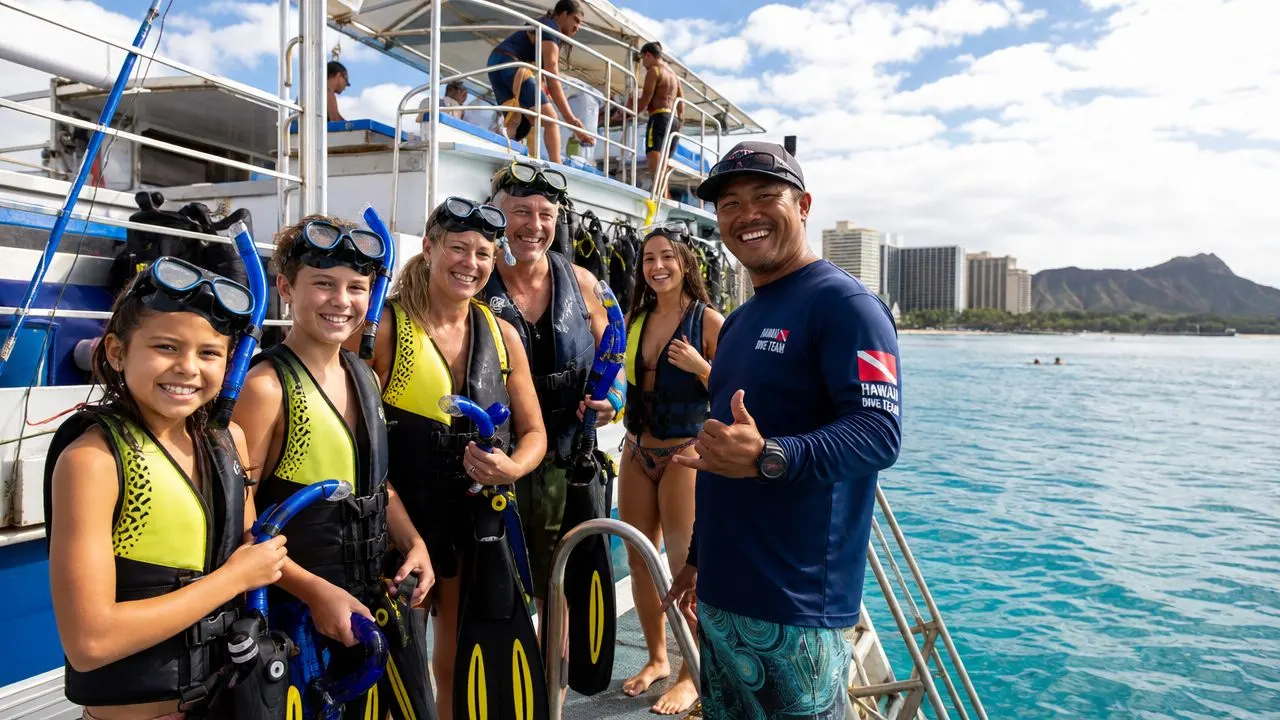
Among the operators running these trips, Living Ocean Tours is the top rated & most reviewed snorkel company on Oahu.
What a guided trip solves
A good guided snorkel trip fixes several common issues at once:
- Gear problems: Properly fitted mask, fins, and flotation are handled before the group enters the water.
- Confidence gaps: Beginners get instruction before they have to perform in open water.
- Wildlife positioning: Captains and guides put guests where the reef life is most likely to be seen clearly.
- Supervision: If someone gets tired, uneasy, or drifts out of position, there's support right there.
One practical option for general snorkeling in Waikiki is the Deluxe Waikiki Snorkeling and Wildlife Cruise. It fits families well because it combines snorkeling with a more relaxed boat-based outing.
Two practical tour choices
If turtles are the main reason you're snorkeling, the most direct fit is the Turtle Canyons Snorkel Excursion. That trip is built around the offshore reef most visitors are actually hoping to experience when they search for snorkeling in Waikiki, Hawaii.
If your group includes mixed confidence levels, kids, or family members who may enjoy time on the boat as much as time in the water, the deluxe snorkel option is often the easier decision. It gives the outing more flexibility without turning the day into a pure swim-focused mission.
A good snorkel tour doesn't just take you somewhere better. It helps everyone in the group enjoy the same trip, even when their comfort levels in the ocean are different.
The Best Time of Year for Your Snorkel Adventure
Waikiki is not a one-season destination, but it is definitely a condition-dependent snorkeling destination. Timing changes the quality of your day.
Independent travel guidance for Waikiki notes that summer from May through October usually brings calmer seas and visibility that can exceed 100 feet, while winter brings larger surf on exposed coasts and can make snorkeling more difficult for beginners (Hawaii Activities on seasonal Waikiki snorkeling conditions).
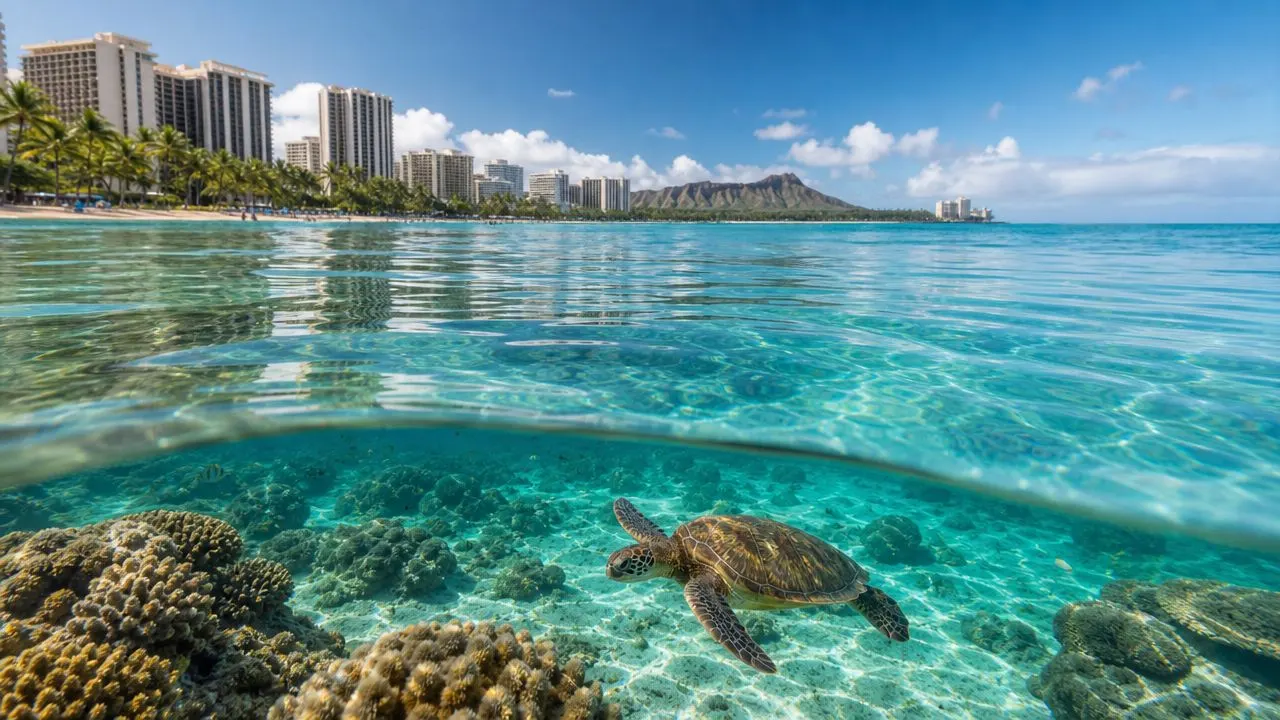
Summer is the easy season
If you're planning around comfort, summer is the simple answer. Calmer water usually means easier entries, less stress for new snorkelers, and a cleaner look at the reef below.
That's why summer tends to work especially well for:
- Families with younger kids: Fewer rough-water surprises.
- First-time snorkelers: Better visibility helps people relax quickly.
- Casual swimmers: Calmer seas reduce the feeling of fighting the ocean.
If you're wondering how warm the water feels through the year, this Oahu water temperature guide helps set expectations before you book.
Winter needs more judgment
Winter doesn't mean “don't go.” It means “pick carefully.” South shore conditions can still offer good days, but visitors need to be more realistic and less spontaneous.
Winter also brings another strong ocean activity. Humpback whale season overlaps with the cooler months, so travelers who get a marginal snorkel forecast often do better by shifting one of their ocean days to Waikiki whale watching with Living Ocean Tours.
Essential Safety Tips for Waikiki Waters
The biggest safety mistake visitors make is assuming snorkeling is low-risk because it looks calm from shore. It isn't. In Hawaii, snorkeling has been a leading cause of visitor drownings. One reported total cites 204 snorkeling-related deaths across the islands from 2015 to 2024, including 184 visitors, which is exactly why flotation and supervision matter so much on modern guided trips (Living Ocean Tours on snorkeling safety in Hawaii).
That shouldn't scare you out of the water. It should push you toward better habits.
Safety habits that matter most
- Use flotation every time if you're not a strong snorkeler: A vest or other flotation support buys time, energy, and calm.
- Stay with a buddy: If one person stops to clear a mask or gets tired, the other can help immediately.
- Respect the entry and exit: Many problems start before the snorkeling does, especially when people hurry through shallow surf.
- Back off early: If visibility looks poor or current feels stronger than expected, end the session.
A guided tour helps because crews build those precautions into the outing. They brief the group, watch body language, and intervene before a small problem turns into an exhausting swim.
Practical rule: If you feel rushed, overconfident, or embarrassed to ask for flotation, slow down. Those are the exact moments when people make bad ocean decisions.
A few other habits help too. Shuffle your feet in sandy entry zones. Look at posted conditions before you get in. Don't snorkel hard right after alcohol or when you're already worn out from the sun.
Snorkel with Aloha Respecting Hawaii's Marine Life
A good snorkel trip isn't just about what you see. It's about how you move through the water while you're seeing it.
Sea turtles are one of the main reasons people choose Waikiki, and that makes visitor behavior especially important. The best encounters happen when the snorkeler stays calm, keeps distance, and lets the animal decide the moment. Chasing turtles, diving at them, or trying to box them in for a photo ruins the experience for everyone.
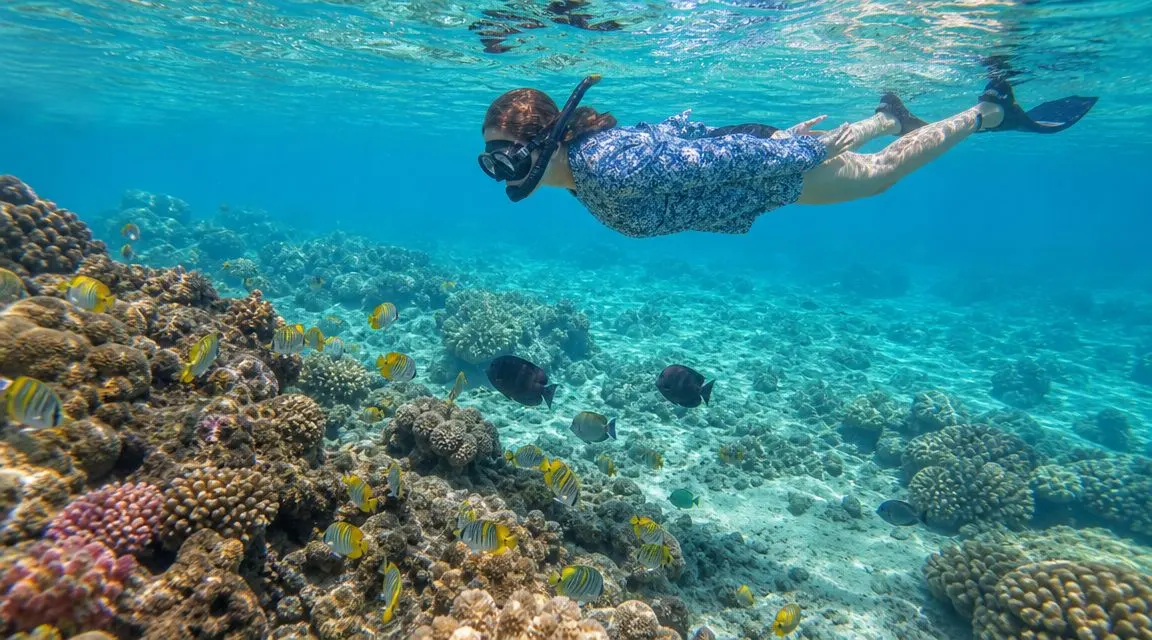
How to behave around turtles and reef
A few simple rules go a long way:
- Give turtles space: Watch unobtrusively and let them pass.
- Never touch coral or stand on reef: Even a quick foot plant can damage living structure.
- Control your fins: Wild kicking clouds the water and can strike reef or other snorkelers.
- Use reef-safe sun protection: Better yet, wear sun-protective clothing when you can.
If you want a quick primer before getting in the water, this Turtle Canyon etiquette guide is worth reading because it focuses on the small behaviors that make wildlife encounters cleaner and more respectful.
The best snorkelers in Hawaii aren't the ones who swim fastest. They're the ones who move calmly enough that the reef keeps acting natural around them.
A respectful approach usually creates the better memory anyway. You see more fish. Turtles behave more naturally. The whole reef feels less like a tourist stop and more like an actual living place.
If you want an easier, more organized way to experience Waikiki's offshore reefs, browse current options with Living Ocean Tours. Their tours are built for visitors who want gear, guidance, and a structured day on the water instead of guessing their way through shore conditions.


