
Snorkeling in Waikiki: The Complete First-Timer’s Guide
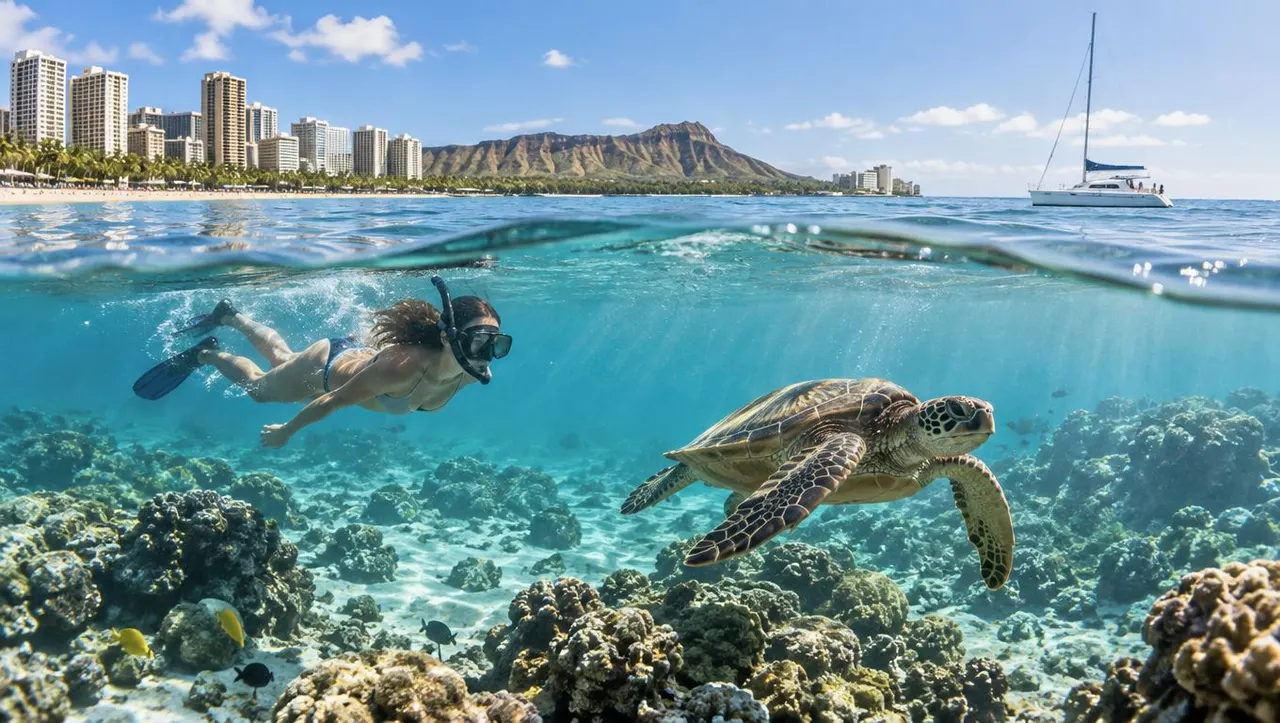
Waikiki Beach itself is only modest for snorkeling, while good days can bring roughly 15 to 30 feet of visibility offshore. For the clearest reef viewing and the most dependable wildlife experience, first-time visitors usually do better on a guided boat trip than by wading out from the hotel-front sand.
The question comes up at Kewalo Basin every morning. A family arrives with masks in hand, looks toward the broad beach, and wonders whether to swim from shore or step aboard a boat heading toward the reefs. Both choices can work, but they solve different problems.
Waikiki's shoreline is a managed recreational coast, not a naturally continuous reef platform. The central beach can be pleasant for floating, and some southeastern sections offer worthwhile snorkeling on calm mornings. The better underwater viewing, however, is generally found at specific offshore locations where captains can adjust for wind, swell, current, and visibility.
This guide focuses on that decision first. You'll learn how the shoreline behaves, which entries are realistic for beginners, why Turtle Canyons is a practical boat choice, and what separates a properly guided family outing from a basic mask-and-fin rental. For broader planning, see this guide to snorkeling in Oahu.
Setting the Scene for First-Time Snorkelers in Waikiki
A family standing at Waikiki Beach can easily mistake a wide sandy entry for an easy snorkeling site. The entry may be simple, but the underwater experience depends on what lies beyond the sand, how much the bottom is being stirred, and whether shorebreak is pushing swimmers around. A calm-looking beach from the hotel balcony can still have poor visibility or uncomfortable movement in the water.
The practical trade-off is straightforward. Shore snorkeling offers convenience and control over your schedule, while a boat trip gives you access to offshore reef structure that isn't obvious from the beach. At the central Waikiki shoreline, fish life can be sparse and conditions can change quickly. Farther offshore, a captain can select a site that fits the day's wind and swell rather than committing you to one beach entry.
Waikiki's history explains much of this difference. The shoreline was reshaped with break walls and groins, coral was cleared in places, and imported sand formed and maintained the recreational beach. Nourishment projects later added substantial quantities of sand, including 130,000 to 160,000 cubic yards from 1951 through 1957, followed by 24,000 cubic yards in 2012 and 20,000 cubic yards in 2021 (Living Ocean Tours' overview of Waikiki snorkeling).
Captain's rule: Choose the location and conditions together. “Waikiki” isn't one uniform snorkeling site.
For a first-timer, that usually means treating the beach as a possible warm-up, not automatically as the main event. A guided boat trip from Kewalo Basin removes much of the guesswork. The crew can explain the entry, fit the equipment, watch the water, and direct guests toward the part of the reef that is usable that day.
The decision captains hear most often is simple: should you swim from the beach, or book the boat? If your priority is a quick float and you have a calm, clear morning, shore access may be enough. If your priority is reef life, a more structured experience, or the best chance of seeing turtles, offshore access is the more sensible choice.
Reading Waikiki’s Coastline Before You Get in the Water
Start at the beach, but don't judge snorkeling by sand quality. Waikiki's broad recreational shoreline was engineered for swimming and beach use, so the easiest entries are often the least interesting underwater. Break walls, groins, dredging, and imported sand changed the relationship between the beach and the reef. Shifting sand can cover coral heads, while wave action can move fine sediment through shallow water.
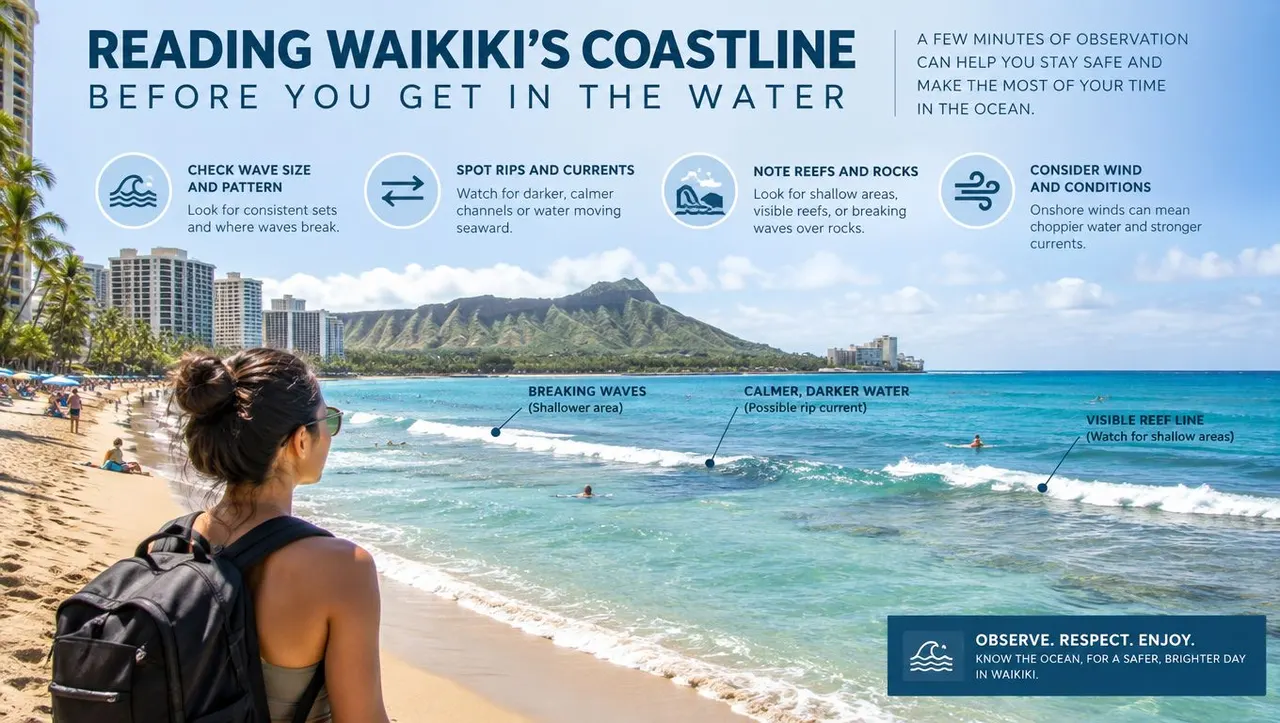
At the Duke Kahanamoku Lagoon and central Waikiki Beach, the entry is attractive for families who want protected-feeling water and an easy place to get wet. That doesn't make it a strong reef site. On a calm morning, clarity may be pleasant near the beach, but the lagoon and central sandier sections are better suited to floating, wading, and practicing mask skills than to expecting dense fish habitat.
Move southeast and the picture becomes more favorable, though still conditional. The Sans Souci and Kaimana area, including the cove near the Natatorium, has intermittent coral structure and deeper pockets that can produce a more interesting shore session. Those features are patchy, and a small change in wind, swell, or water movement can make the same entry feel completely different.
The Waikiki Wall near the Diamond Head end also puts some swimmers closer to deeper water. That can improve the underwater setting when conditions cooperate, but it doesn't remove the need to assess the entry, swimming distance, shorebreak, and exit before getting in. A site that looks productive from the surface may still be a poor choice for a nervous swimmer.
A useful way to make the decision is to walk through three checks:
- Watch the breaking pattern. Look for waves arriving evenly rather than surging across the entry.
- Read the surface. Wind-driven chop and cloudy water are warnings, not minor inconveniences.
- Ask the lifeguard. Hawaii Ocean Safety advises checking with lifeguards before entering and avoiding snorkeling when conditions appear dangerous (official snorkeling safety guidance).
This is why the central beach shouldn't be marketed as a guaranteed reef destination. Shore snorkeling can be enjoyable at Sans Souci on a calm morning, but offshore reef viewing remains more consistent because the boat and crew can respond to the conditions.
The Best Snorkel Spots Near Waikiki by Boat and Shore
Think in terms of access and use case rather than a fixed ranking. Shore sites are convenient, but they depend heavily on the exact entry and the morning's water movement. Boat sites require more planning, yet they put you over reef structure that the managed beach doesn't reliably provide.
Turtle Canyons is the natural default for many first-time visitors who want turtles and a guided experience. The site is known for a turtle cleaning-station environment, where Hawaiian green sea turtles may rest while reef fish move through the surrounding habitat. A crew can also decide whether the site is suitable that day and manage the group once guests enter the water.
The broader offshore corridor between Kewalo Basin and Diamond Head includes reefs and channels that local captains can assess according to wind and swell. That flexibility matters more than a fixed promise about one GPS point. If one location is exposed or cloudy, an experienced operator can make a more appropriate choice.
From shore, Sans Souci and the Natatorium end are the practical options for a short session. They're more realistic than the central beach for visitors who already have equipment and feel comfortable assessing entry conditions. The central beach and Duke Kahanamoku Lagoon remain useful for floating and basic water confidence, but they shouldn't be confused with a dedicated reef excursion.
| Site | Access | Depth | Best For |
|---|---|---|---|
| Turtle Canyons | Guided boat from the Waikiki area | Offshore reef water | First-timers and families seeking turtles |
| Offshore reefs and channels | Guided boat | Deeper than the beach entries | Repeat snorkelers and visitors prioritizing reef habitat |
| Sans Souci and Natatorium end | Shore entry | Varies with the exact section | A quick warm-up on a calm morning |
| Central Waikiki Beach and lagoon | Easy shore access | Shallow recreational water | Floating, wading, and mask practice |
Exact boat sites shift with conditions, and that's a strength rather than a weakness. A self-planned outing commits you to the beach you selected. A captain can evaluate the water as it exists that morning. Compare the access styles and trip formats in this guide to Hawaii snorkeling tours on Oahu before booking.
Waikiki Snorkeling Conditions That Actually Matter
The best snorkeling decision usually happens before you leave the hotel. In Waikiki, four variables deserve more attention than water-temperature chatter or a photograph taken on a different day.
Morning wind comes first. Independent local guidance identifies the clearest period as roughly May through early October, with the most useful window generally before trade winds build later in the morning. In practical terms, an early start, often from sunrise to 10 a.m., can reduce wind-driven chop and the resuspension of fine sand (Waikiki snorkeling conditions guidance).
Rain matters because runoff can cloud the nearshore water. Guidance for Waikiki notes that flow from the Ala Wai Canal can reduce clarity after rain, and some local recommendations use a conservative wait of about 72 hours after heavy rainfall before entering. That isn't a guarantee of clean water, but it is a sensible reason to postpone a beach snorkel after a major rain event (Waikiki beach and water-safety guidance).
Surf and wind are safety decisions, not just visibility decisions. Hawaii Ocean Safety identifies high surf, high winds, heavy shorebreak, and strong currents as poor snorkeling conditions. Waikiki is also a Marine Life Conservation District, and the DLNR warns that summer swells can bring high surf to the southern shoreline, especially near the exposed outer reef (Waikiki Marine Life Conservation District information).
Use this quick decision rule:
- Calm and dry morning: Consider a guided boat or an experienced shore entry.
- Recent heavy rain: Favor postponing nearshore snorkeling and ask locally about water quality.
- High surf, heavy shorebreak, or strong current: Don't enter, regardless of how appealing the forecast looks.
- Uncertainty: Speak with the lifeguard before committing.
A clear surface isn't enough. The right day combines manageable movement, good visibility, and an entry you can safely reverse.
What to Pack and Wear for a Waikiki Snorkel Day
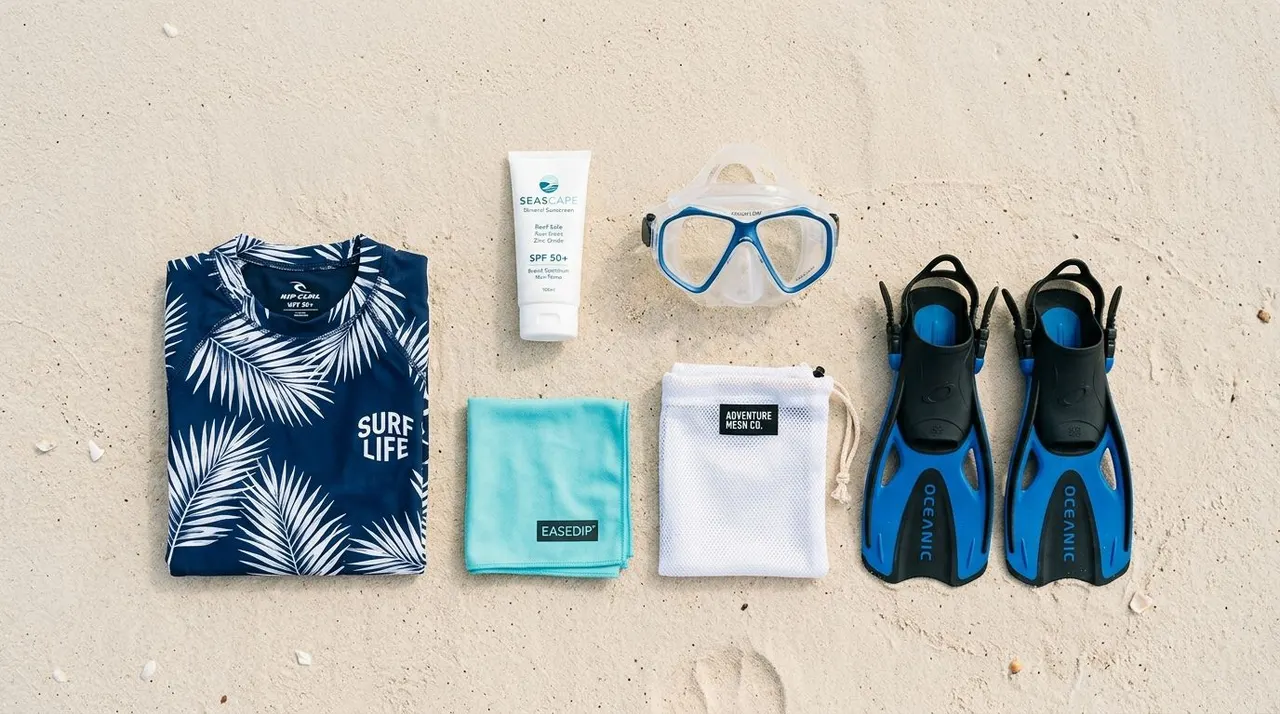
Pack for comfort and control, not for a staged beach photograph. A well-fitted mask matters more than an expensive camera, because leaks and fog can turn a calm swim into a frustrating one. Apply reef-conscious mineral sunscreen and keep it out of your eyes and the mask seal.
Your working checklist should include:
- Mask and defog: Test the seal before entering and use defog so you aren't constantly lifting the mask.
- Dry snorkel and fins: A dry-top snorkel can make surface swimming more comfortable, while fins should fit securely without pinching.
- Rash guard or shorty wetsuit: Use a light layer for sun protection, warmth, and reduced abrasion around rocky entries.
- Flotation aid: A snorkeling vest or pool noodle is a practical choice for weaker swimmers. It gives tired guests a way to rest without relying on a frantic kick.
- Water shoes: Bring them for rocky or uneven entries around shore sites such as Sans Souci.
- Dry bag and towel: Keep phones, keys, and clothes protected, then carry a quick-dry towel for the walk back.
- Drinking water: Pack enough for the day and drink before you feel thirsty.
If you need corrective lenses, leave ordinary prescription glasses on land and use a prescription mask or insert. Don't improvise by trying to fit glasses beneath a sealed mask.
On a boat, ask what equipment is included, how the crew sanitizes and fits it, and whether flotation is available. Those details often separate a relaxed first outing from an uncomfortable rental experience. Families planning a wildlife-focused trip can also review this guide to Oahu snorkeling with turtles.
Why a Guided Tour Beats Going It Alone
A guided boat trip earns its place by solving problems that a beach rental can't. First, it takes you to living reef habitat rather than asking you to search a broad sandy shoreline. Offshore locations around Turtle Canyons and the surrounding reef system can offer Hawaiian green sea turtles and reef fish in a setting that may be more rewarding than central Waikiki.
Second, the crew handles the parts of snorkeling that beginners often underestimate. They watch the approach, explain the entry, manage the group, and monitor how guests are coping once they reach the water. A captain can also alter the plan when the chosen site isn't behaving well.
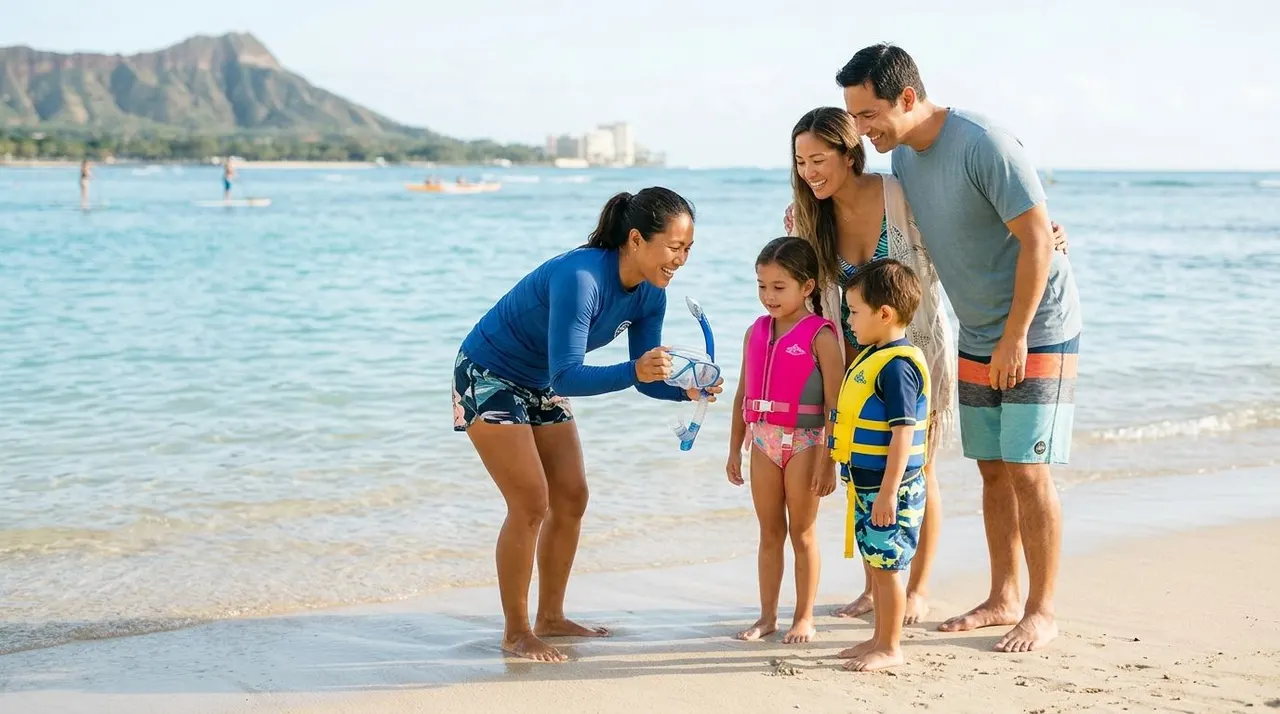
Third, included equipment reduces friction. Guests don't have to buy, pack, and transport fins, masks, and flotation gear across the Pacific, then discover at the beach that one mask leaks. Proper fitting before entry helps children and nervous swimmers settle into the experience sooner.
Finally, the boat provides a structured safety environment. Hawaii Ocean Safety recommends snorkeling with a partner, maintaining close visual contact, and staying within a distance you can swim back without your gear. Those principles are easier to apply when a crew gives a briefing, controls the entry point, and remains present throughout the session (Hawaii Ocean Safety's snorkeling guidance).
A good guide doesn't promise that the ocean will behave. The guide gives you a better plan when it doesn't.
For families, the useful benchmark is a stable boat with a shallow site option, flotation, patient instruction, and activities for people who don't want to snorkel continuously. Living Ocean Tours operates a Deluxe Waikiki Snorkel and Wildlife Cruise from Kewalo Basin with snorkeling equipment and a family-oriented boat experience that includes additional water activities. It also describes itself as the top rated and most reviewed snorkel company on Oahu, a claim readers should evaluate alongside current reviews, safety information, and the exact inclusions for their chosen departure.
Sunset Cruises and Whale Watching Season in Waikiki
Not every worthwhile boat experience requires a mask. A sunset cruise suits couples, non-snorkelers, and families who have already spent the morning in the water and want a slower coastal outing. The appeal is the change of pace, with open views, a comfortable ride, and the chance to enjoy the Waikiki coastline without asking everyone in the group to swim.
Whale watching serves a different purpose. Humpback whales visit Hawaiian waters during the seasonal winter window, and sightings take place within the Hawaiian Islands Humpback National Marine Sanctuary. Regulations shape the experience: boats must keep the required distance, and guests shouldn't swim with whales. A guided operator matters because the crew understands those boundaries and can interpret behavior without turning wildlife viewing into a chase.
Calm conditions improve both experiences. A smooth morning is usually more comfortable for wildlife observation, while rougher afternoon conditions can make any open-water outing less enjoyable. For snorkeling, that often supports an early departure. For a sunset cruise, the departure time is part of the experience, so the operator's weather policy and vessel setup deserve attention before booking.
Summer sunset outings can be especially attractive to guests who want coastal scenery, light refreshments, and the possibility of seeing other marine life without making a full snorkeling commitment. Hawaiian spinner dolphins may appear, but no responsible operator should frame them as a guaranteed sighting. Whale sharks are also not a dependable expectation in these waters.
Ask three questions before choosing a seasonal add-on:
- Who wants to participate: Swimmers may prefer a reef trip, while the whole family may enjoy a sightseeing cruise.
- What does the weather policy say: Confirm how the operator handles unsafe or unsuitable conditions.
- What wildlife promise is being made: Responsible tours describe possibilities, not guarantees.
Common Questions Before You Book
Can beginners snorkel in Waikiki? Yes, but beginners should choose calm conditions, use flotation when needed, and consider a guided boat trip. A beach entry isn't automatically easier once shorebreak, current, and poor visibility enter the equation.
What age can children start? Operators set their own minimum ages and supervision rules. Ask the company directly about the child's age, comfort in open water, flotation equipment, and whether a parent must remain beside them.
Can a non-swimmer participate? Some guided outings can accommodate cautious swimmers with flotation and in-water support, but the operator needs accurate information before departure. A non-swimmer shouldn't be placed in open water without a clear plan and suitable equipment.
Are masks and fins provided? Reputable boat tours commonly include snorkeling equipment, but confirm what is supplied, whether flotation is included, and how the crew handles fit. A mask that leaks is a small problem on land and a major problem once you're offshore.
Do conditions affect the booking? They should. High surf, high winds, heavy shorebreak, and strong currents are reasons not to snorkel, and recent heavy rain can reduce nearshore clarity. Check the operator's cancellation and rescheduling terms before paying.
Should you choose the beach or a boat? Pick the beach for a flexible, low-commitment session when the water is calm and you already know the entry. Pick the boat when you want access to offshore reef habitat, equipment support, and a crew managing the day's conditions.
The most useful planning habit is to reserve the morning that looks calmest and driest, then keep your schedule flexible if the ocean changes. Waikiki rewards visitors who treat conditions as part of the itinerary rather than as a footnote.
Living Ocean Tours offers guided Waikiki snorkeling from Kewalo Basin, including access toward Turtle Canyons, equipment, instruction, and wildlife-focused experiences for beginners and families. Visit Living Ocean Tours to review the current snorkeling options, departure details, and availability before choosing between a beach session and an offshore trip.


