
Snorkeling in Honolulu Hawaii: A 2026 Family Guide
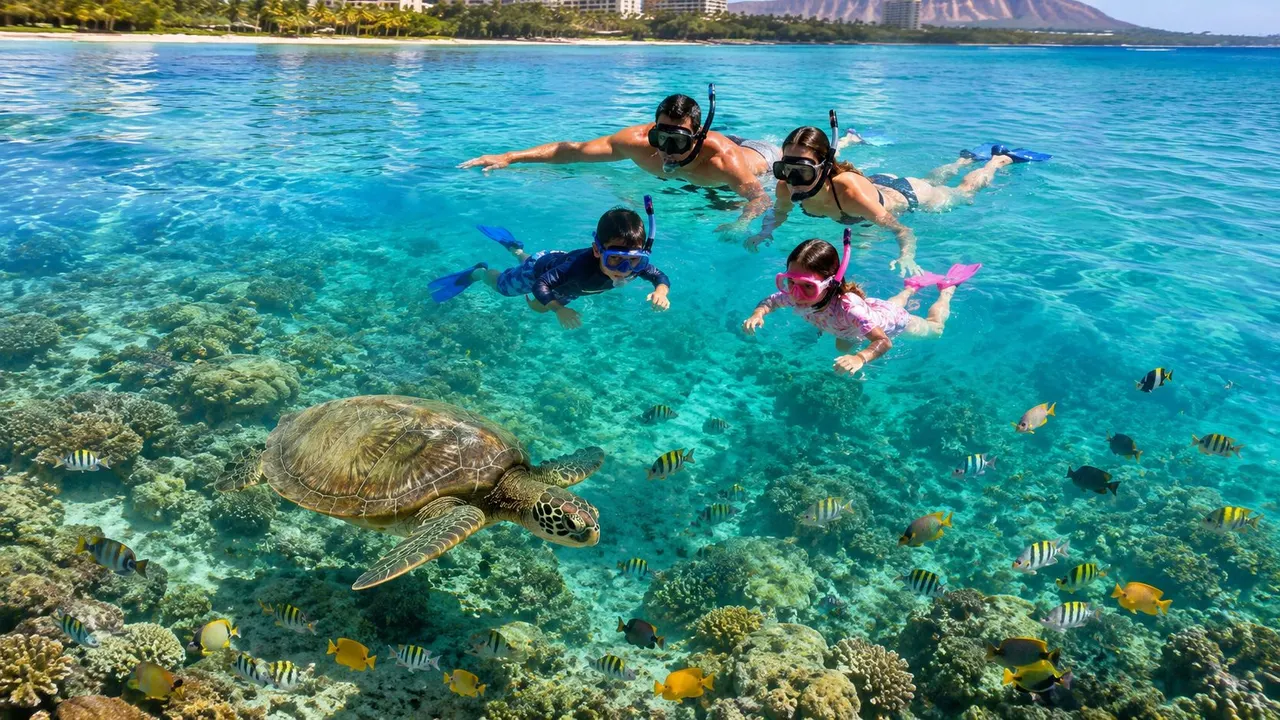
You're probably doing what a lot of Waikiki visitors do the night before a beach day. One tab has Hanauma Bay reservations open. Another has a list of “best snorkel spots.” Someone in the family is asking whether the kids can handle it, whether grandma can come on the boat, and whether seeing sea turtles is realistic or just brochure talk.
That's the right moment to get clear on one thing. Snorkeling in Honolulu, Hawaii can be magical, but it isn't plug-and-play. The water changes by hour, shore entries can be harder than they look, and the difference between a smooth family memory and a stressful morning usually comes down to planning, access, and safety support.
Families do best when they stop thinking only about “which spot is famous” and start asking better questions. Is this entry calm? Is there shorebreak? Are we carrying gear across rocks? Are the non-swimmers wearing flotation? Is there someone in the water who can help right away if a child panics?
That's where a lot of generic travel guides fall short. They show the postcard and skip the trade-offs. This guide doesn't. It covers what works, what usually doesn't, and why guided boat snorkeling is often the smarter call for visitors, especially families and first-timers.
Your Family's Guide to Honolulu's Underwater World
A typical family arrives in Honolulu with the same picture in mind. Warm water, bright fish, a few turtles if luck is on their side, and kids talking about it the whole flight home. That picture is realistic, but only if you match the experience to your group instead of chasing the most famous name on a map.
The families who have the easiest day usually aren't the ones trying to “do Hawaii like a local.” They're the ones who look realistically at who's in their group. A confident teen swimmer needs something different than a six-year-old wearing a vest for the first time. Grandparents may love the boat ride and wildlife, but not a rocky shore entry. If that sounds like your group, this kind of family snorkeling on Oahu planning guide is worth reading before you commit to a location.
What families usually want
Most visiting families are trying to solve the same few problems:
- Safe water access without waves pushing everyone around at the shoreline
- Wildlife worth the effort, not a long setup for a few quick fish sightings
- Simple logistics that don't eat half the vacation day
- Options for mixed abilities, including weak swimmers and cautious first-timers
A good snorkel day starts before anyone gets in the water. It starts with choosing conditions your least experienced person can handle.
What changes the day most
The biggest difference maker isn't usually the reef. It's the setup. Shore snorkeling asks your family to manage parking, gear, timing, and ocean reading on your own. Guided snorkeling shifts those jobs to people who do it daily, which leaves your group free to enjoy the water.
That's why the DIY shore snorkel versus guided boat tour decision matters so much in Honolulu. One can be excellent. The other is often easier, safer, and more memorable for visitors.
When to Go Snorkeling in Honolulu for the Best Conditions
Timing matters as much as location. Families often focus on where to snorkel and forget to ask when the water is easiest to enjoy. In Honolulu, the daily window can make a bigger difference than the destination itself.
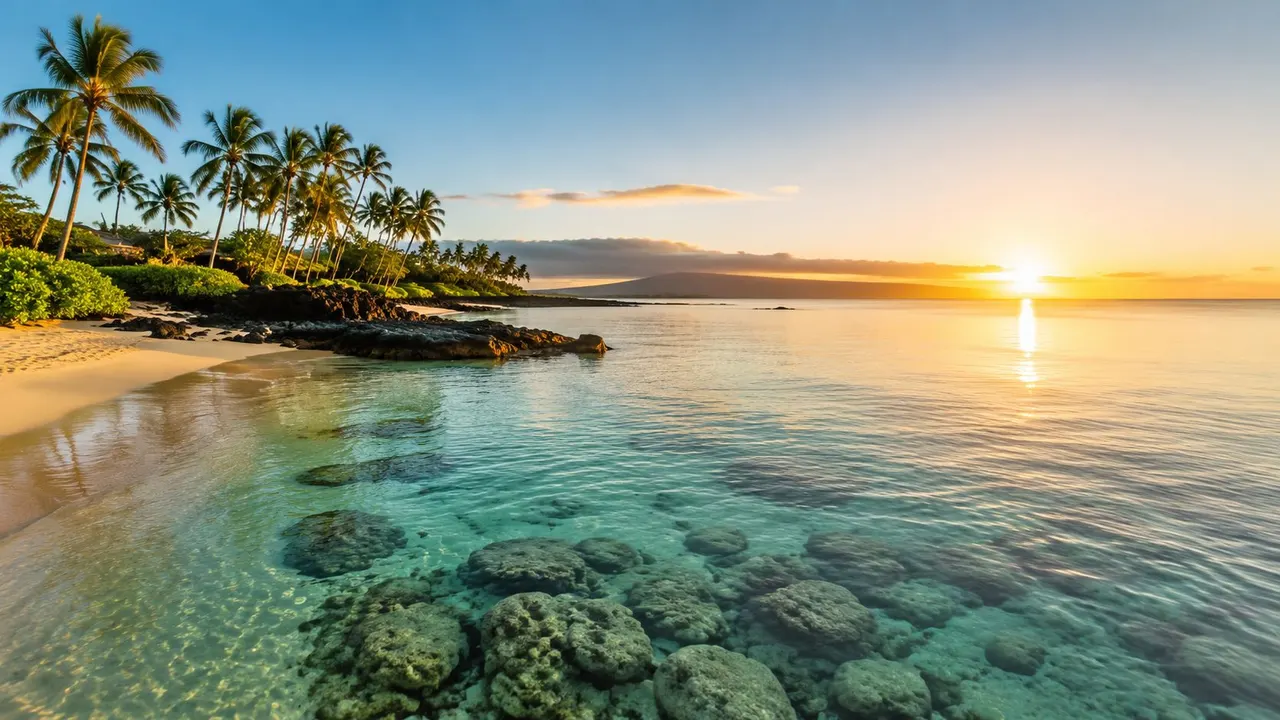
The clearest planning benchmark is this: the optimal window for snorkeling in Honolulu, Oahu, is mid-morning from 9:30 AM to 1:00 PM, when conditions are typically calmer and visibility is at its best, according to Oahu snorkel conditions guidance from Snorkel Bob. The same source notes that water temperatures range from 74°F in winter to 82°F in summer, and that May through September is generally the most favorable season.
If you're trying to match comfort with kid-friendly conditions, that's your target.
Why mid-morning usually wins
Early morning can be beautiful, but it isn't automatically the easiest for every family. People are still waking up, younger kids can be slow to settle in, and shore operations may feel rushed. Mid-morning usually gives everyone enough time to eat, hydrate, and get organized without landing in the choppier part of the day.
By afternoon, the trade-offs become more obvious:
- More surface chop can make breathing and visibility less comfortable for beginners
- More fatigue sets in, especially for families stacking snorkeling onto a packed itinerary
- More hesitation from kids happens once they're tired, overexcited, or hungry
Seasonal trade-offs to know
Summer usually gives visitors the easiest all-around snorkeling conditions on Oahu's south side. Winter can still offer good days in Honolulu, but ocean energy across the island is less forgiving, and families should be more selective.
A helpful way to consider it is:
| Season | What it usually means for families |
|---|---|
| May to September | Warmer water, easier planning, strong season for casual snorkeling |
| Winter months | Still possible in Honolulu, but conditions require more care and flexibility |
Practical rule: If you have beginners, plan snorkeling as the main event of the morning, not the leftover activity after lunch.
One more point that experienced crews take seriously. Visitors often underestimate how travel affects them. After a long flight, dehydration and fatigue can sneak up on you. If snorkeling is one of your must-do activities, give your family time to settle in first instead of forcing it on arrival day. You'll enjoy the water more, and you'll make better decisions once everyone's adjusted to the climate.
For trip planning, this Oahu water temperature overview helps set expectations on what the ocean feels like throughout the year.
Honolulu's Famous Snorkel Spots and What to Really Expect
Honolulu has famous snorkel names for a reason. The scenery is excellent, the reefs are photogenic, and the water can be spectacular. But fame and family-friendliness aren't always the same thing.
Hanauma Bay is beautiful, but it's not effortless
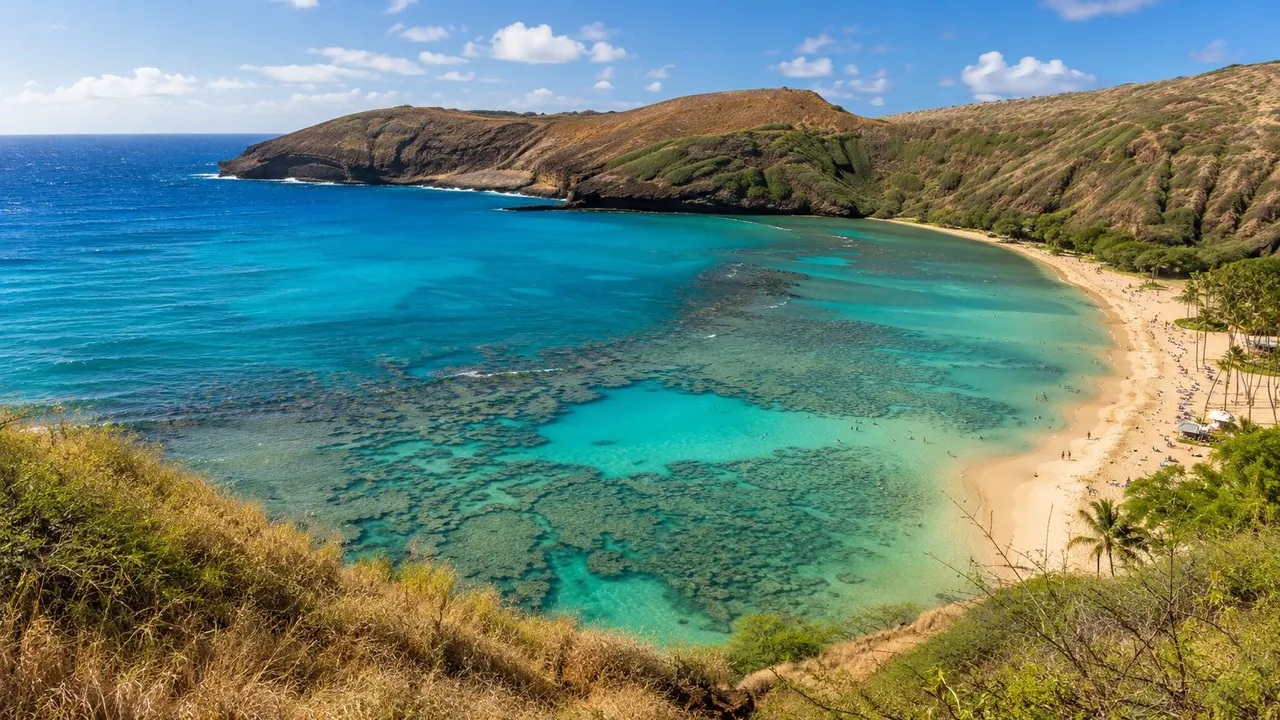
Hanauma Bay still deserves its reputation. The problem isn't the bay. The problem is that many visitors expect it to work like a casual beach stop, and it doesn't.
According to this Honolulu snorkeling overview, Hanauma Bay now comes with a mandatory reservation system, a per-person fee, a 9-minute conservation video, and a 1:30 PM last entry. The same source says 70% of first-time snorkelers are now booking guided boat tours to places like Turtle Canyons instead, largely because access is simpler and the safety support is built in.
That doesn't make Hanauma Bay a bad choice. It makes it a choice that requires planning and a backup plan.
Other shore spots have conditions attached
Visitors also hear about places outside central Honolulu, especially on Oahu's North Shore. Some are excellent when the ocean is settled. Some are a hard no for beginners when surf rises. That's the trade-off with shore snorkeling on Oahu. A spot can be amazing in one season and inappropriate in another.
For families, the practical issues usually stack up fast:
- Parking and timing can become the first stress point
- Carrying rental gear across sand, rock, or crowded access paths gets old quickly
- Shore entry is often the part that rattles beginners, not the snorkeling itself
- Conditions change while you're in the water, which matters if no one in your group reads the ocean confidently
The best shore spot on a blog post can still be the wrong spot for your family on that particular day.
The DIY trade-off most guides skip
DIY snorkeling sounds flexible, and sometimes it is. But it also means your family is handling all of this on your own: site selection, wave judgment, current awareness, equipment fit, transportation, and the decision about when conditions are no longer worth it.
That's why visitors often end up happier offshore. Boat access removes the hardest part of the day for many beginners, which is the beach entry itself. It also puts your family in a setup designed around snorkeling instead of making snorkeling fit around a public beach visit.
If your group includes kids, hesitant swimmers, or grandparents, don't judge your options by reputation alone. Judge them by how easy they are to execute safely.
Why a Guided Snorkel Tour is the Safest Bet for Families
A family of four can leave the hotel with good intentions and still have the day go sideways fast. One child gets nervous in a mask. One parent is busy fixing a fin strap. Nobody is really watching how the ocean is changing. That is why setup matters as much as the snorkel spot.
Snorkeling causes more tourist drowning deaths in Hawaii than many visitors realize, and most victims are visitors who are unfamiliar with local conditions. For families, that shifts the decision away from convenience and toward support, supervision, and choosing an environment that is easier to manage.
What a guided tour changes for a family
The main benefit is not luxury. It is reducing the number of things that can go wrong at once.
On a good boat tour, the crew handles the parts that beginners usually misjudge. Mask fit gets checked before anyone is in open water. Kids and hesitant adults get flotation from the start instead of after they are already uncomfortable. Someone explains how to breathe slowly through a snorkel, how to clear water from a mask, and what to do if a swimmer wants back on the boat early.
That matters because family snorkeling problems usually come in clusters. A small gear issue becomes stress. Stress changes breathing. Poor breathing turns a fun first five minutes into a short, unhappy swim.
Guided trips also put a safety role where it belongs, with trained crew instead of with the strongest swimmer in your group.
Why boat access is often the smarter call than DIY shore snorkeling
For many visiting families, the hardest part of the day is not the snorkeling itself. It is everything wrapped around it.
Shore plans ask parents to make a string of judgment calls. Is the entry calm enough for a child today? Are the rocks slick? Is the current pushing harder now than it was 20 minutes ago? At a place like Hanauma Bay, you also have to deal with the reservation system, timing, transport, and the reality that a famous spot can still feel exhausting if the logistics start badly.
A guided boat trip cuts out a lot of that friction. You check in, get fitted, listen to the briefing, and enter the water from a controlled platform. For beginners, that is usually easier than walking over uneven shoreline, getting knocked around in the shallows, and trying to settle down after a rough entry.
What I see work best with mixed-ability groups
The families who have the smoothest day are rarely the most athletic. They are the ones with clear supervision, well-fitted gear, and a crew that sets a calm pace.
That is the practical value behind a Honolulu snorkel company that focuses on guided family-friendly tours. Living Ocean Tours uses the format many mixed-ability groups need most: organized gear, flotation support, a pre-entry safety briefing, and in-water guidance once guests are off the boat.
Why parents usually enjoy the guided option more
Parents get to be present.
Instead of managing parking, hauling gear, watching the shore break, and deciding whether conditions still feel safe, they can pay attention to the moment that matters. A child puts their face in the water and sees their first reef fish. A hesitant swimmer relaxes because the flotation is working and the crew is nearby. Grandparents stay part of the experience instead of sitting out because the entry looked rough.
Those are the days families talk about later. Not the ones where everyone was technically at a snorkel spot, but half the morning was spent solving preventable problems.
Experience Turtle Canyons with Living Ocean Tours
If your family wants the classic Honolulu turtle snorkel, Turtle Canyons is the name to know. It sits offshore near Waikiki and functions as a natural turtle cleaning station, where reef fish clean algae from the shells of resting Hawaiian green sea turtles. You don't get that kind of encounter from a crowded hotel beach.
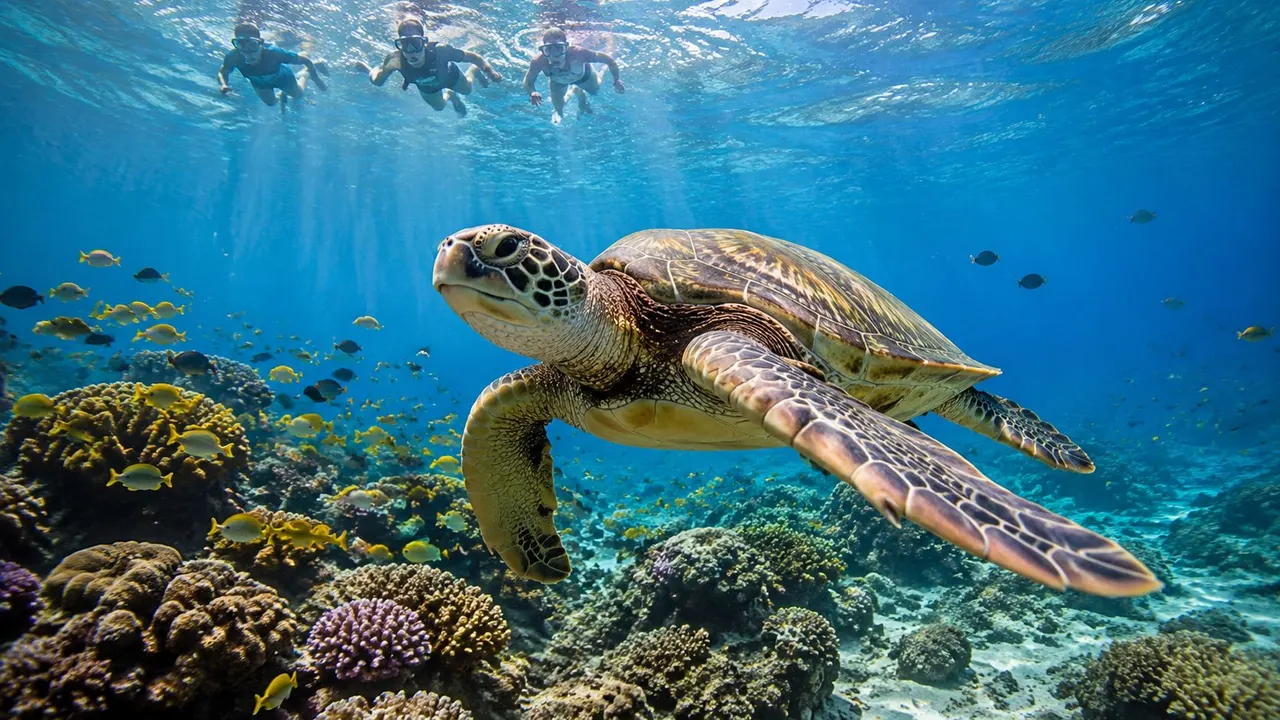
The main reason families choose this route is predictability. Living Ocean Tours reports a 95% success rate for spotting Hawaiian green sea turtles on its Turtle Canyon Snorkel Excursion, with visibility often exceeding 50 feet. For visitors who want a strong chance of seeing wildlife without gambling on a shore spot, that matters.
What the day usually feels like
The boat departs from Kewalo Basin, which is convenient for many Waikiki visitors. That already simplifies the morning. Instead of navigating reservations and shoreline logistics, your family checks in, gets fitted for gear, listens to the crew's safety briefing, and heads down the coast with Diamond Head and Waikiki behind you.
Once on site, the rhythm is usually easier for beginners than people expect. The crew explains where to enter, how to float efficiently, and how to move without overworking. That's important because excited first-timers often kick too much and tire themselves out.
Guests looking for more detail on the route and experience can preview this Turtle Canyon snorkel adventure in Waikiki, Oahu, and book the actual Turtle Canyons Snorkel Excursion.
Why Turtle Canyons works so well for visitors
Turtle Canyons solves several common vacation problems in one shot:
- Reliable wildlife viewing rather than hoping a shore reef delivers
- Boat-only access, which keeps the experience separate from crowded public entries
- A clear structure that works well for families who don't want to self-manage every step
There's also a simple emotional factor. For a lot of visitors, swimming near sea turtles in clear water off Waikiki becomes the signature memory of the trip.
Beginner's Snorkeling Checklist Gear Safety and Etiquette
A good first snorkel day usually comes down to a few simple decisions made before anyone gets in the water. Families often focus on the fish and forget the basics that shape the whole outing. Mask fit, sun exposure, hydration, and knowing when to stop matter more than packing extra gear.
That matters even more if you're deciding between shore snorkeling and a guided boat trip. On your own, you are the one checking conditions, managing tired kids, and spotting early signs of trouble. On a guided tour, the crew handles much of that workload, which is a big reason many beginners have a better first experience from a boat.
What to wear and bring
Keep the setup light. Bring what helps you stay comfortable for the full outing, not what looks impressive in a vacation photo.
- Swimwear that stays secure: You should be able to float, kick, and climb a ladder without adjusting straps or tugging at fabric.
- Rash guard or cover-up: Honolulu sun gets people fast, especially on the boat ride out and the ride back.
- Water and a towel: A surprising number of rough snorkel sessions start with sun, fatigue, and not enough fluids.
- Simple footwear: Sandals or deck-friendly shoes are easier than bulky water shoes for most boat-based trips.
- Dry clothes for afterward: Kids get cold quickly once the wind hits.
If you're packing for a mixed-age group, this Oahu snorkel packing list for families and first-timers helps keep the bag practical.
Essential safety rules
The first rule is simple. If the gear does not feel right, fix that before you swim away from the entry point.
A leaking mask burns energy. A fogged lens makes beginners anxious because they lose orientation and stop enjoying the water. If breathing through the snorkel feels strained, or anyone feels dizzy, disoriented, or develops a headache, stop immediately, remove the gear, and get out of the water. As noted earlier, Hawaii ocean safety guidance treats those symptoms as warning signs, not something to push through.
A few habits prevent a lot of first-day problems:
- Float first, kick second. Calm snorkelers use less energy and stay out longer.
- Wear flotation if needed. Good judgment beats pride every time.
- Stay close to your buddy. Beginners drift apart faster than they realize.
- Turn back early. Half your energy should be saved for the return, especially from shore.
- Rest before you are tired. Kids rarely say they're done until they are past the point of enjoying it.
I tell first-timers this all the time. The ocean rewards relaxed people and punishes rushed ones.
Reef etiquette that actually matters
Honolulu's reefs are alive, and they are less durable than they look. Good etiquette protects the reef, but it also protects your family from cuts, stings, and bad wildlife interactions.
- Do not touch coral: Even light contact can damage coral and slice up hands, knees, or feet.
- Do not stand on the reef: If you need to stand, you are probably too shallow or in the wrong place.
- Do not chase turtles or fish: Let the animal choose the distance.
- Keep fins and hands quiet: Splashing scatters fish and turns a calm snorkel into a stressful one for everyone nearby.
Families who want a guided outing with more built-in activity sometimes choose the Deluxe Waikiki Snorkeling and Wildlife Cruise, especially when younger kids want snorkeling plus extra time on the water.
Honolulu Snorkeling FAQs
Can non-swimmers or weak swimmers go snorkeling
They can, but they shouldn't do it alone. This Honolulu snorkeling article focused on non-swimmers notes that while 90% of snorkeling victims were not strong swimmers, boat-guided tours with mandatory flotation gear are the safest option for non-swimmers. For families, that's the key distinction. Skill level matters, but support matters more.
What happens if it rains on tour day
Light rain doesn't automatically ruin a snorkel trip. In Honolulu, showers are often brief. The primary issue is ocean safety, not a passing cloud. If conditions are unsafe, responsible operators cancel or reschedule rather than force the trip.
How far ahead should we book
Book as early as you can if snorkeling is a priority. A week or two ahead is a practical target for many families, especially in summer and around holidays. The more people in your group, the more helpful early booking becomes.
If you want a simple way to turn planning into an easy family ocean day, start with Living Ocean Tours. Their Honolulu departures from Kewalo Basin make it easy to snorkel off Waikiki without the usual shore-entry hassle, and guided options are a strong fit for first-timers, kids, and multi-generational groups.


