
Snorkeling Honolulu: Why Objects Look Larger Underwater
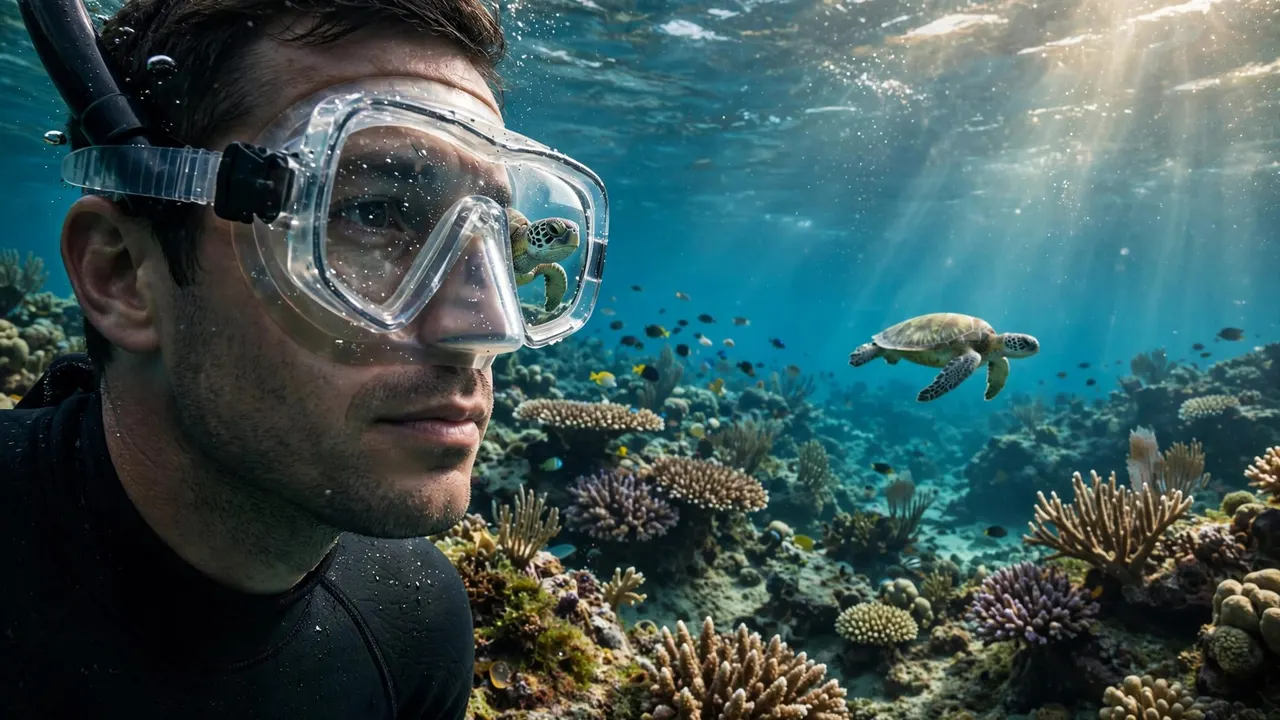
Your first turtle sighting with Living Ocean Tours might look closer than it really is. When you’re snorkeling Honolulu’s reefs, your mask changes how you judge both size and distance.
That larger-looking fish hasn’t suddenly grown; you’re seeing the effects of refraction, the bending of light between materials. Understanding this effect helps you feel comfortable, protect the reef, and enjoy wildlife without swimming closer.
Start with what happens when light travels through the water and into your mask.
Why Underwater Objects Look Larger
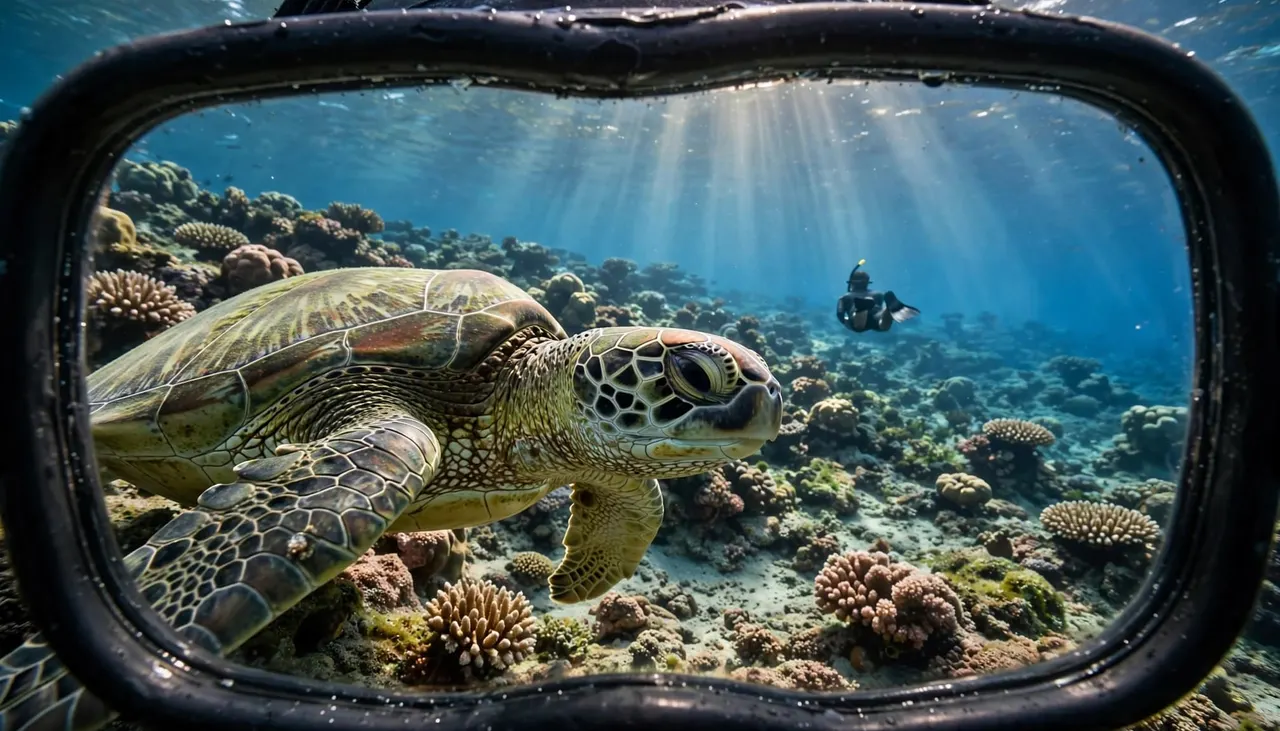
Light changes direction at your mask
Light travels at different speeds through water, glass, and air. When it crosses these boundaries at an angle, its direction changes.
Your mask creates an air pocket between your eyes and the surrounding seawater. Light from a turtle or fish passes through the mask’s window before reaching that pocket.
The relationship between these materials and the bending angle follows Snell’s law of refraction. You don’t need to calculate it while swimming, but it explains why the reef looks different through a mask.
Your brain interprets a closer image
Your visual system usually interprets incoming light as though it traveled in straight lines. However, those rays have changed direction before reaching your eyes.
Through a flat mask window, underwater objects can therefore appear closer and larger than they would without that boundary.
When snorkeling Honolulu’s reefs, you’ll notice this most with recognizable subjects: a turtle’s shell, a nearby fish, or a coral head. The animal or reef hasn’t changed dimensions. Your view has changed.
How Your Mask Changes What You See
The air pocket helps you focus
Without a mask, your underwater view usually looks blurry. Water reduces the focusing power of your cornea, the transparent front surface of your eye.
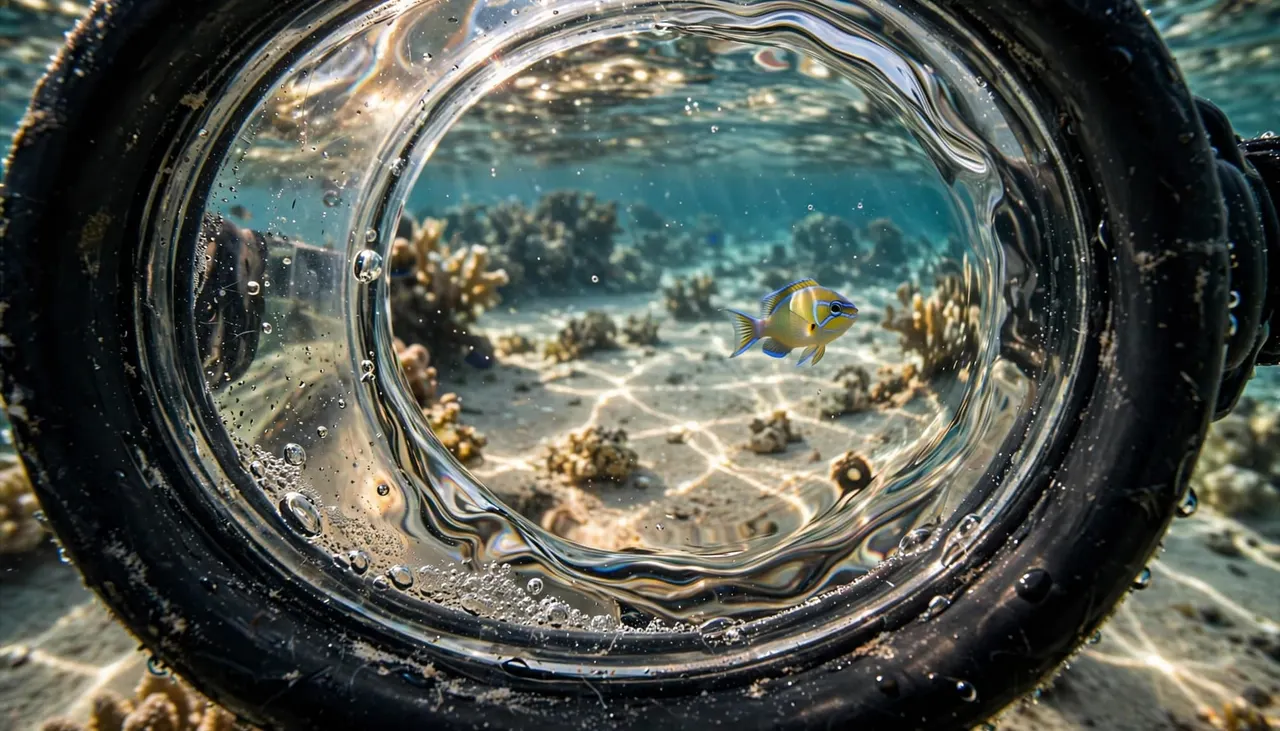
A mask restores an air space in front of your eyes. As a result, your eyes can focus much more effectively on the reef.
That clearer image comes with altered apparent size and distance. A standard flat-front mask doesn’t contain a magnifying lens, but the water-to-air transition produces a magnifying effect.
Corrective mask lenses address your eyesight. They don’t eliminate the ordinary refraction effect at the mask boundary.
A comfortable fit makes observation easier
For snorkeling Honolulu’s coast, a well-fitting mask helps you spend less time adjusting gear and more time watching marine life.
Keep hair away from the seal and ask the crew to check the fit. Tightening the strap excessively can make a mask uncomfortable without solving a poor seal.
Also, ask how to prepare the lens against fogging. A foggy window obscures details and makes an unfamiliar underwater scene harder to interpret.
Try your equipment before swimming away from the entry point. If anything feels uncomfortable, get help while you’re still close to the boat.
How Much Larger Will Fish and Turtles Look?
You’ll often hear that underwater objects look roughly one-third larger through a diving mask. A refraction simulator’s diving explanation gives the familiar estimates below.
Treat these figures as broad rules of thumb.
| What you notice | Common rough estimate |
|---|---|
| Apparent size | About 33% larger |
| Apparent distance | About 25% closer |
These estimates aren’t measurements for your particular mask or viewing position. Window shape, viewing angle, and the position of your eyes affect what you see.
Also, apparent size and apparent distance are connected. An object that seems nearer occupies more of your view, so it can look bigger.
You shouldn’t use the percentages to calculate your swimming distance from wildlife. Underwater distance judgment involves more than one optical effect, and your own movement adds another variable.
A turtle swimming across your view may also seem to change size as it approaches or turns. That real change in viewing distance combines with the mask’s refraction.
Instead of mentally correcting every fish, give yourself a few relaxed moments to adjust. Watch the reef from the surface and follow your guide’s positioning instructions.
Judging Distance While Snorkeling Honolulu’s Reefs
Give sea turtles room to move
Hawaiian green sea turtles, or honu, are a highlight of Oahu snorkeling. However, a close-looking turtle doesn’t give you a reliable measurement of your actual separation.
NOAA recommends staying at least 10 feet (3 meters) away from sea turtles in Hawaii. Leave more room when conditions or the animal’s movement call for it.
Keep your position predictable, and don’t follow a turtle to maintain a better view. Never touch, feed, or block its path.
At Turtle Canyons, turtles visit a natural cleaning station where fish remove material from their bodies. Watching that behavior from a respectful distance gives you something more interesting than a rushed close-up.
Keep your fins away from coral
Your eyes face forward, but your fins extend behind you. That makes it easy to overlook how close they are to the reef.
Stay horizontal when the water allows, and use small, controlled kicks. Avoid standing on coral or pushing off it to change direction.
If the reef feels uncomfortably close, stop moving toward it. Follow your guide into clearer space instead of testing the distance with your hands or feet.
For couples snorkeling Honolulu’s reefs together, agree to stay within sight without crowding each other. Families should follow the crew’s instructions for keeping children close and supported.
A clear view of the bottom doesn’t prove you have enough clearance for your fins.
Why Clear Water Can Still Mislead You
Clear water makes reef details easier to see, but it doesn’t remove refraction. You can have excellent visibility and still misjudge how far away something is.
On land, familiar objects help you estimate distance. Underwater, an unfamiliar coral formation may offer fewer useful clues about scale.
Meanwhile, suspended particles reduce contrast and hide background details. Surface movement can also shift the light patterns across the reef. When you’re snorkeling Honolulu’s coastline, pause before deciding that a hazy shape is close enough to approach.
Your camera has its own underwater view
A camera inside a waterproof housing also looks through optical surfaces. As MIT’s computational photography text explains, refraction occurs at optical boundaries.
However, your camera’s image won’t necessarily match your mask view. Lens choice, housing design, and framing affect the result.
Keep your camera close to your body and watch your surroundings between shots. Don’t swim toward a turtle simply because it looks small on the screen.
Conditions matter more than visual clarity
Good visibility doesn’t establish that currents, swell, or entry conditions are suitable for you.
Before entering, listen to the crew’s assessment and tell them about your swimming experience. If you feel tired, uneasy, or short of breath, signal for help and return to the boat.
Plan for Snorkeling Honolulu’s Offshore Reefs
Living Ocean Tours departs from Kewalo Basin Boat Harbor, near Waikiki. You can compare its guided Honolulu snorkeling experiences before choosing your outing.
The company identifies itself as the only tour company with professional snorkel guides. For your first snorkel, that emphasis on in-water guidance gives you someone to ask about equipment, wildlife, and positioning.
You can check the company’s available ocean outings before settling on your preferred experience.
Watch turtle-cleaning behavior at Turtle Canyons
The Turtle Canyon Snorkel Tour centers on Waikiki’s offshore turtle-cleaning station. Living Ocean Tours supplies snorkeling gear and knowledgeable guides, so you don’t have to organize equipment separately.
Your guide can help you identify what you’re watching and maintain respectful space around turtles. Wildlife sightings remain unpredictable, so approach the trip as a chance to observe animals in their natural habitat.
Before choosing a departure, CHECK AVAILABILITY for the Turtle Canyon excursion.
Tell the crew what support you need
You don’t need to understand optics to enjoy the water. However, telling the crew that you’re new to snorkeling helps them tailor their instructions.
Ask about mask fitting, flotation, and the return route before entering. Then take your first look while staying near your guide.
The company’s boats have shaded seating and onboard restrooms. Those comforts also give your family a place to relax between time in the water and watching Waikiki’s coastline.
Key Takeaways
- Your mask’s air pocket restores clearer underwater vision, while refraction changes apparent size and distance.
- The commonly quoted size and distance percentages are rough estimates, not precise measurements for your equipment.
- Keep at least 10 feet away from Hawaiian sea turtles, and follow your guide’s instructions around coral.
- Clear water helps you see details, but it doesn’t establish safe swimming conditions or accurate distance judgment.
Frequently Asked Questions
Does deeper water make everything look larger?
Depth alone doesn’t determine the magnification you notice through a flat-front mask. The optical boundaries, viewing angle, and distance between you and the subject matter more.
However, depth can change available light and visibility. Those changes affect how easily you recognize details and judge the surrounding space.
Can you buy a mask that removes the effect?
A standard flat-front snorkeling mask retains the air-water viewing effect. Different optical designs can change the view, but premium pricing doesn’t automatically mean accurate underwater scale.
For a recreational outing, prioritize fit, comfort, and a clear lens. Ask the crew for help rather than choosing unfamiliar equipment solely to reduce magnification.
Should you move closer if a fish looks far away?
Don’t use apparent distance alone to decide. Stay with your guide, leave wildlife undisturbed, and avoid swimming over shallow coral.
A patient surface view often lets you watch fish behavior without changing your position.
Enjoy the View Without Chasing It
Snorkeling Honolulu’s reefs gives you a clearer underwater view through your mask, but that view changes apparent scale. Understanding refraction helps explain why a fish or turtle can look larger and closer than expected.
Give yourself time to adjust, keep wildlife space generous, and follow your guide’s lead. You can enjoy the details of the reef while leaving its animals and coral undisturbed.


