
Snorkeling Honolulu: Stop Fins From Slipping
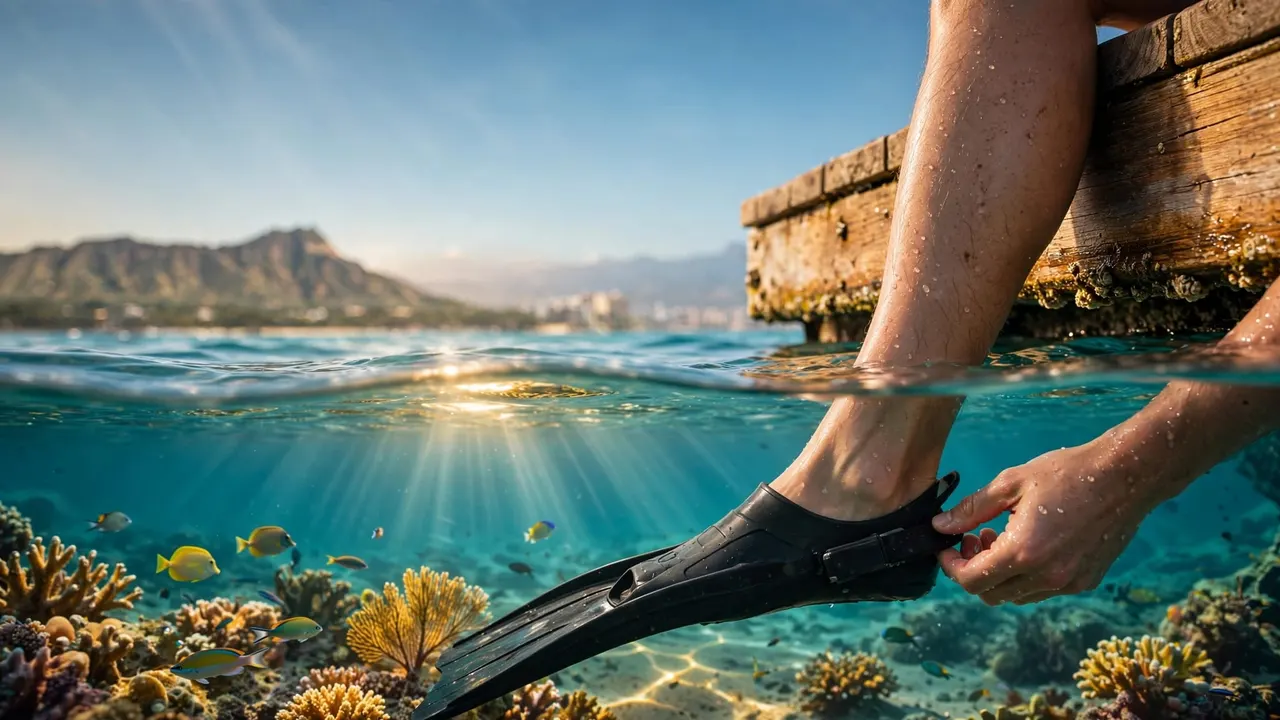
A loose fin can turn a beautiful reef swim into a frustrating workout within minutes. When you’re snorkeling Honolulu, your fins should feel secure enough for gentle kicks without squeezing your toes or rubbing your heel.
Living Ocean Tours welcomes families, couples, beginners, and confident swimmers near Waikiki. A few simple fit checks help you spend more time watching reef fish and less time tugging at your gear.
Start with the fit before you step off the swim platform.
Key Takeaways for Secure Snorkel Fins
- Your fin should stay in place through a slow kick without your toes gripping the pocket or your heel sliding upward.
- Sand, a folded fin sock, and an oversized foot pocket can all cause slipping and painful friction.
- Full-foot fins work best when they fit your bare foot comfortably. Open-heel fins offer more adjustment range with socks or booties.
- Stop early if you feel burning, pressure, cramping, or repeated heel movement. Ask for another size instead of trying to push through discomfort.
- Keep your body horizontal and use slow kicks from your hips. Controlled movement reduces rubbing and keeps fins away from coral.
Why Fins Slip While Snorkeling Honolulu
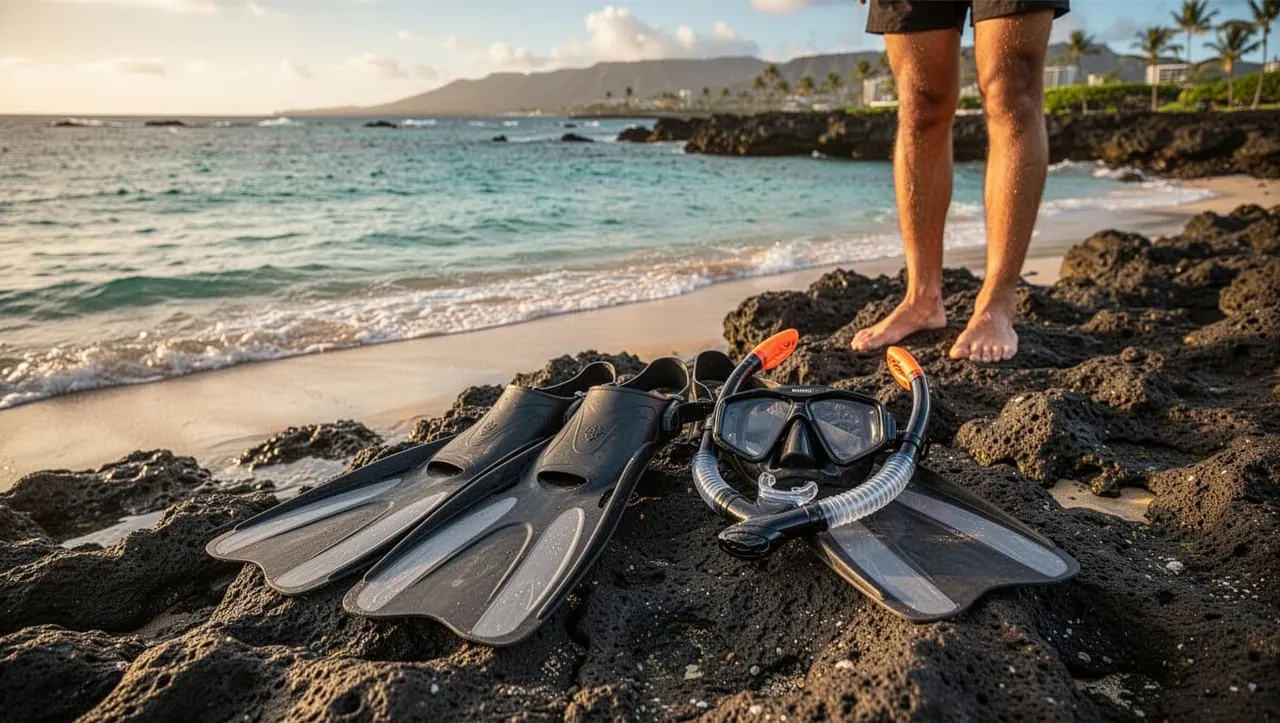
A slipping fin usually points to a fit issue, not a need to kick harder. Water makes your skin softer, so even a small gap can create rubbing at the heel, toe box, or edge of the foot pocket.
The foot pocket is too large
Your heel may lift with every kick when the pocket has too much room. You might also feel your foot shifting side to side as you move your ankle.
Sizing varies by brand and fin style. Although some pairs cover a small shoe-size range, don’t treat the number printed on a fin as a guarantee. Check snorkeling fin sizing by shoe size as a starting point, then judge the actual fit on your foot.
A well-fitted full-foot fin feels close and stable, like a comfortable water shoe. It shouldn’t pinch your toes, press hard into your arch, or leave a sharp edge against your heel.
Sand, sunscreen, and wet skin add friction
A fin can fit well on deck and still start rubbing once you enter the ocean. Sand inside the pocket becomes abrasive, while a slick layer of sunscreen on your feet may let the fin move more than expected.
Before entering the water, rinse sand from your feet and inspect the inside of both fins. If you wear fin socks, smooth them around your heel and toes. A small wrinkle can become a painful hot spot after only a few minutes of kicking.
Check Your Fin Fit Before You Enter
You can catch most fin problems while you’re seated near the swim step. Take a minute to test the whole setup instead of waiting until the group has started swimming.
Use a simple three-part fit check
First, slide your foot fully into the pocket. Move your ankle gently from side to side. The fin should follow your foot instead of shifting around it.
Next, press your heel lightly into the back of the pocket. You shouldn’t feel grit, a folded sock, or a hard seam against your skin. Then hold a rail or sit at the swim step and make several slow flutter kicks.
Your toes should stay relaxed. If you curl them to keep the fins on, ask for another pair.
A fin that feels “almost right” on deck can become uncomfortable fast in saltwater. Change it before the swim begins.
Know when socks will help
Thin Lycra or neoprene fin socks can reduce skin-on-rubber friction. They also help if your foot has a minor gap inside a full-foot fin.
However, socks change the fit. A fin that feels loose barefoot may become secure with a thin sock, while a snug pair can become restrictive. Guides on full-foot fins and fin socks also note that these fins can work with bare feet or socks, depending on comfort.
If a fin squeezes your toes, arch, or ankle after adding socks, choose a larger size or a different style. Don’t hope that painful pressure will disappear once you’re in the water.
How to Stop Fins From Slipping in the Water
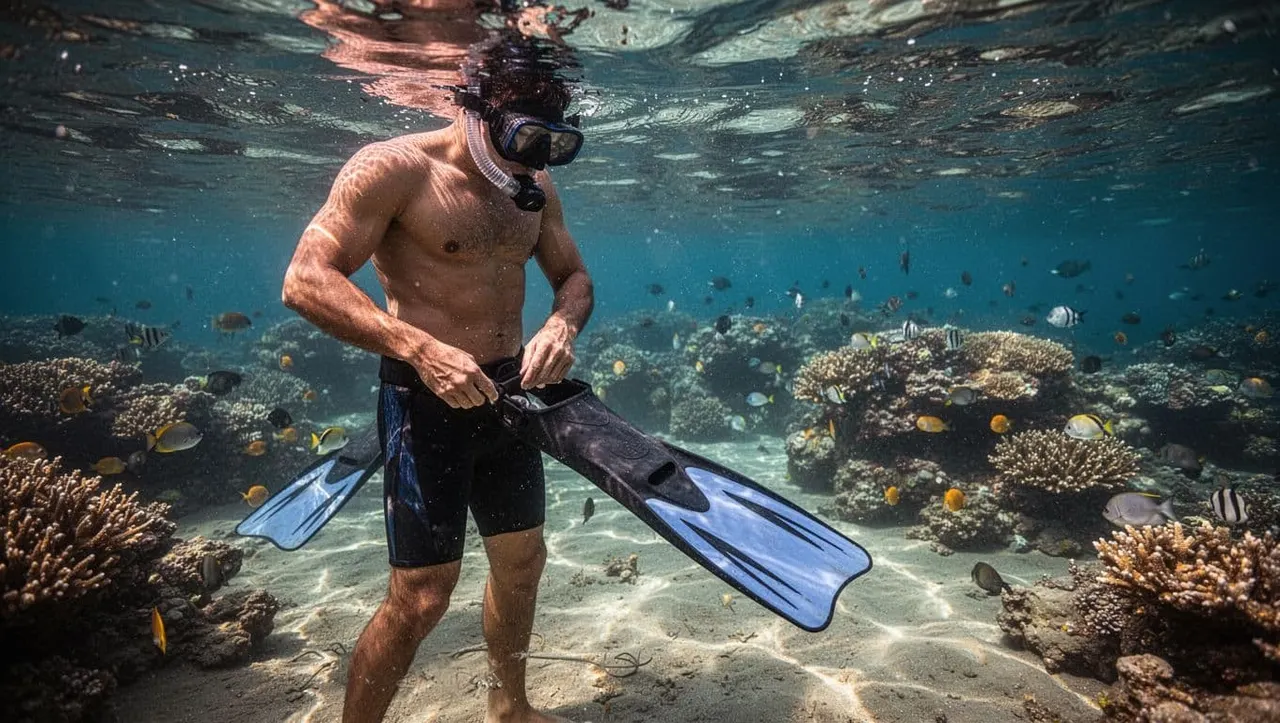
When snorkeling Honolulu, stop and reset at the first sign of a shifting fin. A calm adjustment near the boat is safer and more comfortable than trying to fix it after you have drifted farther away.
Adjust open-heel straps with care
Open-heel fins use an adjustable strap behind your heel. Pull it snug enough to lie flat and keep your heel seated, but don’t cinch it until it digs into your Achilles tendon.
A twisted strap can slide off or create a painful pressure point. Check that it sits centered across your heel before entering the water. If the strap keeps slipping despite a careful adjustment, the fin may be too large for your foot.
Open-heel styles can give you more flexibility when a bare-foot pocket doesn’t fit well. Still, no strap can make an oversized fin feel stable.
Slow your kick and reset your position
Fast, bicycle-style kicking can make fins slap against your feet. Instead, float face down, keep your legs fairly straight, and move from your hips with easy, controlled flutter kicks.
If a fin slides, stop kicking. Float, raise your head, and signal your buddy or guide. Return to the ladder if you can’t fix the problem quickly. You can always switch gear and try again.
For a broader reference, snug full-foot fin fit without pressure points is the standard you want. Secure doesn’t mean painfully tight.
Protect Your Feet and the Reef
A comfortable fin fit gives you better control around coral. When your foot slides inside the pocket, you may kick harder, tire sooner, or lose your horizontal position near a shallow reef.
Keep your fins behind you and avoid standing on coral or marine growth. If you need a break, float with your face up, hold your flotation device, or return to the boat. Use a sandy area only when your guide directs you there.
Hawaiian green sea turtles need room to surface, feed, and travel through the reef. Watch without touching, chasing, feeding, or blocking their path. Your calm movements help wildlife stay calm too.
Snorkeling Honolulu doesn’t require long swims or repeated duck dives. You can see plenty of reef life while moving slowly near your guide and keeping your gear comfortable.
Get Help Before a Small Issue Becomes a Blister
Living Ocean Tours departs from Kewalo Basin Boat Harbor, minutes from Waikiki. The company is the only tour company with professional snorkel guides, giving you trained in-water support while you settle into your mask, snorkel, fins, and flotation gear.
Choose a supported Turtle Canyons outing
On a Turtle Canyon snorkel tour in Waikiki, you receive gear, instruction, and professional guidance before entering the water. Let the crew know if you haven’t worn fins recently, feel nervous in open water, or want extra time near the ladder.
Living Ocean Tours reports a 95% turtle-sighting success rate at the natural cleaning station, though every wildlife encounter happens on the animals’ terms. A proper fin fit helps you remain relaxed while you observe, not touch, the reef and its visitors.
You can CHECK AVAILABILITY for a Turtle Canyons outing before your Waikiki stay fills up.
Give yourself time to settle in
A Coast Guard-inspected double-decker boat with shaded seating, onboard restrooms, dry storage, and sturdy ladders gives you room to adjust before and after your swim. Tell a guide about any heel rubbing, loose strap, cramp, or cold feet early.
If you feel discomfort building, return to the boat before it becomes a blister. Sitting out part of a swim is good judgment, especially when you can relax on deck and try again with better-fitting equipment.
FAQ About Slipping Snorkel Fins
Should you wear fin socks with rental fins?
Thin fin socks can protect your skin and reduce minor rubbing. They can also take up a little extra space in a loose full-foot fin.
Test the sock and fin together before entering. If your toes feel compressed or the heel edge presses into your skin, remove the socks or ask for a different fin. Your feet should feel stable, not squeezed.
Can you keep snorkeling with a hot spot or blister?
Stop when you feel burning, stinging, or persistent rubbing. Continuing to kick can turn a mild hot spot into a painful blister that affects the rest of your Waikiki trip.
Float, signal your guide, and return to the boat if the problem doesn’t resolve right away. Keep the area clean and dry after your swim. If pain continues or the skin looks irritated, avoid wearing the same fin again.
Are open-heel fins better than full-foot fins?
Neither style is automatically better. Full-foot fins can feel simple and comfortable in warm water when the pocket matches your bare foot. Open-heel fins work well when you need to adjust the strap or prefer socks or booties.
Your foot shape matters more than the label. Choose the pair that stays secure through slow kicks without creating pressure points.
A Better Snorkel Starts With Comfortable Feet
The best reef moments happen when your equipment fades into the background. Check for sand, test each fin with slow kicks, and trade an uncomfortable pair before you swim away from the boat.
With secure fins, controlled movement, and professional guidance nearby, snorkeling Honolulu can stay focused on clear water, colorful fish, and respectful wildlife viewing.


