
Snorkeling Honolulu: Why Herbivorous Fish Matter to Reef Health
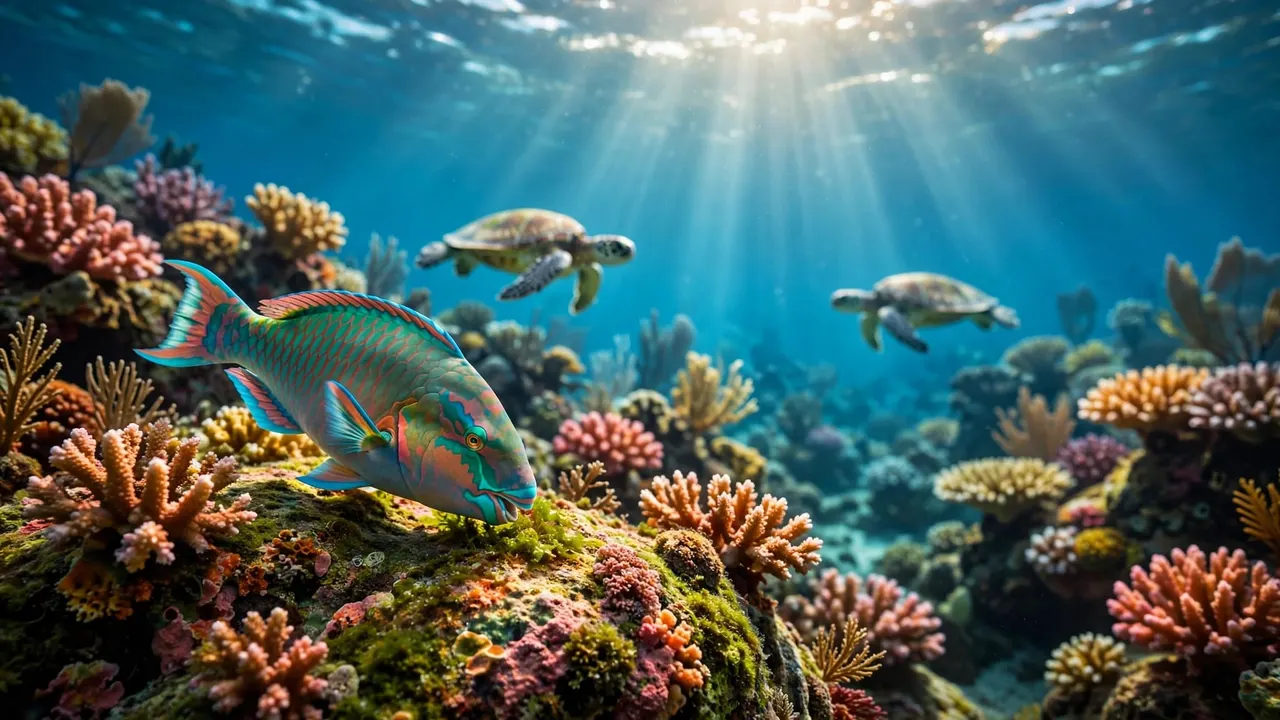
A colorful fish nibbling algae may not look dramatic, yet it helps keep Oahu’s reefs open for coral growth. When you go snorkeling Honolulu, you are watching a living system where grazers, coral, turtles, and people all share limited space.
Living Ocean Tours brings you close to that system from Kewalo Basin Boat Harbor, minutes from Waikiki. You get a welcoming, safety-focused ocean experience with the only tour company in Honolulu that has professional snorkel guides, so you can enjoy the water while learning how to respect it.
The reef work happening below the surface
Coral needs access to light. However, algae can spread quickly across hard reef surfaces when herbivorous fish are scarce. Thick algae can shade young coral, occupy bare rock, and make it harder for coral larvae to settle.
Herbivorous fish graze on algae throughout the day. Their feeding leaves room for coral to grow and recover after storms, warm-water stress, or other damage. You may overlook this work while watching for turtles, but a reef depends on it.
Algae and coral compete for the same space
A reef is not a static underwater garden. Corals and algae constantly compete for space on the seafloor. When fish eat algae often enough, coral has a better chance to claim open areas.
NOAA’s research on natural grazing explains that parrotfish and surgeonfish consume algae that can compete with reef-building corals. That simple act of feeding affects the entire habitat you came to see.
Grazers help reefs recover after stress
Healthy reefs need more than living coral. They also need fish that move nutrients, clean surfaces, and keep algae from dominating damaged patches.
Large herbivorous fish can be especially effective because they consume more algae. NOAA describes this relationship in its report on using hungry fish to conserve coral reefs. When you see a large grazing fish, you are seeing part of the reef’s maintenance crew at work.
A reef with plenty of grazing fish has more opportunity for new coral to settle on open, algae-free surfaces.
The herbivorous fish you may spot around Oahu
Hawaii’s reef fish are easy to admire for their color, but their diets matter as much as their appearance. Some species browse delicate turf algae, while others scrape algae and dead material from harder reef surfaces.
You might see a grazer alone, or you may notice several fish moving across the same section of reef. Give them space. Their natural feeding pattern is far more interesting when you pause and watch it.
Surgeonfish, including manini and kole
Surgeonfish are common reef grazers around Oahu. Manini, also called convict tang, have bold black stripes. Kole, or goldring surgeonfish, have darker bodies and a distinctive ring around the eye.
Both are part of Hawaii’s herbivore community. Their small mouths let them pick algae from reef surfaces, which helps prevent it from becoming a dense blanket. Because they often move steadily while feeding, you can spot their behavior without chasing them.
Uhu, Hawaii’s parrotfish
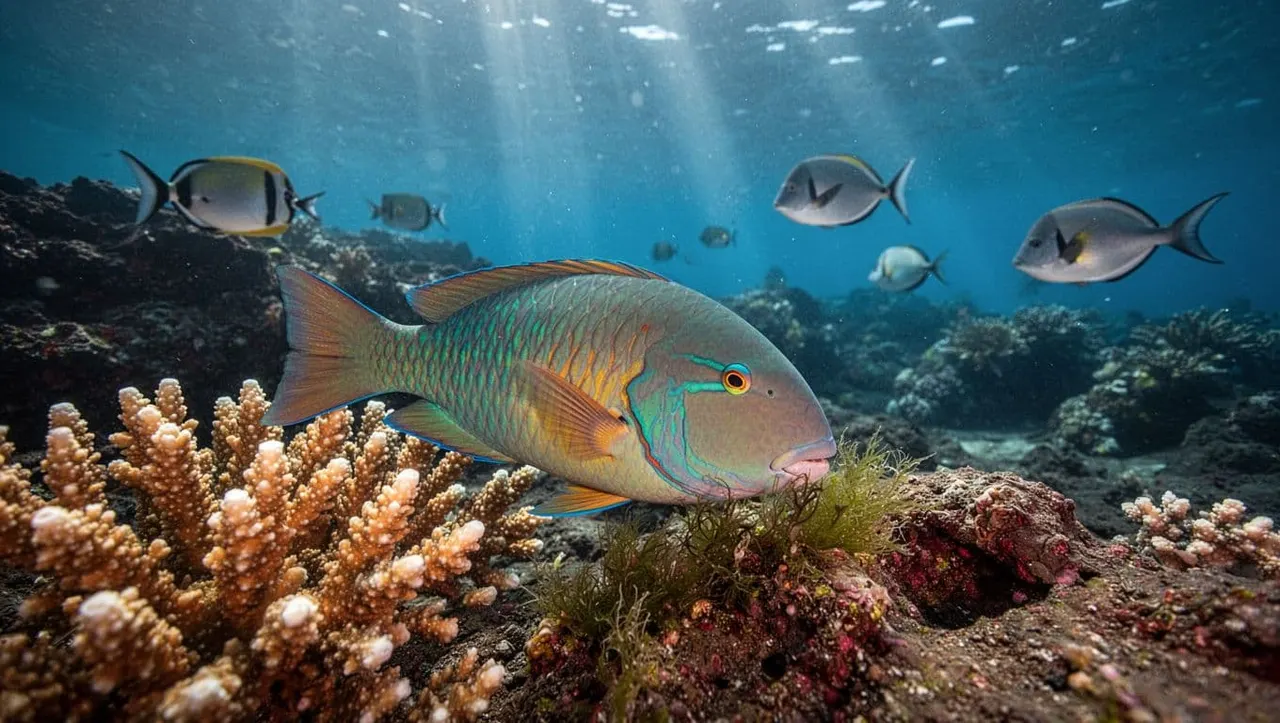
Uhu is the Hawaiian name for parrotfish. Their beak-like teeth scrape algae from rock and old coral skeletons, leaving freshly grazed patches behind. Some species are brilliantly colored, while others blend into the reef until they move.
The University of Hawaii notes that uhu can clear algae from dead coral, which creates opportunities for new coral growth. You may also hear the crunch of a parrotfish feeding if the water is calm and you float nearby.
What snorkeling Honolulu teaches you about reef balance
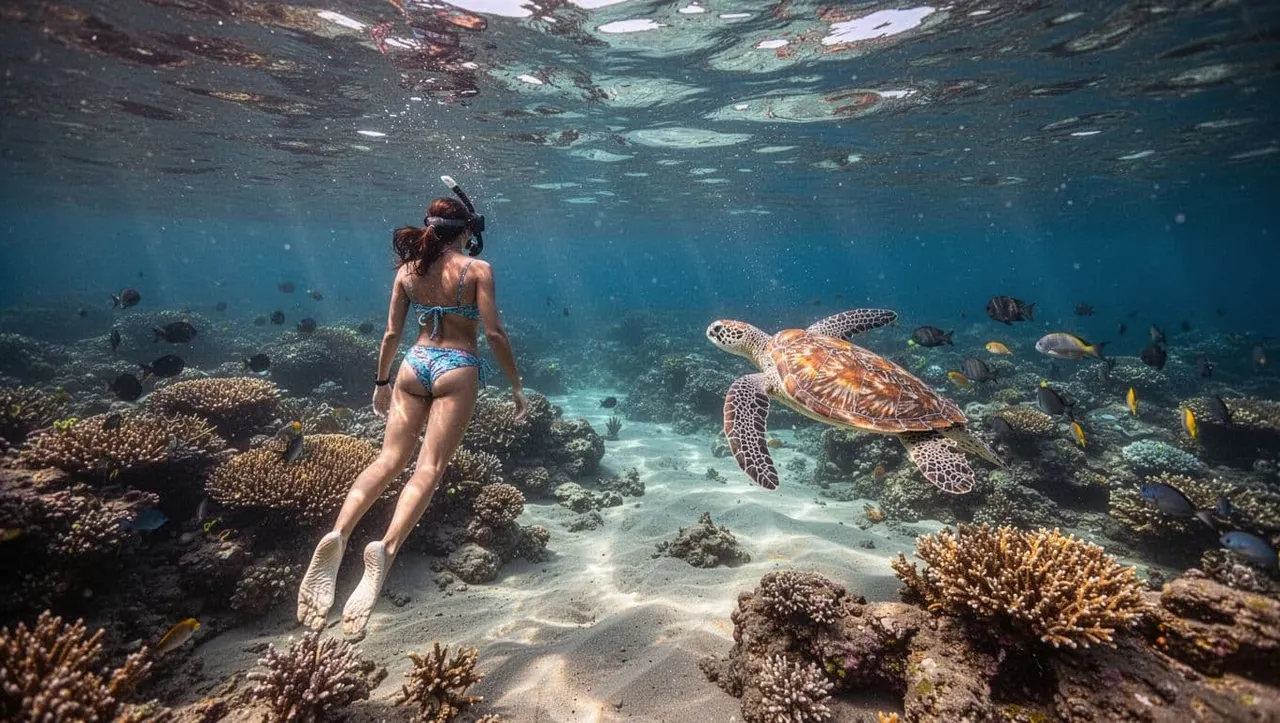
The best snorkel sessions often reward patience. Instead of racing from one animal to the next, float face-down for a few minutes over one reef area. You will start to notice fish feeding, cleaning stations, shifting shadows, and the different textures of sand, coral, and volcanic rock.
Turtles are often the highlight, especially around Turtle Canyons. Still, herbivorous fish tell you something important about the reef’s everyday health. They show that the reef’s food web is active at every level.
Watch behavior, not only bright colors
A fish’s behavior gives you more information than a quick photograph. Surgeonfish commonly graze with their heads down. Parrotfish may scrape and move forward in short bursts. Other fish hover above the reef or pick tiny prey from the water column.
Try to identify what the fish is doing before you swim closer. This helps you avoid startling wildlife, and it gives your time in the water more meaning. A reef becomes easier to understand when you watch it on its own terms.
Sea turtles and grazers share a busy neighborhood
Hawaiian green sea turtles also eat algae, although their role differs from that of reef fish. At Turtle Canyons, turtles visit a natural cleaning station where smaller fish remove algae and other material from their shells.
You should never touch a turtle, crowd its path, or block its route to the surface. Let it choose where to swim. Respectful viewing protects the animal and keeps the moment calm for everyone nearby.
A global assessment of reef herbivorous fish found that these fish regulate competition between fleshy algae and reef-building corals. The colorful fish below you are part of the same wider system that supports turtles and countless smaller animals.
Choose a guided snorkel trip that respects the reef
A guided trip gives first-time snorkelers more confidence and gives experienced swimmers a stronger connection to the place. You receive gear, basic instruction, and guidance on where to look without needing to guess how close is too close.
Living Ocean Tours operates Coast Guard-inspected double-decker vessels with shaded seating, restrooms, dry storage, and sturdy ladders for water entry. You can explore Honolulu ocean tours and cruises that pair marine-life viewing with a respectful approach to Hawaii’s reefs.
See Turtle Canyons with professional guides
The Turtle Canyons Snorkel Excursion takes you to Waikiki’s well-known turtle cleaning station. Living Ocean Tours reports a 95% success rate for spotting Hawaiian green sea turtles there, although wildlife sightings always depend on nature.
Professional snorkel guides help you enter the water comfortably, adjust your mask, and keep a respectful distance from wildlife. That support is especially helpful if you are snorkeling with kids or trying it for the first time.
When you are ready to see this reef community in person, CHECK AVAILABILITY for the Turtle Canyons outing.
Add more space for families and confident swimmers
The Deluxe Waikiki Snorkeling and Wildlife Cruise heads to a less-crowded reef and includes a boat-mounted waterslide, water trampoline, and floating lily pad. It gives active families more room to enjoy the ocean between snorkel sessions.
The Lokahi also uses a SeaKeeper stabilization system to reduce boat roll. That extra steadiness can make the ride more comfortable if you are worried about motion sickness. You can CHECK AVAILABILITY when a family-friendly reef day sounds right.
Protect reef fish while you snorkel
Your choices in the water have an immediate effect. Coral breaks easily, fish need room to feed, and sand stirred by fins can settle over coral surfaces.
Before you enter the ocean, take a minute to check your fit and flotation. A comfortable mask and relaxed breathing reduce the urge to stand on the reef or grab at nearby rock.
Keep your body horizontal and hands to yourself
Float with your body parallel to the surface whenever possible. If you need to adjust gear, move to a sandy area away from coral. Never stand on, kick, or hold onto the reef.
Keep your hands away from fish, turtles, and coral. Feeding wildlife also changes natural behavior, so leave snacks on the boat. Your best interaction is observation.
Give wildlife a clear path
Stay far enough away that animals do not change direction because of you. This matters when turtles rise for air and when fish are grazing close to the reef.
If another snorkeler gets too close, you can drift back rather than joining the crowd. A little extra distance often gives you a clearer view anyway.
Make your reef time count
Look beyond the largest turtle or brightest school of fish. Notice where algae grows, where coral has open space, and where herbivores are feeding. Those details turn a pleasant swim into a closer look at Oahu’s marine life.
When you go snorkeling Honolulu waters, your most memorable sighting may be a sea turtle. Yet the steady work of uhu, kole, and manini helps keep that underwater neighborhood healthy enough for turtles, coral, and future snorkelers.
A better way to see Oahu’s reefs
Herbivorous fish protect the colorful coral habitats that make Waikiki snorkeling so memorable. By grazing on algae, they help coral compete for light and space.
Choose a guided trip, float carefully, and leave every animal undisturbed. Respectful snorkeling lets you enjoy the reef while giving its smallest workers room to do their jobs.


