
Snorkeling Honolulu on Cloudy Days: Visibility and Comfort Tips
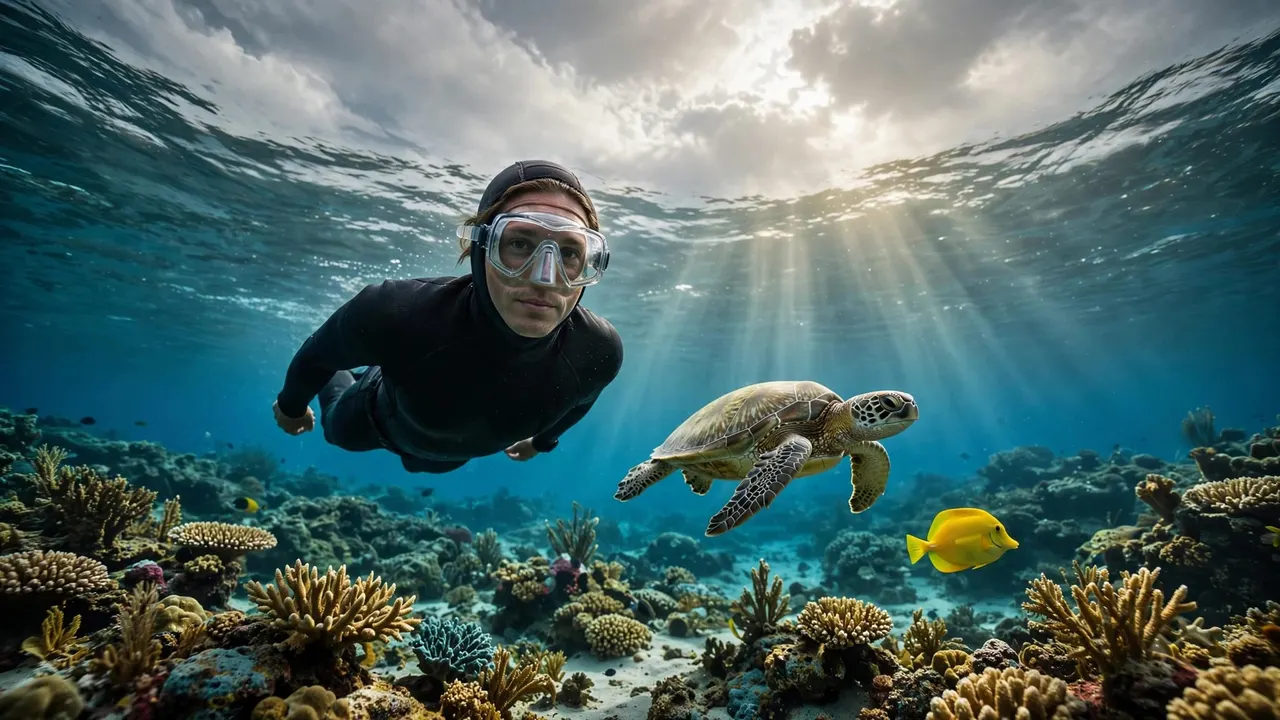
A gray Waikiki sky doesn’t automatically mean your ocean plans are washed out. Snorkeling Honolulu can still be colorful, calm, and memorable when clouds cover the sun but the water remains settled.
Living Ocean Tours takes you from Kewalo Basin Boat Harbor to Waikiki’s reef waters with professional snorkel guides, comfortable boats, and gear for every experience level. You can enjoy a better day on the water when you judge conditions by more than the forecast icon.
Cloud cover changes the view, but wind, swell, rain, and your preparation matter far more.
When Snorkeling Honolulu, Clouds Matter Less Than the Water
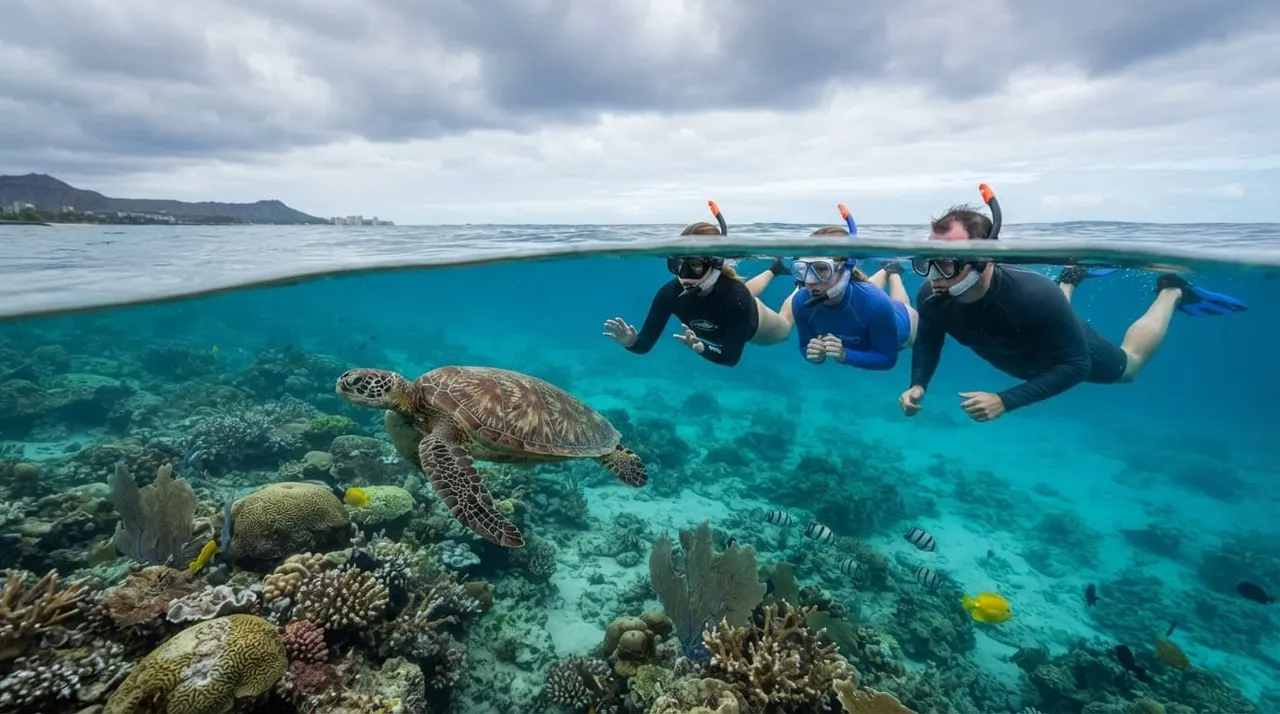
Clouds reduce sunlight, so reef colors may look softer beneath the surface. Yet visibility comes from water clarity, not sunshine alone. A calm, clear morning under thick clouds can offer a better snorkel than a bright day with wind-chopped water.
In clear water, you can still spot yellow tang, butterflyfish, reef structure, and Hawaiian green sea turtles. Your mask creates a focused window underwater, while the ocean filters out the gray sky above.
What affects underwater visibility most
Wind pushes surface water into chop. Large swells can stir sand and sediment near shore. Heavy rainfall may send runoff into some coastal areas, which can cloud the water and affect reef conditions.
Clouds alone don’t create any of those issues. Therefore, don’t cancel a snorkeling plan based solely on an overcast forecast. Look at the complete picture before you decide.
The National Weather Service Honolulu forecast includes local conditions, buoy reports, tides, and coastal observations. Check it close to departure time because Oahu’s weather can shift quickly between neighborhoods.
Why overcast light can feel more comfortable
Bright tropical sun can tire your eyes before you even enter the water. On cloudy days, you often get gentler light and less glare bouncing off the ocean. That makes the ride out more pleasant, especially if you are prone to headaches from intense sun.
You should still wear reef-safe sunscreen. UV rays pass through cloud cover, and the reflection from water adds exposure. A rash guard, hat, and sunglasses also help before and after your swim.
A cloudy day can soften the light, but it cannot make unsafe ocean conditions safe. Always give wind, swell, currents, and crew direction more weight than the sky’s color.
Read the Ocean Before You Leave Waikiki
Your hotel window gives you only part of the story. The ocean beyond the shoreline can look different from the harbor, and conditions may change during a single morning.
Start with the marine outlook, then listen to the crew at check-in. They watch the water regularly and can explain what conditions mean for your planned swim.
Check surf, wind, and rain separately
A small chance of showers can coexist with calm water. On the other hand, strong trade winds can make a dry day uncomfortable by roughening the surface.
Review the Hawaii surf forecast for shore-facing swell conditions. For a boat outing, also check the Hawaiian marine forecast, which covers coastal waters, winds, and seas.
Use this quick guide when you assess a cloudy snorkeling day:
| Condition | What it may mean for you |
|---|---|
| High clouds and calm water | Often comfortable, with good potential visibility |
| Light passing showers | Usually manageable when wind and seas remain low |
| Strong wind | Choppy surface, cooler ride, and harder mask clearing |
| Large surf or rising swell | Reduced comfort and possible sediment near reef areas |
| Thunder or severe weather | Stay out of the water and follow cancellation guidance |
A professional crew makes the final call for good reason. If they adjust a route or postpone an outing, they are putting your safety ahead of a schedule.
Choose a Boat Experience With Real Onboard Comfort
You don’t need perfect sunshine to have a great time offshore. You need dry storage, shade, a restroom, stable footing, and a crew that makes entry easy when the water feels unfamiliar.
Living Ocean Tours is based minutes from Waikiki at Kewalo Basin Boat Harbor. Its Coast Guard-inspected double-decker vessels, Coral Kai and Lokahi, have shaded seating, onboard restrooms, dry storage, and sturdy ladders for getting in and out of the water.
Living Ocean Tours is also the only tour company with professional snorkel guides. That matters on an overcast day, when first-time guests may need extra help with mask fit, fins, breathing rhythm, or spotting marine life beneath lower light.
Pick a trip that fits your group
The Honolulu ocean tours lineup gives you useful choices if the forecast stays cloudy. Couples often enjoy the quieter pace of a turtle-focused snorkel trip. Families may prefer extra space and water activities between snorkel sessions.
On the Lokahi, the SeaKeeper stabilization system limits boat roll. That can make a major difference if you worry about motion sickness, especially when the wind picks up outside the harbor.
Prepare Your Gear for Lower Light and Cooler Air
Cloudy conditions don’t require complicated equipment. However, a few smart choices can keep you warmer, calmer, and more focused on the reef.
A properly fitted mask matters more than a sunny sky. Test the seal against your face before boarding. Keep your hair clear of the skirt, and avoid using sunscreen on your forehead after you put on the mask. Oil can weaken the seal and cause fogging.
Pack for comfort before and after your swim
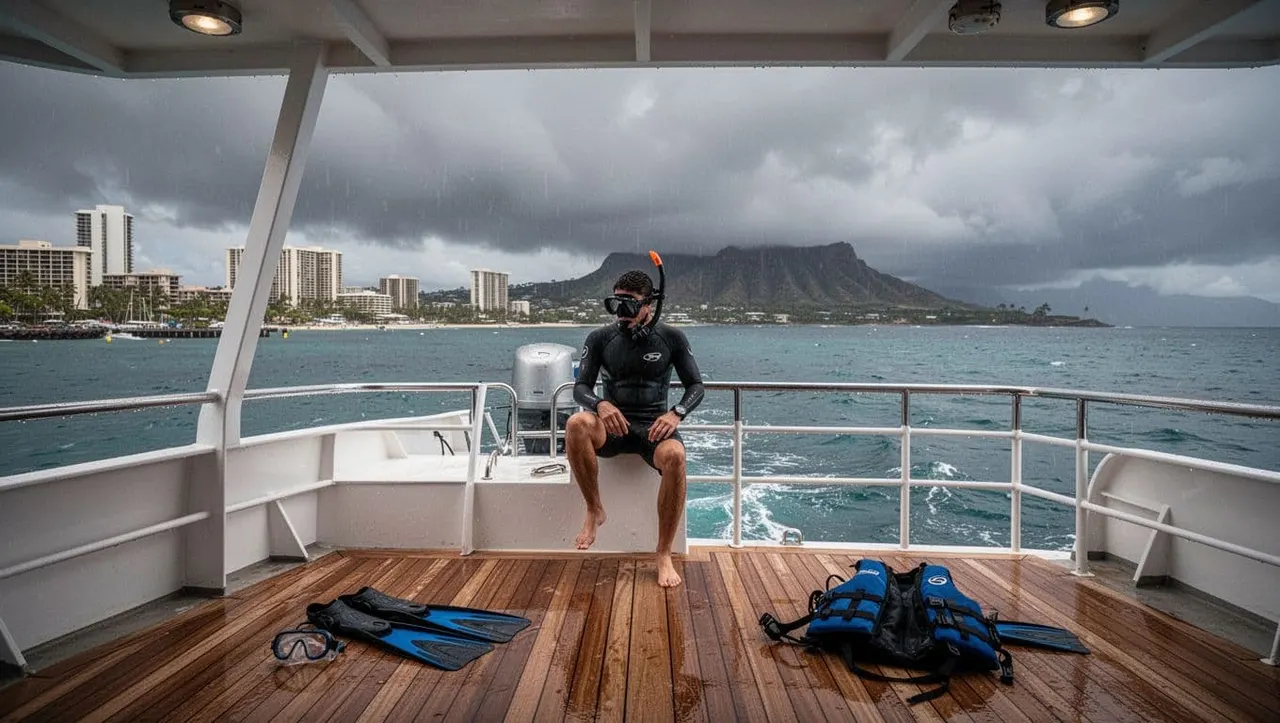
Bring a dry towel and a warm layer for the ride back. Even Hawaii’s warm ocean can feel cool after you float still for a while, particularly when the breeze comes up.
A rash guard helps in several ways. It provides sun coverage, reduces the chill, and keeps you more comfortable against flotation gear. If you get cold easily, ask the crew about flotation options that let you relax without constant kicking.
You should also skip a heavy breakfast and limit alcohol before a boat ride. Hydrate with water instead. Those simple steps often help more with seasickness than trying to tough it out after you feel unwell.
Get More From a Cloudy Turtle Canyon Snorkel
Turtle Canyons is known for its natural cleaning stations, where reef fish remove algae and debris from Hawaiian green sea turtles. Living Ocean Tours reports a 95% turtle-sighting success rate on its Turtle Canyons Snorkel Excursion, although wild animal encounters can never be guaranteed.
Cloudy conditions may make it harder to see surface glare, which can help you notice motion below. Watch for a turtle’s broad shell shape, then stay still and let it move through the area on its own terms.
Follow the wildlife without chasing it
You will see more when you slow down. Hover horizontally, keep your fins away from the reef, and scan outward rather than staring straight down. A guide can point out animals you might miss while you adjust your breathing.
Give turtles plenty of space. Never touch, feed, corner, or ride wildlife. Your best photos and memories come from observing natural behavior without forcing an encounter.
For a guided outing with gear and instruction included, you can CHECK AVAILABILITY for a Turtle Canyons snorkel trip. You can focus on the water while the crew handles the route, safety briefing, and support.
Make Family Snorkeling Easier in Cloudy Conditions
Children often care less about the color of the sky than adults do. They remember sliding into warm water, seeing a turtle, and feeling safe beside a parent or guide.
The Deluxe Waikiki Snorkeling and Wildlife Cruise gives families room to spread out. It visits a less-crowded reef and includes a boat-mounted waterslide, water trampoline, and floating lily pad. Those options are helpful if one person wants a break from snorkeling without feeling left out.
Keep the first swim short and successful
If your child is new to snorkeling, start with a few calm minutes near the boat. Let them practice breathing with their face in the water before they try to swim farther away.
Flotation equipment takes pressure off beginners. Meanwhile, professional guides can offer patient instruction and keep everyone oriented. You don’t need to force a long swim to have a successful first snorkeling experience.
When your group wants both reef time and boat-based fun, CHECK AVAILABILITY for the Deluxe Waikiki Snorkeling and Wildlife Cruise.
Know When to Reschedule Instead
A cloudy day is fine. Unsafe seas are not. If you see whitecaps across the water, feel a strong wind on shore, or hear a marine advisory, stay flexible.
Rain can also affect your plans if it becomes heavy and persistent. Runoff may reduce water clarity near some coastlines, while lightning means you should stay out of the ocean entirely. Tour crews may change locations, adjust water time, or cancel when conditions demand it.
Trust the crew’s call
You may feel disappointed if a trip changes, especially on a short vacation. Still, a crew that refuses to push through poor conditions protects your experience and your family.
Use an unexpected cloudy afternoon for the beach, a museum, or a relaxed meal near Waikiki. Then return when the water offers the safer, clearer outing you came for.
A Cloudy Sky Can Still Lead to a Great Snorkel
The best snorkeling Honolulu days depend on the water, not a postcard-blue sky. Calm seas, good guidance, a well-fitted mask, and respectful wildlife viewing can turn an overcast morning into a standout part of your Oahu trip.
Pack a warm layer, check the marine forecast, and stay open to the crew’s advice. When the ocean is ready, clouds can simply become part of the view above the reef.


