
Snorkel with Turtles Oahu: 2026 Guide to Best Spots & Safety
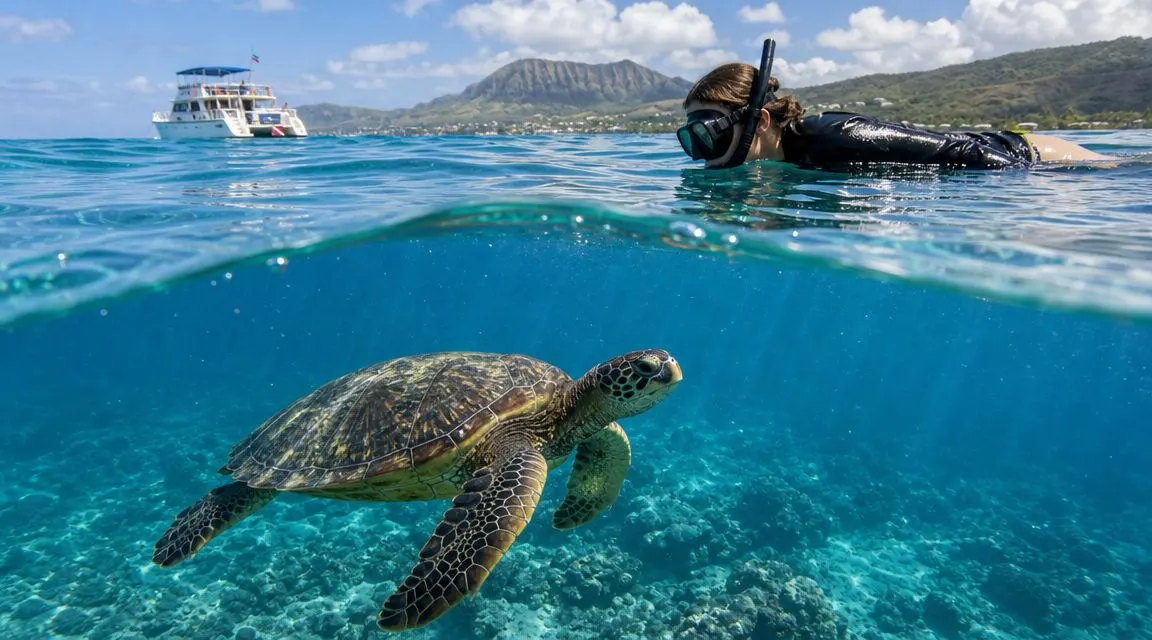
You're probably in one of two places right now. Either you're staying in Waikiki and trying to figure out whether the famous turtle experience is worth booking, or you've already searched for a beach where you can just walk in and hope for the best. That's where most visitors start.
The part that often gets missed is that the question isn't only where to see turtles. The better question is which option gives your family the calmest water, the least stress, and the highest chance of a memorable encounter without bothering the animals. If your goal is to snorkel with turtles in Oahu and come away saying, “That was the highlight of our trip,” the details matter.
Your Dream of Swimming with Sea Turtles in Oahu
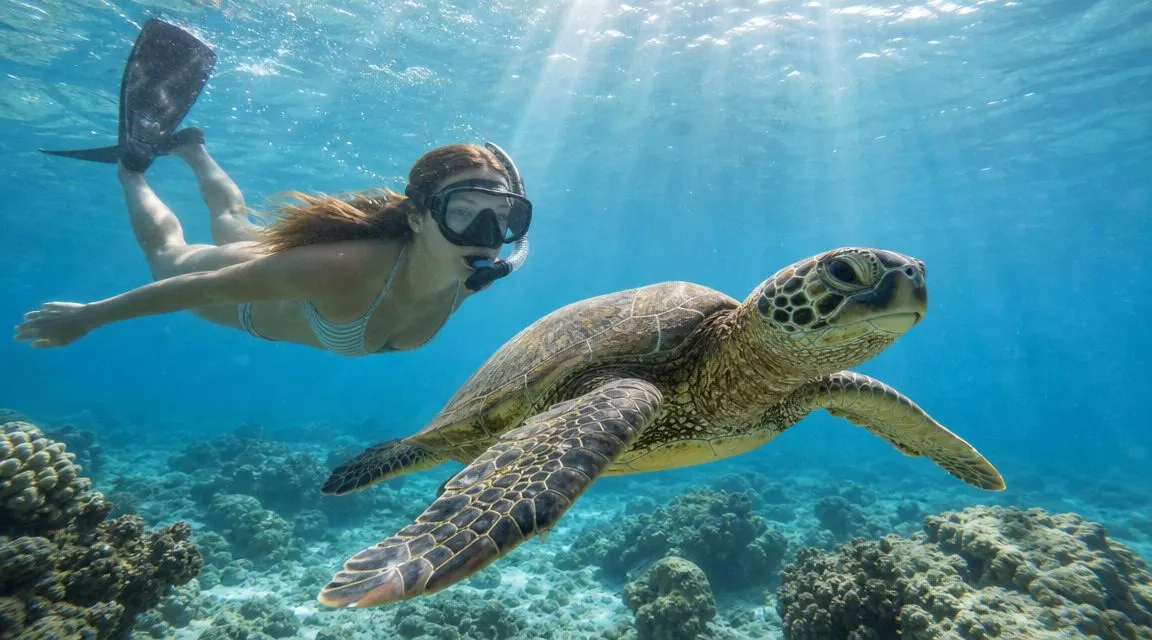
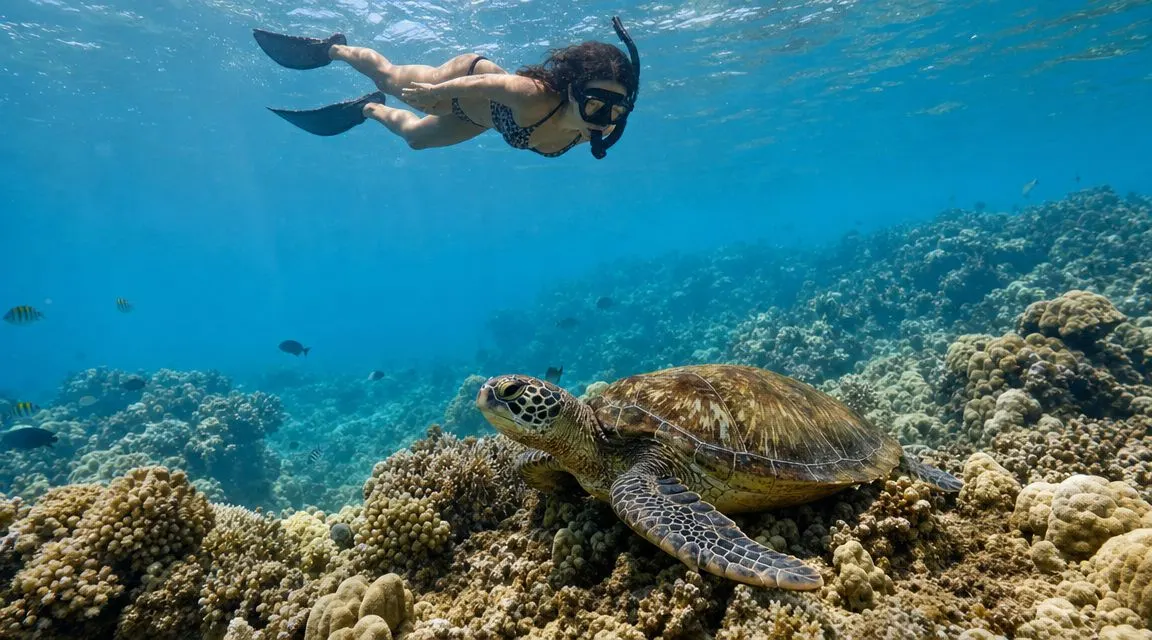
A good turtle snorkel doesn't feel rushed. You slip into clear blue water, settle your breathing, put your face in, and suddenly a honu glides across the reef with the kind of calm that changes the whole pace of your day. Kids go quiet. Adults stop kicking so hard. Everyone pays attention.
That moment matters more in Hawaiʻi because these animals aren't just another photo opportunity. They're part of the ocean life that people come here hoping to experience with respect, not by crowding or chasing. The best trips are the ones where guests leave excited and the turtles get to keep behaving like turtles.
What most visitors expect
It's often expected that the experience will be simple. Grab a mask, head to a beach, see a turtle, go home happy. Sometimes that works. A lot of times it doesn't.
Your experience depends on water clarity, entry conditions, current, crowding, and whether you're trying to observe wildlife or force an encounter. If you want a better feel for where turtles spend time around the island, this guide to turtles in Oahu is a useful starting point.
The most memorable turtle encounters happen when people slow down enough to watch instead of trying to get close.
What makes the dream work in real life
Three things make a turtle snorkel go well. Access to the right habitat, safe conditions for beginners, and good guidance in the water.
That's why experienced crews tend to think less like tourists and more like ocean planners. We look at where the reef gives turtles room to move, where snorkelers can stay comfortable at the surface, and how to keep the group from turning a wildlife encounter into a traffic jam.
- Calm entry matters: People who are relaxed in the first few minutes usually enjoy the whole snorkel more.
- Visibility changes everything: Clearer water means you don't need to swim hard or dive down to see what's below you.
- Distance improves the encounter: Turtles act more naturally when guests hold position and let the animal pass.
The Best Places to Find Turtles Shore vs Boat Tours
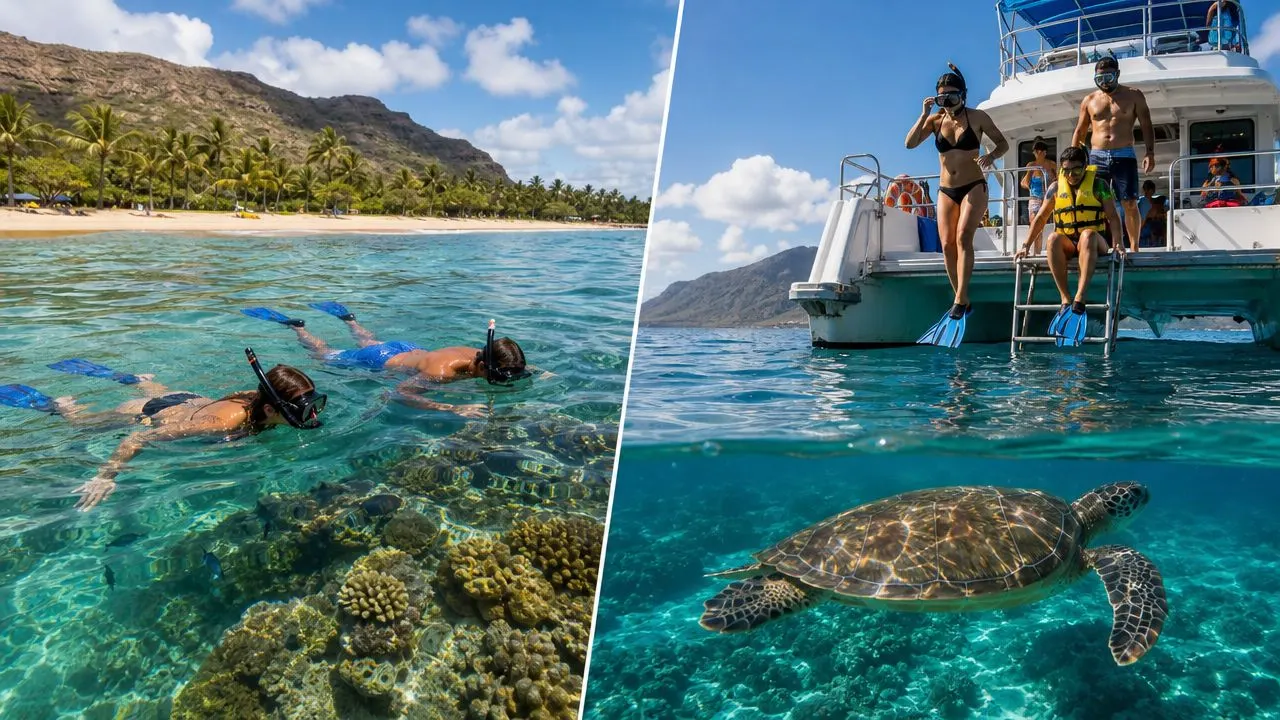
If you ask where to snorkel with turtles in Oahu, you'll usually hear two answers. One is a shore spot, often called a turtle beach. The other is an offshore reef reached by boat. For families and first-timers, those are not equal experiences.
Shore access sounds easier on paper. No reservation, no boat ride, no schedule. But the beach option asks more from you once you arrive. You need to judge conditions correctly, manage gear without help, and deal with whatever the ocean is doing that day.
What shore-based turtle viewing gets right
Shore spots can be appealing if you're already exploring the island by car and you don't mind being flexible. They can also be fine for strong swimmers who understand surf, current, and entry points.
That said, the best-known shore option often disappoints the exact people most excited about turtles. Independent travel guidance notes that Laniakea Beach is “extremely crowded,” has dangerous surf in winter (Oct-Apr), and can have poor visibility in summer, while Turtle Canyon is only accessible by boat and is described as a more reliable, calmer option for turtle encounters in this comparison of shore spots and Turtle Canyon.
Where boat tours pull ahead
Boat tours remove the two biggest problems with shore snorkeling. First, they take you away from the beach crowd. Second, they put you over habitat chosen for the snorkeling experience, not just because it's easy to park nearby.
A reef like Turtle Canyon works better for beginners because the whole outing is designed around the encounter. You aren't timing a beach entry between sets. You aren't wondering whether the water will be churned up by the time you get there. You're being brought to an offshore site that's known specifically for turtle viewing.
Here's the practical comparison:
| Option | Main advantage | Main drawback | Better for |
|---|---|---|---|
| Shore snorkeling | Flexible and independent | Crowding, surf, and inconsistent visibility | Confident swimmers who can adapt |
| Boat tour to Turtle Canyon | More controlled, calmer, more reliable setting | Requires booking and a schedule | Families, beginners, mixed-ability groups |
If you're traveling with kids, grandparents, or anyone nervous in the water, the winning question is comfort and consistency, not just access.
The choice most families should make
Families usually don't need the cheapest or most adventurous option. They need the one that works. That means a short outing, easy instructions, proper flotation, and a reef where people can float at the surface and still see what they came to see.
If you want a side-by-side breakdown of offshore reef access versus general Waikiki snorkeling, this comparison of Turtle Canyon vs Waikiki snorkeling is worth reading before you commit.
Why a Guided Snorkel Tour is the Smartest Choice
A guided tour earns its value before anyone gets in the water. Good crews fit masks correctly, explain how to breathe through a snorkel without panic, organize entry so guests aren't bumping into each other, and watch body position around the reef and wildlife. That's what turns “I hope this goes well” into a smooth day.
Guides also solve a problem many visitors don't anticipate. Most first-time snorkelers don't struggle with swimming. They struggle with staying calm, clearing a mask, and knowing where to look without flailing. In-water support fixes that fast.
What a professional crew actually changes
The biggest difference is control. Not control over wildlife. Control over the human side of the experience.
A good guided trip usually includes:
- Properly fitted gear: A leaking mask can ruin a first snorkel in minutes.
- A simple safety briefing: Guests need to know how to float, signal, and move without exhausting themselves.
- In-water oversight: Someone should be watching spacing, comfort level, and reef position at all times.
- Local judgment: Conditions vary, and experienced crews adjust how they run the stop.
Among the available options, Living Ocean Tours' Oahu snorkeling tours include guided outings designed for visitors who want equipment, instruction, and on-water support in one booking. The company is also widely known as the top rated and most reviewed snorkel company on Oahu.
Why guided is different from just taking a boat ride
Some visitors think any boat that stops near a reef offers the same experience. It doesn't. The crew's habits matter. So does whether they teach turtle etiquette before the first splash.
That's especially true with families. When one child gets nervous or one adult decides they're “not a snorkeler,” the guide's job is to slow things down, adjust flotation, and make the experience manageable without turning the whole outing stressful.
If turtle snorkeling is the goal, the most direct option is the Turtle Canyons Snorkel Excursion.
What to Expect on Your Turtle Canyons Snorkel Excursion
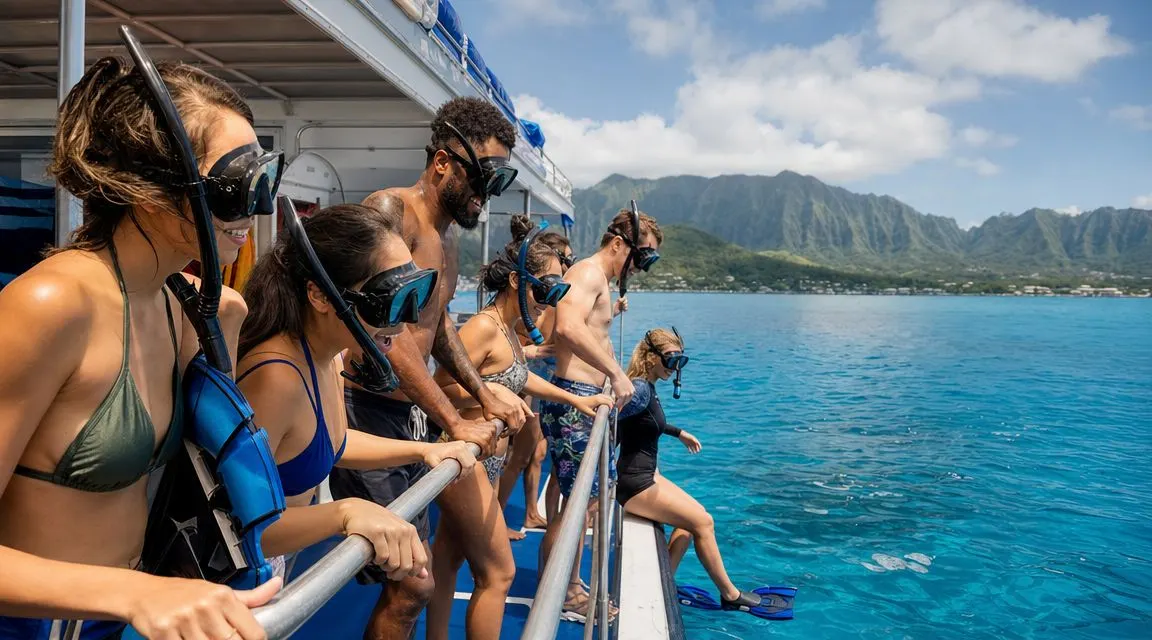
Most guests relax once they realize how straightforward the outing is. You check in at the harbor, get fitted with gear, listen to the safety talk, and take a short ride along the Waikiki coast. By the time you reach the snorkel site, the crew has already answered the questions that cause most first-timer anxiety.
The reef itself is one reason this stop works so well. Independent guides describe Turtle Canyon as a shallow offshore reef with depth ranges from about 3 to 10 feet near the reef edge to roughly 30 feet in the main area, while other operators place the site in the 20 to 45 foot range offshore of Waikiki in this overview of Turtle Canyon reef depths. For snorkelers, that depth gradient means you can stay at the surface and still keep visual contact with turtles moving through the water column.
The ride out and the water entry
The boat ride is short enough that it doesn't eat your vacation day, but long enough to get people settled. That matters with kids and mixed-age groups. The calm starts before the snorkel starts.
Once anchored, the crew explains where to enter, how to use the flotation provided, and where the turtles are likely to move. Guests who haven't snorkeled before usually do best when they spend a minute breathing through the snorkel at the surface before trying to swim anywhere.
What the turtle viewing is usually like
At Turtle Canyon, guided trips report a 99% turtle sighting success rate, with a typical encounter of 3 to 5 turtles and morning visibility often reaching 50 to 100 feet, according to Living Ocean Tours' guide to snorkeling with turtles off Oahu. Those numbers match what makes the site so appealing in practice. You don't need scuba skills or aggressive swimming to have a meaningful view.
A strong outing usually feels like this:
- You float first: The best snorkelers aren't always the fastest. They're the calmest.
- The reef comes into focus: Fish, coral structure, and movement start to separate once your breathing settles.
- The turtles appear naturally: You spot them moving below, crossing the reef, or passing along the edge of the group.
Stay horizontal, keep your kicks small, and let the reef come to you. That's how beginners start looking comfortable in the water.
For more detail on the site itself, this page on Turtle Canyon Oahu gives a useful overview.
Honu Etiquette Your Guide to Safe and Respectful Snorkeling
There's one rule every guest should remember before getting in. You are there to observe, not interact. Sea turtles are protected wildlife, and your job is to make sure your presence doesn't change their behavior.
The strongest evidence-based guidance for turtle snorkeling on Oahu is a minimum 10-foot buffer from Hawaiian green sea turtles, with zero touching and zero feeding, as explained in this guide to Oahu turtle snorkeling etiquette. Chasing or crowding them can stress the animals and may block their path to the surface.
The rules that are not optional
Guests sometimes think the danger is only to the swimmer. It isn't. A turtle needs room to rise, breathe, rest, and move off the reef without people boxing it in.
Keep these habits in mind:
- Hold the buffer: Stay at least 10 feet away at all times.
- Never reach out: Touching is illegal and harmful.
- Don't cut off the turtle's route: If it's heading upward or forward, move aside.
- Skip the chase: If you have to swim hard to get closer, you're already doing too much.
How to behave well in the water
Good turtle etiquette is mostly about body control. Slow kicks. Quiet movement. No diving down on top of an animal. No splashing over its head.
The simplest approach is also the best one:
| Good practice | Poor practice |
|---|---|
| Floating calmly to the side | Swimming directly at the turtle |
| Letting the animal pass | Turning it into a pursuit |
| Watching from a stable position | Hovering over its path to the surface |
Respect usually creates the better sighting. Turtles stay easier to watch when people stop trying to force the moment.
Using reef etiquette guidance for Oahu snorkelers also helps protect the coral habitat that supports the whole experience.
Pro Tips for a Perfect Turtle Snorkeling Adventure
The best turtle trips start well before the boat leaves the harbor. A few smart choices will make the day smoother for everyone in your group, especially if you're traveling with kids or grandparents.
Timing and packing
Morning conditions are often the easiest for beginners because the water tends to look cleaner and feel calmer. That lines up with the visibility pattern already noted earlier for Turtle Canyon.
Bring the basics and keep it simple:
- Reef-safe sunscreen: Put it on before the trip so it has time to absorb.
- A towel and dry clothes: The ride back feels better when you've got something warm and dry waiting.
- A secure hat and sunglasses: Harbor sun is strong, even before you get in the water.
- Minimal extras: Don't turn a short snorkel into a luggage exercise.
If you're bringing children
Kids usually do better with clear expectations than with hype. Tell them they may see turtles, fish, and reef structure, but the main job is to float, listen, and stay with the guide.
A few family-specific habits work well:
- Use flotation early: Don't wait until someone feels tired.
- Practice face-in breathing first: That's often the biggest hurdle for beginners.
- Choose the right tour style: Some families want a focused turtle outing, others want more onboard play.
If your group wants a broader snorkel day with added family fun, the Deluxe Waikiki Snorkeling and Wildlife Cruise is a practical alternative to a turtle-focused excursion.
Your Oahu Turtle Adventure Awaits
For most visitors, the right answer isn't the most famous beach. It's the experience that removes guesswork. If you want to snorkel with turtles in Oahu without turning the day into a hunt for parking, a gamble on surf, or a stressful swim in crowded water, an offshore guided trip makes more sense.
That's especially true for families and beginners. NOAA-based guidance summarized by Living Ocean Tours says people must stay at least 10 feet (3 meters) away from sea turtles, and guided Turtle Canyon trips are typically around 2 to 2.5 hours dock-to-dock, which makes the outing manageable for a vacation day while keeping the encounter structured and respectful in this guide to turtle snorkeling on Oahu.
The strongest memories usually come from simple things done well. Calm water. Clear instruction. Good spacing in the water. A turtle moving across the reef while your whole group gets to watch without rush or chaos. That's the version of this experience worth planning for.
If you want a turtle snorkel that fits a Waikiki vacation, keeps the logistics simple, and puts safety and wildlife respect first, book with Living Ocean Tours.


