
Why Reef Sponges Filter Water Around Oahu
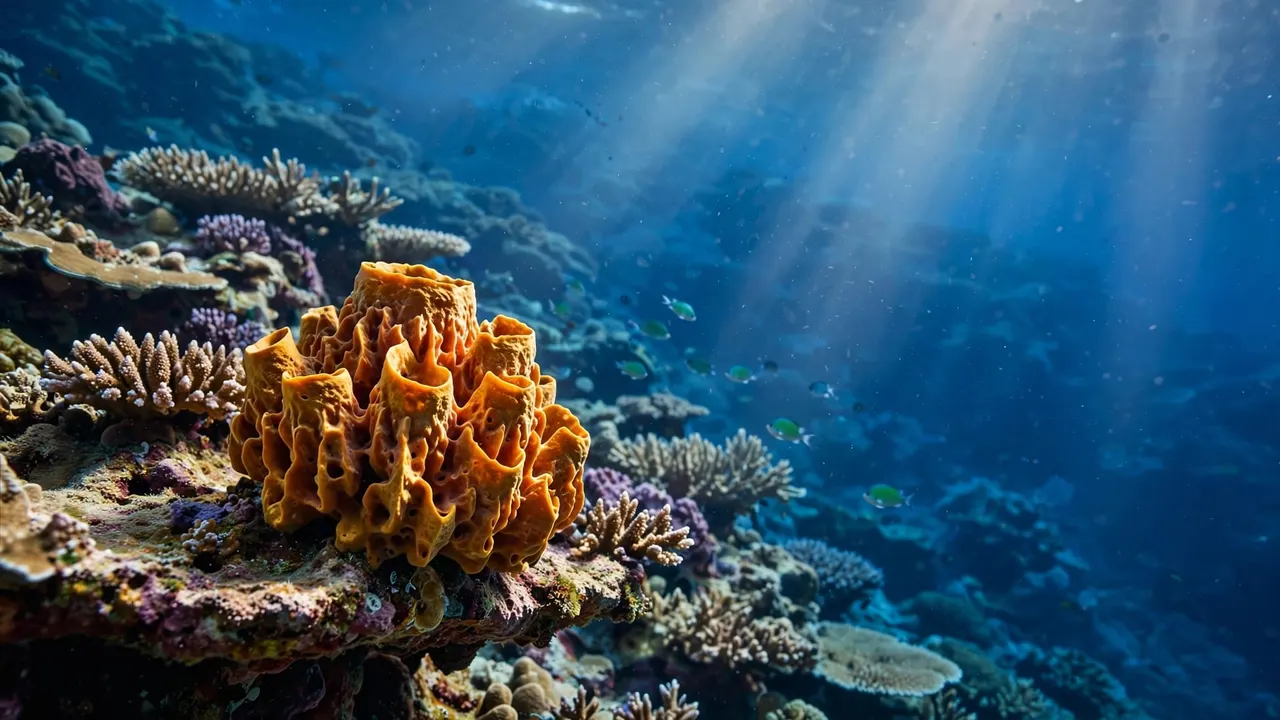
Reef sponges filter water because they need food and oxygen to survive. As water passes through their bodies, they capture tiny particles and take up dissolved material that other reef animals may not use directly.
At Living Ocean Tours, we love helping you notice the smaller life beneath the surface. Understanding what sponges do can make your next Oahu snorkel more rewarding, even when you can’t see the filtering itself.
Why reef sponges filter seawater
A sponge stays attached to the reef, so it can’t swim after a meal. Instead, it brings water to itself. The steady flow delivers food and oxygen, then carries waste away.
Sponges are animals, although they don’t look much like the fish and turtles you may spot while snorkeling. They lack a brain and a digestive system like yours, but their bodies have specialized cells that keep water moving and capture food.
The process continues whether you’re in the water or not. When you float above a reef near Oahu, you’re watching a habitat where sponges, corals, fish, and many smaller organisms carry on with their daily lives.
A sponge’s filtering ability also varies with its species, size, and surroundings. You won’t see every sponge doing the same job at the same rate, and a colorful reef doesn’t need to look clear for sponges to be feeding.
How water moves through a sponge
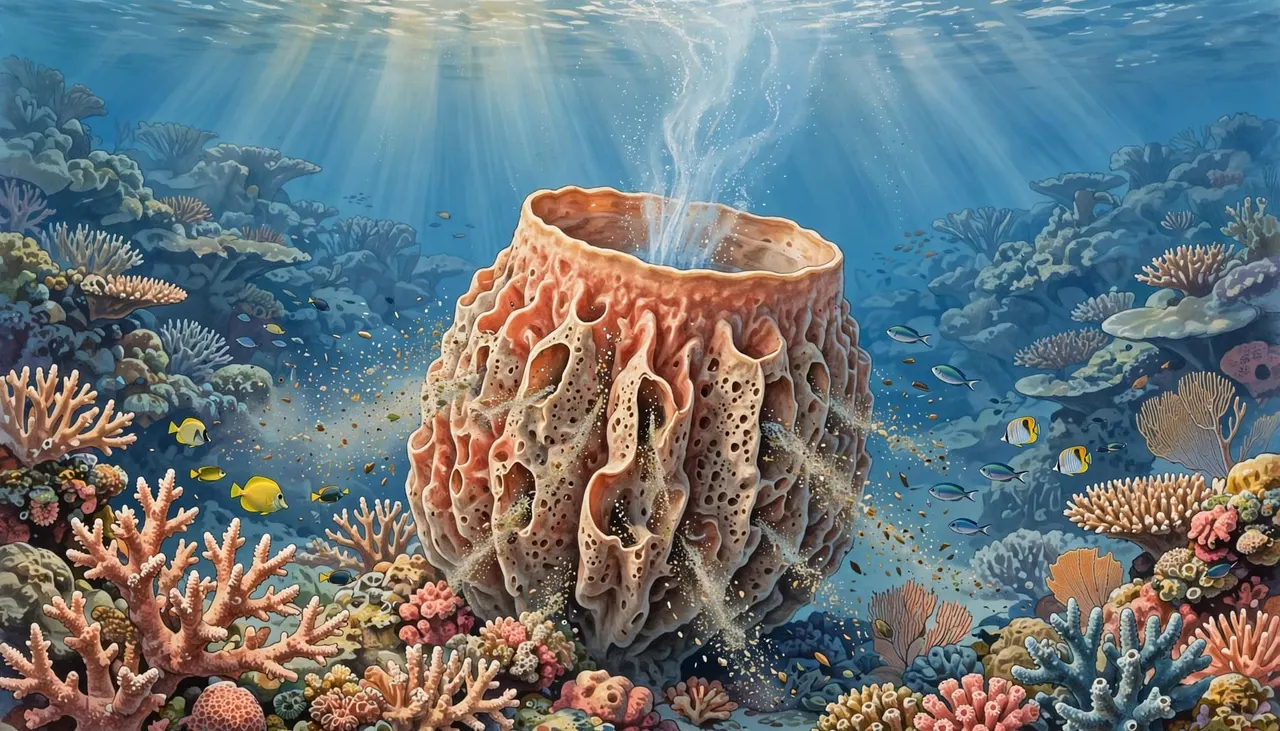
A sponge’s body contains a network of openings and channels. You may notice a larger opening on a sponge, although its smaller pores can be difficult to distinguish from the surface.
Tiny cells drive the flow
Water enters through small pores and travels into chambers inside the sponge. There, specialized cells called choanocytes use whip-like structures to move water and capture food. Water then leaves through larger openings called oscula.
This flow brings fresh water across the sponge’s feeding surfaces. It also allows the animal to exchange gases with its surroundings and release waste.
You don’t need to identify every opening to appreciate the process. The important detail is that a sponge’s still exterior contains an active water-moving system.
Small food sources add up
Many sponges capture bacteria and other tiny particles suspended in seawater. Some also take up dissolved organic matter, which consists of carbon-containing material too small to see as individual particles.
According to NOAA’s explanation of sponges, these animals can affect reef water quality as they filter bacteria and process nutrients.
Different sponges use different food sources. That variety helps explain why several kinds can live within the same reef habitat without all depending on exactly the same meal.
What sponge filtration means for a reef
The water passing through a sponge connects it to the rest of the reef. A sponge keeps some of the material it takes in, while other material returns to the surroundings in forms that can be used by other organisms.
Sponges help move nutrients
Reef animals need nutrients to grow, but those nutrients aren’t always available in a form they can use. Sponges can take up some dissolved material and release waste or shed tissue that becomes available to other reef organisms.
Scientists use the term sponge loop for a proposed pathway in which sponges take up dissolved organic matter and return some of it as small particles. Other animals that eat detritus, or organic debris, may then use those particles.
You can find this idea discussed in a review of Caribbean sponge ecology. The pathway is an active area of research, and it shouldn’t be assumed to work identically for every sponge or reef.
Clear water has many influences
Sponges remove some material as they feed, but they don’t act as a single filter for an entire bay. Waves, currents, runoff, sediment, and plankton can all affect what the water looks like on your snorkel day.
That means you can’t judge the number of sponges below you by visibility alone. A cloudy patch doesn’t tell you whether sponges are present, and a clear day doesn’t reveal how much water they’ve filtered.
What researchers found in Oahu’s hidden reef spaces
Some of the most interesting reef sponges are easy to miss. They can grow inside crevices, beneath ledges, or in other sheltered parts of the reef rather than in open view.
Research led by Vicente, Webb, and Paulay documented 186 sponge operational taxonomic units, or groups used by researchers to distinguish organisms, in Hawaiian reef habitats. The study included 150 new records for the Hawaiian Islands.
More than three-quarters of the recorded groups occupied hidden reef spaces. The findings show how much sponge diversity can be overlooked when you judge a reef only by what is visible on its surface.
Kaneohe Bay was among the places included in the research. Those findings are about biodiversity, so they don’t establish how quickly sponges filter water at Turtle Canyon or another Oahu snorkel site.
For you, the discovery is a reason to slow down and notice the reef’s structure. A shaded opening can be part of a busy habitat, even when you can’t see what lives inside it.
How to spot sponges while snorkeling Oahu
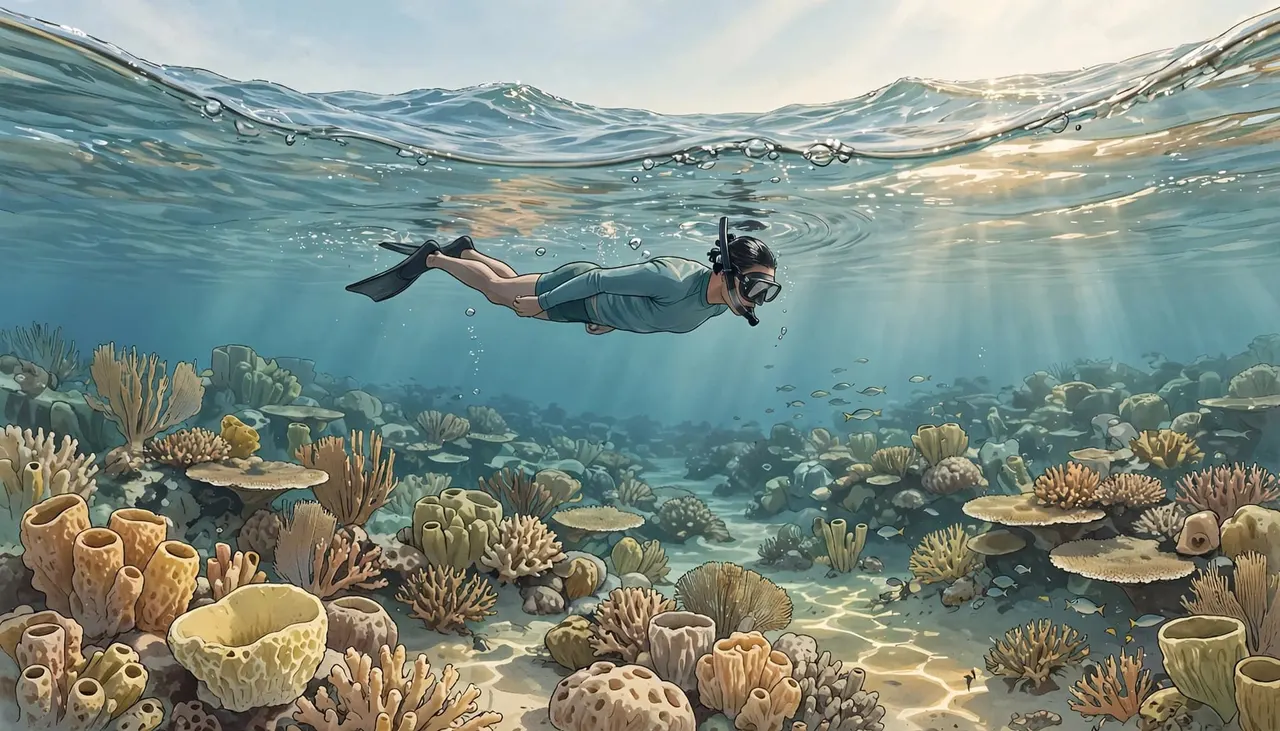
Sponges come in a variety of shapes. Some form low patches on hard surfaces, while others grow into more recognizable mounds or tubes. Colors and textures vary, too, so there’s no single appearance that identifies every sponge.
Look for shapes without getting close
Start by floating comfortably at the surface and looking across the reef rather than straight down at one spot. You may notice an irregular patch on rock or an opening in a mound that stands apart from nearby coral.
Take your time. Sunlight, depth, and moving water change how colors appear through your mask. If you can’t identify something confidently, enjoy observing it without assigning a name.
A guide can help you notice features you might otherwise swim past. You don’t need a close-up view to appreciate how many different animals share the reef.
Let hidden animals stay hidden
Crevices can shelter sponges and other small animals, but you shouldn’t reach inside or move anything for a better look. Avoid extending a camera into an opening, too. A strap or camera body can strike the reef even if your hands stay clear.
Instead, watch the opening from a comfortable distance. A fish may pass in or out, or you may simply get a better sense of the shelter the reef provides.
Protect the reef while you explore
A good snorkeling position gives you room to enjoy the view without touching the animals below. Coral colonies and sponges are living organisms, and both deserve space.
Keep your body and gear clear
Float horizontally when you’re comfortable, and give your fins enough room to move above the reef. Before you turn toward a fish or lift your head to speak, notice where your feet and equipment are.
If your mask needs adjusting, move into open water or return to the boat or your guide for help. Don’t stand on coral or hold onto the reef for support.
Keep camera straps and other accessories close to your body. Even a slow turn can drag loose gear across the bottom in shallow water.
Give wildlife an open path
Watch turtles and fish without touching, feeding, chasing, or crowding them. At a turtle cleaning station, give animals room to move naturally and keep their route to the surface open.
You can also prepare before entering the water. A rash guard covers skin and reduces the area where you need sunscreen. If you use sunscreen, remember that a “reef-safe” label doesn’t guarantee zero environmental impact.
Above all, choose conditions that suit your swimming ability. Stay with a buddy or your guide, use flotation when it helps, and return to the boat if you feel tired or uncomfortable.
Explore a Waikiki reef with our guides
Our Turtle Canyon Snorkel Tour takes you to a natural turtle-cleaning habitat near Waikiki. While turtles are a highlight, your time in the water is also a chance to notice the reef community around them.
Our professional snorkel guides provide in-water support, and our crew helps with equipment and instruction. If you’re new to snorkeling, tell us when you need a hand or a break. Families are welcome, with tours available for ages 3 and up.
Living Ocean Tours departs from Kewalo Basin Boat Harbor, a short trip from Waikiki. For a guided turtle outing, you can CHECK AVAILABILITY.
You can also explore our Oahu snorkeling and ocean tours to find an outing that fits your group.
Common questions about reef sponges
Are sponges coral or plants?
Sponges are animals. Corals are animals, too, but they have a different body structure and way of life. A sponge’s shape may resemble a plant or a patch of rock, which is one reason it can be easy to overlook.
Can you see a sponge filtering water?
You generally won’t see the tiny particles a sponge captures or the water moving through its chambers while snorkeling. You can still look for sponges and appreciate the feeding process happening inside them.
Should you touch a sponge to identify it?
Leave it where it is and observe without touching. Contact can damage reef life, and reaching toward a sponge may also put your fins or equipment against nearby coral. If you’re curious about an animal, ask your guide what features to look for.
Take a closer look without touching
Reef sponges filter water to feed and survive, and their activity connects them to the wider reef community. Many remain hidden, so the reef holds more life than you can see during a single swim.
On your next Oahu snorkel, give yourself time to float, look, and notice the smaller details. With a respectful distance, you can enjoy the view while leaving the reef undisturbed.


