
Keep a Reef Sighting Journal While Snorkeling Oahu
You can keep a reef sighting journal by watching first, then recording a few clear observations after you’re safely out of the water. At Living Ocean Tours, we encourage you to notice the smaller reef encounters alongside the wildlife you came hoping to see.
Your most useful entries separate what you observed from what you assumed, without turning your swim into an assignment. Start with a simple format that leaves your attention free for the ocean.
Key Takeaways
- Record your notes after snorkeling so writing doesn’t compete with breathing, swimming, or staying with your buddy.
- Describe the encounter honestly, including anything you couldn’t see clearly.
- Keep at least 10 feet (3 meters) from sea turtles, and never touch or stand on coral.
- Use your journal to preserve memories and questions, rather than treating every entry as a confirmed wildlife record.
Set Up Your Reef Sighting Journal
Choose a format you’ll enjoy using
A notebook or phone notes app can work well. Choose whichever makes it easiest to capture your thoughts while the encounter still feels fresh.
You don’t need specialized equipment to begin. Keep paper and electronics in dry storage during your swim, then settle somewhere secure before opening them.
If you already take underwater photographs, you can connect them with your notes afterward. However, leave the camera behind whenever it distracts you from comfortable swimming or awareness of your surroundings.
Give your entries a familiar shape
Reserve space for the place, the encounter, and anything that remained unclear. Add a personal memory, such as which moment surprised you or what your child noticed first.
Keep the same broad structure across entries. That makes your reef sighting journal easier to revisit without requiring long descriptions every time.
Leave room for a later addition, too. A conversation with your guide may help clarify a detail, but keep your original observation separate from that later explanation.
Observe First, Write Once You’re Out
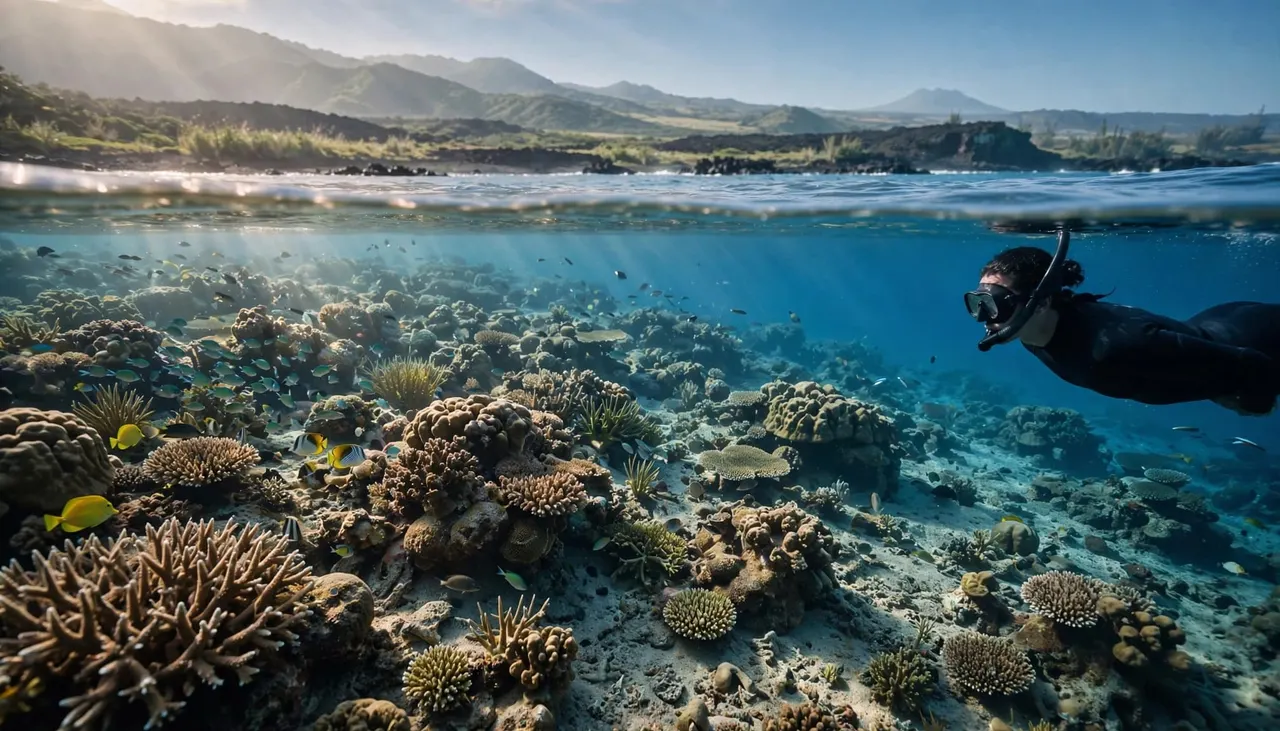
Keep your attention on the swim
Your first responsibility is staying comfortable and aware. Follow your guide’s boundaries, keep track of your buddy, and leave space between your fins and the reef.
Let an encounter unfold without chasing it. You don’t need to follow an animal around the reef to earn a worthwhile journal entry.
If conditions or swimming demands occupy your attention, save the observation exercise for another moment. A short, relaxed look is more useful than a detailed memory collected while you’re struggling.
Choose a few moments to remember rather than trying to mentally record the entire swim. You can enjoy an encounter without documenting it.
Separate an observation from an assumption
A fish beside a turtle gives you something interesting to record. Its position alone doesn’t establish its identity or explain why it was there.
Similarly, a partly hidden animal may leave you with an impression rather than a clear view. Preserve that limitation instead of filling the gap with a confident name.
Keep uncertainty beside the observation it belongs to. A question mark added much later can be easy to overlook.
Your guide can help you discuss the encounter afterward. Describe what you remember, then distinguish the guide’s explanation from details you personally observed.
Build an Entry You’ll Want to Revisit
Capture the encounter before polishing it
Once you’re back aboard or safely ashore, write a brief account while your memory is fresh. Plain language is enough.
Start with the moment that held your attention. Then add the surrounding context you remember, without forcing the account into a complete story.
These prompts give your reef sighting journal a repeatable structure.
| Entry prompt | What to include |
|---|---|
| Place | The named snorkeling area or broader location you know |
| Encounter | What you directly observed |
| Limits | Anything hidden, brief, or uncertain |
| Guide input | An explanation you received afterward |
| Personal memory | Why the moment stayed with you |
You can leave a field blank when you have nothing useful to add. Consistency helps, but completeness isn’t the goal.
Preserve your original memory
Write your own recollection before comparing notes with your partner or family. Otherwise, another person’s account can become difficult to separate from yours.
Afterward, invite everyone to contribute something they noticed. Children can draw their memory of the encounter or dictate a sentence to an adult.
Keep those contributions attributed to the person who made them. Your family’s shared page becomes richer when different perspectives remain visible.
Finally, resist editing every entry into polished travel writing. A short, accurate note often preserves more than a dramatic paragraph.
Protect the Reef While You Observe
Give sea turtles room
NOAA’s marine-life viewing distance guidelines recommend staying at least 10 feet (3 meters) from sea turtles in Hawaii, both in the water and on land.
Keep that space even when you’re hoping for a better memory or photograph. Never touch, chase, feed, block, or surround a turtle.
If an animal changes position, let it choose its route. Don’t move underneath it or close the gap to inspect something you couldn’t see.
Your journal can acknowledge an incomplete view. Getting closer isn’t a necessary part of documenting the encounter.
Keep your body and equipment clear
Never stand on, grab, or kick coral. Use the flotation support your crew recommends, and ask for help when you need an equipment adjustment.
Hawaii’s shallow-reef identification guide also warns against putting hands or feet into holes or beneath ledges you can’t see.
Leave coral fragments and other reef material where you find them. A written memory doesn’t require a collected souvenir.
Most importantly, stop observing whenever you need to concentrate on your breathing, your group, or returning to the boat. The journal should fit around responsible snorkeling.
Compare Visits Without Claiming More Than You Know
After several outings, your reef sighting journal becomes a record of your own encounters. Read entries side by side to notice what caught your attention at different places.
Use recognizable destination names, such as Waikiki or Turtle Canyons, when those are the places you visited. Don’t add precision you don’t have.
Keep personal observations separate from conclusions about the reef. Seeing fewer animals during one swim doesn’t establish a decline, just as a busy encounter doesn’t describe the whole habitat.
Likewise, write “I didn’t see it” rather than treating an unseen animal as absent. Your view covers only part of the reef and part of its activity.
Hawaii’s marine protected areas guide offers broader conservation context for the places you enjoy. Your journal can support that interest without becoming a scientific survey.
Look for changes in your own attention, too. You may discover that later entries contain more patient descriptions and fewer rushed labels. That’s a useful record of how your experience grows.
Bring Your Journal on a Guided Waikiki Outing
At Living Ocean Tours, we’re Oahu’s only tour company with professional snorkel guides. You have in-water support while learning to watch reef life without crowding it.
Our trips depart from Kewalo Basin Boat Harbor near Waikiki. Before entering the water, tell our crew about your swimming comfort and any support your family needs.
You can explore our Oahu ocean tours when planning your visit. For an underwater journal, our guided snorkeling tours give you opportunities to observe reef habitat with equipment and guidance.
Bring a question rather than a long wildlife checklist. After your swim, share the encounter you found hardest to describe, including what remained unclear.
Shaded seating and dry storage give you a comfortable place to regroup and retrieve your journal. You can write a few lines while the rest of your group relaxes.
Frequently Asked Questions
Do you need underwater photos for a reef journal?
No. You can build a useful journal entirely from written memories or drawings. Photographs are optional additions, and taking them shouldn’t compete with staying oriented or following your guide.
If you have pictures, connect a small selection with the relevant entry afterward. Keep the original images rather than relying only on heavily edited versions. Your notes should still say what you remember observing, including details the photograph doesn’t show.
What if you can’t identify anything you saw?
You can still record a meaningful encounter. Naming an animal is only one possible part of your journal, and an uncertain sighting doesn’t make the entry a failure.
Write what held your attention and what prevented a clearer view. Then add any explanation your guide provides as a separate note. If the identification remains unresolved, leave it open. You’ll preserve an honest memory instead of carrying an unsupported label into future entries.
Keep the Memory, Leave the Reef Undisturbed
A reef sighting journal works best when patient observation comes before documentation. Watch comfortably, respect wildlife space, and record your thoughts once you’re safely out of the water.
Keep your entries honest about what you saw and what remained uncertain. You’ll bring home a personal record of Oahu’s reef encounters without asking the reef to change for your story.


