
Reef Fish Mouth Shapes: An Oahu Snorkeling Guide

You see different reef fish mouth shapes because fish have evolved different ways to reach and capture food. A narrow snout helps with precise picking, while stronger biting jaws handle food attached to hard surfaces.
With Living Ocean Tours, you can explore Waikiki’s reef habitat with support while you watch these differences in action. Patient observation helps you connect a fish’s appearance with its behavior, even before you know its name. Start with the mouth, then notice where the fish directs each bite.
How reef fish mouth shapes match different foods
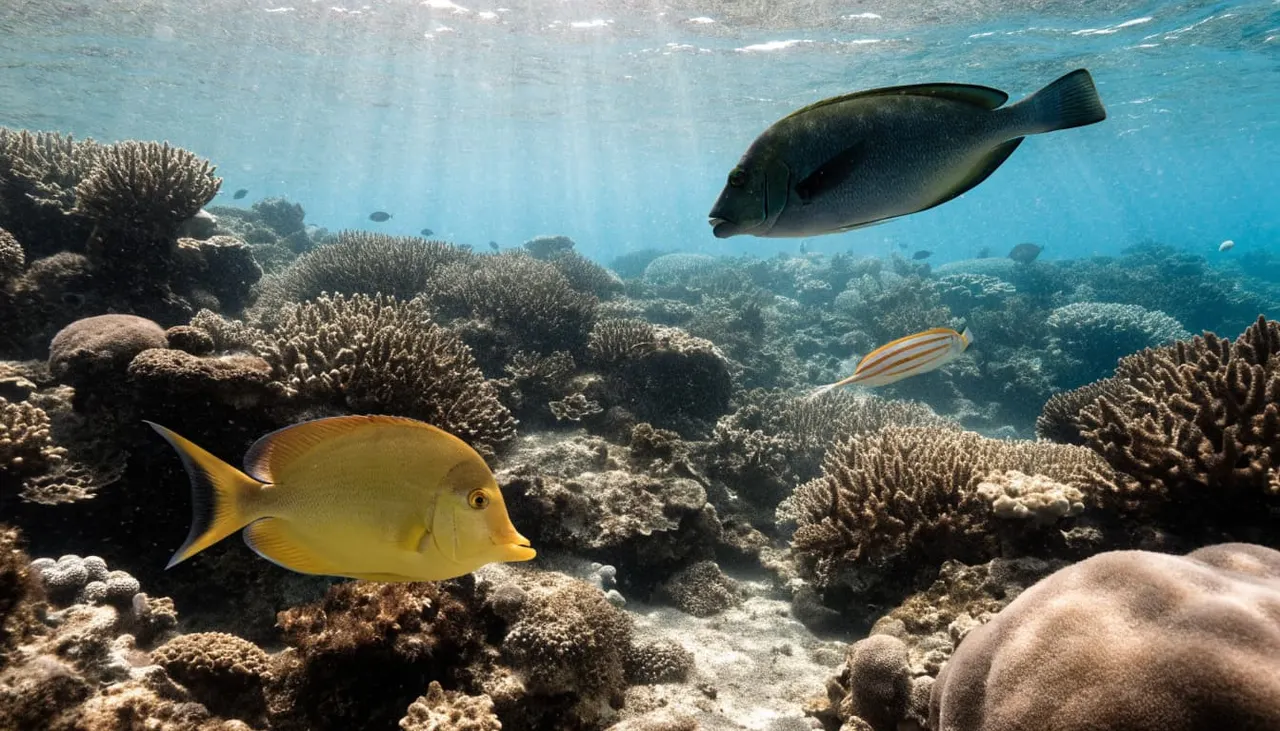
A reef offers food in many places: attached to rock, tucked into crevices, buried in sediment, and drifting above coral. Different feeding structures help fish use these separate resources.
That variety supports an extraordinary community. Research on reef-fish evolution notes that coral reefs contain about 20% of all fish species.
Narrow mouths reach small spaces
When you notice a long, narrow snout, watch where its tip goes. A small mouth at the end can reach food around uneven reef surfaces and into openings that broader jaws can’t access as easily.
However, a pointed snout doesn’t identify one exact diet. Fish with similar outlines can eat different foods, and some species change their feeding choices with availability.
From the surface, you might see repeated picking without seeing the food itself. That’s still a useful observation. Remember the snout’s shape and the surface the fish visits rather than guessing what every bite contains.
Broad or beak-like jaws handle different bites
A broad mouth can take in larger food items, while a beak-like biting edge can remove material attached to a surface. Teeth, jaw strength, and how far the mouth opens all affect the bite.
However, a fish biting near coral isn’t automatically eating living coral tissue. Food may grow on nearby rock or other hard surfaces.
These structures developed across generations. A fish doesn’t choose a new mouth shape for its next meal. Instead, its inherited anatomy affects which feeding opportunities it can use.
Suction, biting, and crushing work differently
Comparing reef fish mouth shapes gives you a starting point, but the resting outline leaves part of the story hidden. Jaws move, mouths expand, and teeth farther inside can process food you never see.
A small-looking mouth can extend forward
Some fish project their jaws forward during feeding. As the mouth opens and the internal cavity expands, water carries food toward the mouth.
This suction-feeding action can happen too quickly to follow clearly through a snorkel mask. You may notice a brief forward movement rather than a long chase.
A 2025 study of feeding adaptations examines protrusible jaws and large teeth as different innovations that improved feeding efficiency. For your reef visit, the useful lesson is simple: a small resting mouth doesn’t reveal its full movement during a strike.
Crushing can happen beyond the visible teeth
The teeth at the front aren’t always the whole feeding system. Some reef fish also process food with specialized teeth farther back in the throat, called pharyngeal teeth.
J. E. Randall’s research on West Indian reef-fish diets describes fish crushing hard prey with their jaws or pharyngeal teeth. That study concerns the West Indies, rather than a survey of Oahu fish.
You usually won’t see this internal processing while snorkeling. Instead, watch the approach and capture, then accept that part of the meal happens out of view.
Mouth position helps you choose where to look
Shape describes the opening and surrounding jaws. Position describes where that opening sits on the head. Together, these clues help you decide where to direct your attention.
These common anatomical terms describe the mouth’s orientation.
| Mouth position | What you can see |
|---|---|
| Terminal | The opening faces forward at the end of the head. |
| Inferior | The opening sits toward the underside of the head. |
| Superior | The opening points upward. |
Treat orientation as a clue, not a complete feeding diagnosis. A fish can tilt its body and reach food outside its usual feeding position.
For example, watch whether a fish levels out beside a surface or angles downward before making contact. Its body movement may tell you more than a brief head-on glimpse.
Viewing angle matters, too. A mouth can look shorter when the fish faces you. Wait for a natural side view rather than swimming around the animal.
When you compare reef fish mouth shapes, combine the mouth’s position with the fish’s movement. That gives you a stronger observation than a confident guess based on one feature.
Watch feeding without misreading every movement

You don’t need to follow a fish across the reef to understand its routine. Often, a comfortable float above one patch reveals more than constant swimming.
Follow a route with your eyes
Give a small reef area 20 to 30 seconds of attention. Notice where fish pause, which surfaces they visit, and whether they repeat the same route.
Then focus on one animal. Repeated contact with a surface suggests a feeding pattern worth watching, although you may not identify the food.
If your approach interrupts that activity, increase your distance. A fish disappearing into shelter tells you little about its normal feeding routine.
For families, compare observations afterward. One person may remember the mouth, while another noticed the route. Together, those details create a better description without requiring a species name.
Separate breathing from feeding
An opening mouth doesn’t always mean a fish is taking a bite. Many fish move water through the mouth and across the gills as part of breathing.
Look for context. A directed approach, contact with a surface, or a quick strike offers more evidence of feeding than repeated mouth opening alone.
Likewise, a fish facing another animal may be interacting rather than eating. You don’t need to assign a purpose to every movement.
Understanding reef fish mouth shapes becomes more rewarding when you allow some uncertainty. Describe what you saw clearly, and leave room for what remained hidden.
Explore Waikiki’s reef with in-water guidance
Our Oahu snorkeling and wildlife tours give you equipment, instruction, and support while you explore offshore reef habitat. We depart from Kewalo Basin Boat Harbor, near Waikiki.
On Oahu, we’re the only tour company with professional snorkel guides in the water. You can share an observation with your guide without arriving with a fish identification.
Describe the mouth, body outline, and feeding location. For example, remembering that a fish repeatedly picked beside a ledge is more useful than remembering only its color.
Turtle Canyons also introduces another feeding relationship: cleaning. Some fish obtain food by removing parasites from other animals. The cleaner-fish genus Labroides demonstrates this relationship, although seeing a fish beside a turtle doesn’t prove it is cleaning.
Before entering, tell our crew about your swimming comfort. Use the flotation support provided, stay with your buddy, and follow the guide’s boundaries.
For a guided reef outing, CHECK AVAILABILITY and choose a departure for your visit.
Key Takeaways for Your Reef Visit
Your best observations connect anatomy with behavior, without requiring you to identify every animal.
- Use reef fish mouth shapes as clues to feeding methods, then watch where and how the fish feeds.
- Remember that moving jaws and hidden teeth can do work you can’t see from the surface.
- Give wildlife enough space to continue its routine. Never feed fish, reach toward them, or stand on coral.
Before moving to another patch, notice one detail beyond color. A projecting snout, downward-facing opening, or repeated feeding route gives you something useful to remember.
Bring a Better Eye to Your Next Snorkel
Reef fish mouth shapes help you understand how different animals share the same habitat. The strongest clues come when you combine anatomy with undisturbed behavior.
On your next Oahu snorkel, choose one fish and watch its route before moving on. You don’t need to name every species to appreciate how precisely each one uses the reef.
Frequently Asked Questions
Can you identify a fish’s diet from its mouth alone?
You can recognize possible feeding methods, but you usually can’t identify an exact diet from mouth shape alone. Teeth, jaw movement, habitat, and behavior add information.
Even then, a brief surface view may leave the food itself invisible. A clear description of the feeding action is more useful than an unsupported dietary label.
Does a large mouth mean a fish is dangerous?
Mouth size alone doesn’t tell you whether a fish threatens swimmers. It describes part of its feeding anatomy, rather than its behavior toward people.
However, every fish deserves space. Don’t handle wildlife or place your fingers near an animal’s mouth. Observe without testing how it reacts, and never use food to attract a closer encounter.
How can children watch fish without chasing them?
Help children get comfortable with their equipment and flotation support first. Then encourage them to watch one small reef patch beside their buddy and within the guide’s boundaries.
Afterward, ask them to describe where a fish’s mouth pointed or how it approached a surface. This keeps their attention on observation rather than getting closer. If they’re tired or uncomfortable, signal the guide and take a break.


